
By Nina Papadopoulos, Senior Education Officer UNHCR – September 2025
As children around the world return to school this season, gathering supplies, meeting teachers, and stepping into classrooms filled with possibility, millions of refugee children face a different reality. For them, access is uncertain, classrooms are overcrowded, and learning materials are limited. At the center of this disparity is one critical yet often overlooked factor: teachers.
When we think about education, we often picture children with books in hand, guided by a teacher who nurtures their curiosity and potential. For refugee learners, this vision is far more fragile. We rightly advocate for every child’s right to education: equitable access to schools, quality instruction, and learning spaces that are protective and inclusive. But none of this can be achieved without teachers.
Teachers are the backbone of any education system. In displacement settings, they are even more indispensable, but too often remain invisible in policy and planning. Teachers in crisis-affected settings bring incredible commitment to their students, even under the most difficult circumstances. And yet, refugee teachers are frequently excluded from formal systems, denied recognition of their qualifications, and offered only short-term stipends with no path to a stable career.
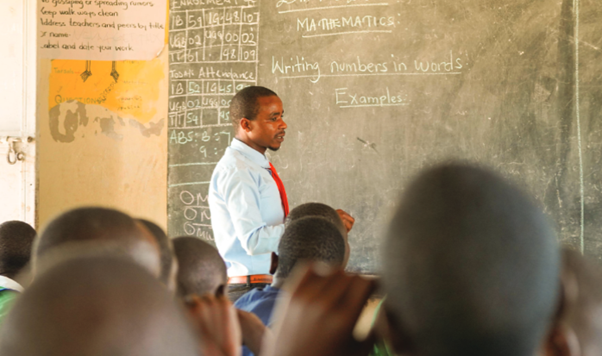
This not only affects their motivation and retention, but it also directly impacts the quality and consistency of education for refugee children.
As the UN agency mandated to protect and assist refugees, UNHCR plays a central role in strengthening national education systems and ensuring displaced learners are not left behind. UNHCR’s Education 2030 Strategy places teachers at the core of its priorities.
We do this by emphasizing the need for qualified, well-compensated, and professionally recognized educators who can deliver quality, inclusive, and protective education to refugee children. Across operations, UNHCR works with governments and partners to advocate for the inclusion of refugee teachers in national policies, workforce planning, and professional development pathways.
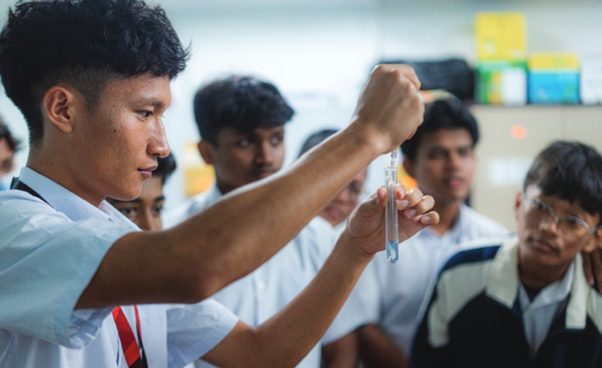
To better understand these challenges, we commissioned a global study with in-depth case studies from Chad, Malaysia, and Uganda. The findings are clear: refugee education cannot succeed without investment in the teachers who make it possible.
👉Teachers in Refugee and Displacement Settings: Challenges and Strategies for Teacher Quality and Workforce Sustainability, UNHCR, Mendenhall, M. (2024).
Including: Chad Case Study, Malaysia Case Study, and Uganda Case Study.
The study highlights the complex and intersecting challenges faced by refugee teachers and teachers working in refugee-hosting areas, including:
- Precarious employment conditions for refugee teachers: Many are unable to access formal teaching posts due to their legal status including restrictions on right to work, lack of recognized credentials, or exclusion from national systems. Where employed, they are often paid significantly less than national teachers, sometimes as little as $16/month, and receive irregular payments with no benefits or job security.
- Limited formal pathways for equivalency and workforce integration: Refugee teachers often hold qualifications from their countries of origin that lack equivalency frameworks within host country systems, making it difficult to determine their alignment with national standards. This creates barriers to registration, employment, and participation in professional development initiatives.
- Limited access to professional development tailored to refugee contexts: Refugee teachers, and those teaching in displacement-affected communities, often lack structured opportunities for training, certification, or career advancement. Training is typically short-term, donor-funded, and not linked to recognized qualifications.
- Psychosocial strain and role overload: Many refugee teachers are themselves displaced and coping with trauma. They are also expected to manage classrooms with large student-teacher ratios, often without adequate teaching materials, while also serving as counselors and mediators in their communities.
These challenges play out differently across country contexts:
- In Chad, where over 60% of teachers in refugee camps are classified as “community teachers,” there are no clear pathways for certification or inclusion in the national payroll, despite years of service. Many face long delays in receiving even small stipends.
- In Malaysia, where refugees have no legal status and access only informal learning centers, refugee teachers operate entirely outside the formal education system. They are unpaid or paid informally, lack protection, and have no prospects for career development or credentialing.
- In Uganda, a progressive refugee education policy enables refugee teachers to work alongside national colleagues. However, significant disparities in pay, inconsistent recognition of prior qualifications, and high student-teacher ratios create ongoing tensions and inequities.
What’s clear across all contexts is this: no education system can function without teachers. In refugee settings, teachers are not only educators they are also mentors, role models, and a lifeline of stability. They manage overcrowded classrooms, often with no curriculum or teaching aids, and still show up every day. If we continue to ignore the structural barriers they face, we risk losing them. And with them the chance to deliver quality education to millions of displaced learners.
Our report calls for a shift in how we think about and plan for the refugee teaching workforce. We must recognize refugee teachers as professionals, create viable pathways for growth, and ensure fair and sustainable compensation.
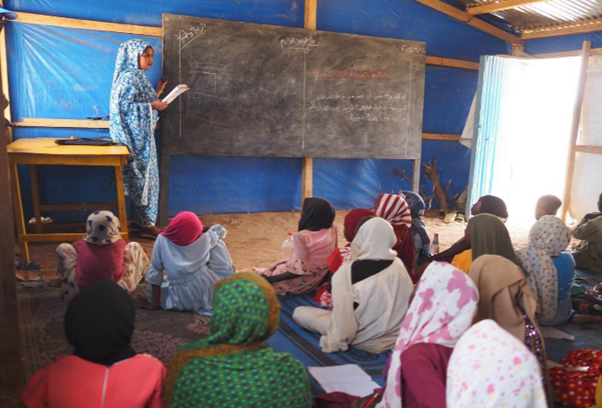
Tadmoun Primary School, Farchana refugee camp, hosts over 1,300 Sudanese refugee students. © UNHCR/Ying Hu
Specifically:
Recognition and accreditation: Link refugee teachers’ prior qualifications and teaching experience to national education systems by developing equivalency frameworks aligned with national professional standards. Work with ministries of education to ensure that certification and teacher registration processes are inclusive of refugee teachers and allow for assessment of their expertise against national benchmarks.
Professional pathways: Strengthen inclusive career development frameworks that enable refugee teachers to move into national teaching positions, including opportunities for advancement, mentorship, and leadership. Ensure refugee teachers can access national professional growth and peer learning opportunities while addressing specific barriers they may face due to displacement, legal status, or financial constraints.
Fair remuneration and sustainable financing: Ensure timely and adequate pay that reflects teachers’ roles and responsibilities. Develop sustainable financing approaches—through government and donor collaboration—to stabilize teacher compensation and workforce planning.
Strengthened workforce management and data systems: Invest in teacher management and data systems to enable evidence-based planning and coordination. Ensure refugee teachers are counted, monitored, and included in national education workforce strategies.
The way forward also requires partnerships. No single actor can address these systemic challenges alone. Collaborating with organizations such as the Education Above All (EAA) Foundation with support from Qatar Fund for Development (QFFD) allows us to combine resources, advocacy, and technical expertise to advance our shared goals of ensuring every refugee child learns with the guidance of a qualified teacher. Through such partnerships, we are not only mobilizing funding but also strengthening global commitments to prioritize teachers at the heart of education systems. At the same time, research collaborations are critical. UNHCR’s partnership with Jigsaw, funded by GPE’s Knowledge and Innovation Exchange (KIX), Scaling Refugee Teacher Inclusion Models for Agency and Well-being, is expanding the evidence base on refugee teachers’ agency and well-being. By documenting their voices, experiences, and resilience, we aim to ensure that policy solutions are grounded in the realities of those on the frontlines of refugee education.
Investing in refugee teachers is not only a matter of fairness, but also a prerequisite for delivering on the promise of inclusive, equitable, and quality education for displaced children and youth. Policymakers, donors, and education actors must move beyond rhetoric and take coordinated action. By prioritizing recognition, professional pathways, and fair remuneration, we can create stronger education systems that benefit both refugees and host community learners. As children in many countries head back to school, we must ensure refugee learners are not left behind. With qualified and motivated teachers to guide them, these children can realize their full potential not only as students, but as the future peacemakers and global citizens our world so urgently needs.
Special thanks to Anoushka Brun, UNHCR Basic Education Intern, for their research and drafting support on writing this blog.