
From Principles to Practice
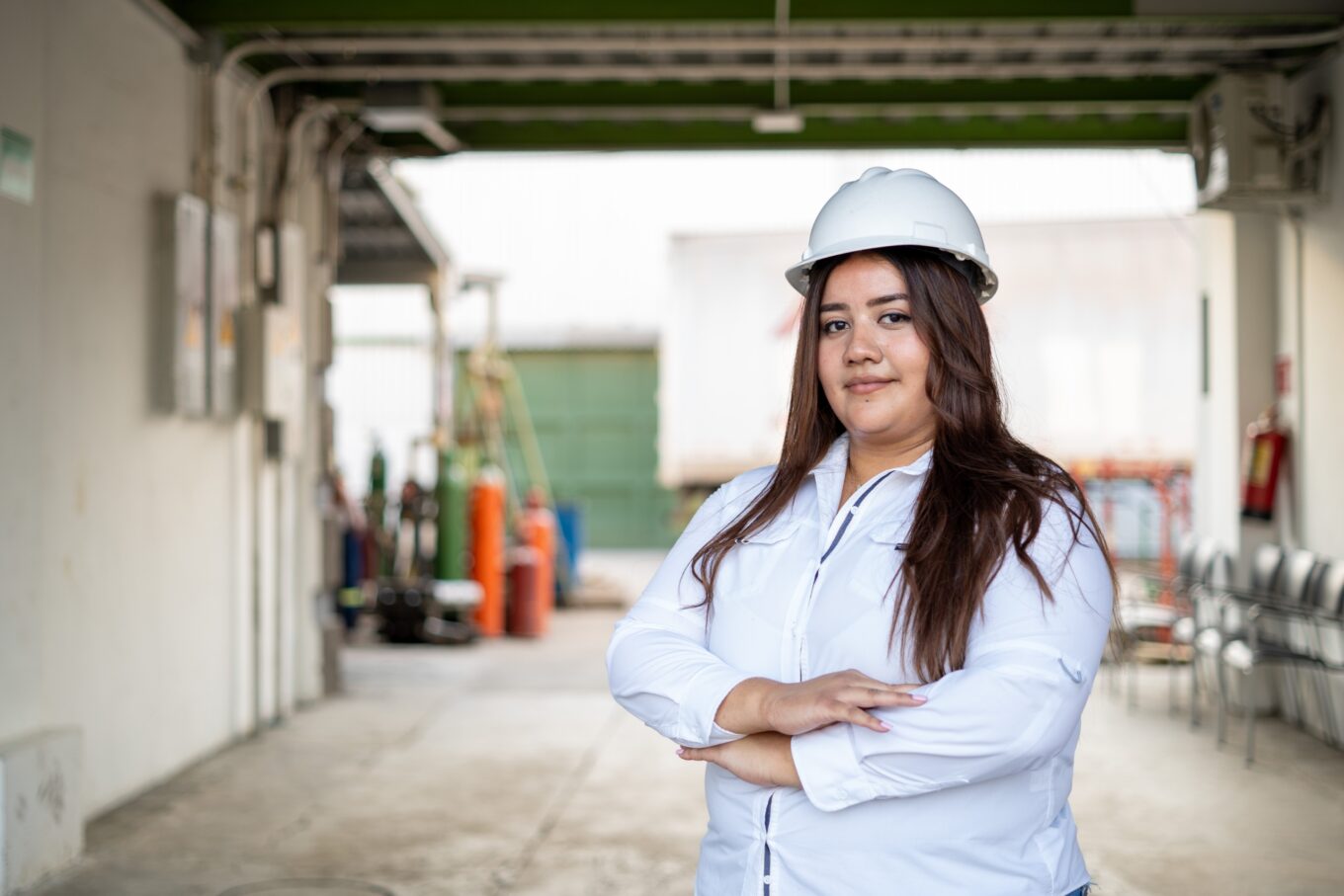
Amelia joined a Salvadoran metallurgical company through UNHCR’s “My First Job” programme, where she gained her first professional experience and was hired at the end. Three years later, she has grown within the company and now works as a Real Estate Project Engineer. ©UNHCR
Worldwide, more than 36.4 million refugees had to flee their homes due to persecution, violence, and conflict, seeking safety in a new country. Despite their challenging circumstances, they bring skills, resilience, and ambition to their host communities. Yet still too many remain excluded from formal labour markets, and even when employed, often face stigma and poor working conditions.
The 2025 UNHCR Global Compact on Refugees Indicator Report indicates that around 62% of refugees live in countries where they have the legal right to work, but emphasizes that significant practical barriers remain. Complex administrative procedures, limited recognition of qualifications, restrictions on movement, and discrimination continue to limit access to formal employment. In addition, the absence of recognized qualifications hinders opportunities for career advancement, leaving skills underutilized and workers in low-paying roles. These challenges also affect businesses seeking to employ refugees, as they often lack guidance and information on how to navigate the system and an understanding of the rights and protections applicable to refugee workers.
As a result, many refugees rely on informal work, which often means limited job security, a lack of social protection, and exposure to unsafe working conditions. Language barriers, digital and financial exclusion, insufficient training, and discrimination can increase workplace risks. Addressing these gaps and driving progress benefits all stakeholders, including governments, businesses, and refugees and their families.
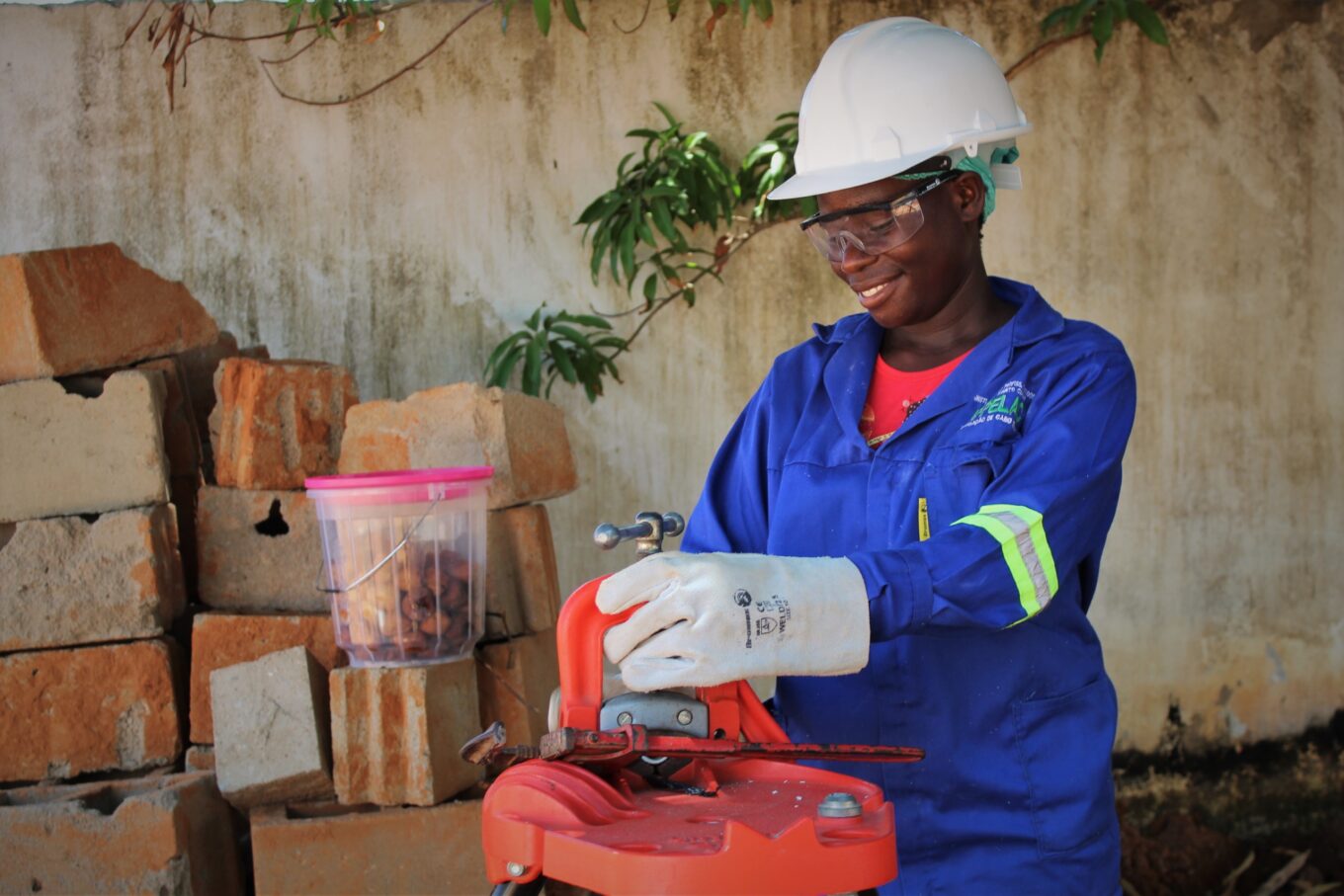
A UNHCR partner is providing technical and vocational training, life skills, and apprenticeship opportunities to 225 displaced and host community youth in Pemba, strengthening livelihoods, social cohesion, and women’s empowerment. ©UNHCR
Why should businesses care?
Globally, many labour markets are experiencing shortages for skilled workers. Refugees can help bridge these gaps, bringing valuable skills, diverse perspectives, adaptability, and experience that strengthen innovation and competitiveness. Hiring and investing in refugees is not philanthropy but a strategic business decision. For example, research by the Tent Partnership for Refugees has shown that hiring refugees can positively impact sales, foster greater employee engagement, and improve employee retention rates.
“We know that most refugees want to work, contribute, and build a new life. We’ve seen first-hand the value that people with refugee backgrounds bring – their experience, their energy and their ideas. We also know that employment is essential to integration, it’s a door opener really, socially, administratively, economically. But we don’t just want to provide any opportunities, it’s about providing good opportunities. This is why taking guidance on how to provide decent work for refugees is so important.”
Lilian Meyer, Human Rights & Social Impact Leader, Ingka Group IKEA
What does decent work for refugees look like?
Decent work means more than just a job. It’s about dignity, independence, and opportunity. For refugees, it is the foundation for rebuilding lives and achieving self-reliance. For companies, it’s about maximizing the potential of their refugee employees, embedding ethical business practices into their operations, and reducing supply chain risks.
“Decent work for refugees involves more than overcoming barriers. It means jobs that match their qualifications, skills, and aspirations, in conditions of freedom, equity, security, and dignity. It also includes equal treatment, freedom from discrimination, a safe and healthy work environment, access to social protection, and pathways for growth and durable solutions. To achieve this, there must be mechanisms in place for refugees to express their views, organize, and participate meaningfully in decision-making.”
Héloïse Ruaudel, Senior Technical Specialist on Crisis Migration, International Labour Organization
In November 2025, UNHCR teamed up with the Ingka Group I IKEA and the ILO on the sidelines of the annual United Nations Business and Human Rights Forum to explore concrete ways to advance decent work for refugees. With more than 40 representatives from business, academia, NGOs, and social partners, we mapped key risks for refugees and identified practical actions businesses can take to promote decent work opportunities.
Here are some of the main takeaways:
- Integrate a refugee lens in fair recruitment strategies: Eliminate worker-paid recruitment fees and related costs, provide transparent contracts that workers can understand, and ensure equal opportunity for all candidates, including refugees.
- Invest in occupational safety and health for refugees: Offer multilingual training and guidance, and ensure they have appropriate protective equipment to stay safe on the job.
- Link refugee employees to social protection: Provide formal contracts and access to health coverage to reduce vulnerability and promote inclusion in social protection systems.
- Enable refugee voices and representation: Respect the right to freedom of association and collective bargaining. Establish anonymous grievance channels and enforce non-retaliation policies to give refugees a voice in the workplace.
- Support the formal recognition of skills and qualifications: Partner with organizations to validate qualifications and offer language training, enabling refugees to fully contribute their talents.
Taking these steps should be seen as a strategic business investment in people and performance. When refugees thrive at work, businesses gain talented employees, boost their reputational value, and improve their environmental, social and governance (ESG) targets, while local economies benefit from refugee inclusion and innovation. Access the key takeaways from the workshop.
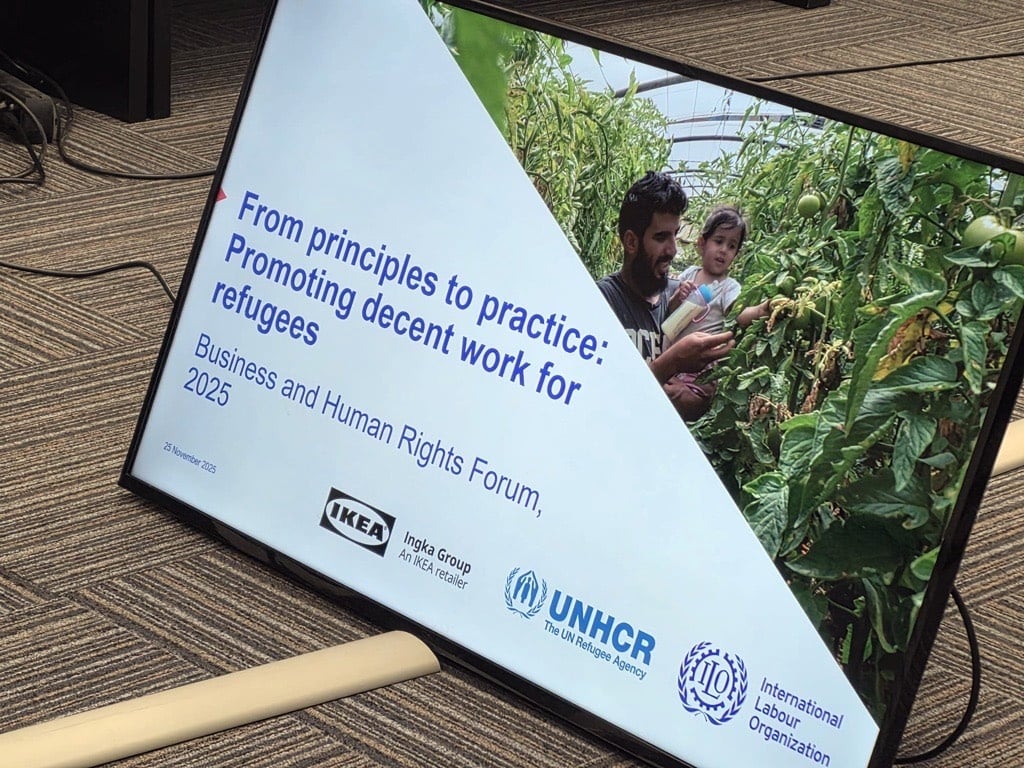
Workshop on Decent Work for Refugees co-hosted by UNHCR, ILO and Ingka Group I IKEA on 24 November 2025. ©UNHCR/Sandrine Flavier
What’s next?
Our collaboration to advance decent work for refugees continues as a shared journey. We aim to:
- Showcase good practices and success stories from companies employing refugees, including the services they provide to support all staff.
- Highlight government initiatives that create incentives for formal refugee employment and decent work.
- Share evidence on the benefits of formal employment for refugees, demonstrating its positive impact on businesses and economies.
- Guide companies on recruiting refugees in line with fair recruitment principles and human rights due diligence.
- Continue to create space for peer-to-peer exchange and information sharing among companies, partners, and stakeholders.
Together with the private sector we can scale what works, close knowledge gaps, and make decent work for all a reality. Decent work for refugees is good for business, good for society, and essential for human dignity.
Together we can lead the way!
Additional resources
- Helpdesk for business on international labour standards | International Labour Organization
- Skills for Employment – Let’s stand with refugees | Ingka Group
For more information, contact:
Ricarda Pinto, Corporate Partnerships Officer, UNHCR
Nada Omeira, Livelihood and Economic Inclusion Officer, UNHCR
Lilian Meyer, Human Rights & Social Impact Leader, Ingka Group I IKEA
Héloïse Ruaudel, Senior Technical Specialist on Crisis Migration, International Labour Organization