
By Andrej Kveder, Senior Statistics and Data Analysis Officer, UNHCR Global Data Service & Felix Schmieding, Senior Statistician, World Bank – UNHCR Joint Data Center on Forced Displacement
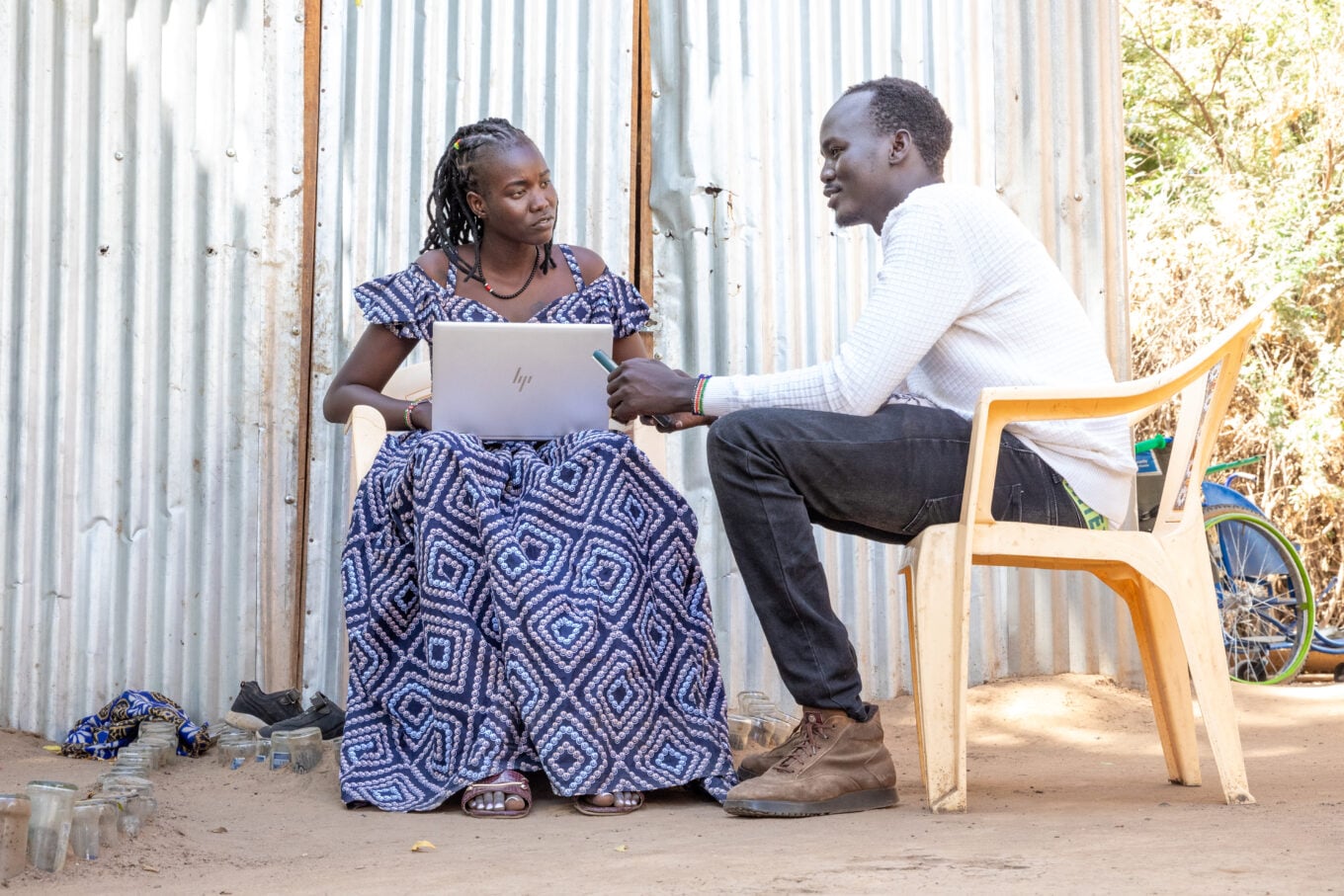
© UNHCR/Charity Nzomo
The United Nations Statistical Commission has adopted the revised Handbook of Surveys on Households and Individuals at its fifty-seventh session in New York.
For the first time in its six-decade history, the Handbook includes a dedicated chapter on surveying forcibly displaced people. This milestone builds on the growing international consensus on how to measure forced displacement, including the statistical recommendations developed by the Expert Group on Refugee, Internally Displaced Persons and Statelessness Statistics (EGRISS), which established internationally endorsed standards for producing comparable and policy-relevant data on forcibly displaced populations.
The addition of Chapter 16 is more than a technical revision. National household surveys shape how poverty is measured, how labour markets are assessed, and how access to education, health, and social protection is monitored. When refugees and internally displaced people are not included in these systems, they are absent from the evidence that informs national policies, public budgets, and long-term planning.
From parallel systems to inclusion
Displaced populations have often been surveyed separately from national populations, through stand-alone exercises. When grounded in international standards and designed for comparability, such surveys can generate high-quality, policy-relevant evidence and play a critical role — particularly in contexts where inclusion in national systems has not yet happened or where barriers to policy implementation exist. Stand-alone surveys can also serve as a bridge to inclusion, demonstrating the value of actionable evidence while strengthening national capacity to produce data on forcibly displaced populations.
Challenges, however, arise when tools are not harmonized, limiting comparability and making it harder to integrate findings on forcibly displaced populations into national development frameworks or assess outcomes alongside host communities.
The revised Handbook responds to these challenges.
Chapter 16 provides practical guidance on how to include forcibly displaced people in national household surveys, as well as on how to conduct stand-alone surveys of refugees and internally displaced people that are comparable to national surveys of the non-displaced population. It outlines approaches for identification, sampling, questionnaire design, and ethical considerations.
By embedding this guidance in one of the world’s most widely used references on household surveys, the Statistical Commission has signalled that inclusion of displaced populations is becoming part of standard statistical practice — a ‘new normal’.
Why inclusion matters now
Displacement is at record levels — over 117 million people were forcibly displaced worldwide at the end of June 2025, according to UNHCR. Many situations are protracted, affecting both displaced and host communities for years or even decades. At the same time, aid budgets and public systems are under pressure.
In this context, reliable and comparable socioeconomic data are essential. Governments need evidence to assess service capacity, identify gaps, and plan effectively across sectors. When refugees and internally displaced people are included in national surveys, they appear in official poverty rates, employment statistics, and education outcomes. Their circumstances become visible in national planning and budget processes, helping align humanitarian responses with broader development strategies.
Strengthening national systems
Improving displacement data increasingly means reinforcing national systems rather than creating separate ones. Support for statistical inclusion has expanded across multiple countries, with repeat inclusion in some contexts and sustained data collection on displaced people in others, reflecting national ownership. In several settings, data and analysis have informed humanitarian and development operations.
Malawi’s 2024 Demographic and Health Survey included a dedicated sampling of refugees residing in Dzaleka camp. Bangladesh’s 2025 Multiple Indicator Cluster Survey (MICS) is, for the first time, including Rohingya refugees; generating high-quality, nationally comparable data on their socioeconomic conditions. Honduras’ Encuesta Permanente de Hogares de Propósitos Múltiples (EPHPM), a quarterly cross-sectional national household survey, has been strengthened to generate up-to-date, nationally representative data on the socioeconomic conditions of internally displaced people.
These experiences reflect a broader shift: displacement is increasingly measured through the same national systems used to understand the wider population.
In some contexts, this evidence has informed policy and planning decisions. In Ethiopia, data contributed to refugee right-to-work reforms and broader economic inclusion measures. In Ecuador and Colombia, strengthened evidence supported government planning and informed development financing for inclusive programmes.
Complementing inclusion – UNHCR’s Forced Displacement Survey
A complementary pillar of this effort is UNHCR’s Forced Displacement Survey (FDS). While distinct from direct inclusion in national household surveys, the FDS is designed to align with international statistical standards and produce nationally representative and comparable data on forcibly displaced people and host communities.
In contexts where integration into national systems is not yet feasible, or where more detailed data are required, the FDS helps address critical evidence gaps. An FDS was implemented in Cameroon in 2024 in close collaboration with the National Institute of Statistics of Cameroon, to integrate critical evidence on the forcibly displaced hosted in the country into the National Statistical System. Jointly implemented by UNHCR and the Government of Cameroon, the survey marks an important step towards advancing the statistical inclusion of forcibly displaced people into national data systems. The Zambia FDS 2025, the fourth implementation of UNHCR’s flagship survey programme, generated nationally representative data on refugees, former refugees, and host communities. Embedded in Zambia’s National Statistical System, the survey is informing national strategies and government planning processes, particularly the 9th National Development Plan. When aligned with national methodologies, these efforts strengthen the evidence base for inclusion and reinforce the broader direction set out in the revised Handbook.
From standards to sustainable solutions
The revised UN Handbook is designed as a living document, designed to incorporate emerging research and country experience over time. Its adoption marks an important step toward making the systematic inclusion of forcibly displaced people in national data production standard practice.
As more countries integrate displaced populations into their survey systems, the evidence base for sustained responses and greater self-reliance continues to expand. Stronger data systems increase the visibility of forcibly displaced people in national and international statistics—including for reporting on the Sustainable Development Goals and the Global Compact on Refugees—while supporting more coherent planning and, over time, more durable solutions for both displaced and host communities.