
UNHCR, United Nations Environment Programme Finance Initiative (UNEP-FI) and the Principles for Responsible Investment (PRI) came together on November 26 during this year’s UN Forum on Business and Human Rights for a joint side event focused on strengthening responsible finance practices. Hosted at UNHCR premises, the session brought financial institutions and sustainability practitioners into dialogue on two interconnected priorities: meaningful stakeholder engagement, and inclusive financial systems that serve forcibly displaced people.
How financial institutions can engage meaningfully: insights from UNEP-FI and PRI
UNEP-FI and PRI opened the discussion by outlining how, consistent with the UN Guiding Principles for Business and Human Rights (UNGPs), meaningful engagement with potentially affected groups and other relevant stakeholders should inform all aspects of an FI’s approach to human rights – from the development of human rights policies, to undertaking human rights due diligence and ensuring access to remedy.
Speakers from financial institutions and the Tallgrass Institute, an organization connecting Indigenous Peoples’ perspectives, solutions, and leadership with investors and the private sector, outlined principles for stakeholder engagement and key entry points for financial institutions to consider with respect to engaging with stakeholders, including affected stakeholders, and with an emphasis on Indigenous Peoples.
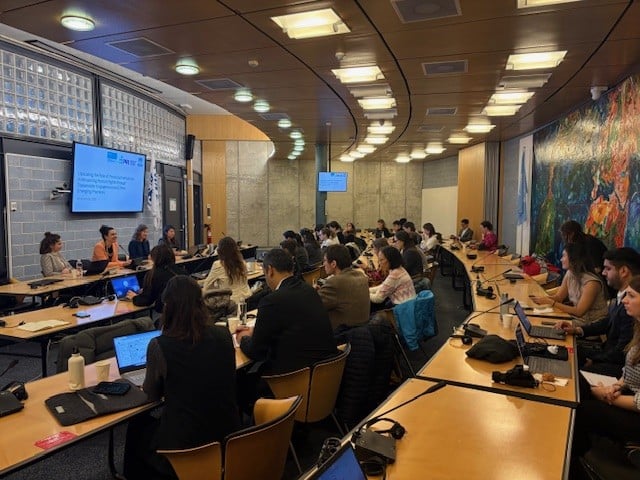
UNEP-FI and PRI opening the event. Credit: Micol Pistelli, UNHCR.
Building on these practical examples and perspectives, participants reflected on the opportunities and challenges, current gaps and key considerations to enable safe and meaningful engagement.
UNHCR: Bringing refugees into the responsible finance conversation
UNHCR expanded the discussion by reminding participants of a critical — yet often overlooked — stakeholder group: refugees and other forcibly displaced people. Drawing on field evidence, UNHCR emphasized that access to financial services is essential for rebuilding FDPs’ lives, achieving self-reliance, and closing existing gaps, and underlined the important role that financial institutions can play in this effort.
UNHCR underscored that financial needs shift across the different stages of displacement and stressed the importance of recognizing the diversity within FDPs through effective market segmentation. The agency also shared examples of good practices in the sector, highlighting portfolio quality data of refugees from Kiva and the UNHCR–Sida and Grameen Crédit Agricole Foundation programme in Uganda, which blends concessional and commercial capital to expand access to responsible financial services for refugees and host communities.
Bridging humanitarian and sustainable finance worlds
Today, UNEP-FI brings together more than 345 signatory banks under the Principles for Responsible Banking, and the PRI counts thousands of signatories worldwide — from asset managers to institutional investors. Together, these signatories are taking action and making progress toward global and local sustainability goals, including advancing more inclusive approaches.
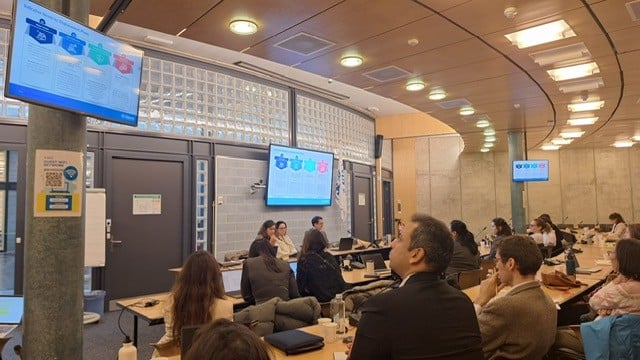
UNHCR presenting its agenda on financial inclusion. Credit: Joana Afonso, UNHCR
The event affirmed the growing convergence between sustainability-focused financial institutions and humanitarian actors. In particular, meaningful engagement with rights-holders in conflict-affected and high-risk areas – whether indigenous people or people forced to flee – emerged as a critical issue that financial institutions must address. UNHCR and UNEP-FI will continue engaging with the financial community to foster more inclusive approaches.
UNHCR and UNEP-FI look forward to building on this momentum and exploring opportunities for continued collaboration.
By Micol Pistelli (UNHCR), Magdalena Garcia (UNEP-FI) and Joana Pedro (UNEP-FI).