
Lessons from the Instant Network Schools evaluation
By Seun Adebayo, UNHCR Pedagogical and Digital Inclusion Officer
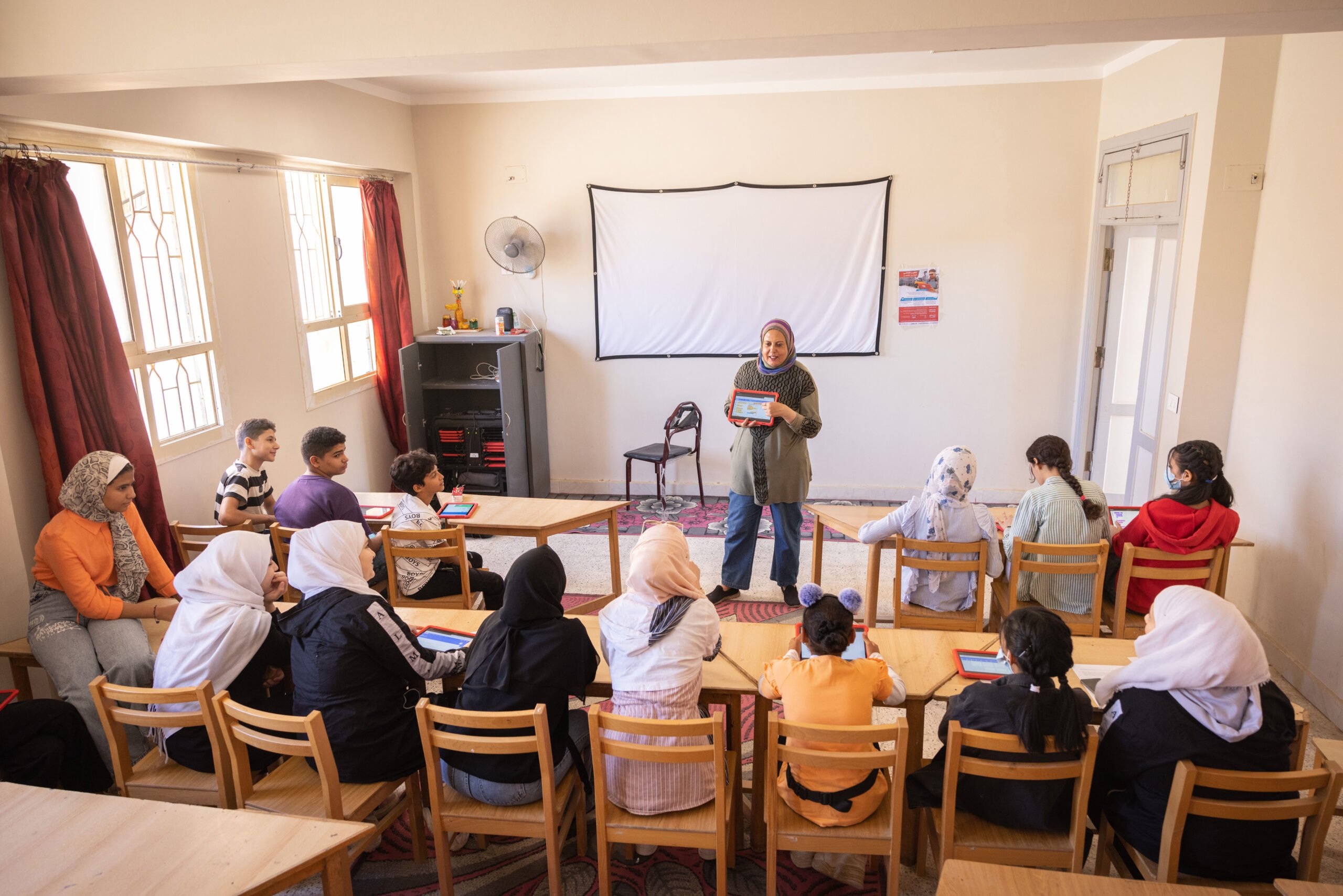
Learners from Syria and Yemen attend an Instant Network Schools class in Cairo, Egypt. © UNHCR/Pedro Costa Gomes
In 2024, UNHCR, the UN Refugee Agency, and Vodafone Foundation’s Instant Network Schools programme launched a Life Skills course to support students learning. A recent evaluation of this course reinforces a fundamental truth in education: life skills do not develop in isolation. They emerge and are sustained through strong, structured, and inclusive education systems that provide continuity, trusted learning environments, and skilled teacher facilitation. Life skills refer to the social, emotional, cognitive, and interpersonal competencies that support learners to navigate everyday challenges, build positive relationships, and make informed decisions (WHO, 1997; UNICEF, 2019). Actively building these skills is essential, especially for people forced to flee, because they support academic achievement, well-being, and resilience, which are critical for refugee and forcibly displaced learners who must adapt to new, complex and often challenging environments (UNICEF, 2019; OECD, 2021).
UNHCR, Vodafone Foundation, and Digital Awareness UK, came together to develop and launch the Life Skills course which shows measurable gains in how learners understand and apply competencies such as empathy, creativity, problem-solving, participation, and negotiation. However, the evaluation’s most important insight extends beyond programme performance. It highlights that these gains were possible largely because the Life Skills intervention operated within functioning school systems, supported by trained teachers and structured learning environments.
As global humanitarian funding pressures increasingly threaten education services for displaced learners, the evaluation offers a timely reminder: life skills interventions are most effective when delivered within, and supporting the impact of, stable and well-supported education systems.
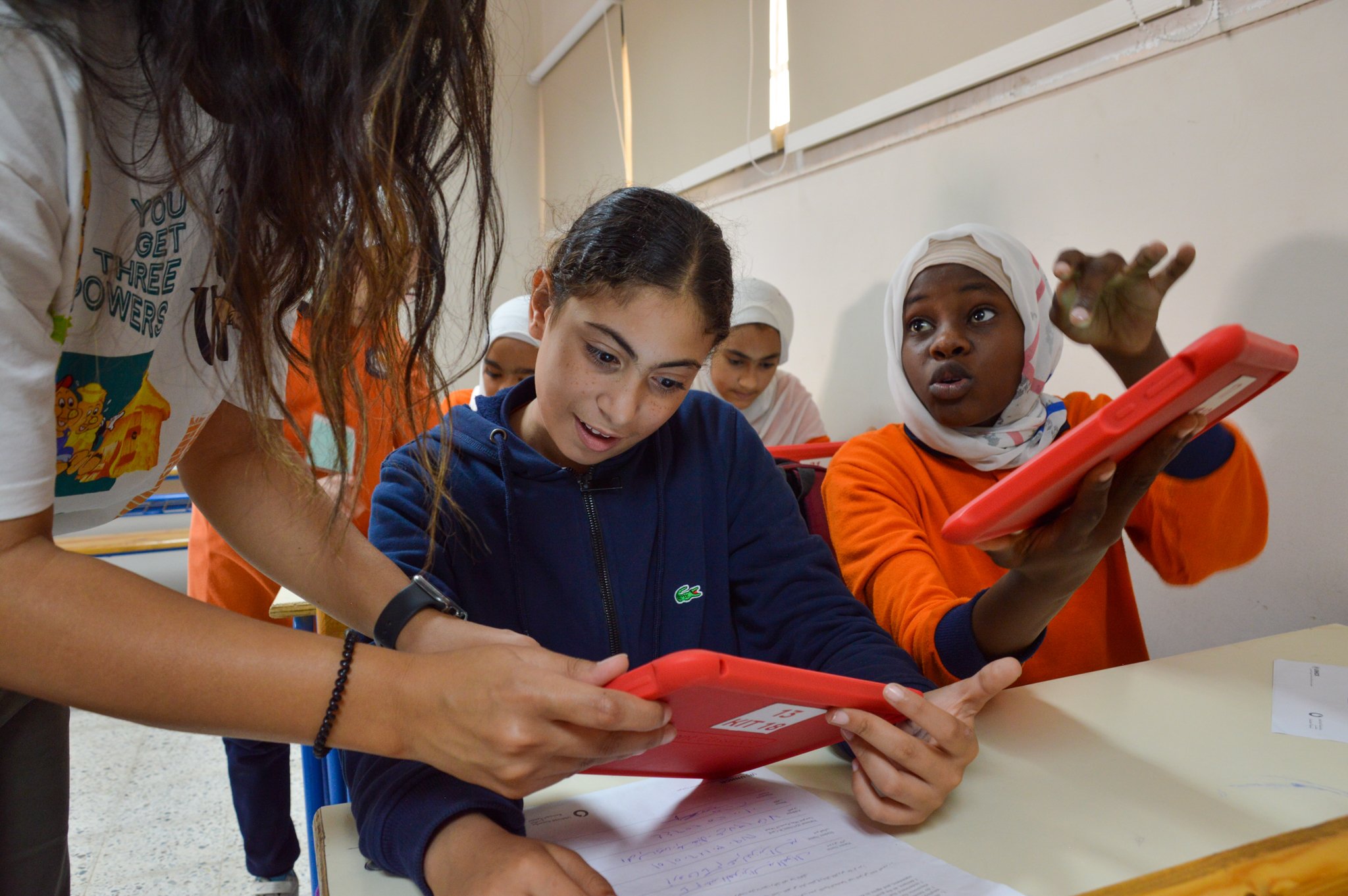
Learners at an Instant Network Schools class in Cairo, Egypt. © UNHCR/Lamis Soliman
Education systems as the enabling environment for life skills development
The INS Life Skills evaluation goes beyond numbers to measure what learners actually understand and can apply in real life. Using matched pre–post surveys and scenario-based questions, the study finds that the largest gains appear in competencies where learners can practise in realistic contexts. Improvements are particularly notable in applied creativity, empathy, participation, negotiation understanding, and resilience knowledge. Teachers also noticed positive shifts in learners’ confidence, emotional awareness, and peer interaction. This pattern aligns with established learning science and education research showing that competencies grow through participatory practice facilitated by educators, not simply through content exposure. Durlak, Weissberg, Dymnicki, Taylor, and Schellinger’s (2011) widely cited meta-analysis of school-based social and emotional learning (SEL) programmes found that outcomes are significantly stronger when skills instruction is integrated into regular classroom activity and actively supported by teachers. The findings on the INS Life Skills course reinforce that formal education systems provide the architecture through which life skills can be consistently practised, contextualised, and sustained.
Engagement thrives when rooted in classroom structures
The INS programme provides structured teacher training that focuses on both pedagogy and the effective integration of technology in the classroom. This professional development is reflected in the positive self-evaluation feedback from both learners and teachers regarding engagement on the life skills elements. Learner feedback shows strong engagement outcomes, with 97% of learners reporting that they found the course materials engaging. Animated videos and interactive quizzes were consistently rated as the most engaging elements, while 94% of learners reported that the Life Skills characters helped their understanding “a lot.” Importantly, engagement translated into perceived real-world relevance, with 95% of learners reporting that they are likely to apply the skills in the coming year and 98% stating that the skills have already helped them in a real-life situation. Most learners found the materials engaging, appreciated interactive videos, and expressed confidence in applying the skills in daily life. Teachers also reported that interactive, story-based elements enhanced participation and comprehension.
This aligns with recent global reviews of digital and SEL programming from organizations such as the OECD (2026) underscoring that digital learning tools are most impactful when they are systematically integrated with structured teaching practices, curriculum alignment, and ongoing teacher mediation. Instructional continuity and classroom reinforcement are therefore essential for promoting durable life-skills development.
Teachers as brokers of development
Teacher facilitation stands out as a critical factor in the INS Life Skills findings. While the Life Skills course content is delivered through a tablet, teachers play an integral role in the facilitation of each lesson, guiding students through reflections and classroom discussions. Qualitative reflections show that where teachers created space for dialogue and reflection, learners demonstrated deeper comprehension and more consistent application. Where scaffolding, facilitation depth, or practice opportunities were limited, application was more uneven especially in relational competencies such as cooperation and respect for diversity. This resonates with broader research in refugee education, which identifies teachers as “brokers of belonging” and competency translation, crucial for helping forcibly displaced learners connect abstract skills to lived realities. Studies by Dryden-Peterson (2016, 2022) and others find that teacher practices and school climate are among the strongest predictors of inclusion and persistence for refugee learners. Without strong teacher support, life-skills initiatives risk remaining conceptual rather than transformative.
Funding cuts threaten the foundations that enable skills development
The evaluation’s findings take on increased urgency amid growing humanitarian funding constraints affecting refugee education globally.
UNICEF (2025) analysis warns that steep reductions in international education aid projected to fall by US$3.2 billion in 2026, a 24 percent drop, could leave an estimated six million additional children out of school, with about one-third of them in humanitarian settings. Cuts at the system level will also undermine governments’ capacity to support teacher development, monitor learning outcomes, and maintain quality education services.
UNHCR (2025) reports that in refugee-hosting settings, funding shortages are already forcing closures of schools and educational programmes, leaving millions of children at risk. In eastern Chad, for example, cuts have led to the closure of schools, clinics, and protection services, leaving thousands of displaced children without access to education. If cuts persist, more than 155,000 refugee children could be left without schooling, increasing their vulnerability to exploitation and abuse.
Human Rights Watch (2025) reports that foreign aid cuts in Bangladesh have exacerbated the education crisis for Rohingya children in Cox’s Bazar, forcing learning centres run by aid organizations to close and leaving community-based schools struggling without official recognition or funding. This has heightened barriers to education access and pushed refugee students toward work or unsafe alternatives.
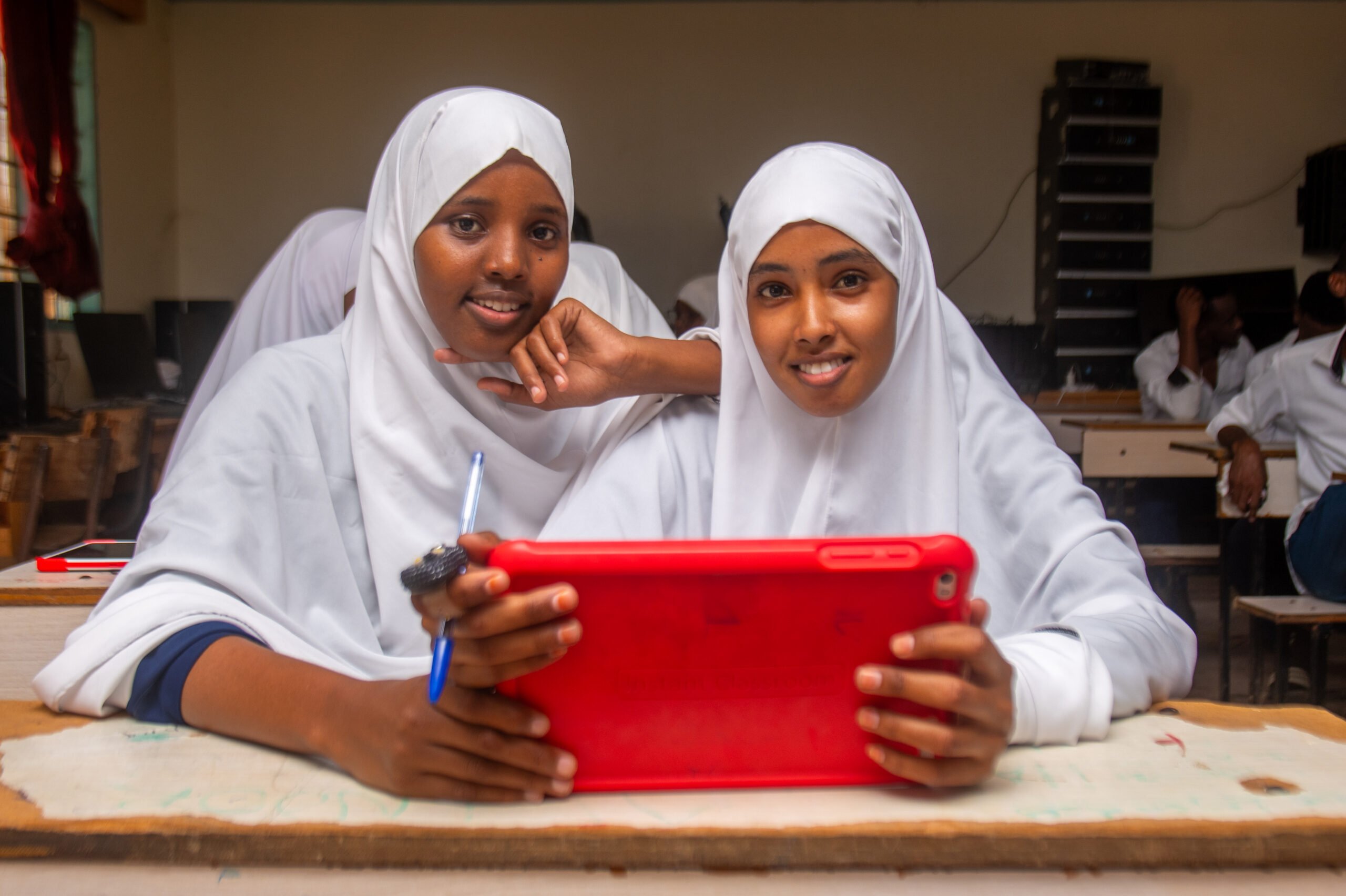
Learners at an Instant Network Schools class in Dadaab, Kenya. © UNHCR/ Mohamed Maalim
What this means for life skills and education systems
Taken together, the INS Life Skills course evaluation and the broader evidence on refugee education and humanitarian funding point to a shared conclusion: life skills are most effectively developed as an outcome of strong education systems rather than through standalone modules. Competencies such as empathy, resilience, cooperation, and reflective decision-making develop most effectively when digital content is anchored in formal school structures, reinforced by trained teachers, and supported by stable environments that prioritize continuity and inclusiveness.
Toward integrated, resilient education systems
The INS Life Skills evaluation highlights key points on where to do more to help refugees and other displaced learners succeed:
- Expand national life-skills modules and approaches to include refugee learners as the first and most sustainable option, ensuring alignment with national curricula, certification pathways, and system-wide teacher support.
- Where national expansion is not yet feasible, anchor complementary life-skills programming within formal school systems as a transitional step that maintains coherence with existing education structures.
- Anchor digital life-skills modules within national curriculum frameworks so they align with classroom priorities and routine instruction.
- Invest in teacher professional development that equips educators with facilitation, reflection, and assessment tools tailored to life-skills competencies.
- Protect and expand funding for formal education services in humanitarian settings, recognizing that sustained education support is a foundational platform for all skills development.
- Strengthen system-level monitoring and evaluation that captures both learning and application, enabling continuous improvement and accountability.
The INS Life Skills programme demonstrates how digital innovation can enrich learning experiences and strengthen real-life competencies among forcibly displaced learners. Yet its strongest highlight is not about technology or content delivery alone. It is showing that life-skills development flourishes when supported by functioning, inclusive, and well-resourced education systems.
At a time when humanitarian funding pressures threaten access to schooling for millions of displaced young people, strengthening education systems is not only an access priority. It is a prerequisite for equipping learners with the abilities they need to adapt and thrive in complex and uncertain futures.
For more information, please contact:
- Seun Adebayo, Pedagogical and Digital Inclusion Officer, UNHCR
- Nadia Asmal, Education Officer, UNHCR