
By Mellissa Lina Mosses and Lamine Kane
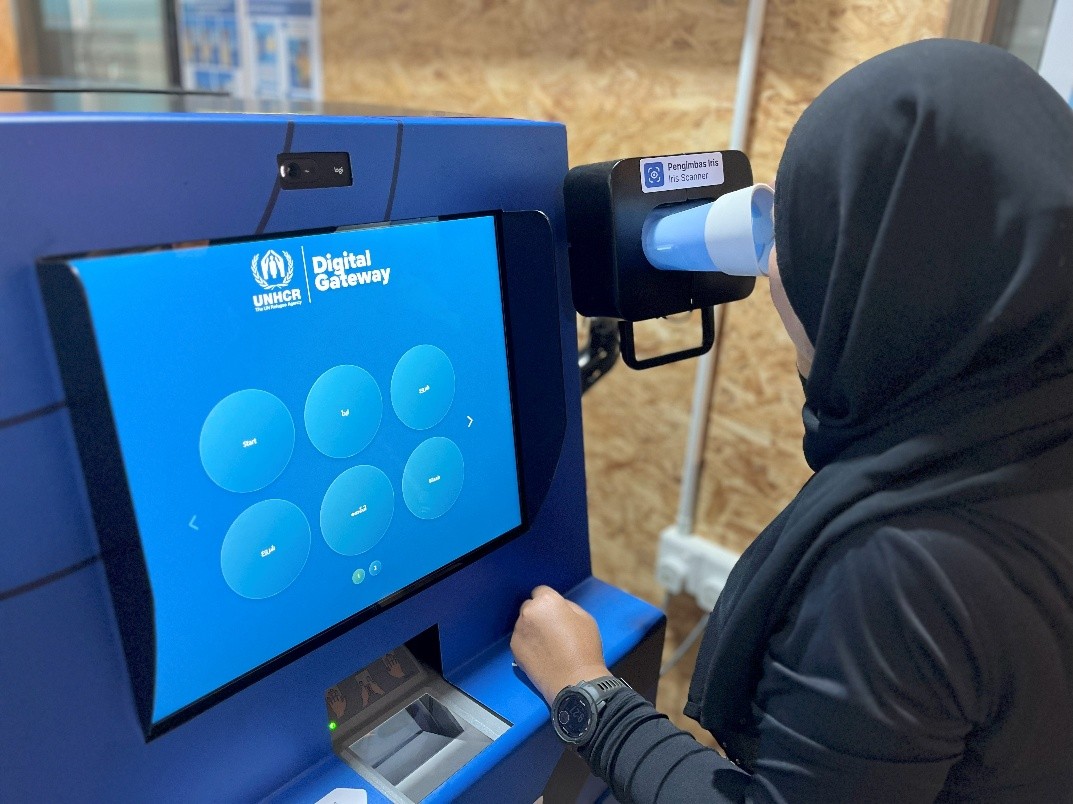
Today, refugees and asylum-seekers in Malaysia can access essential documentation and services more quickly and conveniently, with reduced waiting times and greater flexibility that helps them spend less time away from work, family and daily life. UNHCR Malaysia has taken an important step forward in service delivery — by introducing the Digital Gateway Self-Service Kiosk.
The Digital Gateway is UNHCR’s new global self-service platform that enables forcibly displaced and stateless people to access services and information securely, anytime and anywhere. Through a growing range of digital channels — including My Services web portal, Digital Gateway contact centre and kiosks — the Gateway helps people manage their own information, complete routine requests independently, and receive timely updates, while ensuring strong protection and data security.
Launched at the UNHCR Malaysia office in Kuala Lumpur on 15 September 2025, the Digital Gateway Self-Service kiosk is designed to make key processes faster, easier, and more dignified for asylum-seekers. With just a few taps, users can renew their UNHCR certificate, update their contact details, address, photo, and verify their personal information. These steps are essential to ensure asylum-seekers can be contacted for important updates and continue to receive the services and protection they need.
Today, these essential steps can be finalized within minutes, making documentation and updates faster and more efficient for asylum-seekers.
The benefits extend beyond efficiency. By empowering asylum-seekers to handle routine processes independently, the kiosks free up UNHCR staff to focus on urgent protection needs, counselling, and life-saving support for the most vulnerable. This balance of self-service and dedicated protection ensures that resources are used where they matter most.
Trying out the service for the first time, a user commented, “The use of kiosk is good, easy with less waiting time. The instructions provided are all clear.”
Who Can Use the Kiosk?
The kiosk is available to asylum-seekers registered with UNHCR Malaysia holding an asylum-seeker certificate. To ensure protection and proper use:
- Individuals with a UNHCR certificate which is about to expire within the next three months or had expired in the last 30 days are eligible to use the kiosks.
- Requests for late renewals (more than 30 days past the certificate expiry date) should be handled through in-person interviews.
- Children above the age of 6 must be accompanied by an adult family member or caregiver. Children under the age of 6 are required to undergo in-person renewal process with UNHCR staff as they are not biometrically enrolled [1].
This ensures that the kiosk is used appropriately while safeguarding children and supporting more complex issues directly through UNHCR staff.
Supporting Asylum-seekers Through Digital Guidance
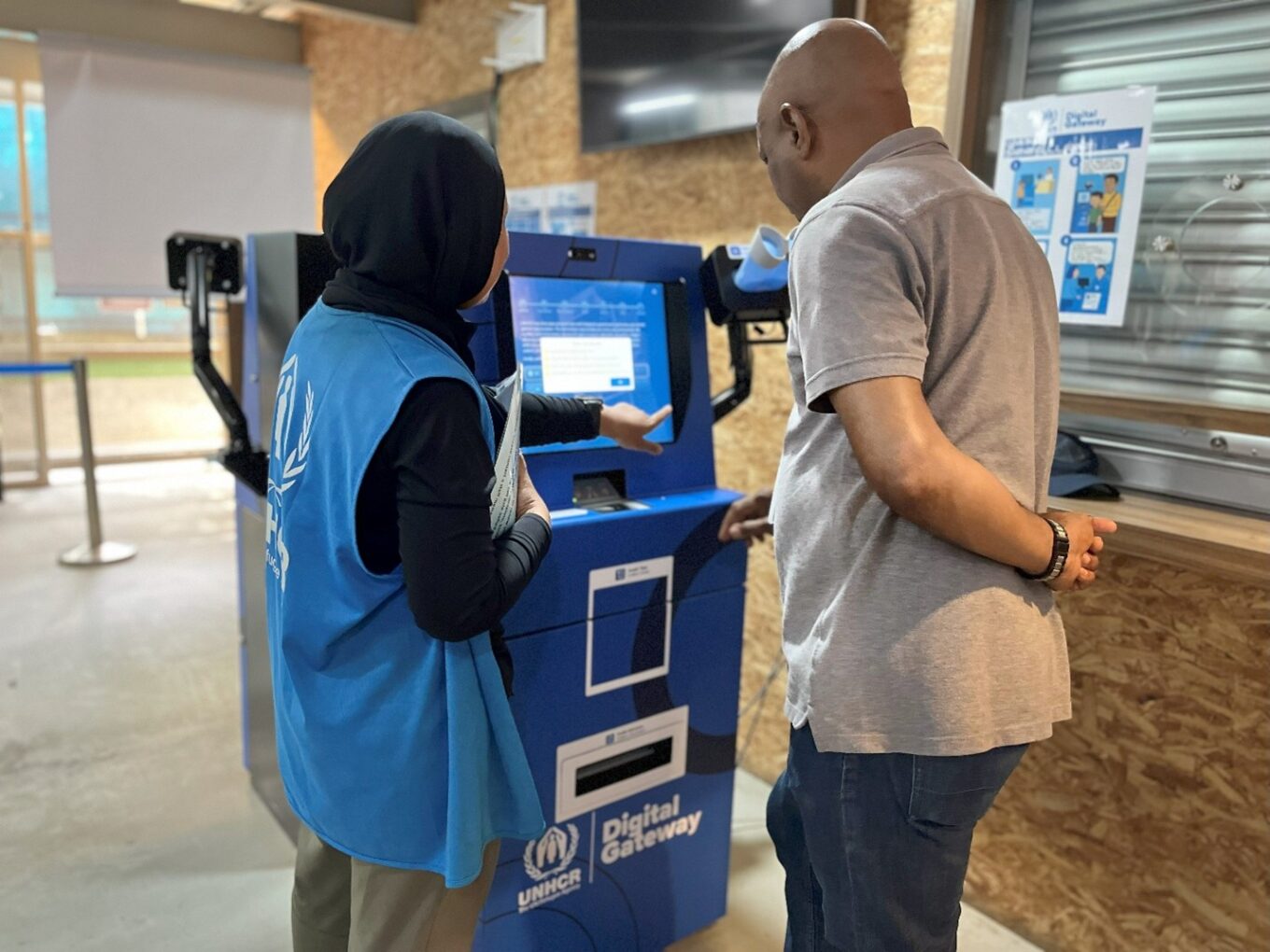
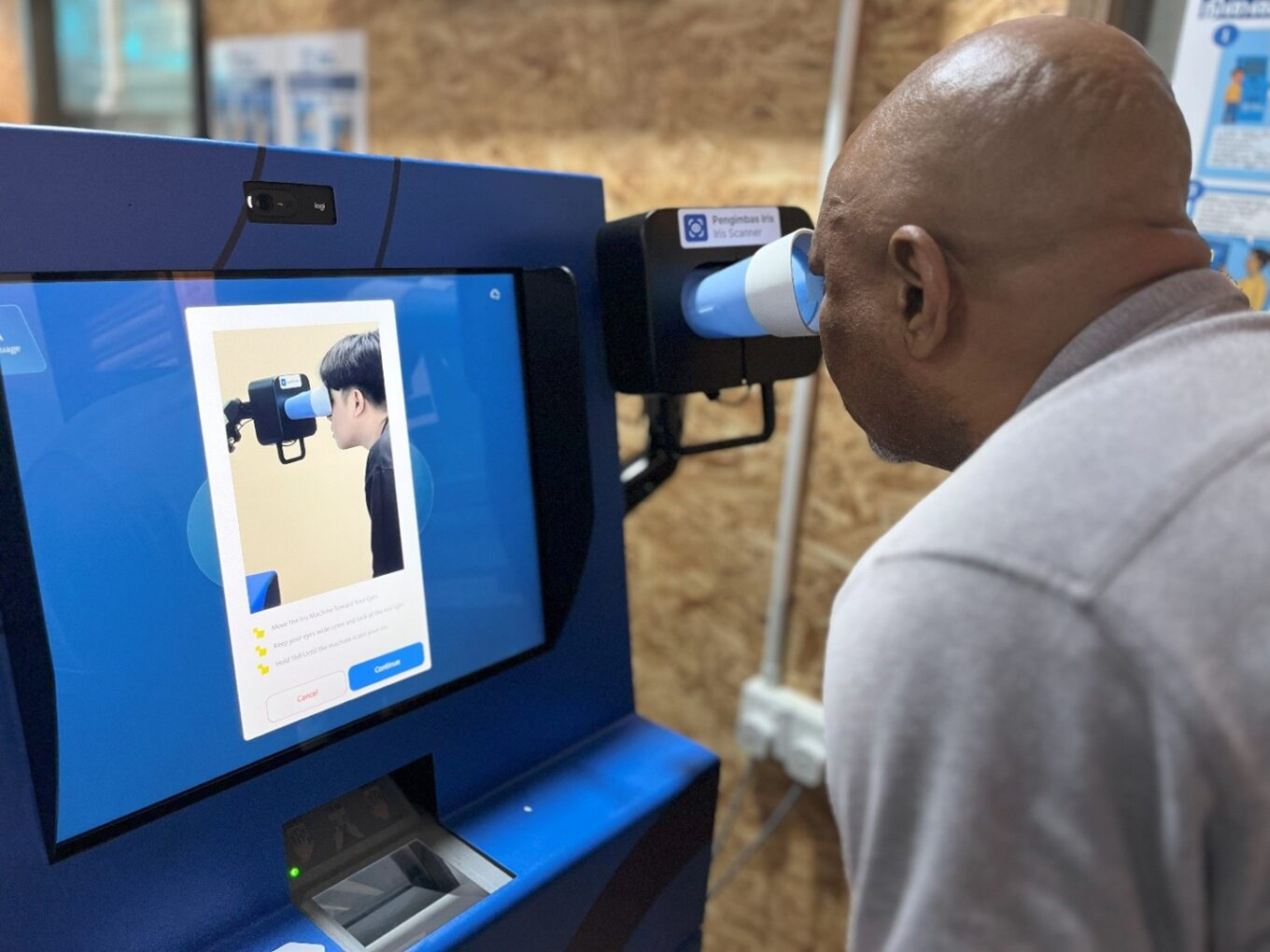
To make the kiosks even easier to use, the Data, Identity Management and Analysis Unit (DIMA) at the Regional Bureau for Asia and the Pacific developed a step-by-step instructional video, walking the kiosk users through each stage of the process. The video is displayed in the Refugee Centre alongside the kiosks ensuring asylum-seekers can approach the machines with confidence and independence. Additionally, some visual illustration posters were also created and displayed inside the UNHCR premise to strengthen user’s understanding and easy usage of the kiosk.
By combining digital tools with clear, accessible guidance, UNHCR reinforces its commitment to inclusivity, ensuring that even first-time users can navigate the kiosks smoothly.
To support Malaysia’s diverse community of forcibly displaced people, including individuals from Pakistan, Somalia, Sri Lanka, and other countries, information is available in multiple languages. . Combined with biometric verification and streamlined workflows, the kiosks embody UNHCR’s move toward smarter, data-driven, and refugee-friendly service delivery.
A Cornerstone of Digital Transformation
The Digital Gateway is not only a service improvement — it is also a cornerstone of UNHCR’s broader Digital Transformation Strategy (2022–2026). Across operations globally, UNHCR is investing in tools that harness technology to make humanitarian services more accessible, transparent, and people centered.
For the asylum-seekers, the Digital Gateway self-service kiosk is more than just a machine — it represents dignity, independence, and a sense of control over their own information.
For UNHCR, it represents a new way of working: faster and smarter, while advancing the global push for digital transformation in humanitarian response. The kiosk in Malaysia magnifies this effort by demonstrating how digital solutions can reduce bottlenecks, empower asylum-seekers, and create a stronger foundation for accountability and trust. Our vision is that every asylum-seeker can access services with efficiency, respect, and trust — powered by innovation that brings humanitarian assistance into the digital age.
[1] Continuous registration in UNHCR Operations – UNHCR – Guidance on Registration and Identity Management