By Lamine Kane and Kritika Shrivastava
Refugees and asylum-seekers in India can now access information and services through UNHCR’s Digital Gateway, a secure self-service platform that brings communication and registration closer to where communities live.
Launched at UNHCR’s Registration Centre in New Delhi on 12 December 2025, the Digital Gateway is available to registered refugees and asylum-seekers aged 18 and above. On the first day, 15 families – 35 refugees and asylum-seekers – came to learn about the new system, with 15 individuals completing verification and creating their My Services accounts.
“This is very helpful,” said one refugee from Yemen after trying the portal for the first time. “It will save us time and money”.
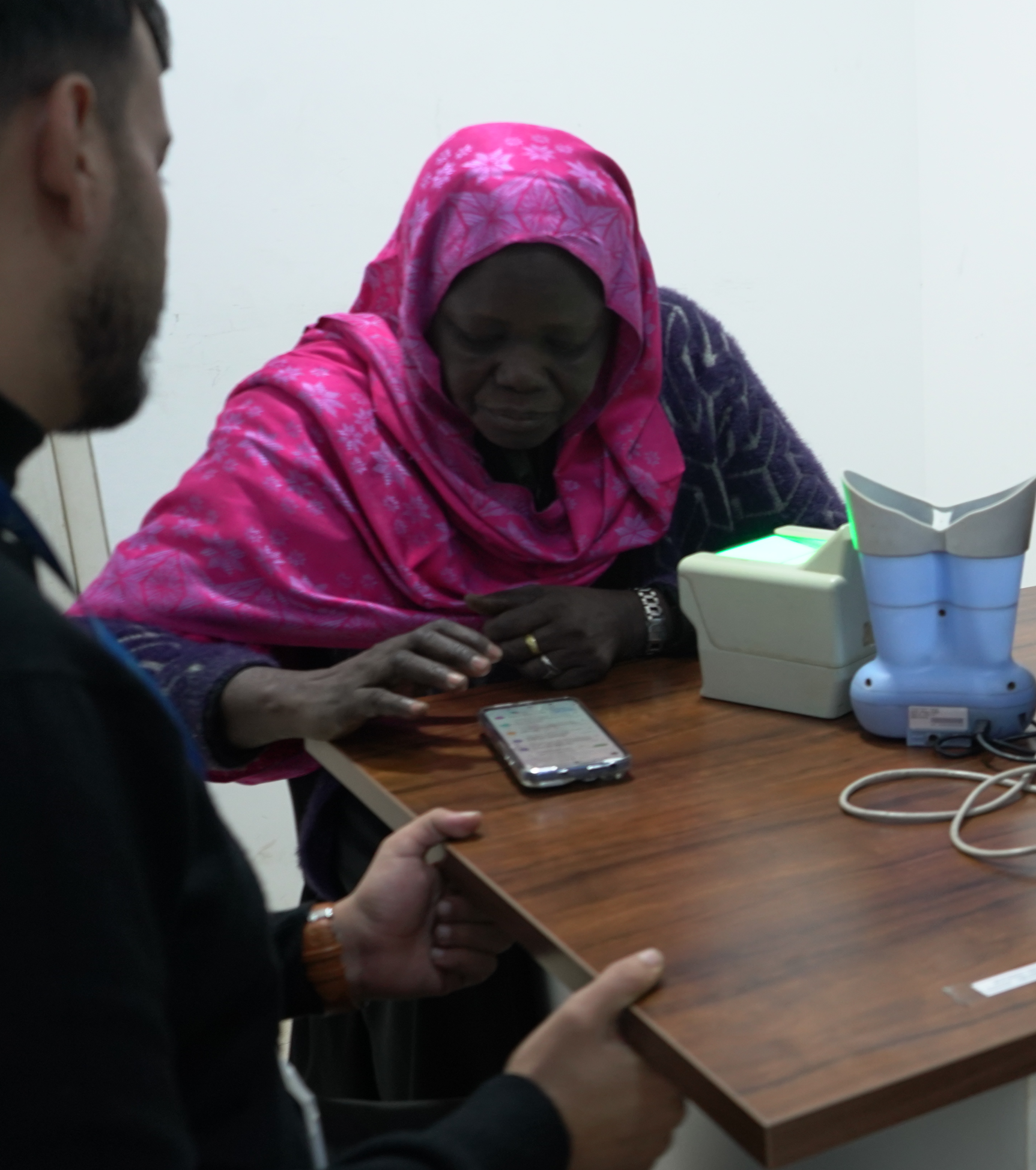
Sudanese refugee creating her My Services account © UNHCR/Paridhi Jain
A single digital doorway
Through a growing range of channels – including the My Services web portal, contact centres and self-service kiosks – UNHCR’s Digital Gateway allows refugees and asylum-seekers to access services and information securely, anytime and from anywhere, while maintaining strong protection and data security.
Several months of preparation, awareness campaigns, configuration and testing preceded the New Delhi launch, including dedicated trainings for UNHCR partners on workflows such as verification, digital invitations and account creation.
In parallel, the UNHCR India Help site was updated to mirror the Digital Gateway experience and design, helping users find information and move smoothly from online guidance to the My Services portal.
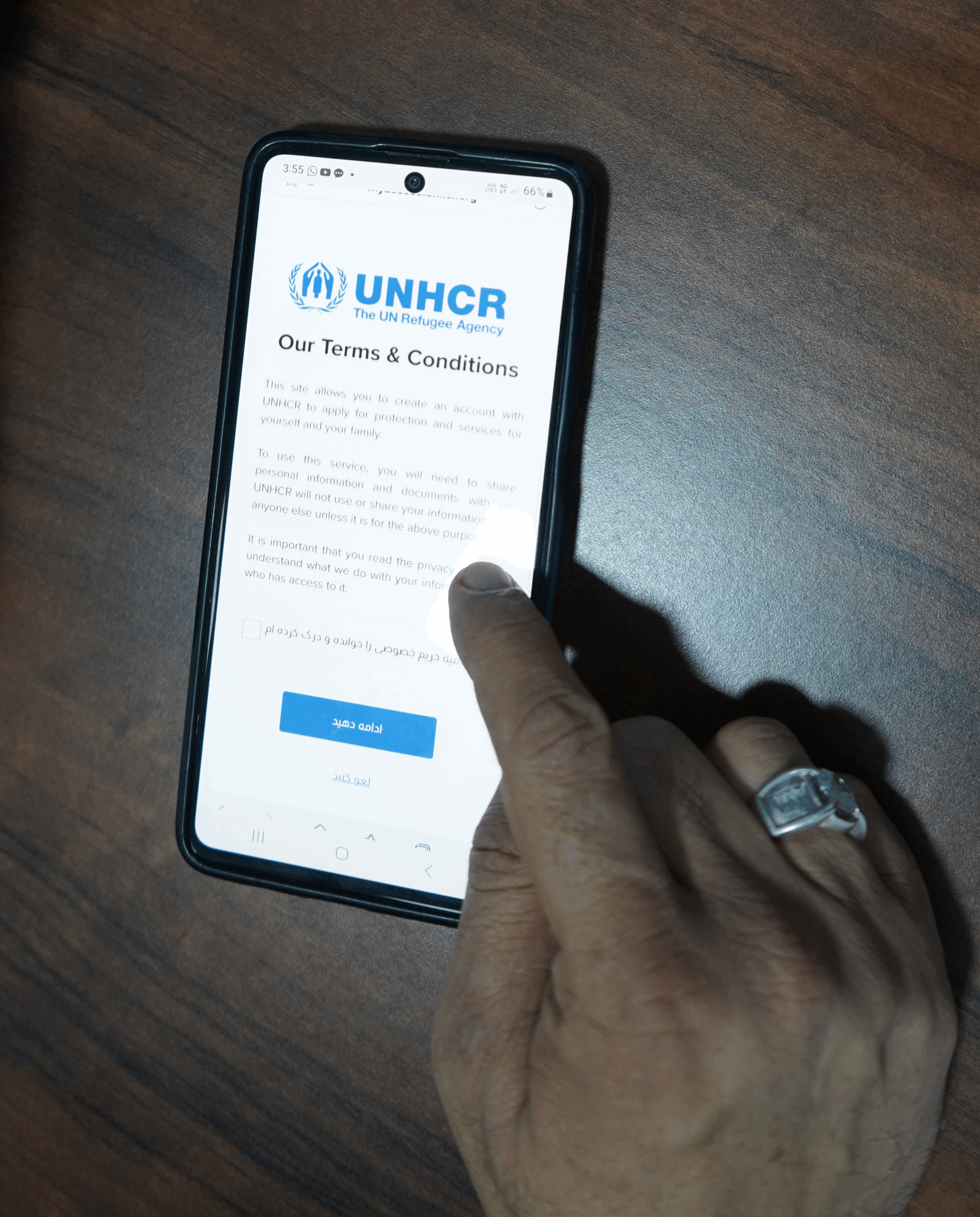
A refugee going through the Terms and Conditions of the My Services Portal before creating their account © UNHCR/Paridhi Jain
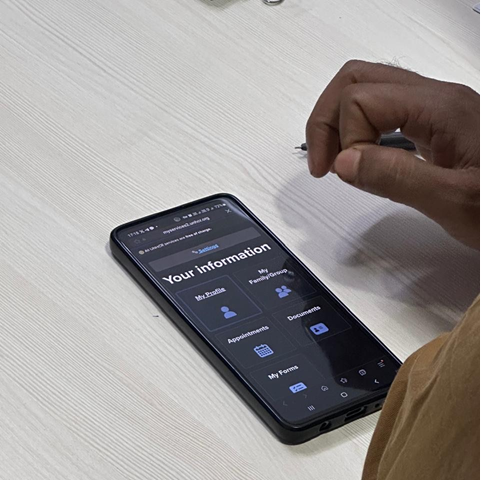
A refugee exploring the home page of the My Services Portal © UNHCR/Gauri Talwar
Bringing refugees’ vital life events closer to Civil Registration and Vital Statistics system
For refugees in India, the lack of access to government-recognized legal documentation can be a serious challenge, limiting their right to employment and public services, as well as ability to register births and deaths.
Home births, delayed reporting, low awareness of the importance of birth and death registration, lack of information about procedures relating to birth and death registration and, hesitation in approaching authorities, all contribute to delayed or missed registration of births and deaths among refugee communities.
When births are not registered, children may grow up without proof of identity, age or country of origin, increasing the risk of marginalization and statelessness. When deaths are not registered, health authorities lose critical data on mortality and causes of death needed for planning services and policies.
UNHCR’s Digital Gateway is designed to bridge this gap, enabling refugees and asylum-seekers to quickly and safely:
- Access their own data and view key information held by UNHCR,
- Notify of a new birth in their family or the death of a registered family member,
- Seek assistance for obtaining official birth and death certificates from the relevant civil registry authorities.
Timely reporting through the Digital Gateway will help generate more accurate statistics on vital life events among refugees and asylum-seekers, which in turn can inform targeted interventions and advocacy.
Listening to communities and bridging the digital divide
The Gateway’s design in India is grounded in what refugees themselves have asked for. In a 2024 survey with communities, 93 per cent of respondents expressed interest in a self-service platform like the Digital Gateway.
At the same time, a separate assessment with marginalized refugee youth, led by UNICEF’s YuWaah initiative, found that less than 50 per cent had access to digital devices such as computers or mobile phones. These findings shaped the roll-out.
In New Delhi, staff support face-to-face onboarding at the UNHCR Registration Centre, with plans to extend activities to partner centres in Hyderabad and beyond.
During the go live, UNHCR and partners worked with families to review and update contact details and ensure that each account is linked to unique phone numbers and email addresses – a vital step for digital safety and reliable communication.
To address connectivity challenges, a dedicated hotspot is set up at the Registration Centre, in Delhi helping refugees complete key steps when they have no access to smartphones or internet.
For many users, the benefits of this secure digital link to UNHCR are immediate. “I am happy to be able to see my information”, shared one refugee.
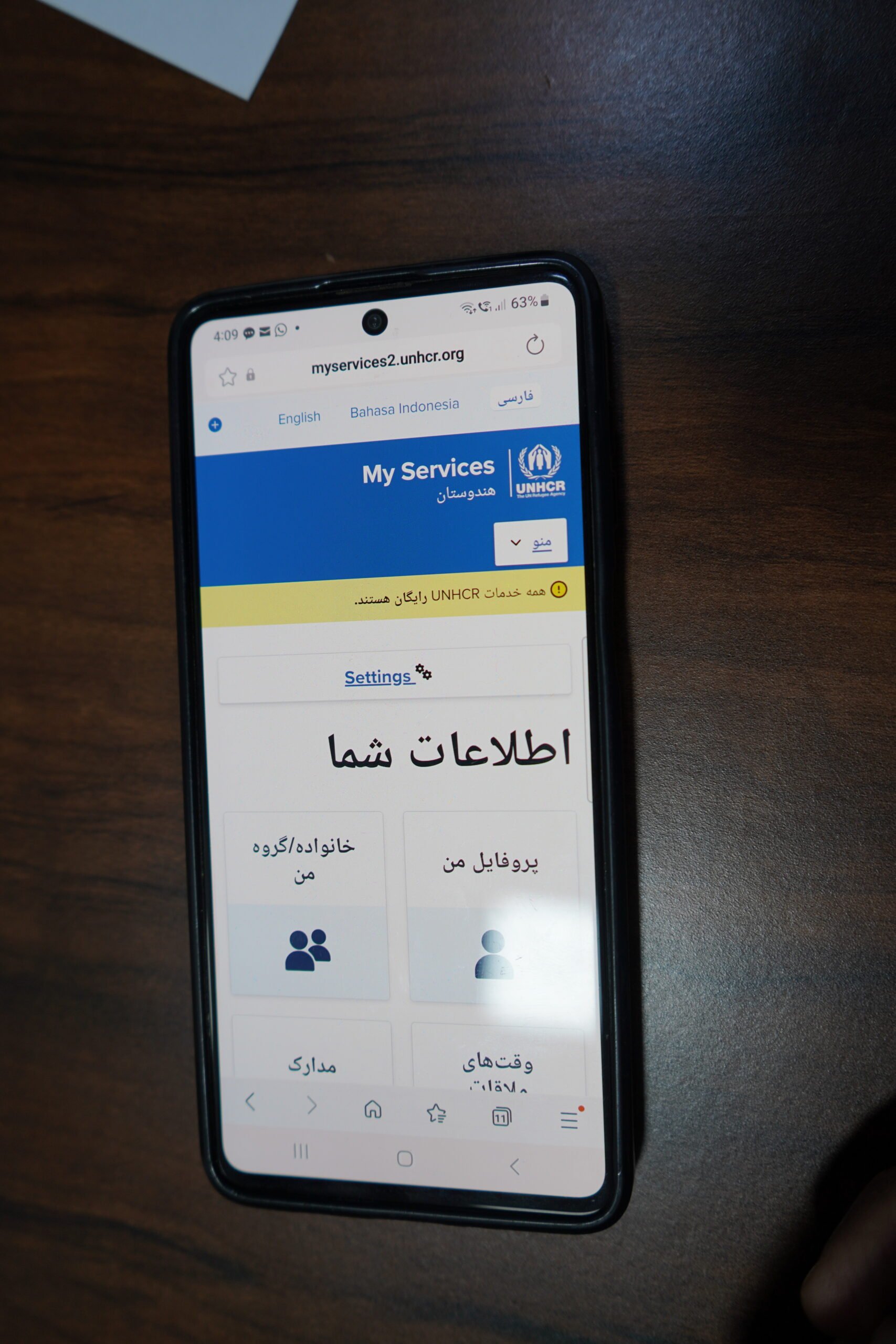
My Services portal is available in multiple languages © UNHCR/Paridhi Jain
Safe digital innovation for refugees across Asia and the Pacific
India’s Digital Gateway is part of a broader shift in Asia and the Pacific to make humanitarian services more accessible, efficient, transparent and people-centred through safe digital tools. In Malaysia , self-service kiosks connected to the Digital Gateway allow asylum-seekers to renew their UNHCR certificates, update personal details and verify information within minutes, reducing waiting times and enabling staff to focus on urgent protection needs. And in Indonesia, the Digital Gateway self-service portal is helping families request registration of newborns and receive referrals for birth certificates.
Across these operations, UNHCR combines digital solutions with clear guidance, multilingual information, strong safeguards and secure workflows, in line with its Digital Transformation Strategy. The aim is to ensure that innovation reinforces, rather than replaces, face-to-face protection, and that refugees can exercise greater control over their own data, in a way that is safe, dignified and inclusive.
In 2026, UNHCR India will scale up onboarding through the Digital Gateway, expand awareness campaigns on birth and death registration, and continue advocacy to help remove practical barriers to access civil registration and vital statistics systems.
Behind each technical advancement is a simple goal: that every refugee birth is recognized, every death is recorded, and every person forced to flee can communicate with UNHCR and partners – quickly, safely and on their own terms.
———
Bloomberg Philanthropies Data for Health Initiative generously supports UNHCR’s work in India, Indonesia and Bangladesh to promote self- and civil registration among refugees, displaced individuals and stateless people. The initiative aims to strengthen recording of births and deaths to inform public health policy. This includes the Digital Gateway self-service portal in India and Indonesia as well as support for tools and household visits by community health workers to streamline the birth and death notification process for refugees hosted in Bangladesh.