



Flames of Survival: Rising LPG Prices Push Refugee Families in Delhi Deeper into Crisis
Flames of Survival: Rising LPG Prices Push Refugee Families in Delhi Deeper into Crisis

Amina Begum(name changed) cooks a meal for her family in their small, rented home in Delhi. Rising LPG prices have forced refugee families to reduce cooking time and carefully ration every meal
In the narrow lanes of Delhi’s neighborhoods where refugees live, the rising price of cooking gas is not just an economic issue, it is changing the way families eat, cook, survive and plan for tomorrow.
For refugee families already living on the edge, a cylinder of LPG has become a symbol of impossible choices: food or rent, medicine or cooking fuel, dignity or debt.
For years, refugee families fleeing conflict in Myanmar, Afghanistan and other countries found critical support through services provided by UNHCR and local organizations. Registration, documentation issued by UNHCR and community support helped many refugees establish an identity, access housing and slowly rebuild lives that had been shattered by war and displacement.
But today, as LPG and food prices continue to rise sharply, many refugee families say the support they once relied on is no longer enough to cope with mounting daily expenses.
Many refugee families in Delhi say they are unable to access subsidized cooking gas or formal LPG connections because they lack the government-issued documentation required under public distribution systems, forcing them to buy cylinders through informal channels at significantly higher prices.
When Chin refugee Lian Nuam (name changed) bought her latest LPG cylinder in April, she could hardly believe the price. Just two months earlier, till February, a 14-kg cylinder cost around Rs 1,150. This time, she paid Rs 3,900 in the local market.
“The cylinder is so heavy,” she says softly. “My sons help me carry it home.”
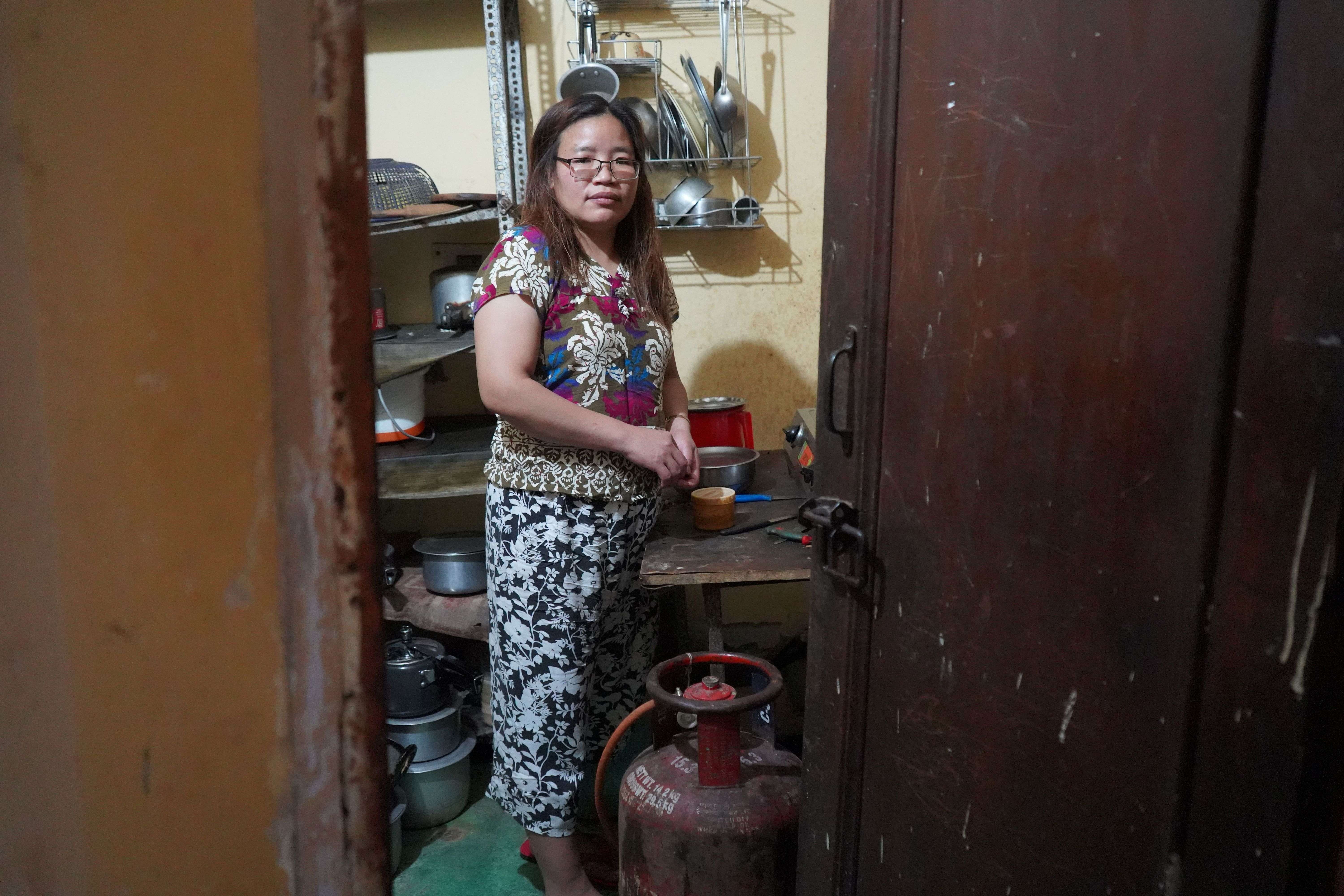
Inside their one-room rented accommodation in Delhi, every flame matters. Her husband works in housekeeping but the family’s limited income is no longer enough to cover rent, food and cooking gas. They have already fallen behind on rent payments for the past two months.
The family fled Myanmar in 2010 as conflict and violence engulfed their hometown. Lian was one month pregnant when they escaped.
“We had to keep running,” she recalls. “In all that fear and chaos, I lost my baby.”
When they arrived in India, they had no money, no home and could not speak the language. Registration and documentation issued by UNHCR became their first step toward safety and stability in an unfamiliar country.
Lian, once a school teacher in Myanmar, later learned woolen knitting through BOSCO, UNHCR local partner, and began earning a small income by selling knitted items through friends on social media. But deteriorating eyesight has made it difficult for her to continue.
Now, even cooking has become a daily calculation.
“We soak vegetables and rice in water for a long time, so they cook faster and use less gas,” she explains.
Their kitchen is shared by three families. Switching to induction cooking is not possible, and electricity bills are another burden they cannot imagine carrying.
“How do we pay for all that?” she asks.
For Amina Begum (name changed), Rohingya refugee, the rising gas prices have added to years of insecurity and discrimination.
She arrived in India from Myanmar in 2011 with her family, carrying memories of displacement and uncertainty. Like many refugees arriving in India, her family relied on UNHCR documentation and services by local partners to access basic assistance, find housing and begin rebuilding their lives.
Her husband once worked as an interpreter but lost his job in 2025. He later found work in a glass factory, until a serious accident left him with injuries to his hand and leg. Climbing stairs is still painful.
Alongside financial hardship, the family faces growing hostility.
“Our neighbors sometimes tell the landlord that we should leave because we are refugees,” she says quietly. “Even my daughter faces hurtful comments in school about not belonging here, although India has been our home for many years now.”
The family’s gas line bill was around Rs 3,000 last month. This month, she fears it may double.
“The landlord paid the bill for now, but we have to return the money,” she says. “We still have rent to pay every month. How do we survive?”
Cooking with firewood is not an option. Their room has little ventilation, and smoke would fill the enclosed space.
“We will suffocate,” she says quietly. “We are on the verge of collapsing.”
Yet amid the uncertainty, she speaks proudly of her children, whose school achievements and awards cover the walls of their modest home.
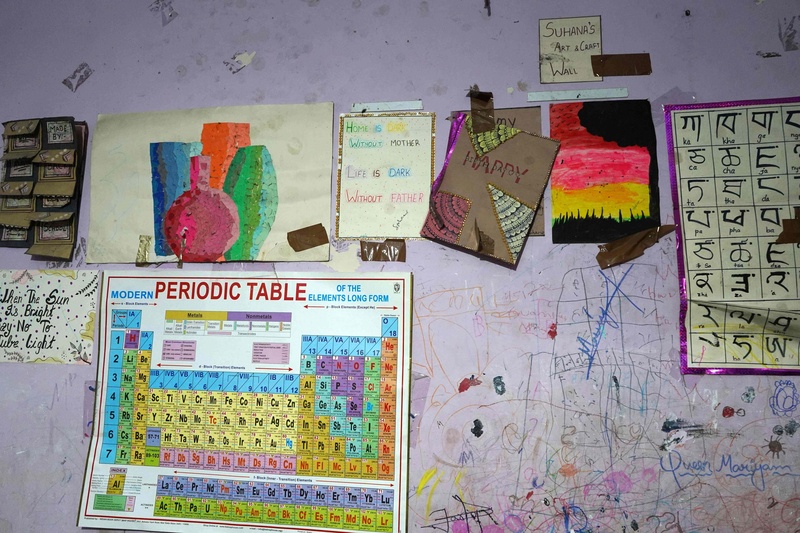
Our children study very well,” she says with a faint smile. “They still dream.”
For Shabana Hamidi (name changed), the struggle is made harder by the high cost of purchasing cooking gas through informal sellers.
In March, she paid between Rs 5,000 and Rs 6,000 for a cylinder.
“It was not even full,” she says. “A proper 14-kg cylinder lasts three months. This one lasted only one month because some gas had already been removed.”
Shabana came to India from Afghanistan in 2018 with her husband, and their three children, fleeing war and instability. Upon arrival, registration and documentation issued by UNHCR served as proof of identity they could rely on while trying to settle in Delhi. It is not enough however to access most of public services available to other disadvantaged communities.
Her husband, who lives with polio, now works in a small shop. Back in Afghanistan, he had a stable job with a good company. But conflict uprooted their lives.
“Some of our relatives are still there,” she says. “They live every day in fear.”
As LPG prices rise across the city alongside increasing food costs, refugee families say the burden falls hardest on those already excluded from formal systems - families without stable incomes, unable to access social protection schemes including subsidized fuel.
For many, humanitarian support once available, helped them rebuild a fragile sense of normalcy . But today, they say the worsening cost-of-living crisis is pushing them back into uncertainty.
In homes across Delhi’s neighborhoods where refugees live, meals are being delayed, food portions reduced, and cooking methods altered to save every last bit of fuel.
The blue flame that once represented warmth and routine has become a source of anxiety.
And for families who escaped war hoping to rebuild their lives in safety, even the simple act of cooking dinner now feels uncertain.


