

Learning Together: How a Community Initiative is Transforming Education for Somali Refugees in Delhi
Learning Together: How a Community Initiative is Transforming Education for Somali Refugees in Delhi

Young Somali refugees learn skills at the Sampushti Community Learning Centre in Delhi, building confidence through shared learning and peer support
On a narrow street in Delhi, as the late afternoon sun softens, a small space begins to fill with voices. Voices which are hesitant at first, then louder, more assured. A group of young Somali girls and one boy sit closely together, watching short English learning videos. They pause, repeat, and try again. A mispronounced word draws laughter, but no one stops. Instead, they help each other, correcting gently, building confidence with every sentence.
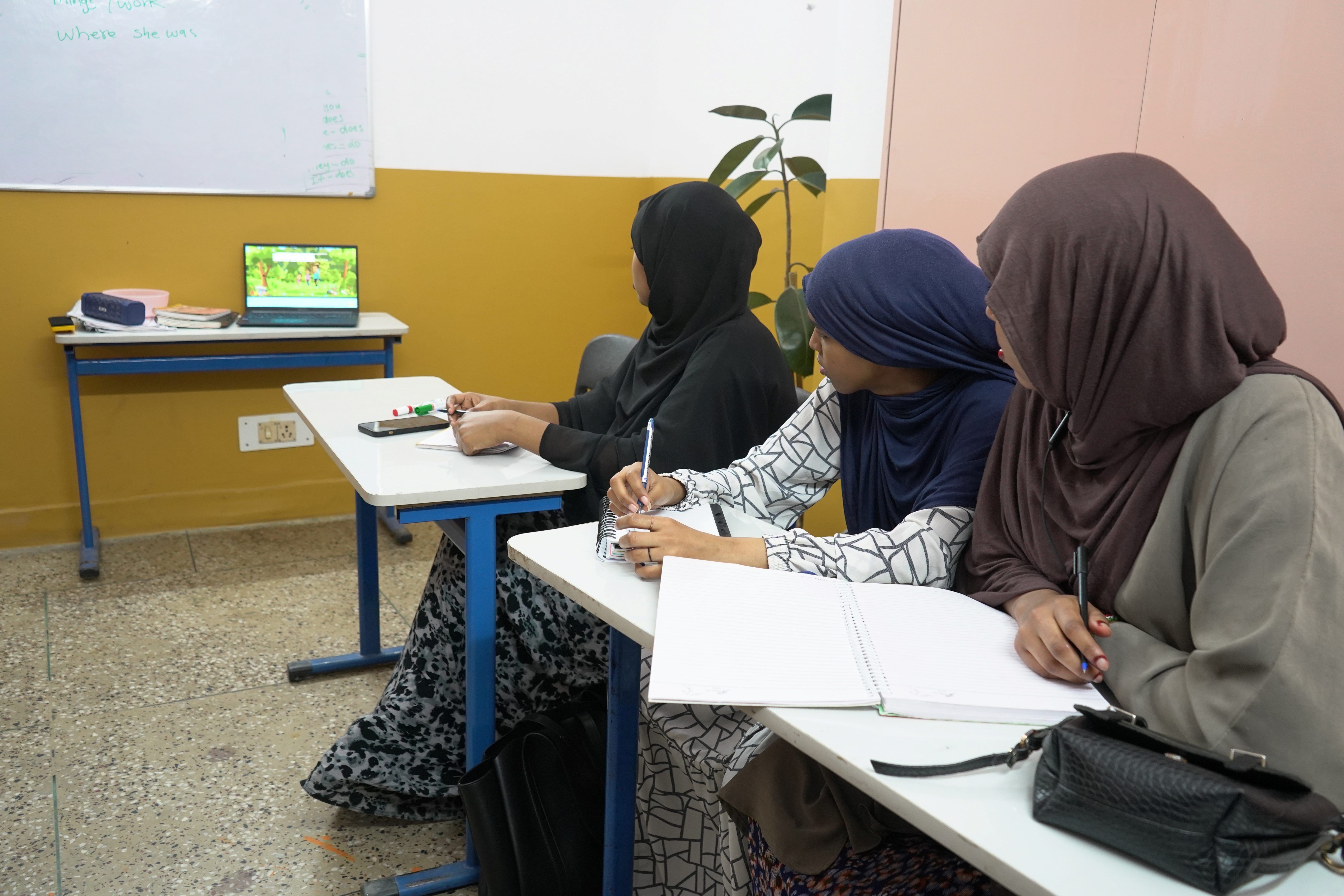
Students repeat phrases from an English-learning video, helping each other improve pronunciation in a lively youth club session.
Just outside, another group of children sit around tables, their attention fixed on sheets of brightly colored paper. Careful hands fold and shape each piece into a lotus flower. Some compare their work, others quietly concentrate, determined to get each fold right. The room is filled with focus and small moments of pride.
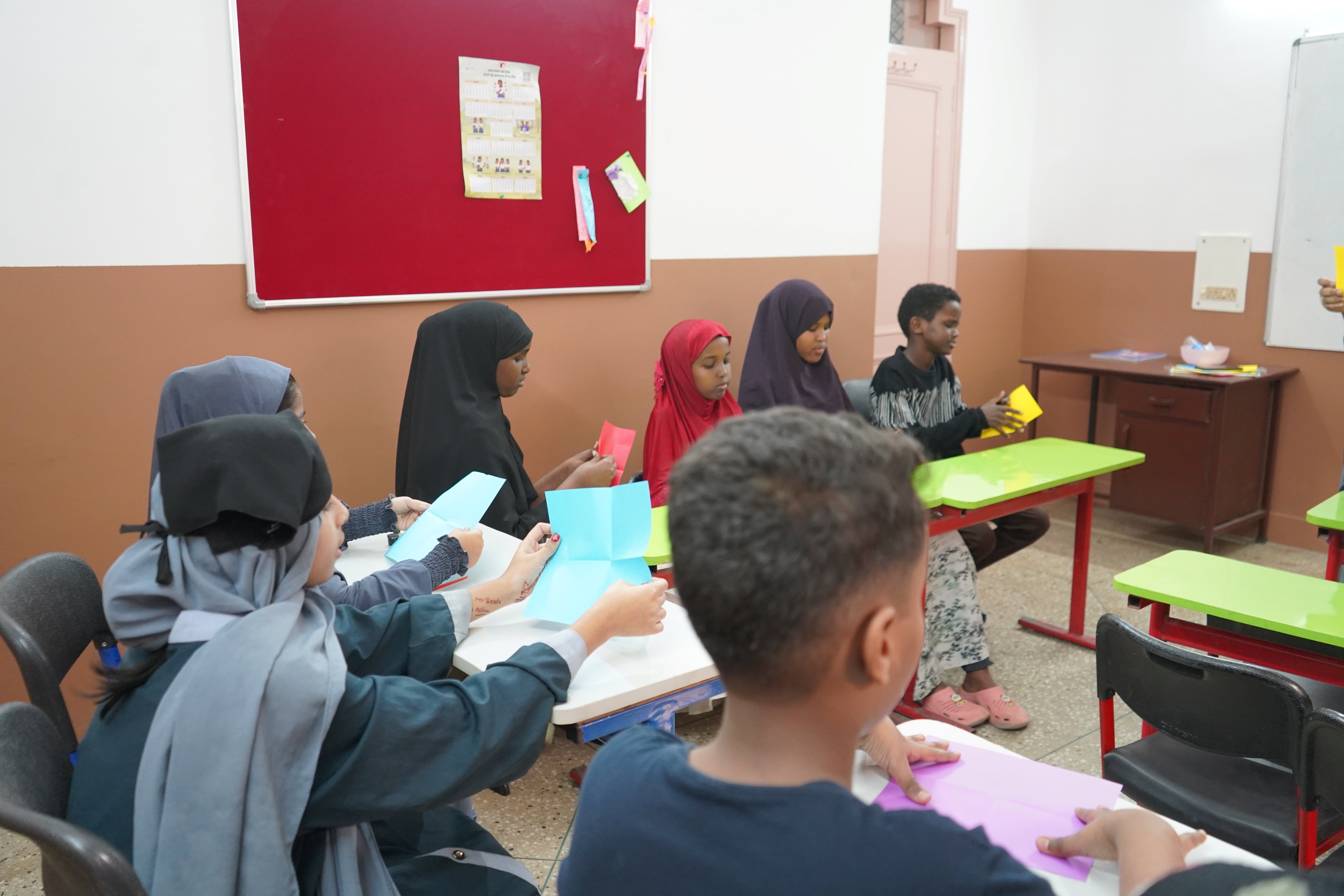
Children participate in different learning activities at the Sampushti Community Learning Centre, a community-led initiative supported by UNHCR.
In a nearby space, a group of youth sit in front of computers. A young teacher moves among them, explaining how to organize information and present it clearly. For many, this is their first time they are learning digital skills in a structured way. There is curiosity, concentration, and a sense that these skills matter.
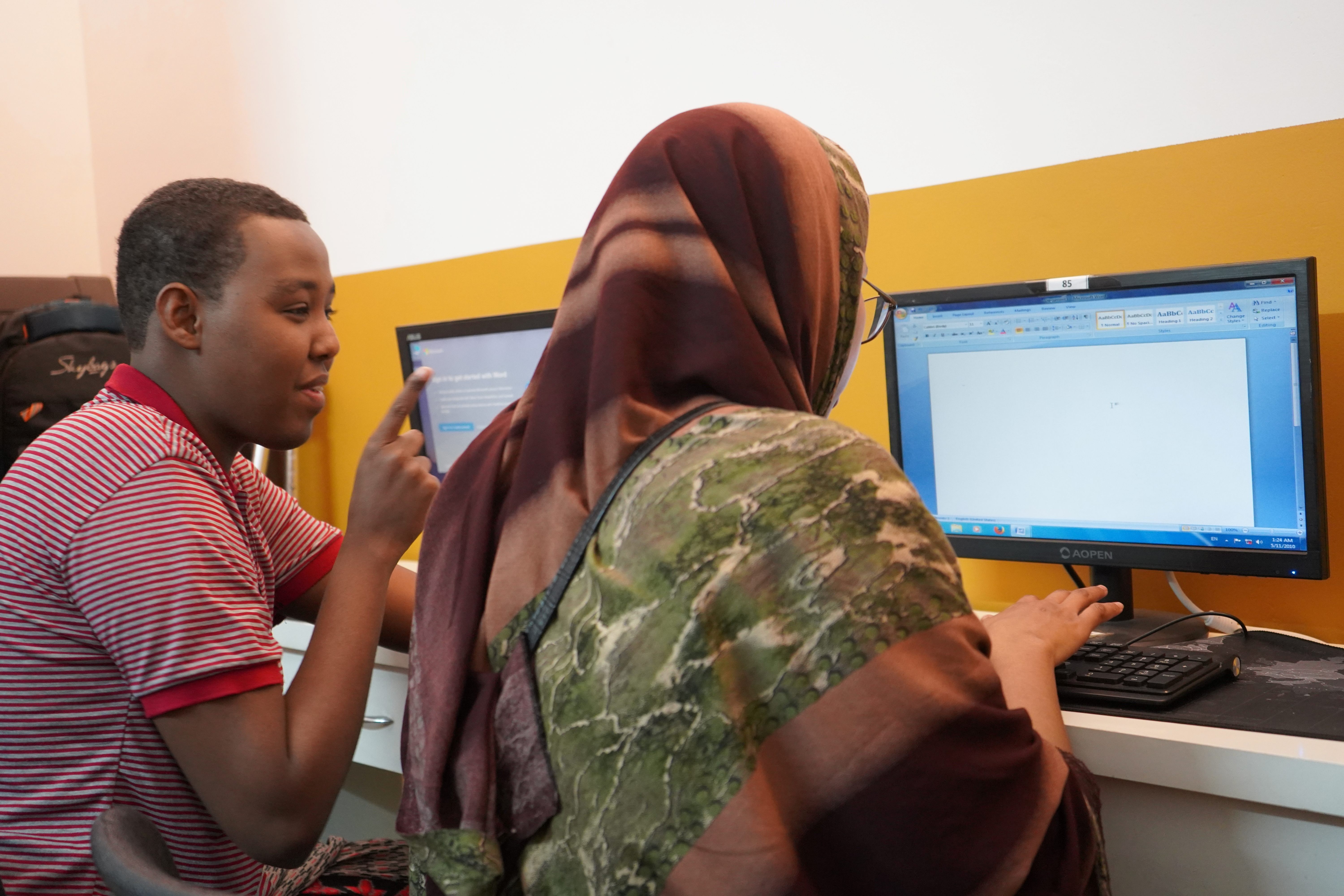
Youth actively participate in computer lessons
This is the Sampushti Community Learning Centre in Delhi, an educational initiative developed under the auspices of the National Bahá’í Charitable Society in response to the needs of refugee families, particularly from the Somali community, following a series of consultations with the community itself. Supported by UNHCR, the initiative seeks to intentionally bring together children and youth from the Somali refugee and local communities, fostering inclusion and social cohesion through shared learning experiences. Sampushti aims to provide not only academic support, but also a safe and inclusive space where children and youth can build confidence, develop skills, and cultivate a strong sense of belonging.
Each afternoon, learners gather in age-based groups. The English classes and junior youth empowerment classes are often the most animated. Here, students practice speaking, reading, and writing, while also learning how to express themselves and work with each other in fostering a positive peer group that enables them to serve the community.
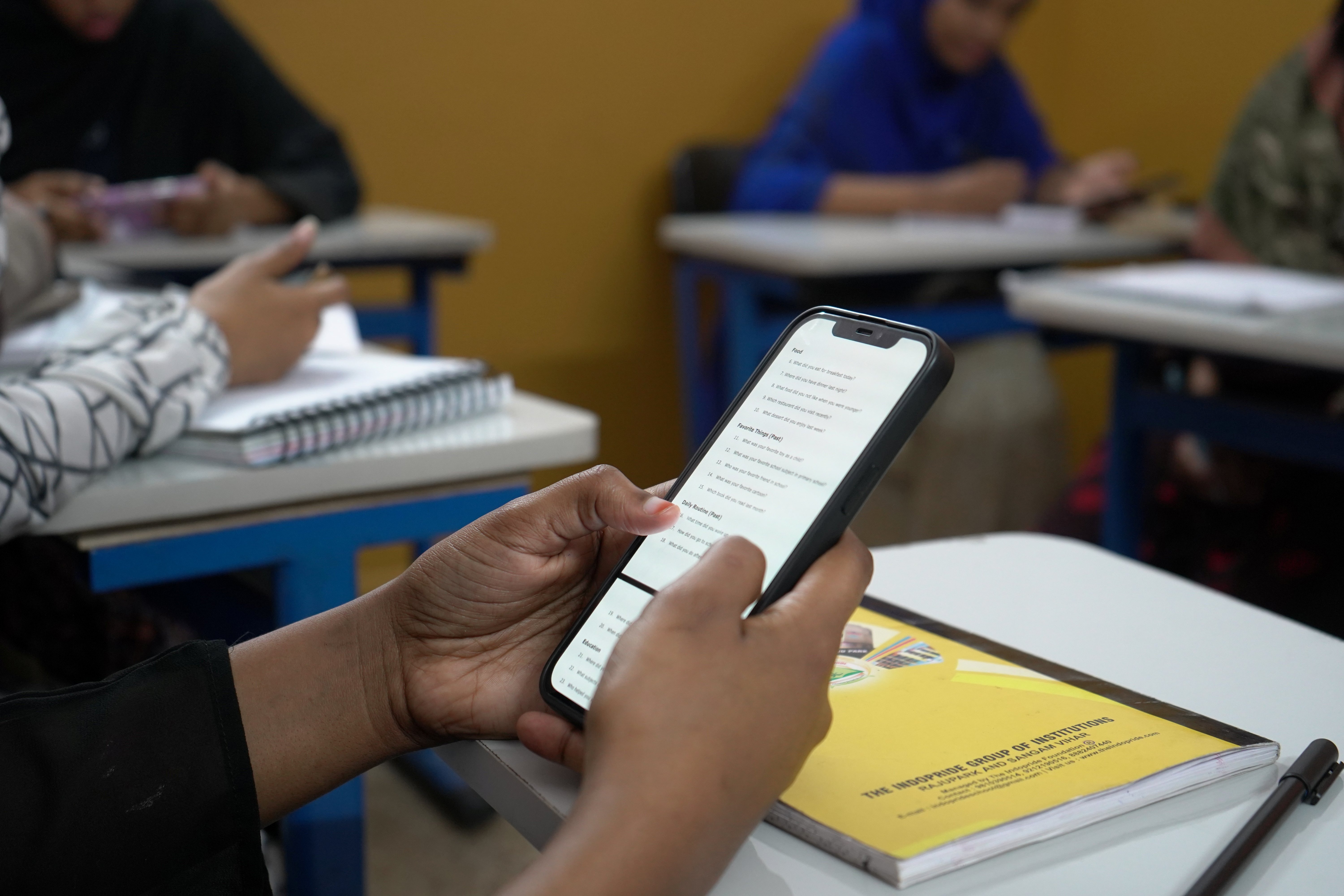
Members of the youth club learning English skills through questionnaires
Nimco (name changed), a Somali refugee who first joined as a student, is now part of the teaching team. She supports younger learners and continues to grow alongside them. “Teaching here makes me feel confident,” she says. “I want to keep learning and help others learn too.”
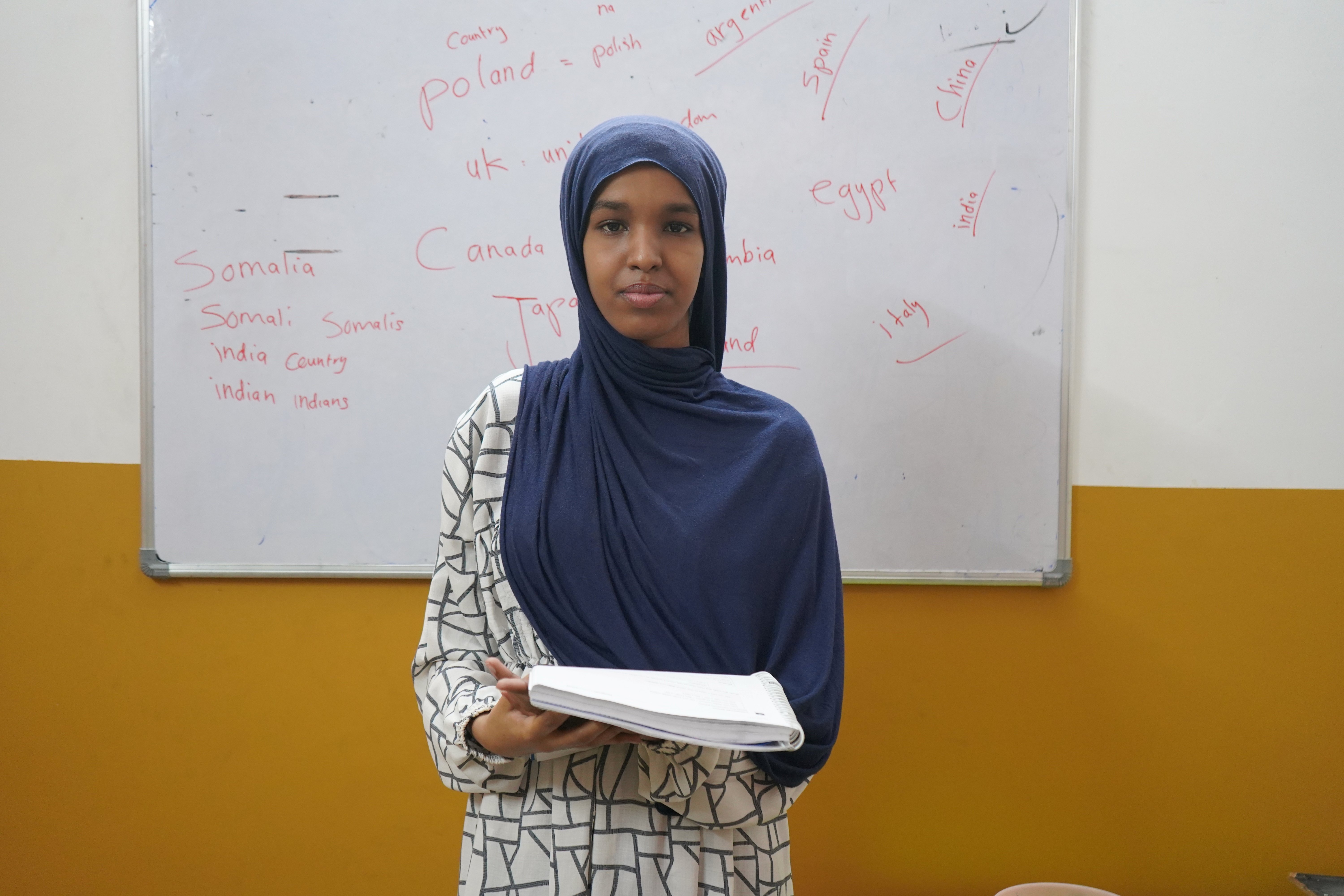
Seventeen-year-old Nimco, a Somali refugee, teaches children at the Centre, contributing to her family income while working towards her dream of becoming a fashion designer
At the same time, art classes bring younger children together around tables, where they explore creativity through simple but fun activities like making paper flowers. These sessions are led by Sampushti staff, creating an environment where learning includes imagination, patience, joy and expressing emotions and insecurities through the medium of art.
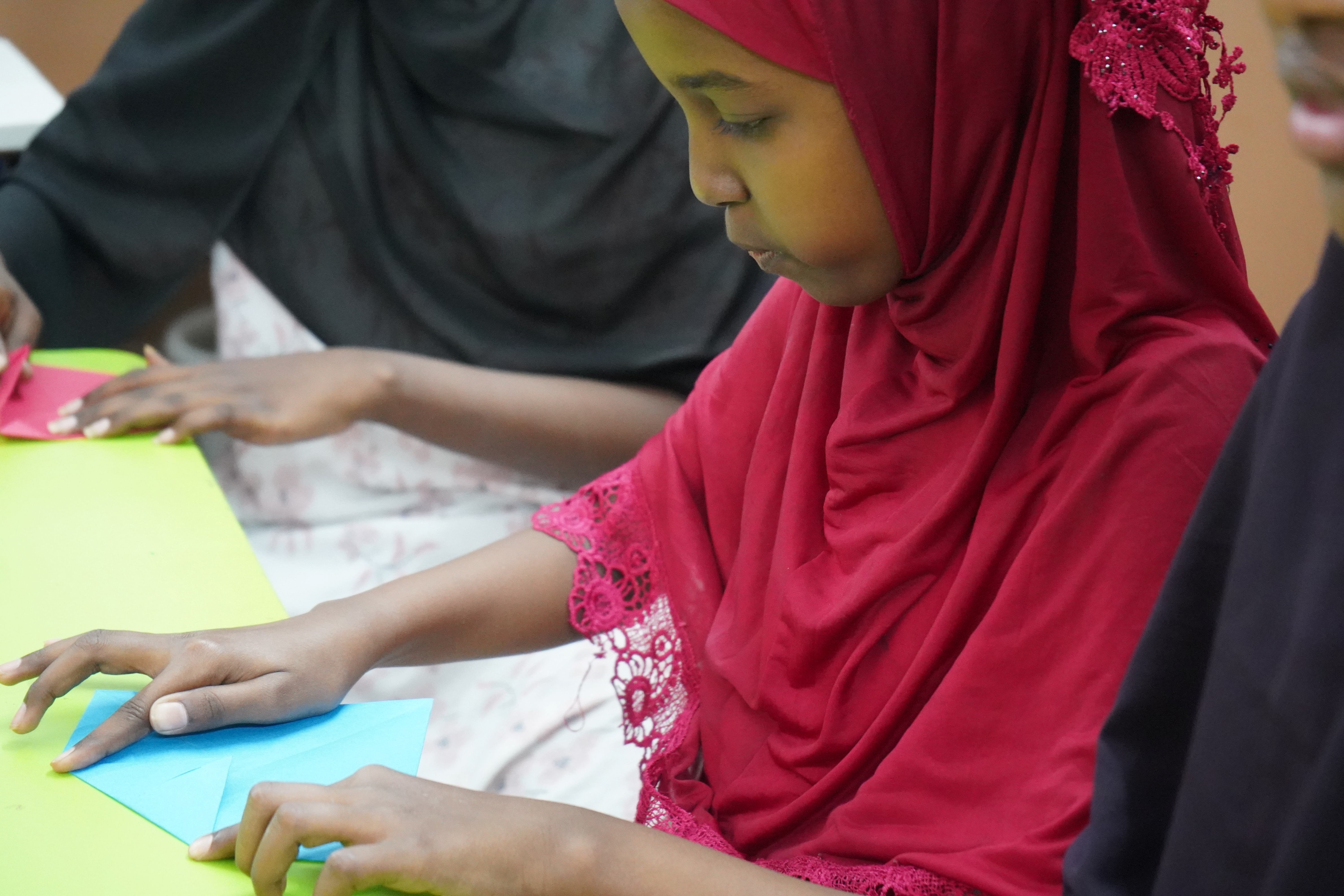
A young girl creates colorful paper lotus flowers during an art session, exploring creativity in a supportive learning environment.
In parallel, computer classes are led by a young Afghan refugee teacher, Farid (name changed). A student of graphic design, he manages financial and other challenges while teaching others three days a week.
“I joined to contribute to the community,” he says. “It gives me a sense of purpose. I want to continue my studies and build a better future.”
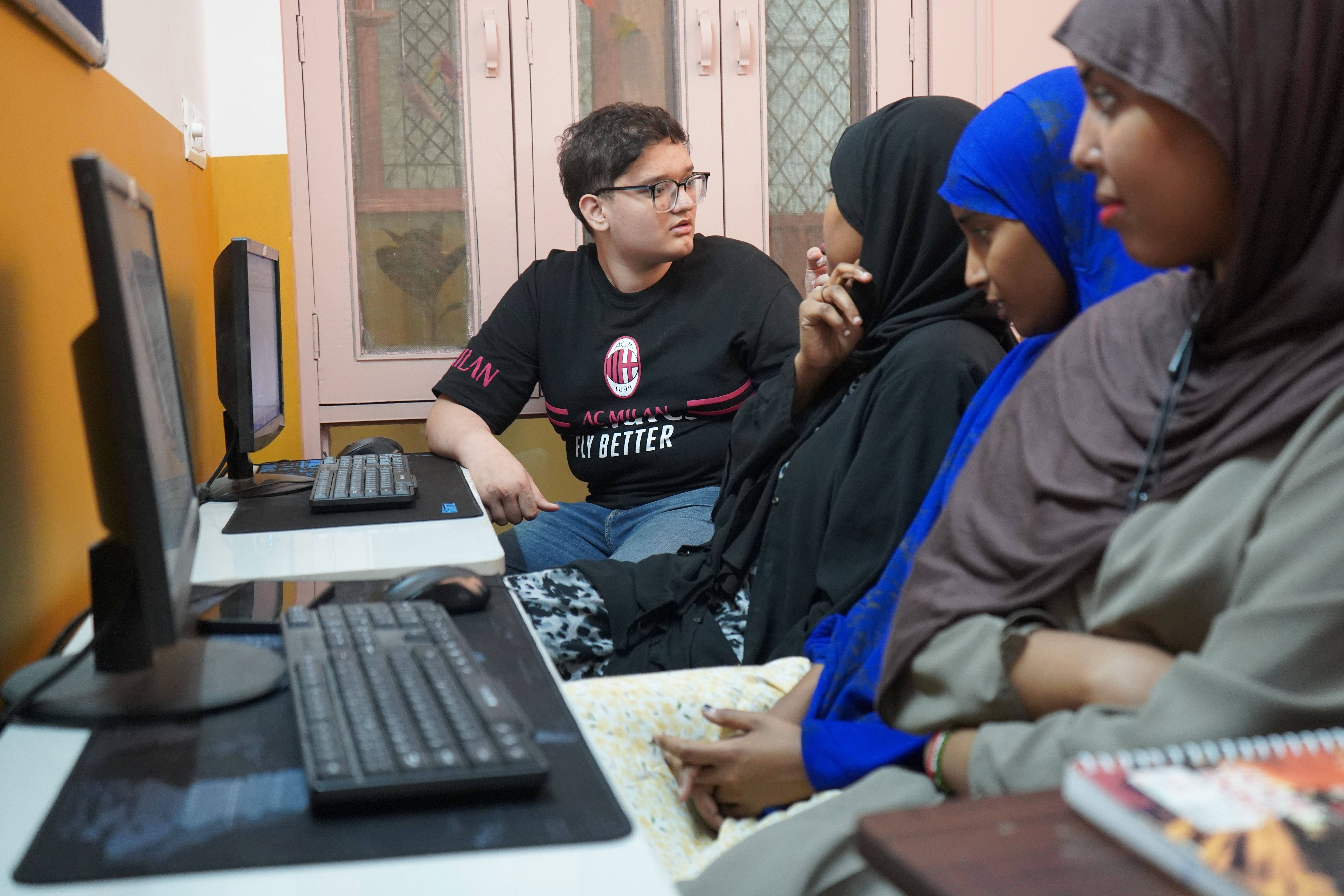
Farid, an Afghan refugee and student of graphic design, teaches computer skills while pursuing his own education.
As the sessions continue, Nimco moves into another classroom to take an English class for younger students. Her presence reflects a larger shift within the initiative, where learners become teachers, and support begins to come from within the community itself.
“This is good for me,” she says. “I can support my family and study. In the future, I want to become a fashion designer.”
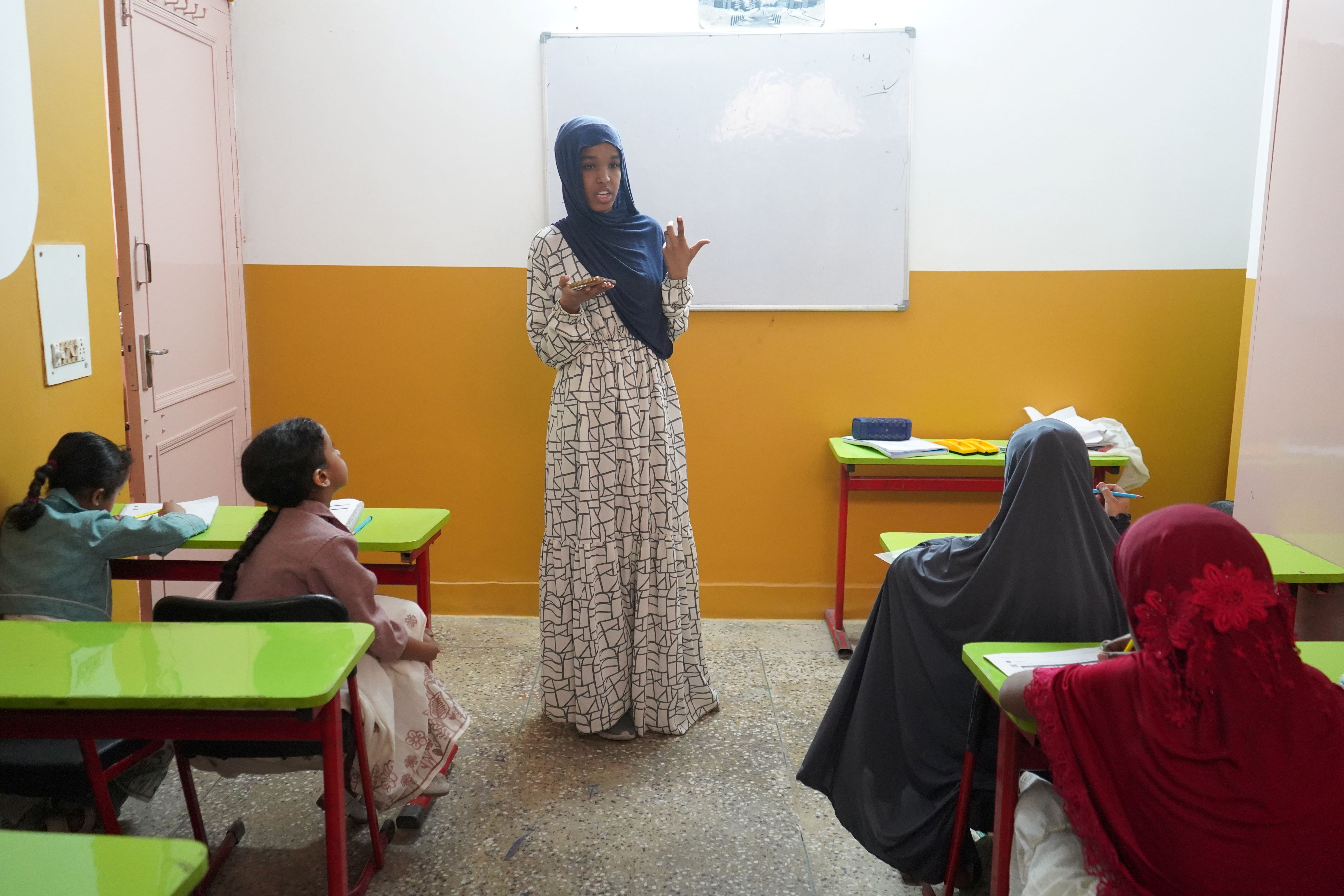
Nimco supports younger students in learning English, who is also a learner herself at the same Centre.
For learners like Hibo (name changed), the change is equally significant. “I am learning how to speak in society and express myself,” she says, describing how the classes are helping her build confidence systematically.
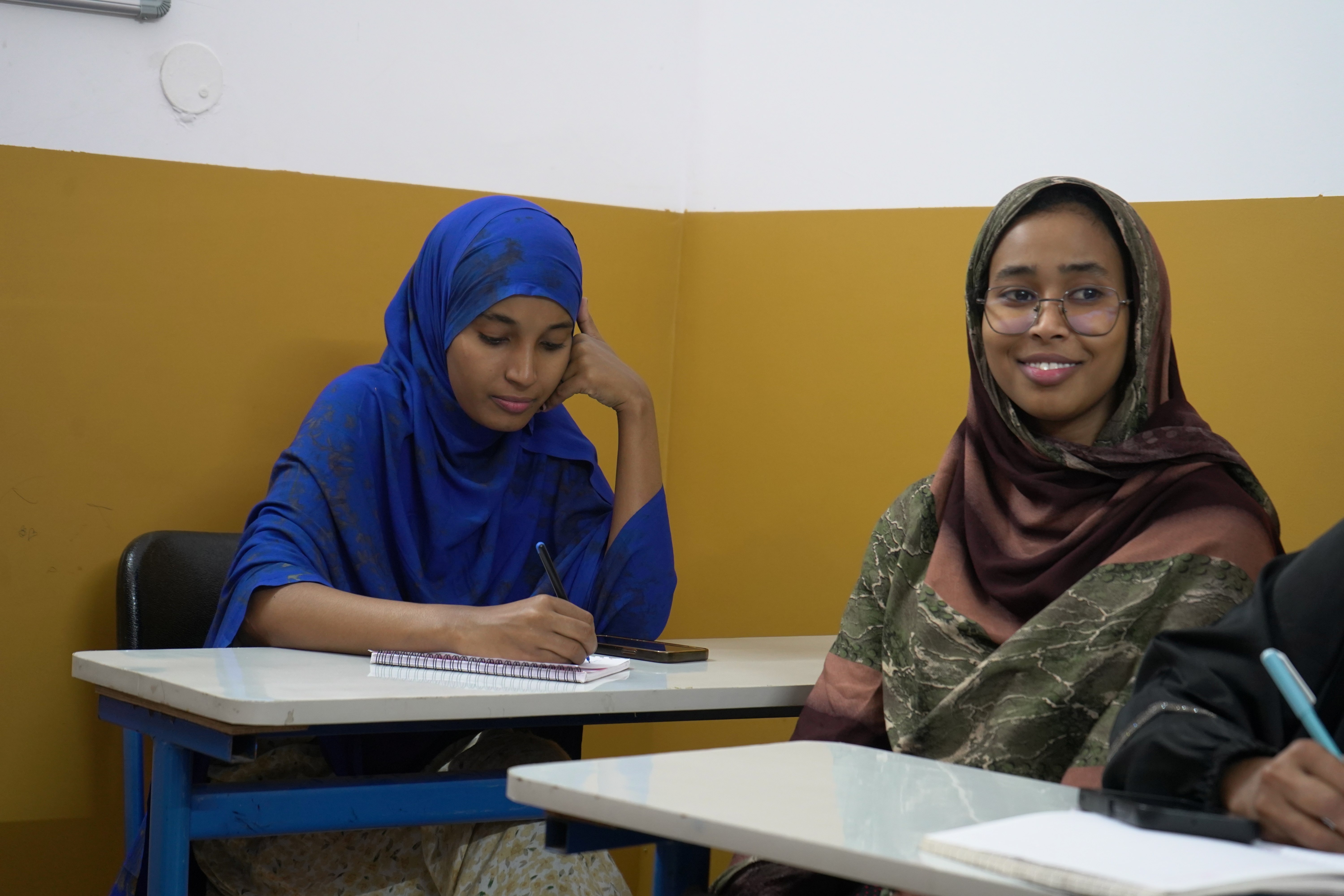
Sampushti Centre where learning also becomes a space for confidence and connection.
This is what defines Sampushti. It is not only a place where refugees receive support, but where they actively shape and sustain what the Centre does. Young people step into roles of responsibility and contribute to the learning of others, challenging common narratives about displacement.
Today, the Centre supports more than forty learners who attend regularly. They are not only building foundational skills in language and technology but also developing confidence in how they see themselves and their future.
With support from UNHCR, initiatives like Sampushti highlight how community-led efforts can transform access to education. It demonstrates that refugees are not only capable of rebuilding their own lives, but can also create opportunities for others and strengthening the resilience of the wider community.
As the day comes to an end, the classrooms begin to empty. Notebooks are packed away, computers switched off, and paper flowers carefully carried home.
What remains is a sense of momentum - of learning, of purpose, and of a community shaping its own path forward. Sampushti continues to try to nurture and build an environment where each individual can be helped to pursue their own intellectual growth and take ownership of the continued development of their society.
Sampushti is inspired by the principle of the oneness of humanity – that the stranger should be seen as a companion, without prejudice. It echoes India’s Vedic tradition of “vasudhaiva kutumbakam”, the world is one family and aligns closely with the principle of international solidarity underpinning UNHCR’s work. Initiatives like Sampushti bring values into practice, fostering inclusion, dignity and community led change.