



Builder of hope: How a Sudanese refugee's design skills is helping others find home, shaping futures
Builder of hope: How a Sudanese refugee's design skills is helping others find home, shaping futures

Repan with one of his shelter designs at the Sherkole refugee camp in Ethiopia.
At first glance, the bamboo-crafted chairs, tables, fences, and beautifully designed compounds scattered across Sherkole refugee camp in Ethiopia, may appear to be simple structures. Yet behind many of them is the remarkable story of Repan Sadik Modir, a 38-year-old Sudanese refugee whose talent, determination, and creativity demonstrate what refugees can achieve when their skills and potential are recognized and supported.
Repan's journey is one of resilience spanning decades, displaced multiple times. Having first arrived in Ethiopia as a child, he lived in Bonga and later in Tsore refugee Camp before returning to Sudan in 2008. However, conflict forced him to seek refuge once again, and since 2011 he has called Sherkole refugee camp home.
While displacement interrupted many aspects of his life, it could not extinguish his passion for design, engineering, and construction. Growing up, he watched his father, an engineer, work on electrical installations, drawings, and designs. Inspired by what he saw, Repan developed an early fascination with creating things with his hands.
As a teenager, he joined a drawing club supported by Save the Children, where his artistic talent began to flourish. Further training opportunities provided by humanitarian organizations helped him develop technical skills in design and construction. What started as a passion gradually evolved into expertise.
"Designing, drawing and creating things has always been part of who I am," he says.
Over the years, Repan transformed locally available bamboo into practical and innovative solutions for his community. Using bamboo, mud, and other locally sourced materials, he has built household shelters, beds, tables, chairs, flower holders, fences, kitchens, and community structures. His achievements also include the construction of multi-storey residential houses, church buildings, and engineering prototypes for villas and apartment designs.
For Repan, bamboo is much more than a building material.
"It is locally available and can solve many of the community's problems," he explains.
Impact beyond physical structures
His work demonstrates the untapped potential that exists within refugee communities. With limited resources but abundant creativity, he has improved living conditions, beautified compounds, and provided practical solutions his community. He has frequently volunteered his skills to support vulnerable individuals, including persons with disabilities and families unable to afford construction services.
The impact of his work extends beyond physical structures. Through craftsmanship and construction, Repan has created opportunities for himself and others. Although much of his work has been voluntary, it has enabled him to earn income, purchase tools, support his family, and reinvest in his passion.
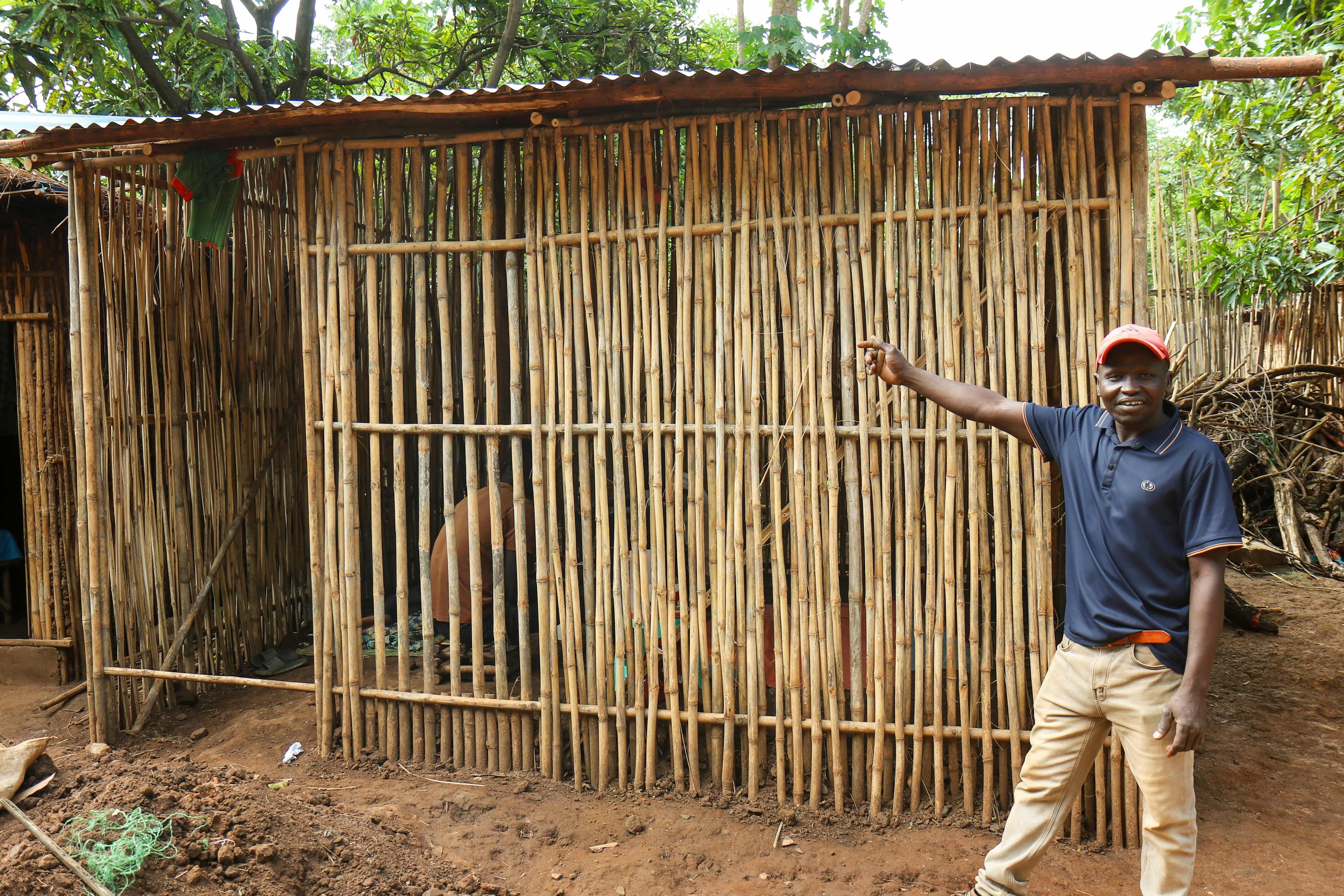
Repan shows one of the shelters he is currently constructing at the Sherkole refugee camp.
"My skills helped me support my family and assist other people. Through my work, I can generate income while giving back to the community," he says.
Equally important, Repan has become a mentor. Young people regularly visit him to learn construction and bamboo crafting techniques. By sharing knowledge and practical skills, he is helping shape a new generation capable of building sustainable livelihoods and reducing dependency.
"I started sharing my skills with children so that they can have a better future," he says.
His belief in the transformative power of skills is deeply connected to his vision for refugee self-reliance. He sees bamboo construction as a sustainable solution that can help communities build their own shelters using locally available resources while reducing pressure on forests and minimizing environmental degradation.
"If communities have the skills and the support to access materials that already exist around them, they can build independently and reduce reliance on other forest resources," he explains.
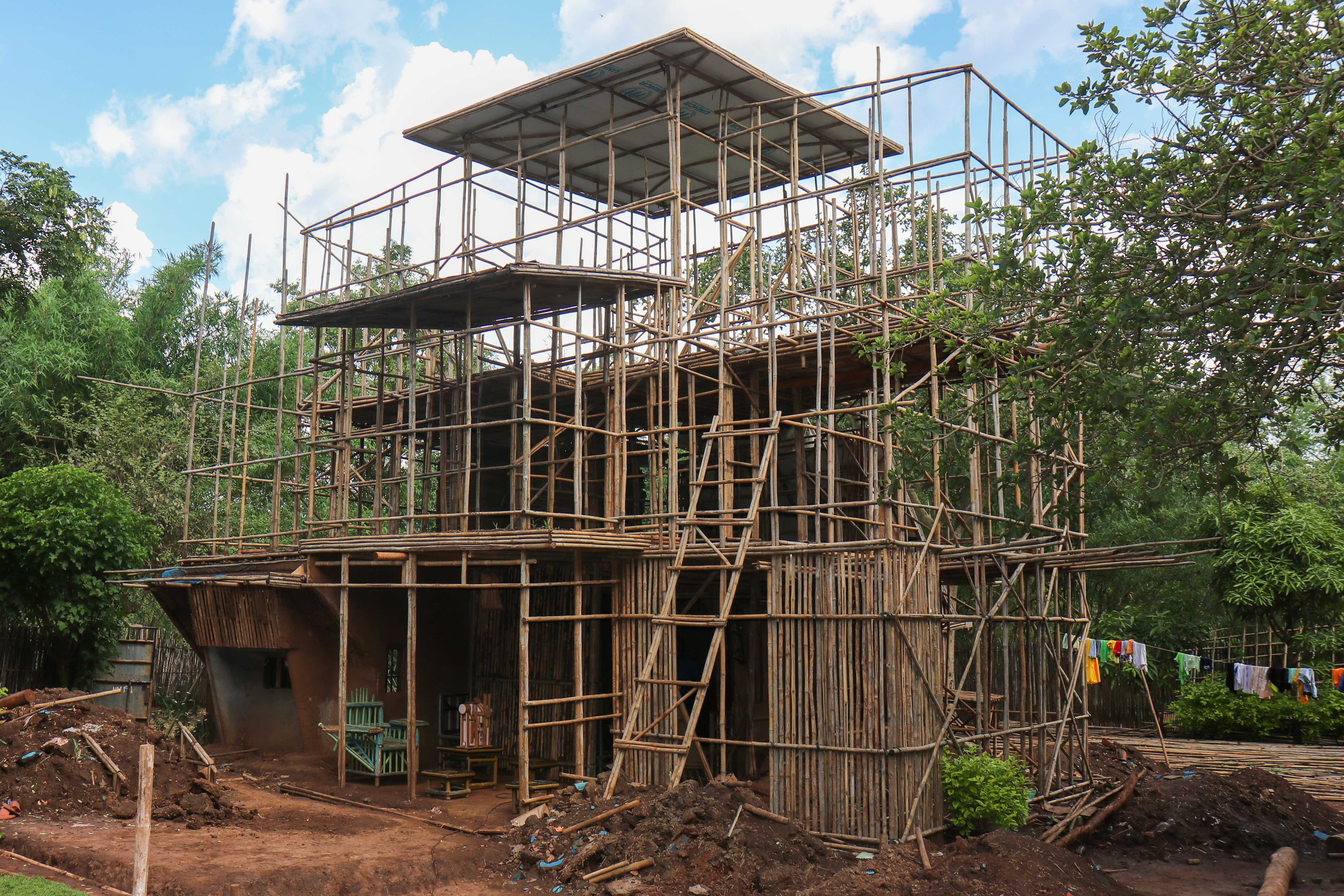
One of Repan's designed shelters under construction.
Recognizing his entrepreneurial potential, Repan recently became one of the winners of the Sherkole Business Pitch Competition, an innovative initiative under the Refugee Inclusion Accelerator (RISE) Innovation Lab. Implemented by GIZ in partnership with UNHCR and national governments, the initiative seeks to unlock practical solutions that promote refugee inclusion and strengthen local economic opportunities for both refugees and host communities.
As Chairperson of the winning team, Ripom Welyam and Friends Anatsi Work Partnership, Repan will gain access to start-up support, business registration assistance, and technical guidance. The opportunity represents more than business support; it is an investment in talent, innovation, and community development.
For Repan, this support could be life-changing.
"My dream is to expand my business in the city and within host communities, create better income opportunities, and become less dependent. With more support, I would purchase equipment and expand my work," he says.
Displacement is a chapter. Not the whole story
His story highlights a broader truth: refugees are not defined by displacement. They arrive with knowledge, skills, professional experience, talents, and aspirations. When given access to opportunities, training, financing, legal pathways, and inclusion in local economies, they become innovators, entrepreneurs, employers, and contributors to national development.
Repan's journey illustrates how relatively small investments can unlock extraordinary potential. Supporting refugee-led initiatives not only strengthens self-reliance and dignity but also contributes to local economic growth, skills transfer, social cohesion, and sustainable development in host communities.
Today, Repan continues to build not only structures, but hope. Through his craftsmanship, mentorship, and determination, he is proving that refugee talent is an asset that benefits everyone.
His message to young people is simple yet powerful:
"Stay away from negative coping mechanisms. Watch what I am doing, learn, work hard, and create a better future."
For Repan, bamboo has become more than a material. It is a symbol of resilience, opportunity, and what becomes possible when refugees are given the chance to transform their skills into solutions, building stronger futures for themselves, their communities, and their host country.


