



Shelter drives stability, protection and inclusion for refugees and host communities in Kakuma
Shelter drives stability, protection and inclusion for refugees and host communities in Kakuma

Sofia, a refugee mother from the Democratic Republic of Congo, stands outside the shelter she built with support from UNHCR, holding her two-year-old daughter, Apolina. Sofia is happy to have a place they can call home.
For many displaced families arriving in Kakuma, the first place they encounter after crossing a border is a reception centre. These facilities offer safety and immediate assistance, but they are not designed to be permanent homes.
Reception centres in Kakuma have consistently operated above capacity. With around 200 new arrivals each week, approximately 6,600 refugees and asylum seekers are currently accommodated in reception facilities. For families who have fled violence, persecution or loss, moving from overcrowded temporary spaces into safe and dignified housing is an important step toward stability.
For most displaced families, shelter provides privacy, protection and the sense of permanence needed to begin rebuilding their lives.
Since 2018, UNHCR has supported the construction of more than 7,800 durable shelters in Kakuma, benefiting around 27,000 refugees, asylum seekers and vulnerable members of the host community. Each shelter represents a family gaining the space and security needed to rebuild after displacement.
A shift toward ownership
In recent years, the shelter response in Kakuma has evolved. Instead of allocating temporary structures, UNHCR increasingly supports families through cash-based assistance, allowing them to build their own permanent shelters.
Under this approach, households receive cash grants in phases, enabling them to manage the construction process themselves. In 2025 alone, this structured system supported the relocation of 182 newly arrived households from reception centres into permanent homes.
The approach aligns with the Kalobeyei Integrated Social and Economic Development Plan (KISEDP) and Kenya’s Shirika Plan, which promote refugee inclusion, local economic growth and stronger links between humanitarian assistance and national systems.
The results are tangible. Refugee-built shelters cost 11 - 14 per cent less than those constructed through traditional contractor models, while compounds of 12 to 14 shelters can often be completed within around 22 days.
Beyond efficiency, the approach also supports local economies. Families purchase materials from nearby suppliers, hire refugee and host-community masons and gain practical financial and construction skills. Opening and managing bank accounts as part of the process also strengthens financial inclusion.
Together, these steps help reinforce both protection and economic participation within Kakuma Municipality.
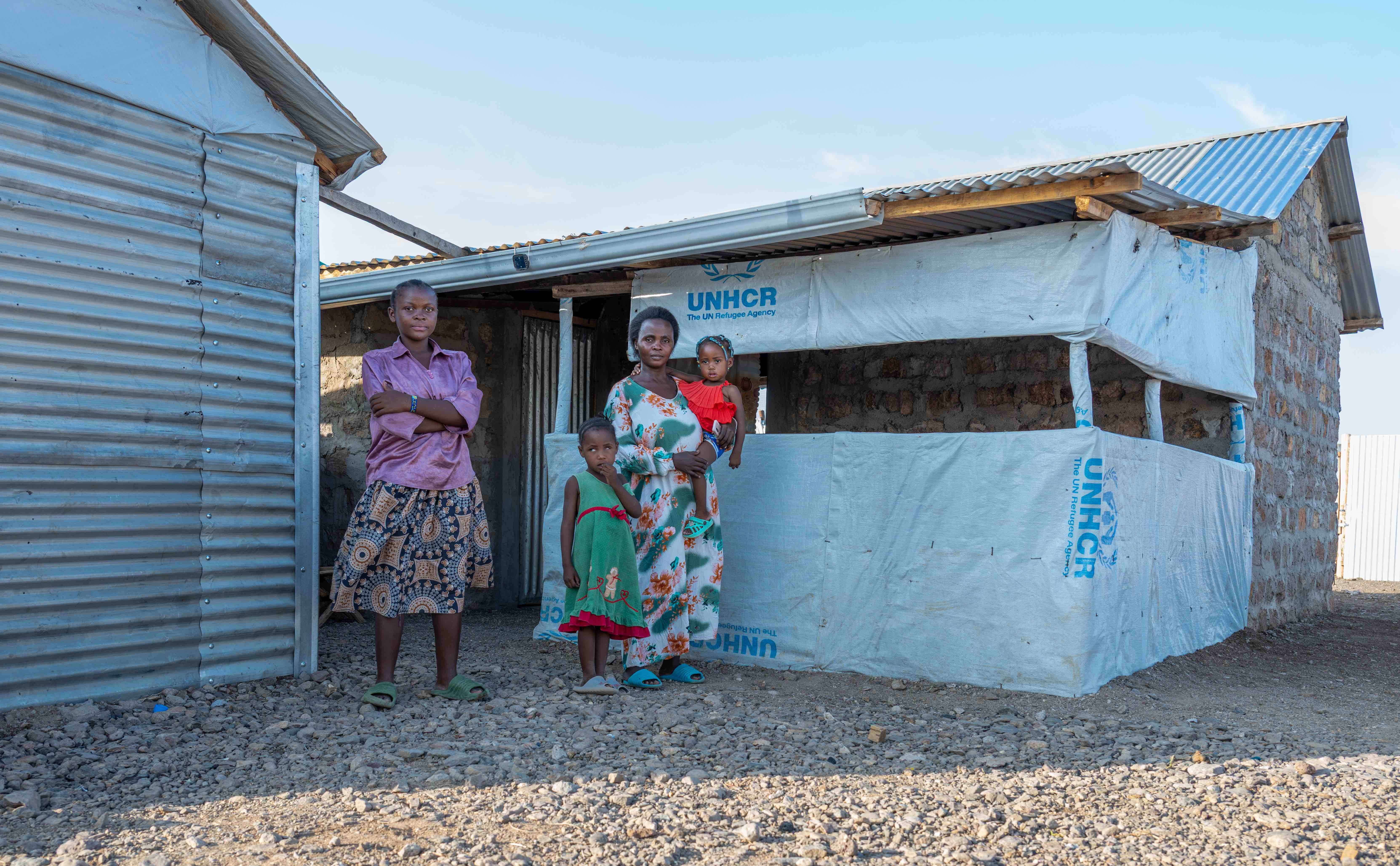
Sofia stands outside the shelter she built with support from UNHCR, alongside her daughters, Feza, 13, and Sakina, 5, while carrying her two-year-old daughter, Apolina.
“I can plan for tomorrow”: Sofia’s story
Sofia, 27, arrived in Kakuma in 2024 with her children after fleeing violence in the Democratic Republic of the Congo. She left her husband behind and now carries the full responsibility of caring for her family.
She does not yet have a stable livelihood, but she now has something equally important: a safe place to live.
“This house keeps my children safe,” she says quietly. “When it rains or the wind blows, I do not fear.”
For Sofia, having a permanent shelter has removed a constant source of worry. Without the uncertainty of temporary living conditions, she can begin thinking about how to support her family.
“I want to start a small business,” she explains. “Now that I have a proper home, I can focus on that.”
How cash for shelter works
The cash-for-shelter model is built on the principle that families are often best placed to construct their own homes when given the necessary support.
Once a household is selected, UNHCR assists them in opening a bank account and provides financial support in stages tied to specific construction milestones. Each phase is verified before the next instalment is released to ensure quality and safety standards are met.
With funds transferred directly to their accounts, families purchase building materials locally and hire skilled labour from both refugee and host communities. Throughout the process, UNHCR technical teams provide guidance to ensure the shelters are safe, durable and suitable for long-term use.
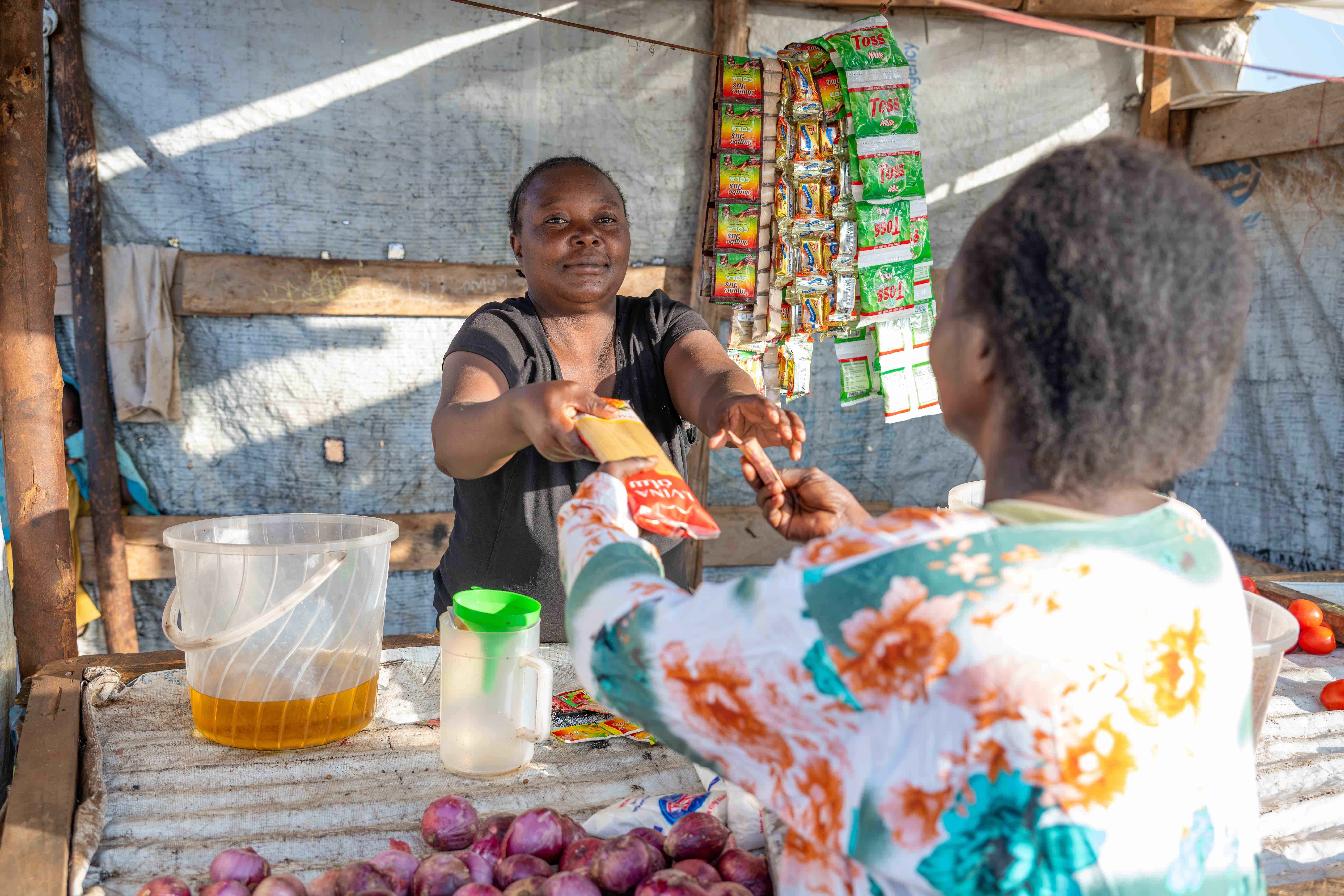
Bahati, a refugee from the Democratic Republic of Congo, serves a customer at her small shop in Kakuma. After receiving support to build permanent shelters for her family, she started the business to supplement the assistance she receives to feed her 11 children.
“Now I sleep without fear”: Bahati’s story
Bahati arrived in Kakuma in 2024 after losing her husband to violence in the Democratic Republic of the Congo. She now cares for her 11 children alone.
The reception centre provided safety when she first arrived, but conditions were crowded and temporary.
Through the cash-for-shelter programme, Bahati received support to build two permanent shelters to accommodate her large family.
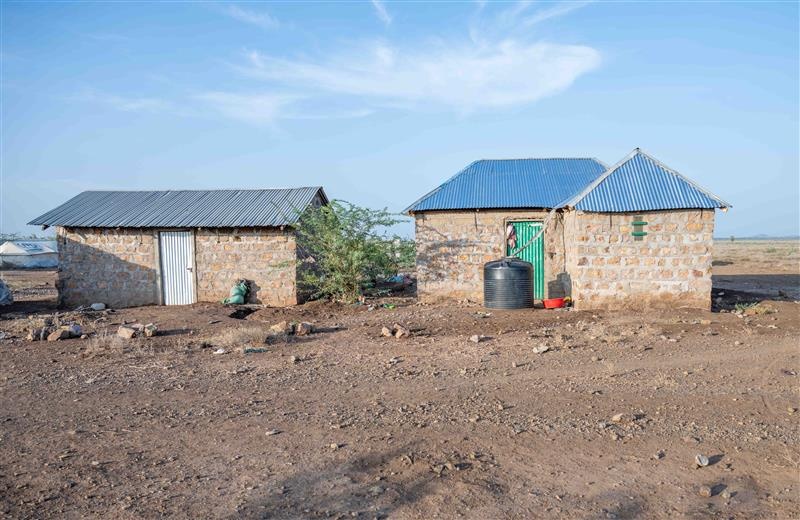
Due to her large family, Bahati received support to build two shelters, providing safe, adequate space for all 11 of her children.
“Before, I worried every night,” she says. “Now my children sleep well. The house protects us from insects and the weather. I feel at peace knowing they are safe.”
Having a permanent home also allowed Bahati to take another step forward. She opened a small shop to supplement the assistance she receives.
“When I received the shelter support, I realised I could also start something small,” she explains. “The house gave me confidence.”
Partnerships that sustain solutions
The shelter programme in Kakuma is built on collaboration. For more than three decades, the Government of Kenya has hosted refugees and asylum seekers, providing the policy foundation for protection and inclusion.
Frameworks such as KISEDP and the Shirika Plan support closer cooperation between humanitarian actors, development partners and local authorities to translate policy commitments into practical solutions on the ground.
These efforts help reduce pressure on host communities while strengthening local markets and creating opportunities for both refugees and residents of Turkana County.
Sustaining the foundation
UNHCR continues to work closely with the Government of Kenya, the Turkana County Government, donors and development partners to ensure refugees and host communities have access to safe and durable shelter.
The needs remain significant. Continued support will be essential to help thousands of families move from overcrowded reception centres into stable homes where they can begin rebuilding their lives.
For families like Sofia’s and Bahati’s, shelter is more than a structure. It is the foundation for safety, dignity and the possibility of a new start.


