



Three years on, a Sudanese grandmother’s journey to safety in South Sudan

Three years on, a Sudanese grandmother’s journey to safety in South Sudan
After fleeing conflict in Sudan, Aisha led her daughters and ten grandchildren through the mountains to find safety in South Sudan.
Aisha Ahmed does not know if her sons-in-law are alive or dead. What she does know is that she must keep moving on for the safety of her remaining family. Fleeing the violence in Sudan, she guided her two daughters and ten grandchildren through mountains and harsh terrains until they finally reached South Sudan.
“I am just carrying them, leading them, and we keep walking,” Aisha says.
Aisha’s family is among the nearly 14 million people displaced since the outbreak of the conflict in Sudan on 15 April 2023. In South Sudan, nearly 1.4 million people have arrived fleeing the conflict. Originally from Kadugli, Aisha remembers a time of peace and stability.
“At first in our country, honestly, we were living comfortably,” she recalls. “We were traders, farmers... there was security and safety. But war came and the men were forced to flee… leaving the women and girls.”
The journey to safety was harrowing. The family walked for weeks through the mountains, taking brief rests before continuing. They eventually reached Umdulu, an area near the border with South Sudan, where conditions were harsh. Exposed to the elements, the family slept in the dirt.
“The rain used to beat down on us in Umdulu; there was no place to take shelter,” Aisha says. “We could hardly lie down and rest because of the flies, fatigue, and rot.”
For days, the family remained in a state of transit, moving from one place to another, stripped of basic necessities. “There was no rest, there was no food. We walked naked and barefoot and tired,” Aisha says, reflecting on the shared trauma of those displaced around her.
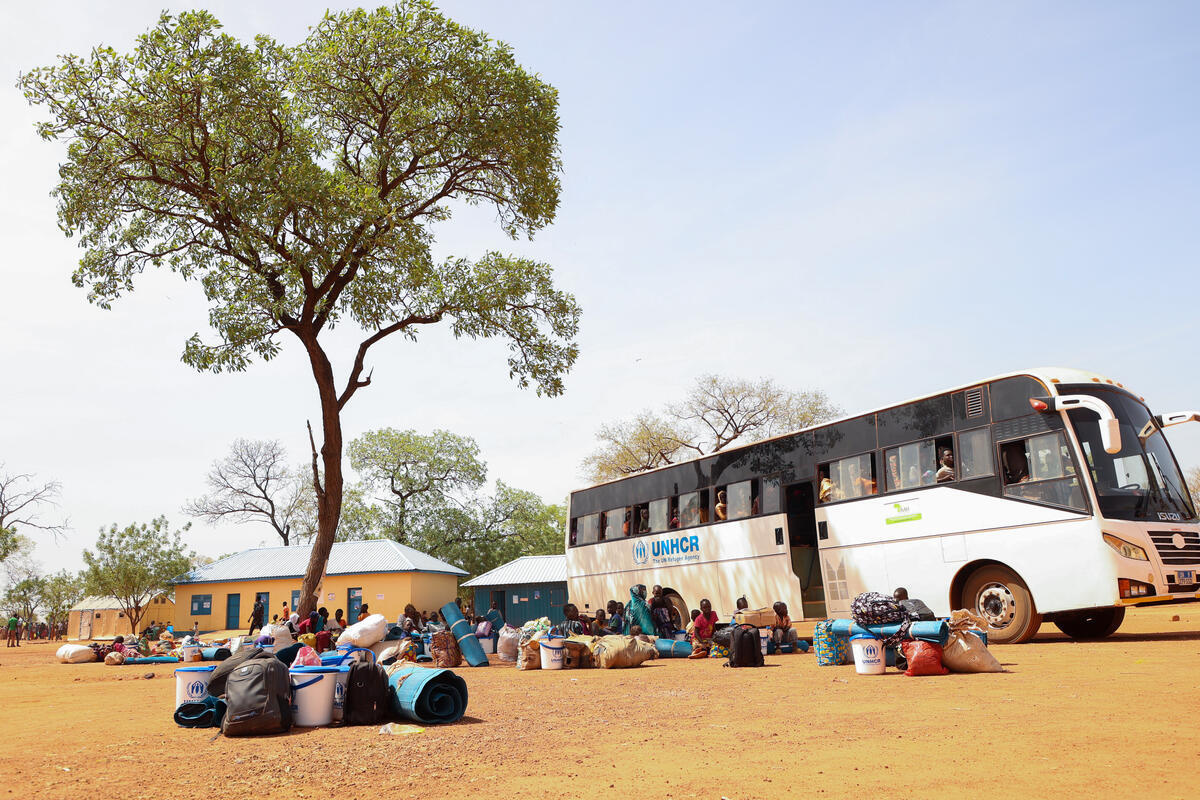
The family’s circumstances finally shifted when they reached Yida, a border town in South Sudan, and were relocated to Pamir refugee camp in the Ruweng Administrative Area.
Refugee-hosting sites in the Ruweng Administrative Area are currently hosting over 31,000 refugees who have arrived since the crisis began in April 2023. Here, UNHCR, the UN Refugee Agency, alongside its partners, provides critical, life-saving support to new arrivals. The response begins at the border. UNHCR facilitates safe transportation, moving exhausted families like Aisha’s away from unsafe border entry points to established sites. Upon arrival, families undergo a formal registration process. This vital step provides them with legal documentation and eases access to basic services, including food and cash distribution, education for the children, and healthcare. For Aisha, the most immediate relief was receiving a safe place to sleep.
“When we came here, thank God, we found shelter to stay in, and we were provided with a place with bathrooms. We had forgotten about living in houses. Compared to what we left behind, it is much better.”
While Pamir offers physical safety, the severe physical toll of the journey remains. Aisha suffers from high blood pressure among other ailments, and the months of displacement have left her weak.
“Right now, my body feels completely battered and exhausted,” she says. “I have no strength left at all. I am just moving on for the sake of these daughters of mine.”
Refugees like Aisha are immediately integrated into a support network through UNHCR’s registration system, allowing her to finally access the health facilities she desperately sought while on the run. Thanks to the support from the South Sudan Humanitarian Fund (SSHF), UNHCR teams are actively delivering emergency shelter, healthcare support, and access to clean water that newly arrived families like Aisha’s urgently need.
Yet, as the Sudan crisis has already surpassed its third year, the ability to sustain the response is under immense pressure. With the $286 million South Sudan budget only 24 per cent funded, continuous and renewed support is urgently needed to keep these essential services running and prevent an already fragile safety net from breaking.
Despite the safety the Sudanese refugees have found, the grief of displacement weighs heavily on their community. “This whole ‘nation’ is tired,” Aisha says.
While UNHCR, the government of South Sudan, and development partners continue to work for long-lasting solutions that foster self-reliance and inclusion of displaced people, the ultimate hope remains a return to peace in Sudan.
“We just hope Sudan gets fixed, and everyone returns to live their normal lives,” says Aisha. “When times get better, we will return to our country.”


