



Sudanese refugees in South Sudan grow enterprises through training, thanks to AfDB support

Sudanese refugees in South Sudan grow enterprises through training, thanks to AfDB support
Tau, an instructor at Ajoung Thok, teaching bedsheet embroidery to help women gain skills and income.
When conflict forces people to flee, the journey to safety is only the first step. The next and often most challenging is rebuilding a life with dignity. In the refugee settlements of Jamjang and Maban in South Sudan, through vocational training and community-led enterprise, refugees from Sudan and their South Sudanese hosts are proving that when given the tools, they can construct their own futures.
Mangisto Abdurahman, welding student
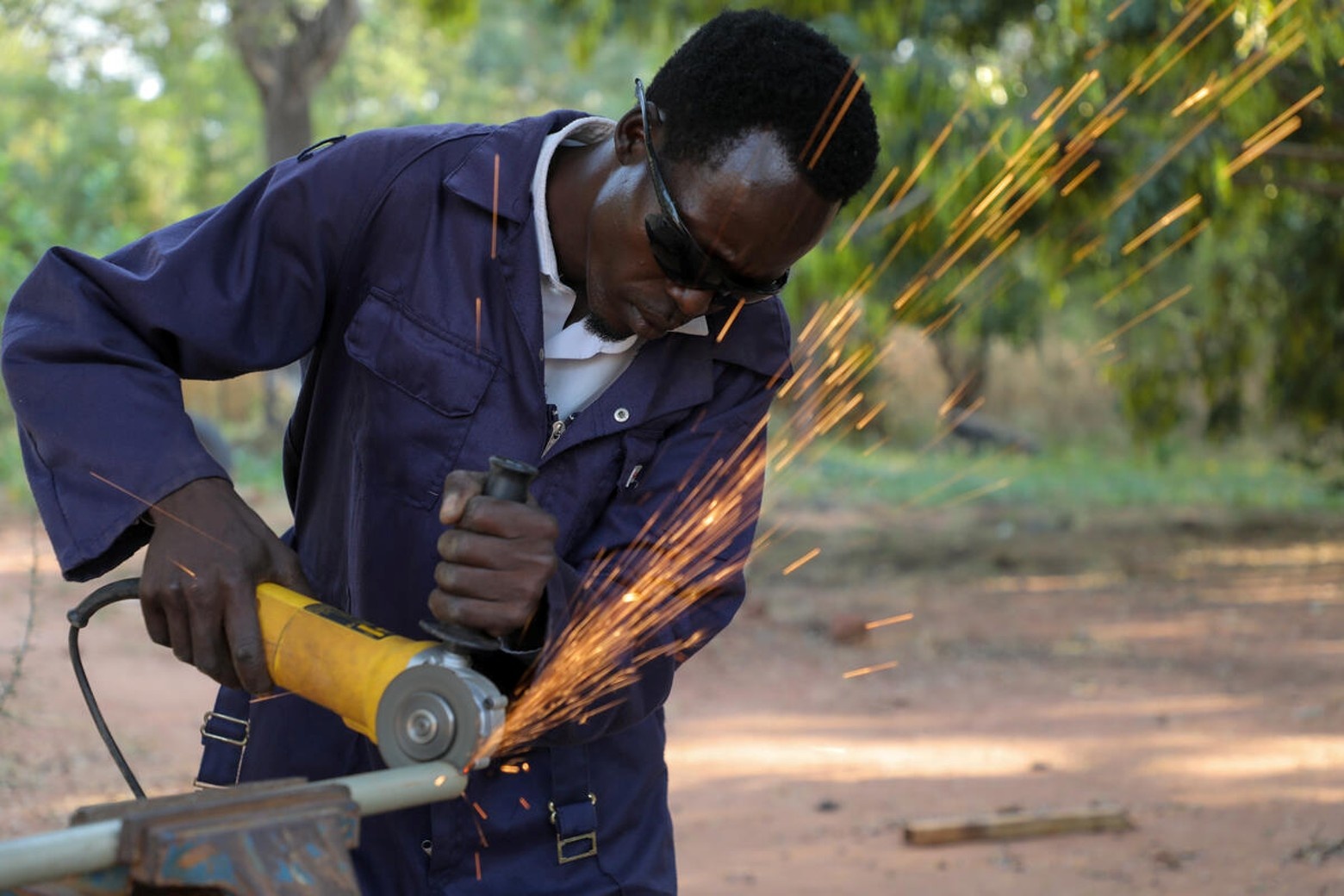
Mangisto Abdurahman, a Sudanese refugee, works his metallic grinder at the Ajoung Thok Vocational Training Centre in South Sudan.
Mangisto Abdurahman, 20, picks up his grinder and sparks flying from his workbench are a daily reminder of his potential to contribute meaningfully to his new community. It has only been a few months, but he already knows that what he is learning here is uncommon.
“Not many people in my community know how to weld,” he says. “When I finish, I can fix things, build things. I can support my family.”
Mangisto is one of hundreds of young people enrolled at the Ajoung Thok Vocational Training Centre, a facility inside the refugee camp that offers courses in welding, plumbing, computer studies, tailoring and embroidery. He came to South Sudan from Sudan and, like many who arrive at Ajoung Thok, had to start again.
Susan Nabil Ali, plumbing student
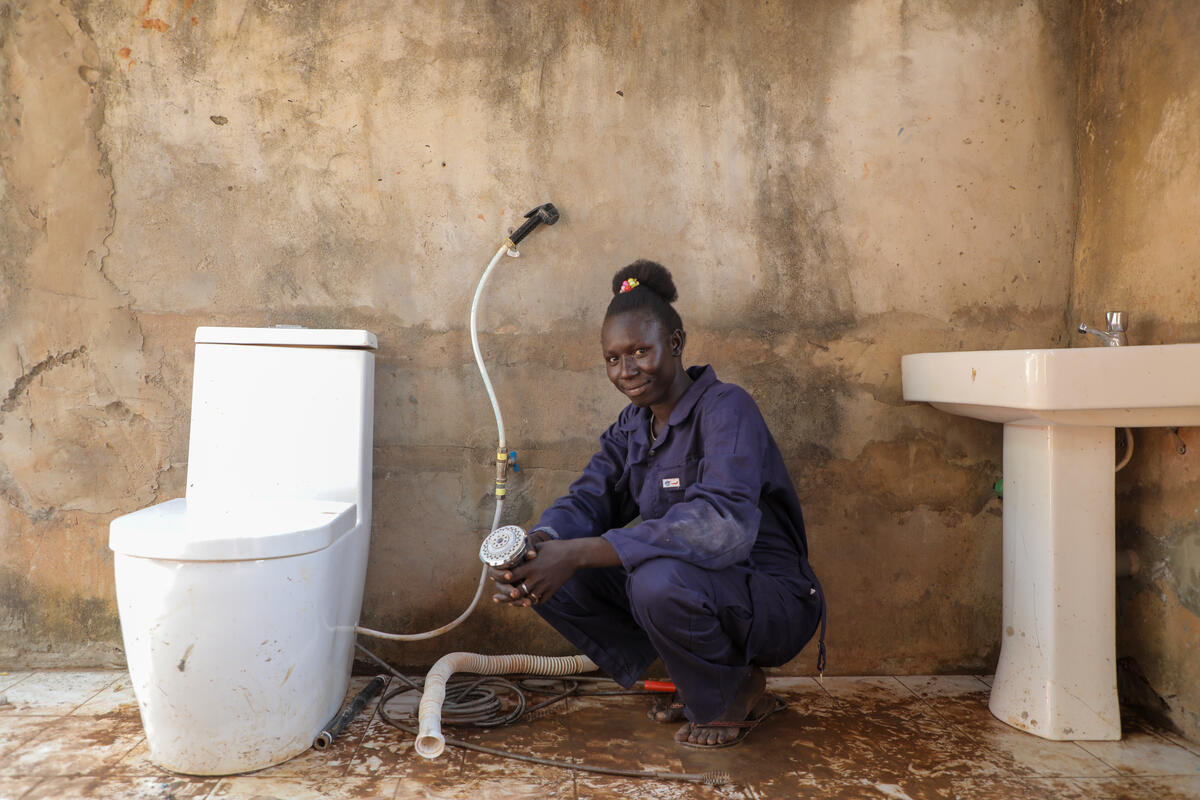
Susan fixes a pipe at the Ajoung Thok Vocational Training Centre, one of few women mastering the plumbing trade in the refugee camp.
Susan Nabil Ali, fled Sudan, is training to be a plumber. She arrived in South Sudan in 2017, resumed her schooling in Ajoung Thok and later on enrolled in the nine-month plumbing course after completing her studies. She is usually the only woman in the room when the subject of plumbing comes up in conversation outside the centre.
“Usually, when people think of a plumber, they assume the person is male,” she says. “But here I am, chasing my dream. I want to use this skill to support my family.”
After she graduates, Susan wants to teach other girls in the camp what she learned from the vocational centre.
Abutarik Idriss, graduate and shop owner
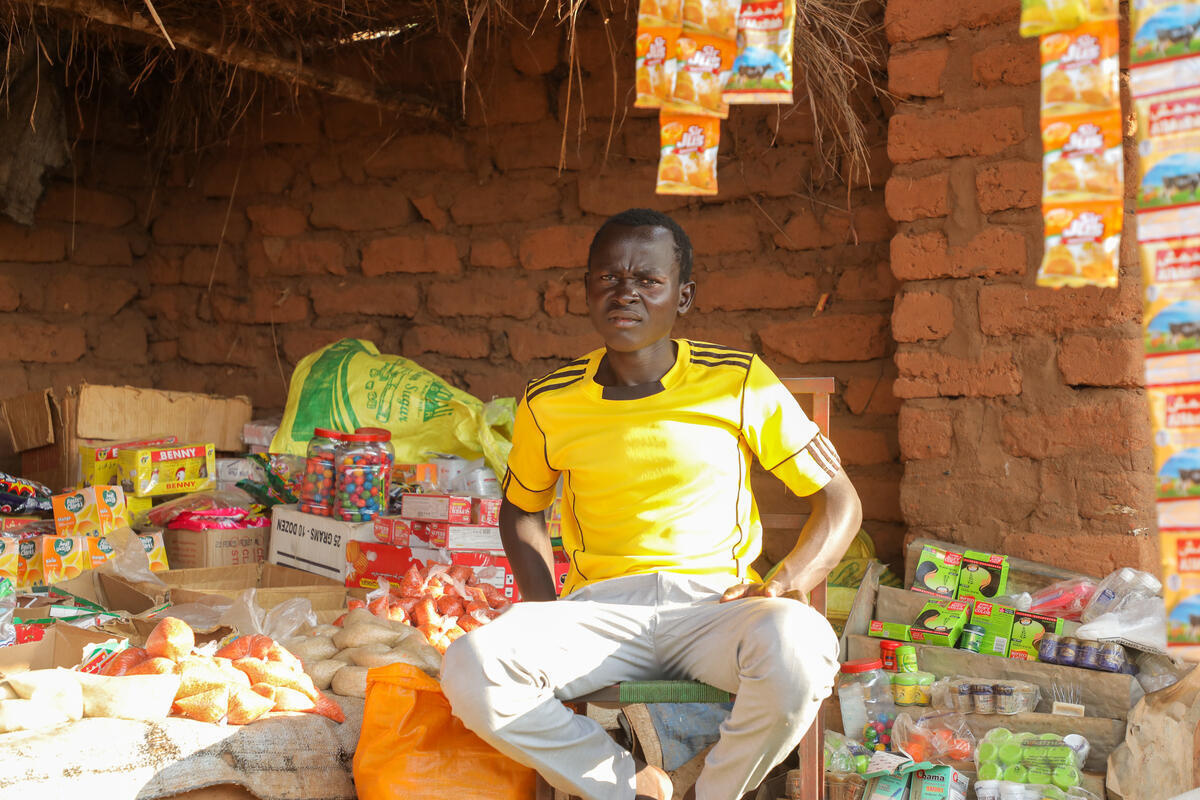
Abutarik sitting at his grocery shop, which he and three colleagues opened inside the refugee camp with a start-up grant.
Abutarik Idriss graduated from the Digital centre in Jamjang with a qualification in computer studies. Within months, he and three classmates had used a start-up grant to open a small grocery shop inside the camp.
Today, Abutarik runs mainly the shop’s accounts, tracking sales and balancing figures using the digital skills he was taught to at the Digital centre. The shop is modest, but the four partners are already talking about expanding including the need for a computer to manage the accounts records.
Tau Makuei, embroidery instructor
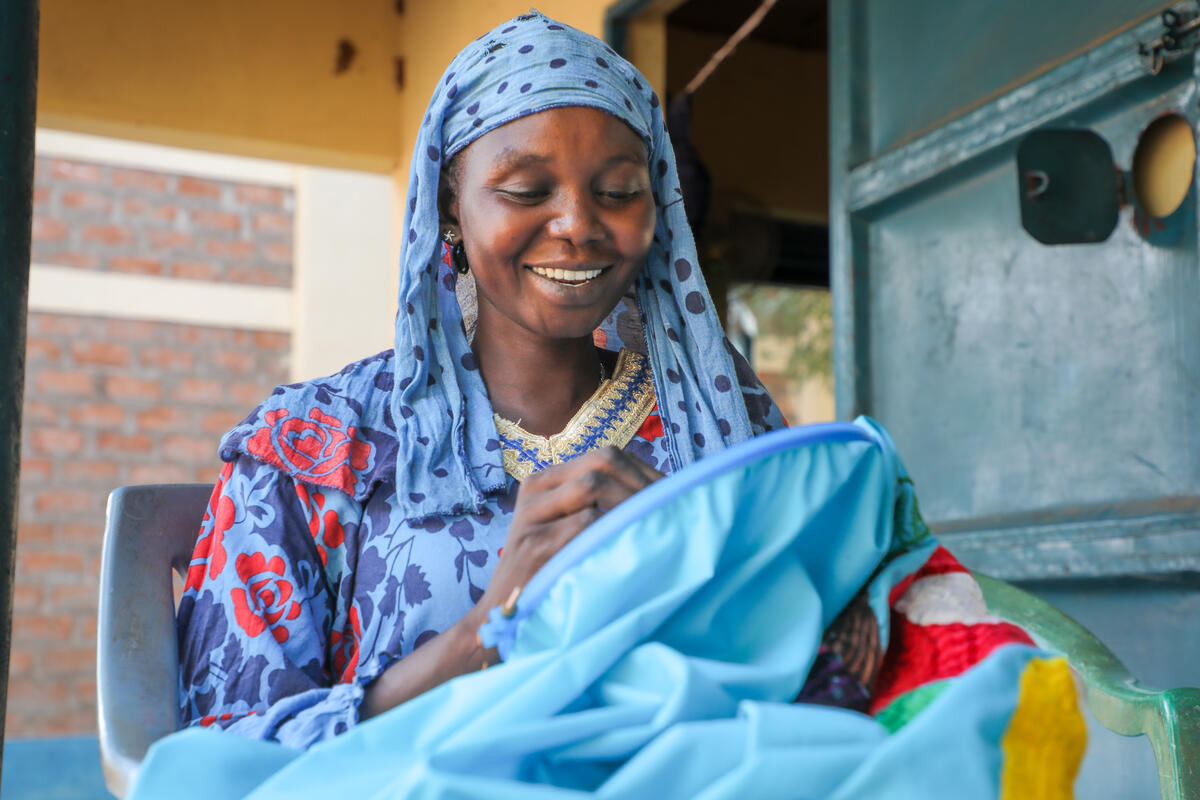
Tau Makuei has been teaching bedsheet embroidery at the centre for three months and she knows why the skill matters.
“When you embroider a bedsheet, you are not just making something beautiful,” she says. “You are making something with value, something that can earn you income and make your home beautiful at the same time.”
Tau is a skilled embroiderer, many of her students are refugees. Their experiences, she says, bring them together in ways that go beyond the classroom.
“We connect on a deeper level. That is something you cannot teach from a textbook.”
She hopes more women in the camp will see embroidery as a means of earning their own money, on their own terms.
Maha, 22, salon owner, Ajoung Thok Market
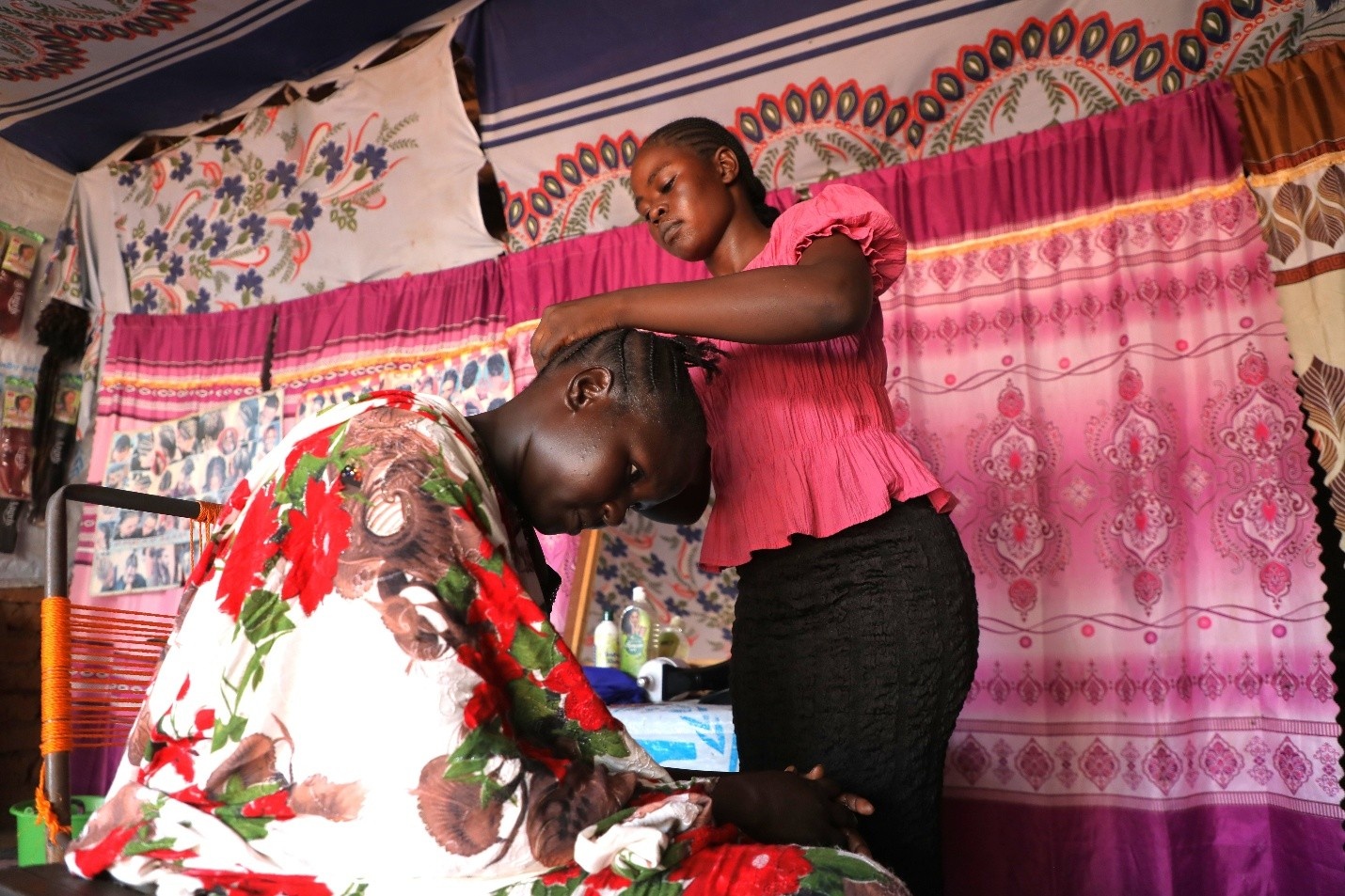
Maha at her salon business inside the Ajoung Thok market in South Sudan.
A few minutes’ walk from the TVET/training centre, inside the Ajoung Thok Market, Maha runs a salon with a business partner who also trained at the centre. Maha is 22 and came from Sudan. She has one employee, a woman from the host community.
“Before the training, I was doing small casual work and never knew how much I would earn in a day,” she says. “Now I have my own salon, I keep records, and I can plan for my family.”
Her business partner is now using profits from the salon to study further. Maha plans to do the same when her business partner returns.
The Sorghum and Joda savings groups, Doro Camp, Maban
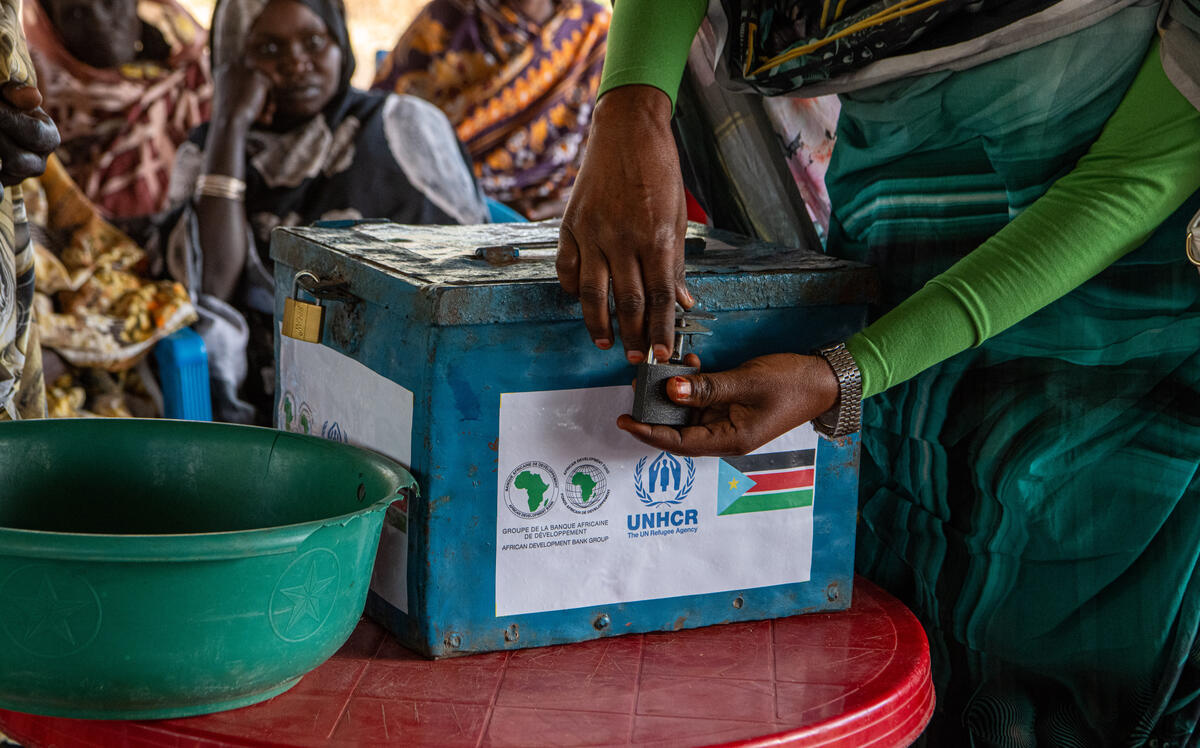
Forty-five members of two savings groups in Doro camp turned a year of hard work into a new beginning for others. After receiving an initial grant and investing it in small businesses, the Sorghum Village Savings and Loan Association grew their funds and then chose to transfer 6,300,000 South Sudanese pounds, about 1,560 US dollars, to the Joda group, where 18 of the 20 members are women. Instead of keeping all the profits, they passed on capital and confidence, giving another group the chance to start and grow their own businesses.
Supported by Relief International and funded by the African Development Bank through UNHCR under the Entrepreneurship Support to Refugees and Host Communities project, the two groups show what happens when training, trust and savings come together. What began as a single grant has turned into a cycle of investment within the camp, with refugees using their own success to open doors for others.


