



Seeds of change: A former Burundian refugee teacher returns home with skills for a greener future
Seeds of change: A former Burundian refugee teacher returns home with skills for a greener future

After 11 years as a refugee in Tanzania, Ephraim Nyandwi has made a life-changing decision. In May 2026, the 53-year-old teacher and environmental advocate chose to return home to Burundi. He was no longer the man who had fled in fear in 2015. Through years of learning and community service in the country's Nyarugusu Refugee Camp, where he lived for over a decade, Ephraim had gained new skills, confidence, and a renewed sense of purpose, empowering him to return home.
Passionate about environmental conservation, Ephraim received training on environmental issues and went on to establish an environmental club at his school in the camp. Through the club, he helped students understand the importance of protecting the environment and inspired them to become agents of change in their communities.
“When I arrived as a refugee, I had lost almost everything,” says Ephraim. “But here, I gained knowledge and skills that changed my life. I am returning to Burundi with a mission to share what I have learned and help my community protect the environment.”
Recalling his journey from Burundi to Tanzania in 2015, Ephraim made a very difficult decision. He fled his home country, Burundi, alone. Life had become unsafe, and like many others, he had no choice but to leave everything behind. He left his home, his work, and his loved ones in search of safety. After a long and uncertain journey, he crossed into Tanzania.
When he arrived, he was received by the Government of the United Republic of Tanzania and UNHCR, the UN Refugee Agency. At the reception centre, he found temporary relief. Soon after, he was taken, along with other asylum seekers, to the Nyarugusu Refugee Camp, which became his new home.
Teaching as a passion
Before fleeing Burundi, Ephraim was a teacher. Teaching was not just his job; it was his passion. So, when he arrived at Nyarugusu Camp, he looked for a way to continue doing what he loved. In 2016, he applied for a teaching position at Shukuru Primary School inside the camp. He was successful, and once again, he stood in front of a classroom, helping children learn.
A decade later, a new opportunity came. With support from the Government and people of Belgium and through the Kigoma Joint Programme, UNHCR provided environment training to more than 120,900 refugees living in Nduta and Nyarugusu refugee camps. The training focused on climate change, environmental protection, clean cooking practices, and kitchen gardening.
Godfrey Oyema, UNHCR Assistant Environment Officer, explains the importance of this training, “We aim to equip refugees with practical knowledge they can apply in their daily lives. By using locally available materials, they can grow food, improve nutrition, reduce pressure on natural resources, and become more self-reliant even in challenging conditions.”
For Ephraim, this training opportunity was special. Growing up in Burundi, he had always loved agriculture. “My parents were hardworking farmers, and I learned farming from them at a young age,” he recalls. When the training was announced, Ephraim joined without hesitation.
But Ephraim did not stop at learning. As a teacher, he believed knowledge should be shared.
At Shukuru Primary School, he started an environmental club. Thirty students joined eagerly. For many of them, it was their first time being part of such a group. The club quickly became a place of learning, action, and teamwork.
Ephraim and his students began by creating small demonstration gardens within the school. They cleared the land together, prepared the soil, and planted different vegetables such as spinach, eggplants, tomatoes, and onions. They used recycled containers like old buckets and plastic bottles to plant seedlings where space was limited.
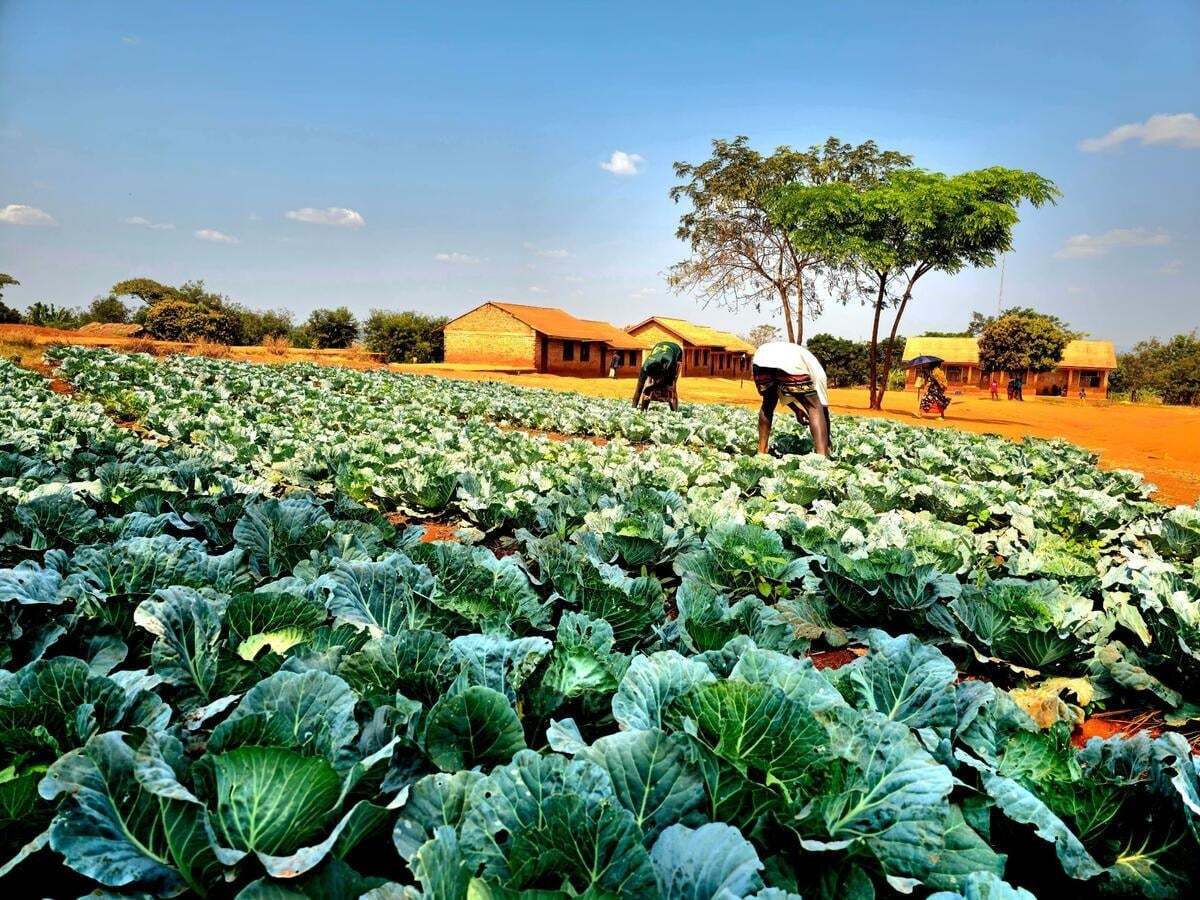
“I taught them how to make organic manure using locally available materials such as food scraps, dry leaves, and animal waste,” describes Ephraim, “The students learn how to mix and compost these materials to enrich the soil without using expensive fertilizers.”
The students also practiced tree planting around the school compound and nearby areas. They took responsibility for nurturing the trees—watering them, protecting them from damage, and ensuring they grow strong.
One of the most exciting moments for the students was harvest time.
Together, they harvested their crops, celebrating their hard work. Some of the produce was sold to support the club’s activities, while the rest was shared among the students to take home to their families.
Ephraim encouraged each student to start a small kitchen garden at home. Many of them did. Over time, families began to see the benefits of fresh vegetables, better nutrition, and small savings on food.
“I always remind them,” Ephraim says, smiling, “Do not give a child a fish; rather, teach a child how to fish.”
To him, this was more than a proverb; it was a way of life.
Ephraim believes the knowledge he planted in his students will last forever. It will continue to grow, just like the seeds they planted together.
“Knowledge is something no one can take away from me.”
Ephraim plans to start his own farm. Using the skills he gained from the training, he will establish a kitchen garden and gradually expand it. He intends to practice sustainable farming methods he learned in the refugee camp, using organic manure, conserving water, planting trees, and applying natural pest control.
He also hopes to start an environmental club in his community in Burundi, just like the one he led in Nyarugusu Camp. Through this, he wants to teach children and young people about protecting the environment, growing food, and becoming self-reliant.
“Even though I lost many years in the camp,” he reflects, “I gained something very valuable: knowledge. And knowledge is something no one can take away from me.”
He is determined to use that knowledge to create a better future for himself, his family, and his community.
For Ephraim, returning home is about more than going back to Burundi. It is about taking home the knowledge, skills, and experience he gained during his years as a refugee and using them to make a difference in his community.


