



KOICA, UNHCR learning event highlights progress toward sustainable reintegration of returnees in Burundi
KOICA, UNHCR learning event highlights progress toward sustainable reintegration of returnees in Burundi

Representatives from KOICA, the Government of Burundi and UNHCR at the program's learning event in Bujumbura, Burundi.
UNHCR, the UN Refugee Agency and the Korea International Cooperation Agency (KOICA) convened a learning event in Bujumbura, Burundi to review progress, share lessons learned, and identify priorities for supporting the sustainable reintegration of Burundian returnees under the theme “From Return to Self-Reliance: Lessons, Good Practices, and Sustainable Reintegration of Returnees.” The event marked the second year of implementation of the KOICA-funded Conflict-affected and Fragile States Supporting Programme (CFP) in Burundi.
The event brought together representatives from the Government of Burundi, funded partners, returnee-led organizations and beneficiaries to reflect on achievements and strengthen partnerships that promote durable solutions for displaced populations.
As part of the regional programme “From Vulnerability to Empowerment: Building Safe and Secure Communities,” supported through the partnership between KOICA and UNHCR, the programme in Burundi supports voluntary repatriation and sustainable reintegration of Burundian refugees in the region through an integrated Humanitarian-Development-Peace (HDP) Nexus approach.
Interventions focus on improving access to shelter, legal documentation, education, healthcare, livelihoods, and community-based services while fostering resilience and social cohesion among returnees and host communities.
In the last two years of implementation, the programme has supported 58,000 Burundian returnees to return to Burundi in safety and with dignity. More than 45,000 individuals have also been screened and assessed to identify their specific needs and receive relevant assistance. The program has also facilitated access to civil documentation and health insurance cards for some 47,000 returnees, enabling them to access critical medical assistance and other essential services. Core relief items have been distributed to 51,000 people, 189 classrooms and school facilities constructed in areas of return; agro-pastoral cooperatives supported to strengthen livelihoods and economic resilience. 245 returnees also received training in income-generating activities and entrepreneurship capacity building.
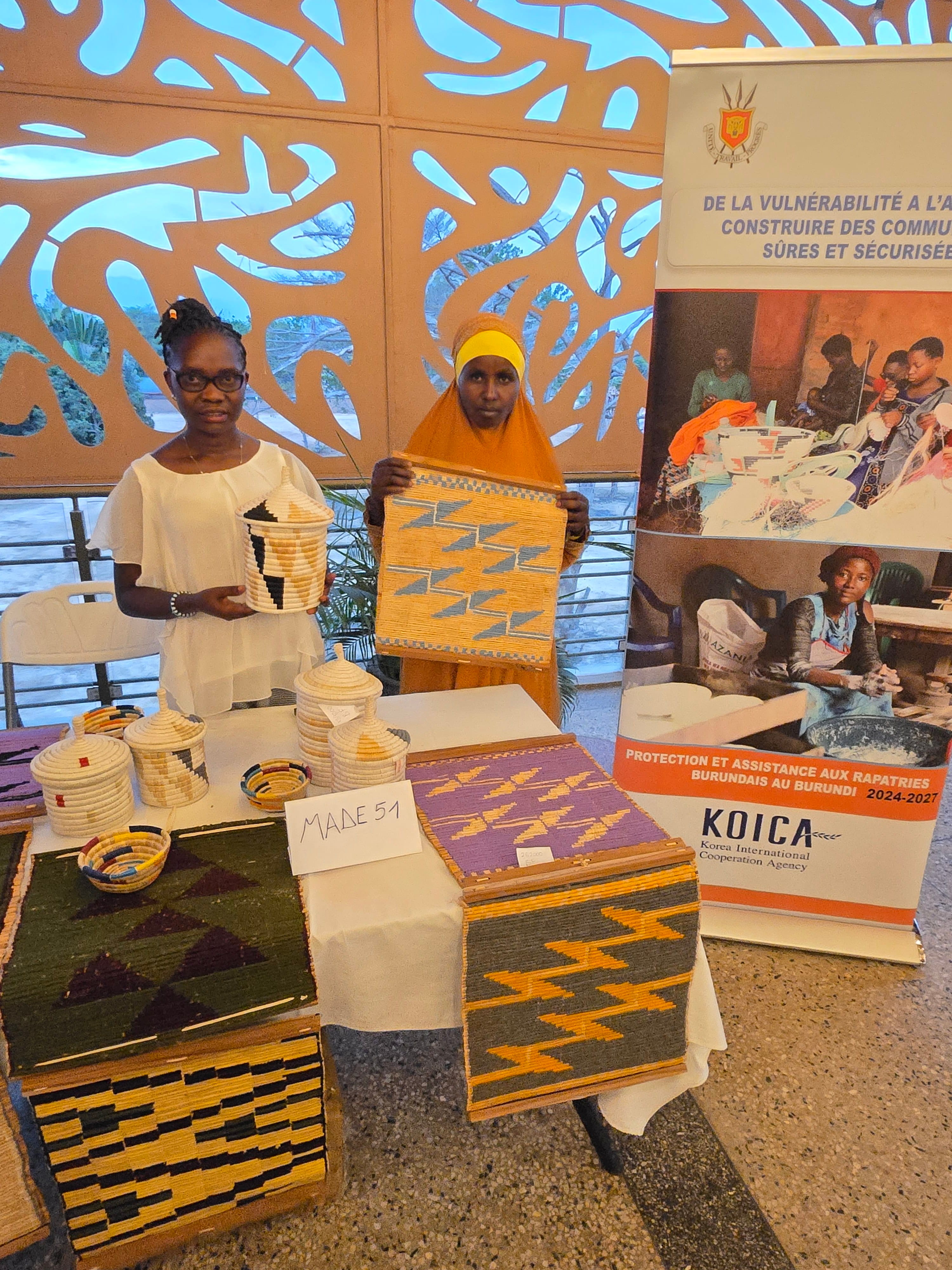
Refugee artisans showcasing their products at the learning event in Bujumbura.
Opening the event, Chubaka Innocent Sangara, the Deputy Representative of UNHCR Burundi, emphasized the critical role of KOICA's sustained support in enabling the safe return, reintegration, and socio-economic empowerment of Burundian returnees, while strengthening peace, social cohesion, and the transition from humanitarian assistance to long-term development solutions.
Nestor Bimenyimana, the Director General of Action Rapatriement et Réintégration des Rapatriés (Action for the Repatriation and Reintegration of Returnees), underscored the Government of Burundi's commitment to refugee protection and the sustainable reintegration of returnees. The Director General appreciated the key achievements made possible by KOICA’s contribution, while calling on KOICA, UNHCR, and partners to strengthen support for education, shelter, and services for vulnerable returnees amid continuing repatriation movements.
Throughout the event, participants reviewed progress made in strengthening reintegration support systems, promoting self-reliance, and enhancing collaboration among humanitarian, development, and government actors. Beneficiaries shared testimonies describing how programme support had improved their living conditions and provided livelihood opportunities. Their testimonials demonstrated the impact of return and reintegration support for Burundian returnees, who have now moved from vulnerability to empowerment. The exhibitions also showcased products developed by cooperatives and with KOICA support.
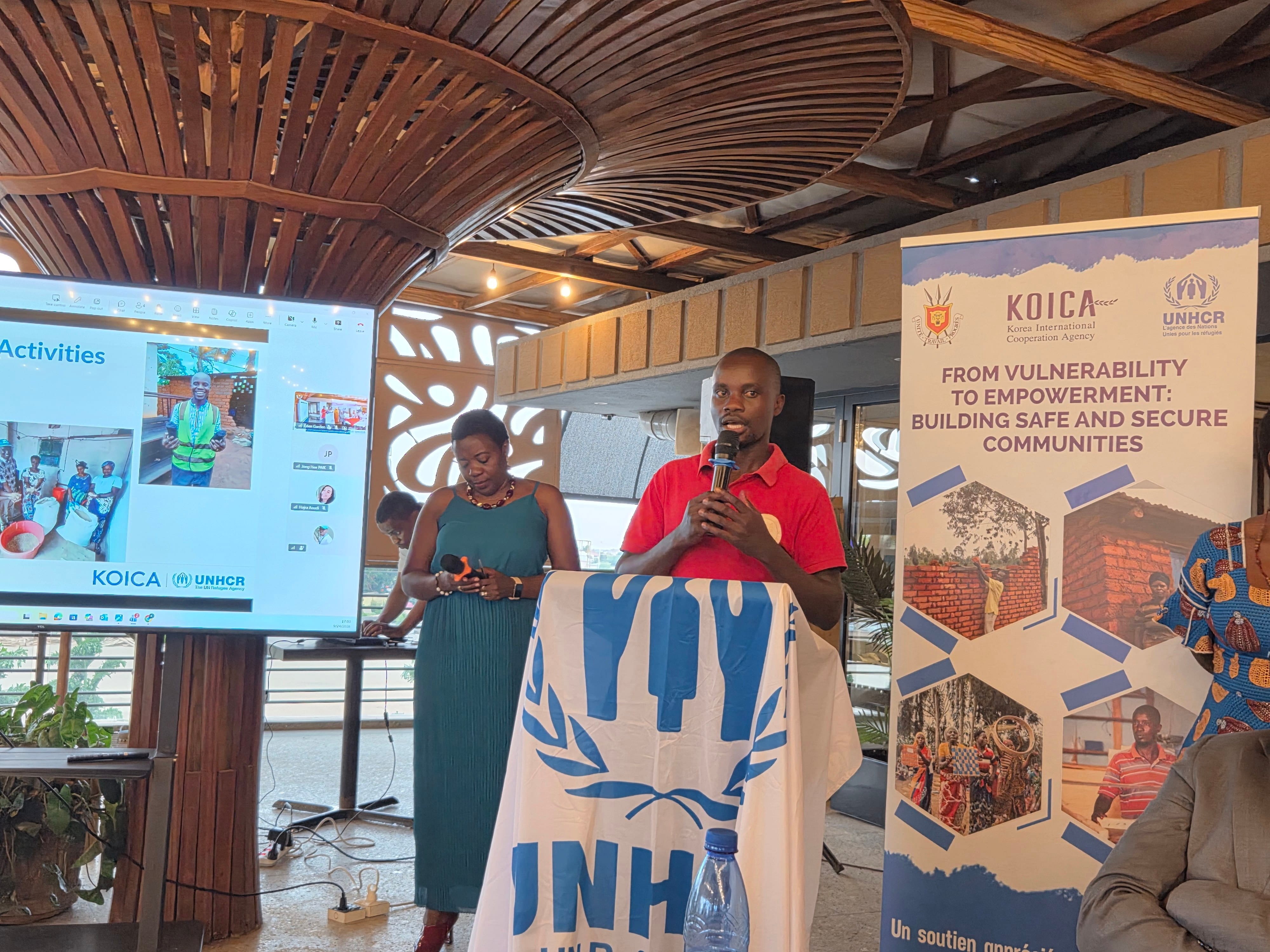
Bethel Iranezereza (36), the leader of the Multi-production Cooperative in Muyange, shares his testimony.
Discussions focused on three key themes: integrated reintegration support, economic empowerment and livelihoods, and partnerships for sustainable reintegration. Participants exchanged lessons learned and identified ways to build on current achievements to ensure long-term sustainability beyond the project cycle.
Kapchae Ra, Country Director of KOICA Rwanda, highlighted the tangible achievements and positive impact observed during field visits, including schools, reception and transit facilities, reintegration activities, and interactions with the beneficiaries. He welcomed the success stories shared during the event and reaffirmed KOICA’s commitment to supporting effective and impactful interventions for returnees and host communities. He further encouraged partners and beneficiaries to continue sharing recommendations on how future interventions could be made more effective, efficient, and responsive to local needs.
The event concluded with a shared commitment among stakeholders to advance durable solutions that enable Burundian returnees to transition from vulnerability to self-reliance. Participants reaffirmed the importance of coordinated investments in services, livelihoods, community infrastructure, and local ownership to strengthen resilience, foster social cohesion, and support Burundi’s national development priorities.
In his closing remarks, Nestor Bimenyimana, the Director General of Action Rapatriement et Réintégration des Rapatriés (Action for the Repatriation and Reintegration of Returnees), reaffirmed appreciation for KOICA, UNHCR, and partners for their support during Burundi’s large-scale return movements, emphasizing the collective commitment to help returnees transition from vulnerability to resilience through sustained reintegration assistance and coordinated action.
END
About the Programme
Since 2014, KOICA and UNHCR have expanded their partnership to support displaced and conflict-affected populations around the world. Under the regional programme “From Vulnerability to Empowerment: Building Safe and Secure Communities (2024-2027),” the two organizations are working together to promote sustainable solutions, community empowerment, and resilience through Humanitarian-Development-Peace Nexus programming. This programme is part of the KOICA’s global initiative Conflict-affected and Fragile states supporting Programme (CFP) which is a multi-year initiative designed to strengthen Humanitarian-Development-Peace Nexus in fragile contexts, implemented in the Eastern Africa region (Burundi and South Sudan) and MENA region (Lebanon and Jordan) through UNHCR.
In Burundi, targeting all five provinces Buhumuza, Bujumbura, Burunga, Butanyerera, and Gitega, the project focuses on:
Voluntary repatriation and reintegration of Burundian returnees through support for safe, dignified, and sustainable return processes;
Civil documentation and legal identity support, enabling returnees to obtain civil status documents, identity cards, and other legal documentation. Protection monitoring and legal assistance;
Legal assistance and access to justice for returnees, including judicial support and legal counselling;
Provision of shelter kits and technical support in shelter construction, rehabilitation, and maintenance to provide adequate housing for returnee households and facilitate sustainable reintegration;
Access to primary healthcare services for returnees and other persons of concern, improving overall well-being and resilience;
Social and economic reintegration of returnees by promoting self-reliance, community participation, and opportunities for sustainable livelihoods;
Strengthening social cohesion and peaceful coexistence between returnees and host communities, contributing to safe and secure communities across Burundi;
Construction of schools and improved access to quality basic education, including strengthening the inclusion of returnee children in the national education system.
The project aims to benefit over 153,000 Burundian returnees and host communities, strengthening sustainable reintegration to provide durable solutions, aligning with contributing to the strategic objectives of the Government of Burundi's National Development Plan (PND 2018–2027), which specifically prioritizes the voluntary repatriation, safe return, and sustainable reintegration of Burundian refugees.


