



When Stitches Speak Across Borders: Afghan refugee women and India’s Kutch artisans weave skills, stories and shared futures
When Stitches Speak Across Borders: Afghan refugee women and India’s Kutch artisans weave skills, stories and shared futures

Artists Farida and Rasilaben weave together during the workshop, exchanging stitches shaped by generations.
In a sunlit wooden hall in New Delhi, women sit together with needles moving steadily through cloth. Some work while seated on sofas; others gather in small circles on the floor, stitching side by side. Children move freely through space — watching, laughing and forming friendships of their own. The workshop feels less like a training room and more like a shared home, filled with creativity, care, and conversation.
Artisans from Kutch, a district in Gujarat in Northwestern India, and Afghanistan have come together to exchange embroidery techniques passed down through generations. Mirrored Kutch motifs meet delicate Afghan traditional patterns as hands demonstrate, repeat and adapt each stitch. What begins as shared practice slowly grows into collaboration — and then into trust and friendship.
For Parween Kakkar, a 47-year-old Afghan refugee who arrived in India in 2017, the exchange offered more than technical learning. Working alongside Kutch artisans felt natural to her. “It is a cultural exchange,” she says. With support from UNHCR, Parween was able to display and sell her embroidered products, earning income while strengthening her confidence. Reflecting on the experience, she adds, “I am happy that two countries are coming together and learning from each other. In these 10 days, I forgot all the troubles of my life.”
Across the hall, Dharmila Ahir, a 32-year-old artisan leader from Kotay village in Kutch, guides younger women as they work. Embroidery has been part of her life since childhood — from stitching her own bridal attire to now leading a collective of 80 women. “We learned from each other — teaching, learning and creating together,” she says. Through shared learning, new market opportunities are beginning to emerge.
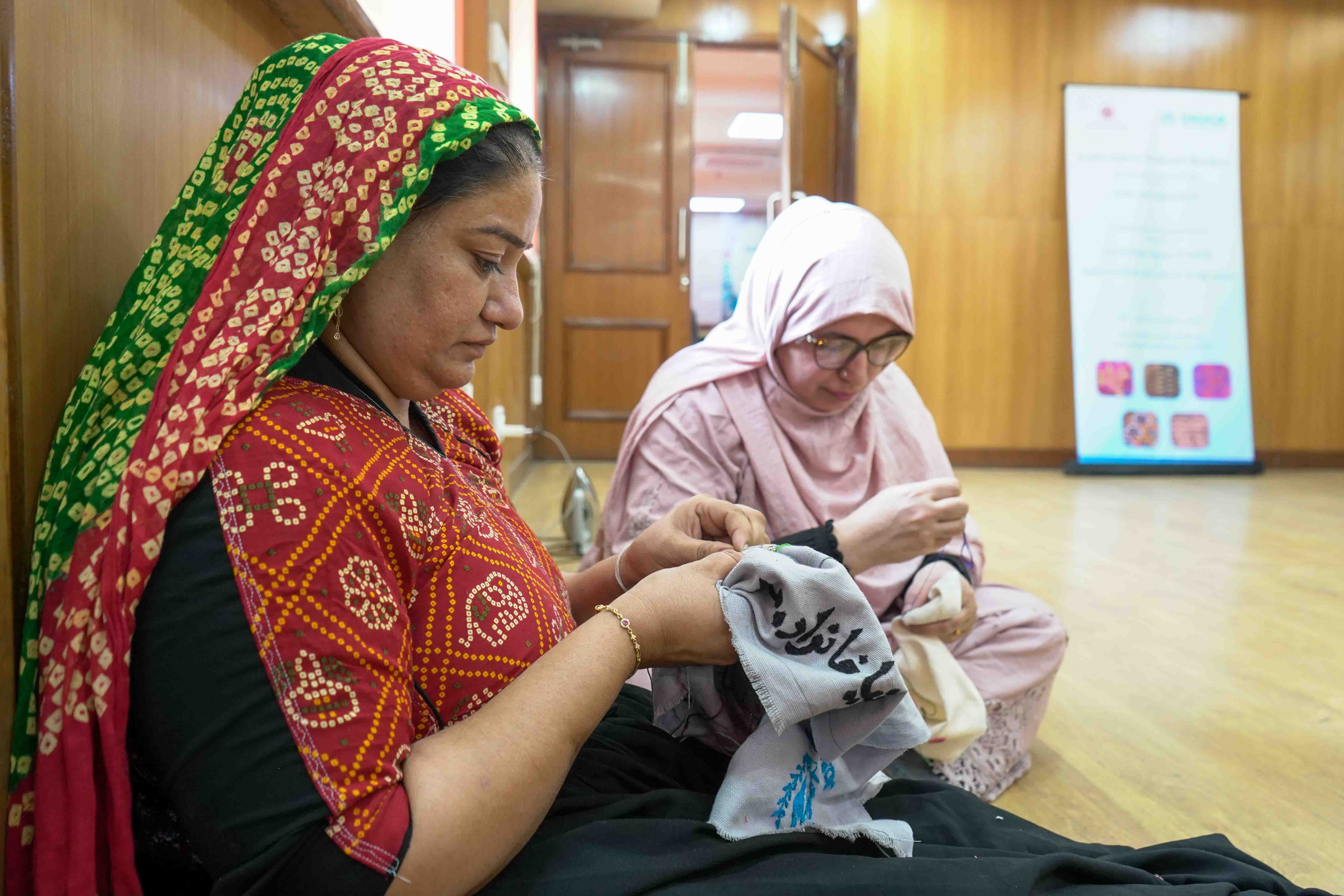
Dharmila Ahir and Khalida Mahmodi co-create a joint embroidery piece, blending Kutch and Afghan traditions.
Recalling how the collaboration began, Dharmila adds, “I learned about UNHCR and IICD’s workshop through the Kaarigar Clinic (an NGO in Gujarat helping women in marketing their products) and we were invited to work together — Kutch women and Afghan women. Even though we speak different languages, our hands speak the same language. In just 10 days, we learned from each other, created joint work and became good friends.”
Khalida Mahmodi also practiced Kutch embroidery techniques taught to her by Sitaben Rabari. For 20-year-old Rasila Rabari, the experience has been transformative. “I earn daily now,” she says. “I also found friendships that will stay with me.”
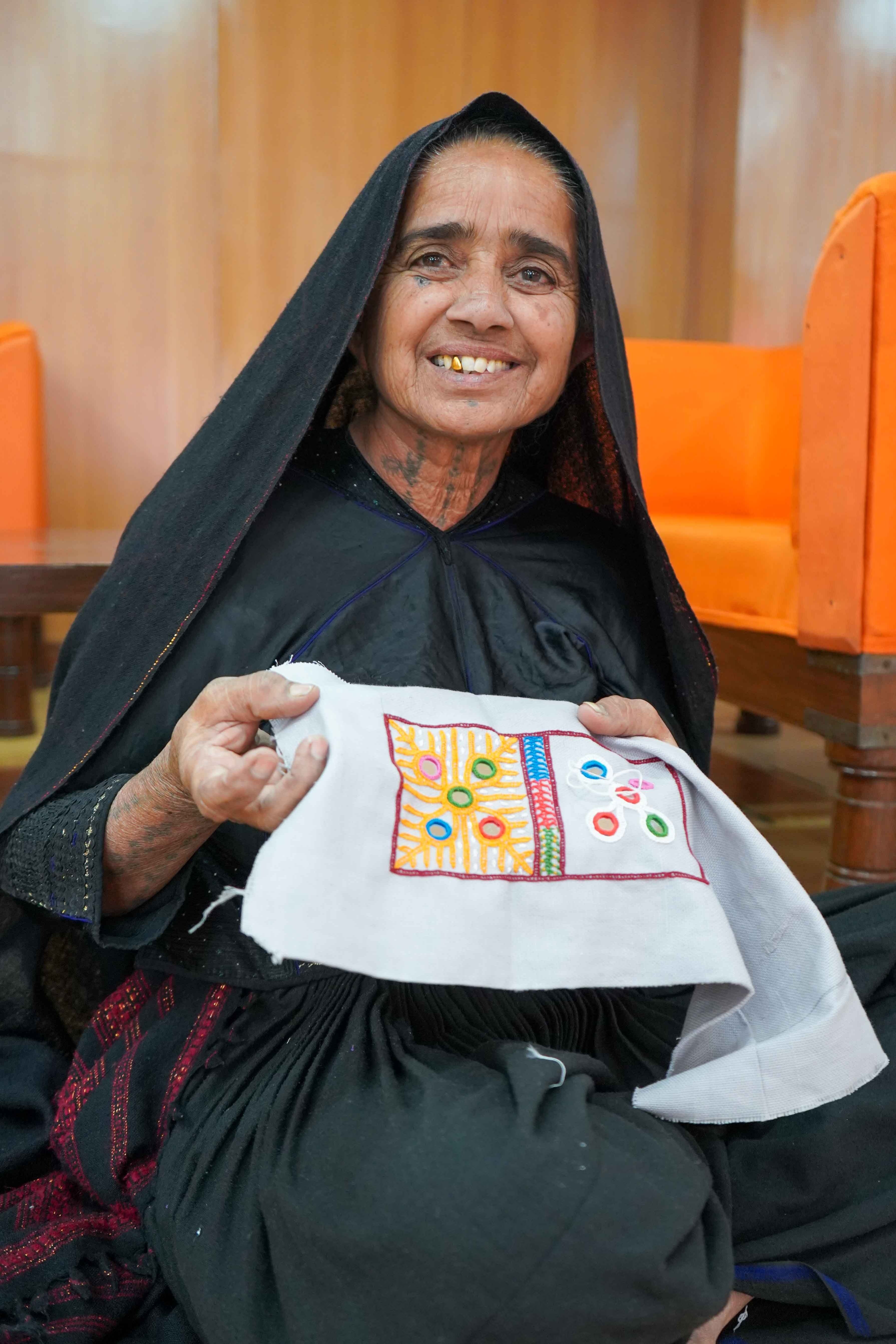
Sitaben Rabari demonstrates traditional Kutch embroidery techniques during the exchange.
From shared learning to shared markets
The collaboration has continued well beyond the workshop. Women from both communities stay connected through a shared WhatsApp group, where they exchange ideas, designs and client requests. Dharmila began promoting Afghan-made products on her Instagram page, introducing them to her existing customer base. When clients requested pocket purses, the message was shared across the group.
Parween and other Afghan women responded by creating the products collaboratively. As a result, Parween sold 10 pocket purses to a single client, earning an income and building confidence as an artisan entrepreneur. With more orders now coming in, the women are seeing stronger and more sustainable livelihood opportunities — created together across borders.
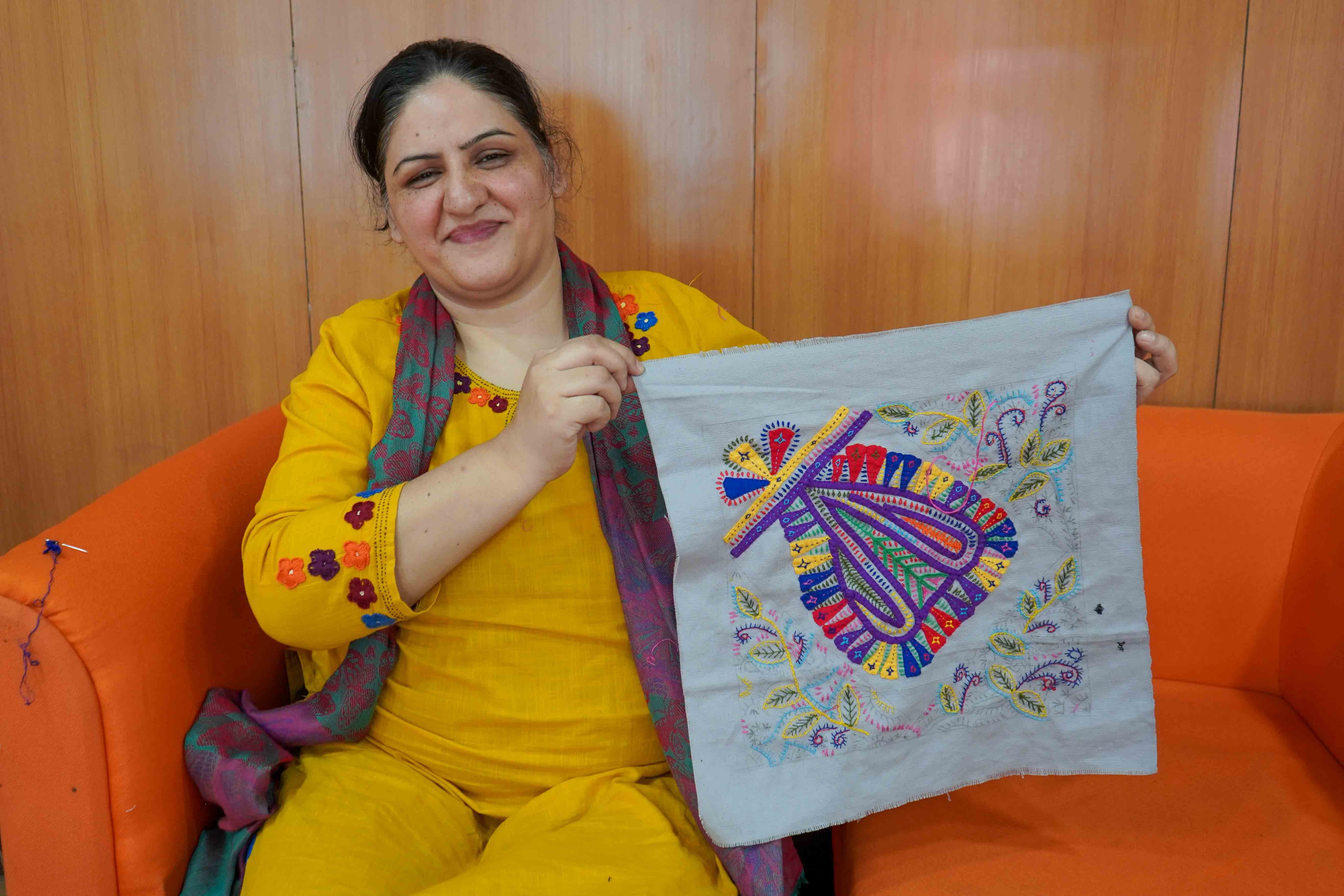
Parween Kakkar displays her embroidery, reflecting tradition, resilience and pathways to sustainable livelihoods.
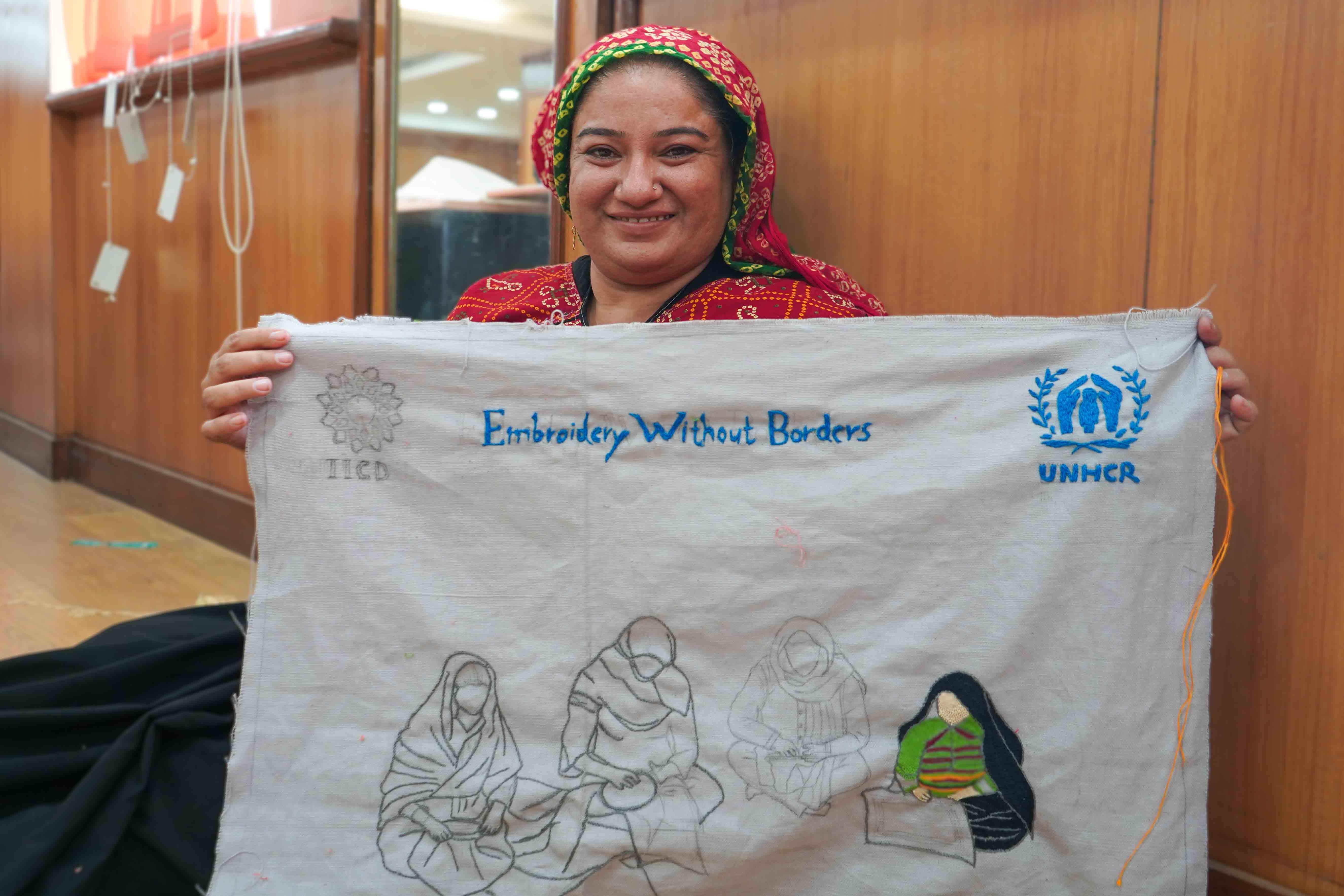
Dharmila Ahir displays her embroidery, reflecting tradition, resilience and pathways to sustainable livelihoods.
Taking the project forward
The workshop was part of Embroidery Without Borders, a collaborative initiative supported by UNHCR India and the Indian Institute of Crafts and Design (IICD), Jaipur. Over 10 days, Afghan refugee women and Kutch artisans exchanged embroidery skills and co-created contemporary, market-ready textile products. Alongside skill development, the initiative fostered dialogue, strengthened community connections, and supported pathways to sustainable livelihoods.
As the days passed, shared techniques transformed into embroidered pieces carrying stories of resilience, displacement, and belonging. The initiative shows how, when women from refugee and host communities create together, stitches can do more than decorate fabric — they can connect cultures and build shared futures with dignity.
Building on the success of this first phase, UNHCR India is seeking financial and additional support for the second phase of the project, with a focus on developing specific, high-quality products for wider markets. Discussions are also underway with MADE51 to explore pathways to global markets, while collaboration with IICD will continue to strengthen design, production and market readiness. to explore pathways to global markets, while collaboration with IICD will continue to strengthen design, production and market readiness.
MADE51 is a flagship initiative of UNHCR that empowers refugee artisans by promoting their skills, cultural heritage, and livelihoods through dignified work. UNHCR India has implemented MADE51 since 2018, working with local social enterprises to support more than 350 refugee artisans across three states.
With these efforts, the initiative is set to expand further in 2026 — creating more opportunities for refugee and host-community artisans alike.
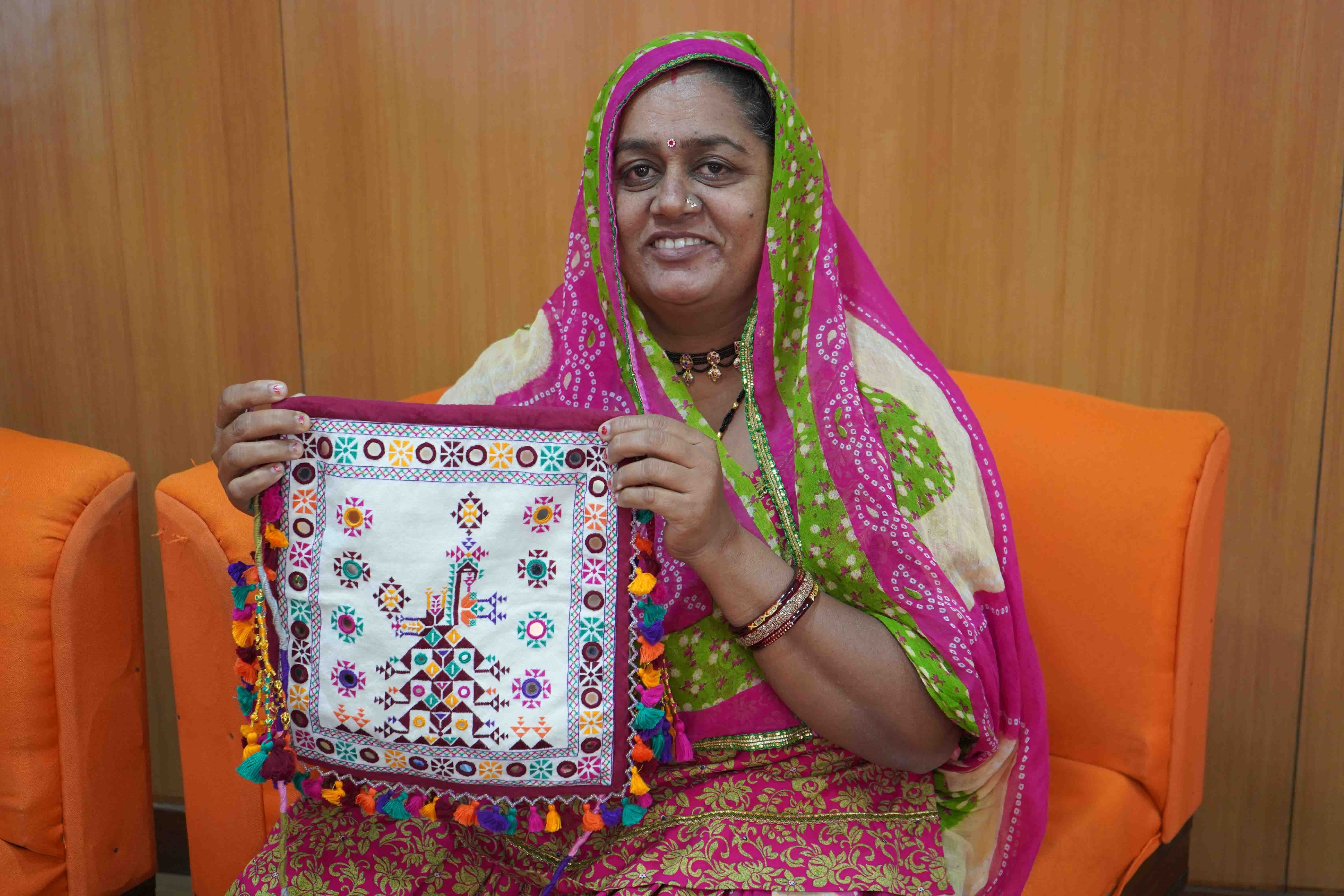
Parvatiben from Kutch proudly displays a handcrafted bag she created — embroidery that now contributes significantly to her family’s income.
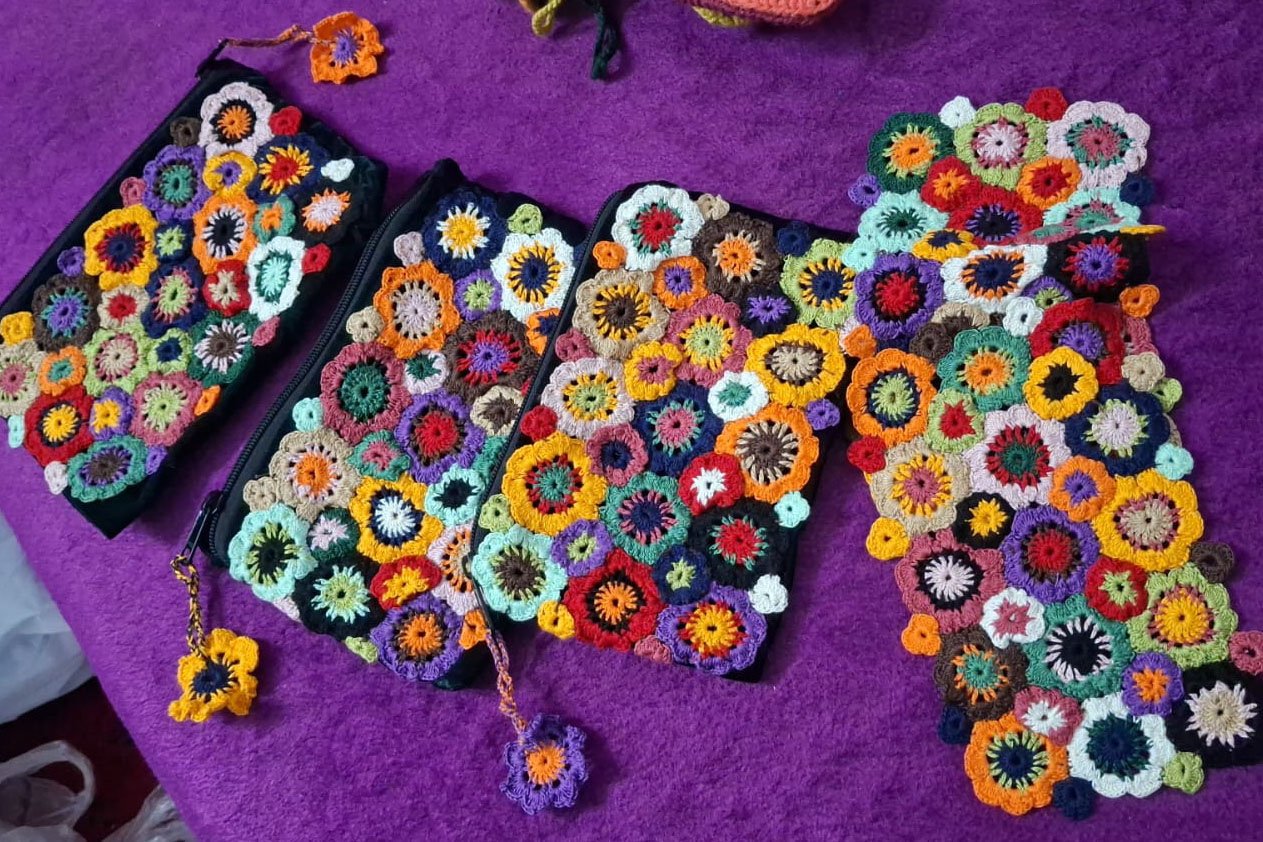
Pocket purses created by Afghan refugee women now reaching new customers through social media with the help of Kutch artisans
To find out more about similar initiatives and UNHCR India please contact us at [email protected]
Related news and stories


