



Afghan and Uzbek communities contribute to climate action in Surkhandarya region
Afghan and Uzbek communities contribute to climate action in Surkhandarya region

Farid* and Basira – a former parliamentarian and a teacher – found themselves working side by side in the sun-filled fields of Termez, in Uzbekistan’s Surkhandarya region. Once leaders and educators in Afghanistan, they were brought together by forced displacement and united by a shared determination to rebuild their lives through work, hope, and community.
In 2025, they were among the hundreds of forcibly displaced Afghan nationals and Uzbek host community members in vulnerable situations participating in a joint initiative by UNHCR, the UN Refugee Agency, and LONGi Green Energy Technology Co., Ltd. The project formed a part of a broader climate action partnership aimed at promoting practical and sustainable solutions that support both forcibly displaced and host communities. By combining environmental protection with income-generating opportunities, the initiative contributed to strengthening resilience and self-reliance in one of Uzbekistan’s most climate-affected regions, which also hosts the largest number of Afghan citizens in the country.
Farid, who once held senior government positions – including serving as a general and later a member of parliament – worked outdoors as a participant in an afforestation project.
“Even though we used to be generals, governors, and members of parliament, today we’re holding shovels in our hands, working as farmers, living as refugees,” he says. He speaks openly about the challenges of starting over. “People had no jobs, no food, no place to sleep. They would come and do this work. All of them are very grateful. This support has been a great help to us.”
Basira, a teacher for over 20 years, fled Afghanistan with her daughters after restrictions on girls’ education were introduced. For her, beyond safety, access to education remains critical to rebuilding a future. “We are very grateful to the Uzbek people,” she says. “Right now, our daughters and sons attend school for free, without any discrimination, alongside Uzbek children.”
She adds that the project also helped her regain a sense of purpose. “We participated in this project and, as you know, tree planting is beneficial – it’s good for the environment, for the conditions, and also health-wise – and we received financial help.”
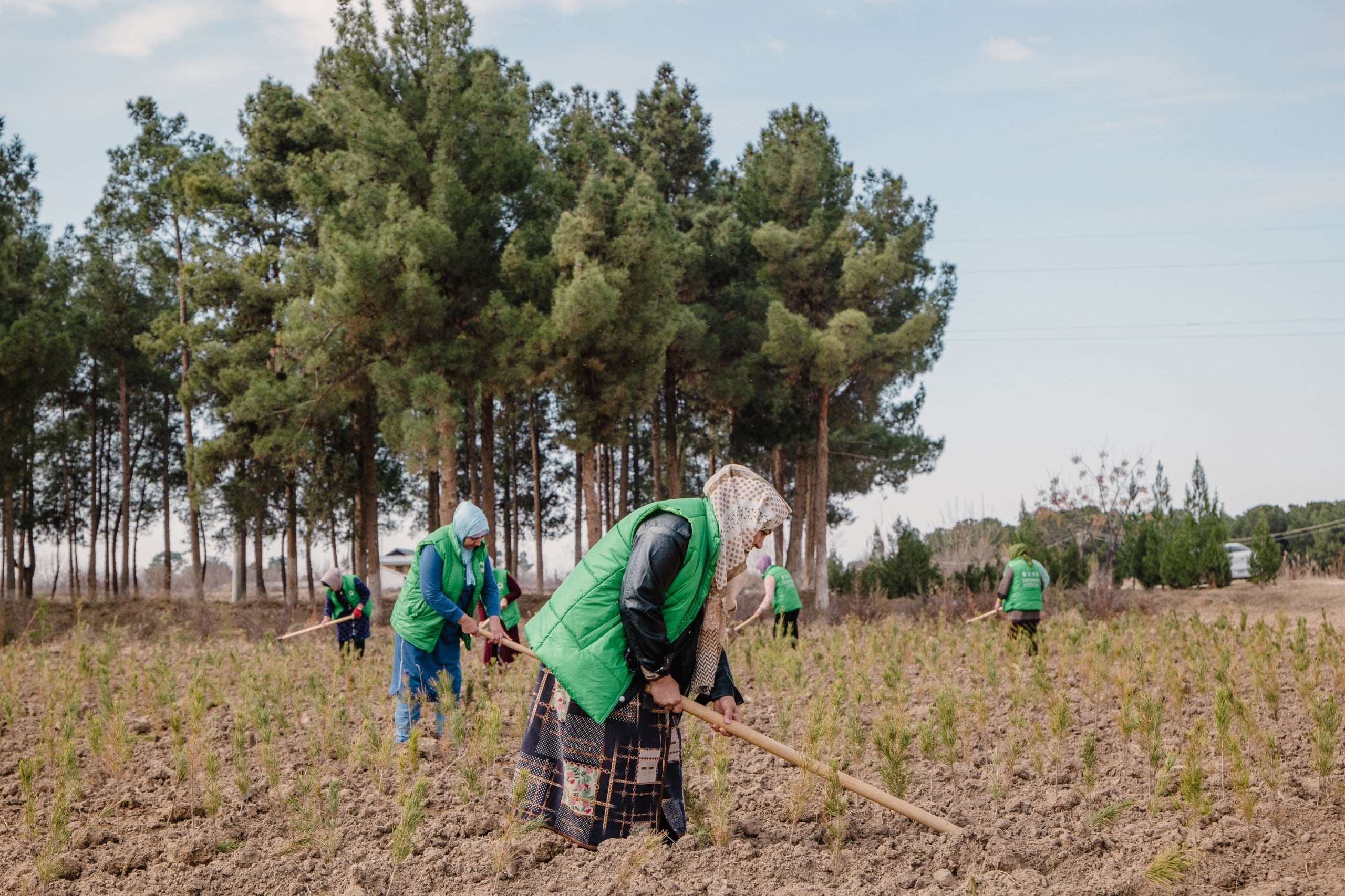
Environmental risks in Surkhandarya – including desertification, water scarcity, and recurring dust storms – continue to pose challenges. From November 2024 to March 2025, 758 Afghan citizens and 824 Uzbek host community members took part in tree-planting activities under Uzbekistan’s national afforestation initiative Yashil Makon (“Green Land”), supported through UNHCR’s cash-for-work programme.
Instead of planting trees directly into dry soil, participants raised saplings in nurseries, allowing them to grow stronger before being transplanted across the region – helping to reduce the impact of desertification.
Farid believes projects like this offer more than just temporary assistance. “If there will be similar projects and we can work like this, we would be happy,” he says. “We’d earn some income. With that, we can support our families. We can send our children to school. We can send our children to kindergarten. We would be very happy.”
Basira shares this sense of hope and readiness to contribute again. “If there are similar projects in the future, we will participate with great enthusiasm because we already took part in this project and have gained a bit of experience,” she says. “Next time, we hope to participate even better and do even greater work than before.” Despite the difficult journey behind them, both Farid and Basira continue to look ahead, using every opportunity to rebuild and provide for their loved ones.
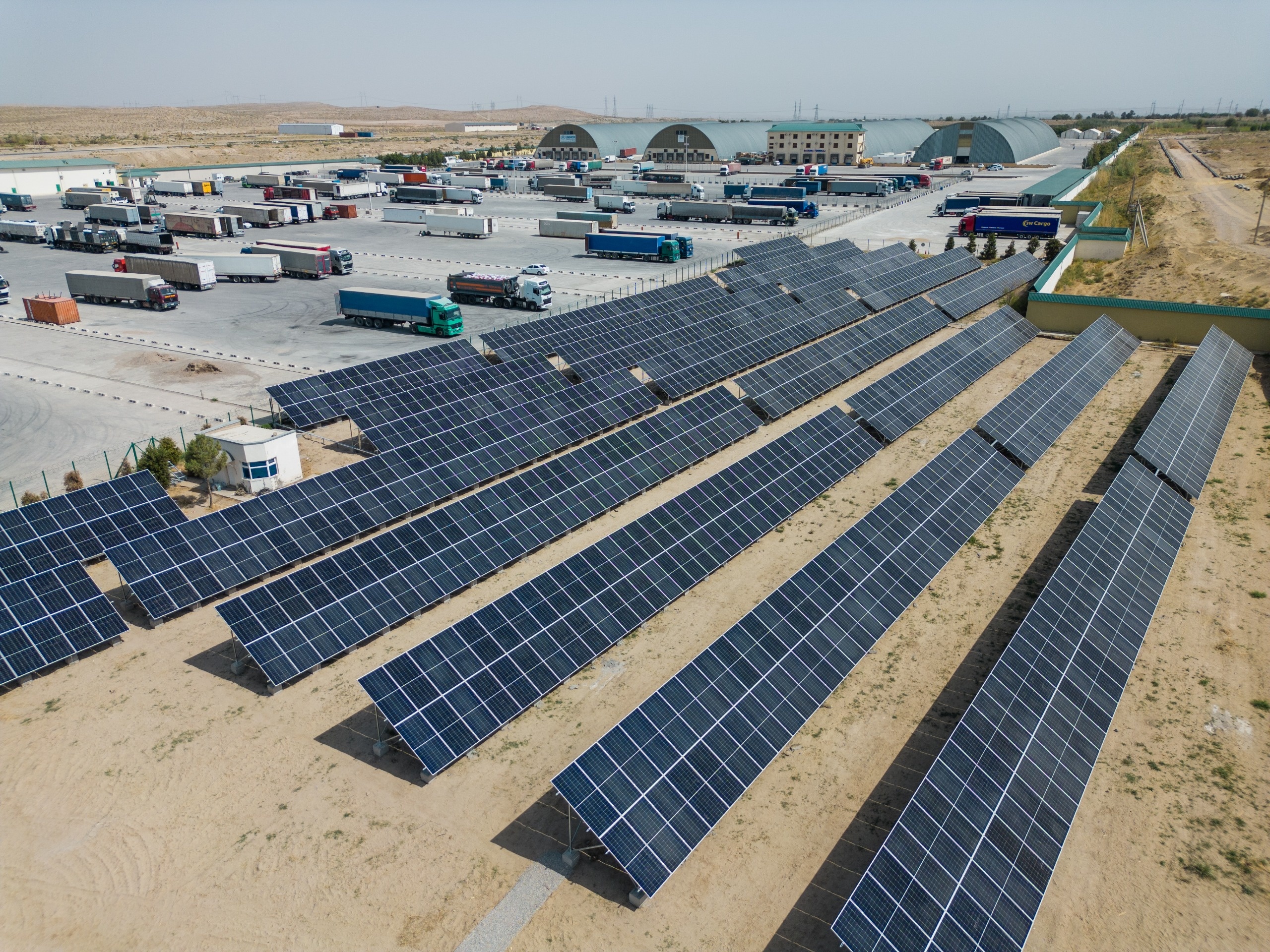
The initiative also built on the first phase of the UNHCR-LONGi partnership, which in early 2025 saw the installation of a 700kW solar power plant at the UNHCR Global Stockpile Termez. Now integrated into UNHCR’s global supply network, solarization has transformed the stockpile into a clean-energy operation, reducing carbon emissions, and advancing climate goals.
For Basira, Uzbekistan has become home where she hopes to live and contribute. “Uzbekistan’s culture is very compatible with Afghanistan’s and with our children,” she says with a smile. “That’s why I want to stay in Uzbekistan – so that my daughters can study here, gain an education here, and improve their future.”
On Earth Day, this initiative stands as a reminder that climate action and human dignity are deeply interconnected. By linking environmental restoration with livelihoods and inclusion, it demonstrates how targeted support can contribute to practical resilience-building for both forcibly displaced and host communities, while contributing to healthier ecosystems and more sustainable futures in one of the region’s most climate-affected areas.
UNHCR continues to work with the Government of Uzbekistan, UN partners, and local NGOs to support sustainable solutions for forcibly displaced people. At the 2023 Global Refugee Forum, the UN Country Team in Uzbekistan joined 49 others around the world in making the UN Common Pledge 2.0 – committing to support national efforts to include forcibly displaced and stateless people in health, education, and employment systems.
* Name changed for the privacy of the individual
This story was originally published on the UNHCR Central Asia website.


