
A collaboration between UNHCR, the UN Refugee Agency, the World Bank and the Government of Jordan
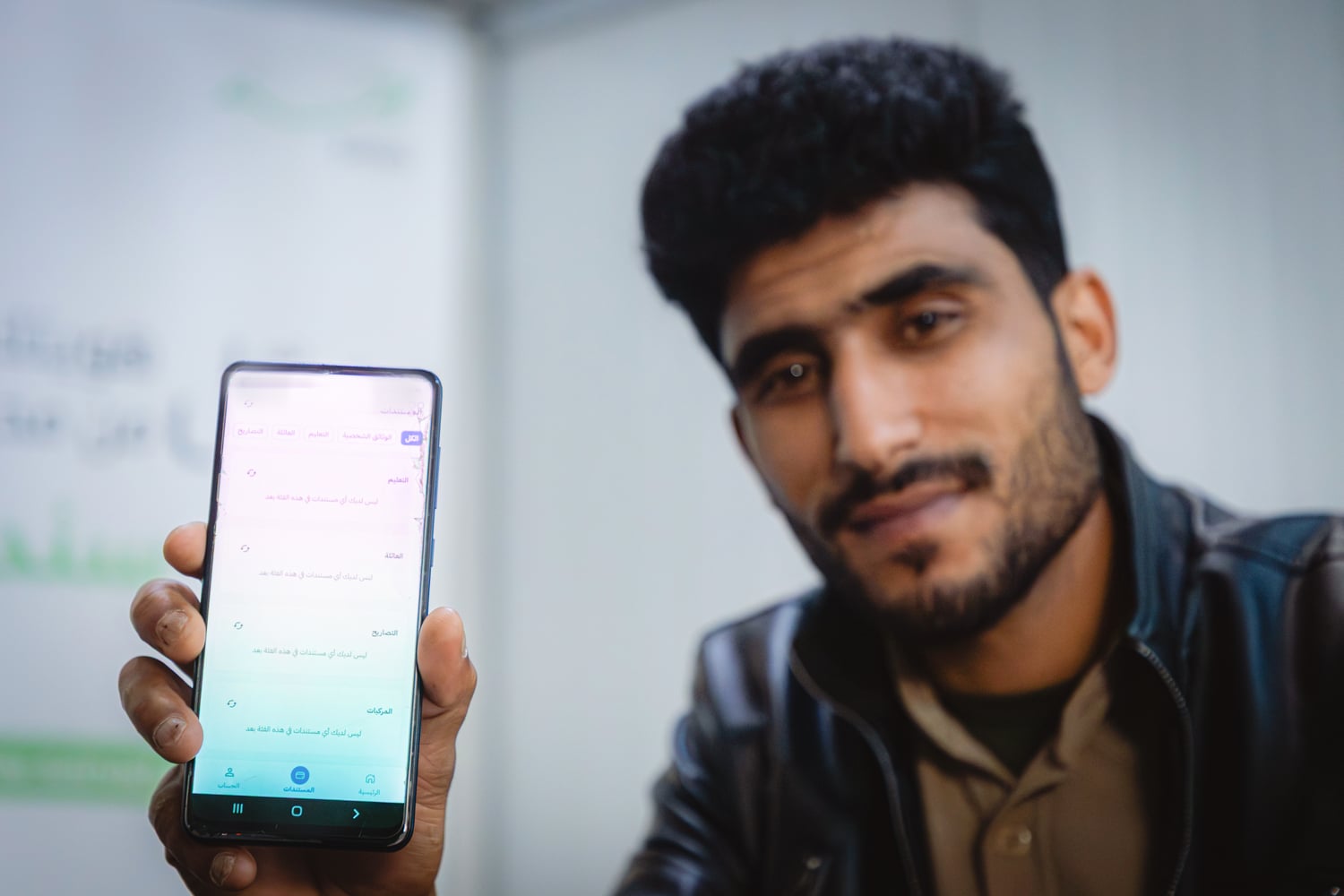
Hamid Al-Nayef, 24, a Syrian refugee living in Jordan’s Za’atari camp, activates the Sanad application on his cell phone.
©UNHCR/Shawkat Alharfoush
Jordan is the first country in the Middle East to extend government-recognized digital identities and services to refugees through a national digital government platform.
Jordan has made digital transformation a national priority through its Economic Modernization Vision and National Digital Transformation Strategy. At the centre of this effort lies SANAD, the Government’s unified digital platform that enables people to securely access an expanding range of public services. By opening SANAD to refugees, Jordan is demonstrating how inclusive digital transformation can strengthen refugee protection. Since its launch in February, more than 20,000 refugees have already enrolled and can now access digital identity and government services.
In the current context of significantly constrained humanitarian financing, this is an example of how investments in national systems supported by development financing can benefit both host countries and the displaced populations they generously host.
Partnerships making inclusion possible
The World Bank is supporting this transformation through the $404 million Jordan People-Centric Digital Government Program-for-Results, including $29 million in grant financing from the Global Concessional Financing Facility (GCFF) to make refugee inclusion a reality. UNHCR, the UN Refugee Agency, the World Bank and the Ministry of Digital Economy and Entrepreneurship (MODEE) worked jointly from design to implementation to ensure success.
The programme was designed to include refugees from the outset. In the planning phase, UNHCR worked alongside the World Bank and Government counterparts to ensure that refugee registration systems, data and protection considerations could be integrated. Refugees were consulted on how digital services could best address their needs, and their input included in the design of the programme.
This collaboration continued throughout implementation. MODEE is deploying trained staff to support enrolment directly at UNHCR registration centres, including in Azraq and Zaatari camps, bringing digital government closer to refugees. UNHCR is also conducting large-scale outreach to ensure refugees understand the benefits of SANAD and to encourage enrolment. In the background, technical teams are strengthening interoperability while continuing to ensure that data is shared in line with national and UNHCR data protection standards.
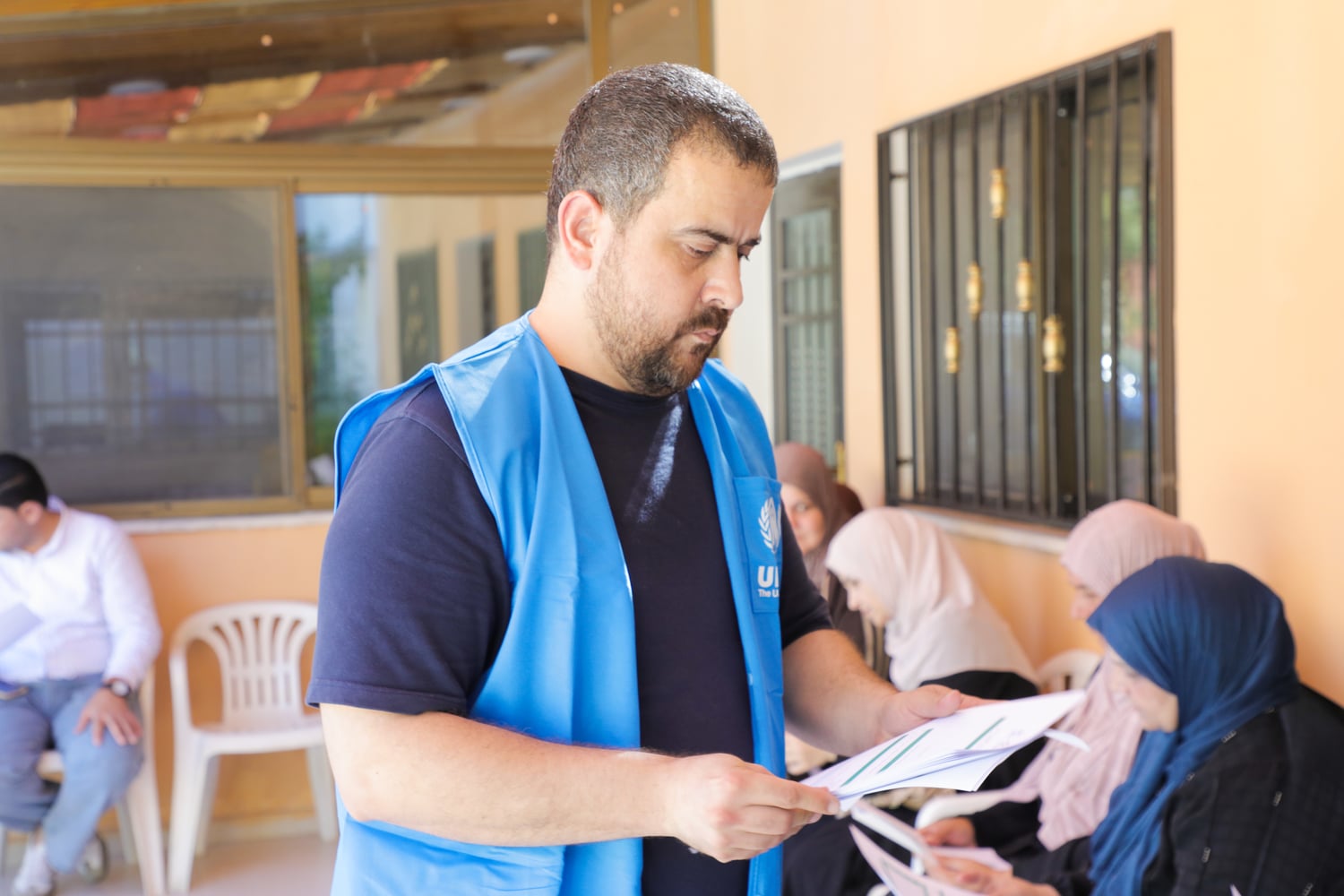
A UNHCR staff member distributes SANAD information leaflets to refugees visiting a help desk in Ajloun, northern Jordan.
©UNHCR/Marine Dondaine
The partnership around SANAD supports UNHCR’s 50 by 35 vision and its target to halve the number of refugees in protracted displacement globally who remain dependent on humanitarian assistance by 2035. A key pillar in achieving that goal is ensuring that refugees can access national systems and services. SANAD is exactly this kind of initiative: rather than delivering parallel refugee services, it brings displaced people into the national digital infrastructure.
Digital inclusion strengthens protection
For refugees, trusted digital identities bring important protection benefits. Once enrolled through secure biometric verification, refugees can access their government-issued digital ID cards and UNHCR asylum-seeker certificates, which serve as legal identity documents. Refugees can view and use their digital records, enabling them to demonstrate their legal status and access essential services without depending on paper documents that can be lost, damaged or left behind.
Refugees are also able to access school certificates, monitor their social security accounts, and book appointments for government services. An initial range of services accessible at launch is set to expand further. By reducing the need for repeated travel and multiple administrative visits, digital services make access more dignified and efficient, particularly for families, older people and those with disabilities.

A UNHCR staff member scans the eye of Yahia Khalid, 23, a Syrian refugee, as he activates the SANAD application on his cell phone.
©UNHCR/Shawkat Alharfoush
Enrolment in national digital systems also supports more coordinated government administration of asylum processes, while refugees shift from relying on separate humanitarian channels to inclusion in the state’s own identity and service systems.
Supporting solutions beyond displacement
Digital inclusion also has the potential to support and facilitate long-term solutions for refugees. SANAD will remain accessible to refugees after they leave Jordan, enabling continued access to official digital records and documentation issued during prolonged periods in displacement. This continuity will simplify what are often complex administrative processes associated with return, resettlement or labour mobility schemes.
Looking ahead, strengthening cooperation with the Syrian authorities to recognize documents available through SANAD could further facilitate reintegration for Syrian refugees returning from Jordan and demonstrate how digital public infrastructure can support people across borders as they rebuild their lives.
Jordan as a model for refugee-inclusive national digital systems
Jordan’s experience demonstrates how digital transformation and refugee inclusion can advance in parallel. As enrolment expands and additional services are introduced, SANAD is evolving beyond simply a digital platform into a practical example of how inclusive public systems can deliver tangible benefits today, while contributing to longer-term durable solutions.
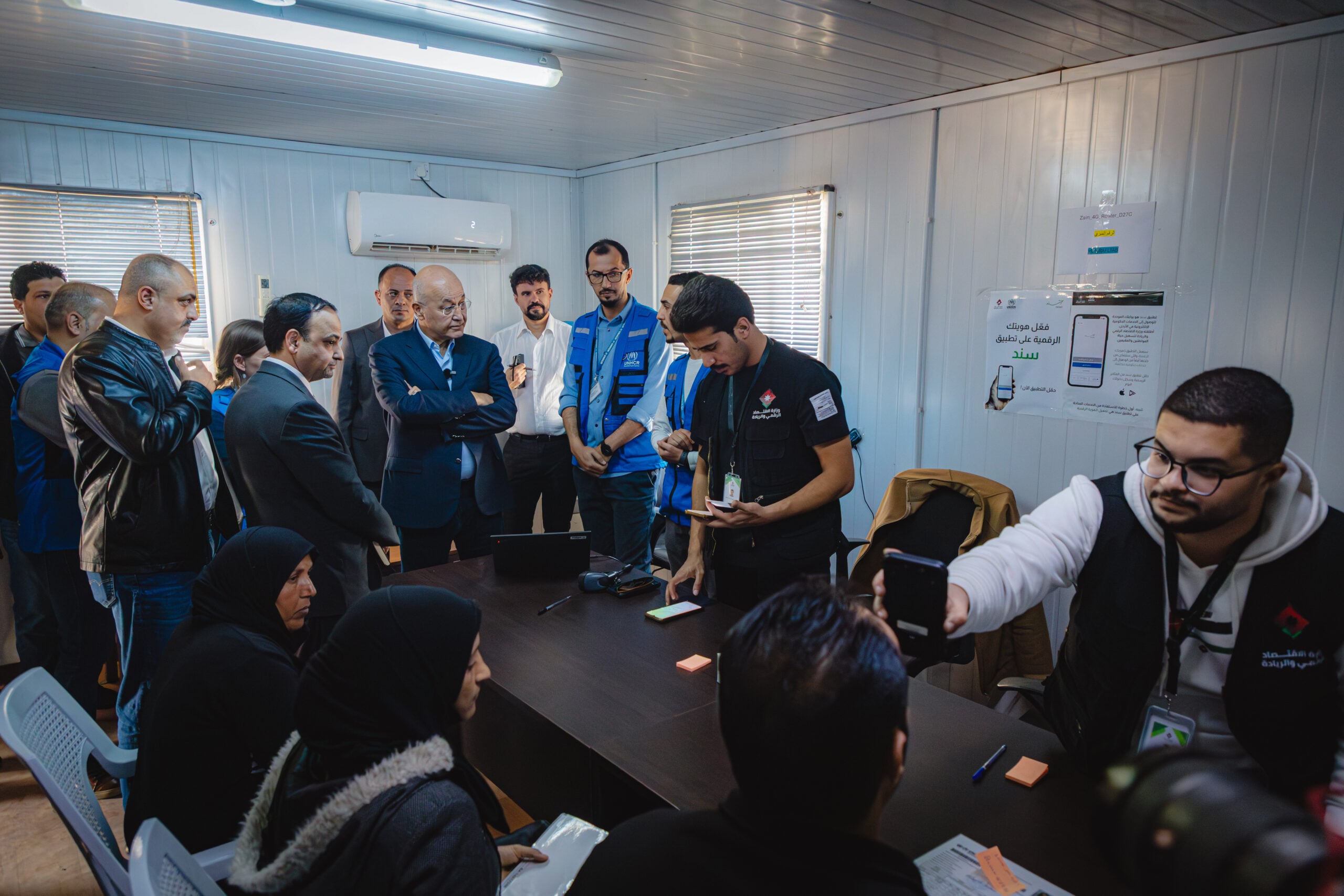
UN High Commissioner for Refugees Barham Salih (arms folded) sees refugees being enrolled in the SANAD platform at Za’atari refugee camp in February 2026.
©UNHCR/Shawkat Alharfoush
This experience also highlights the broader potential of digital public infrastructure. When systems are designed from the outset to serve everyone, they can deliver more efficient services, strengthen institutional capacity, and improve outcomes for both refugees and host communities. Jordan’s approach offers a valuable model for countries seeking to build digital societies that are more accessible, resilient and inclusive.
This achievement reflects the Government’s leadership, sustained collaboration between humanitarian and development partners, and the catalytic support of the Global Concessional Financing Facility.
By Marguerite Duponchel (UNHCR), Erwin Knippenberg (World Bank), Gabriele Olivi (UNHCR), and Samer Qubain (World Bank).