
By Laura Argibay, UNHCR Communications Officer.
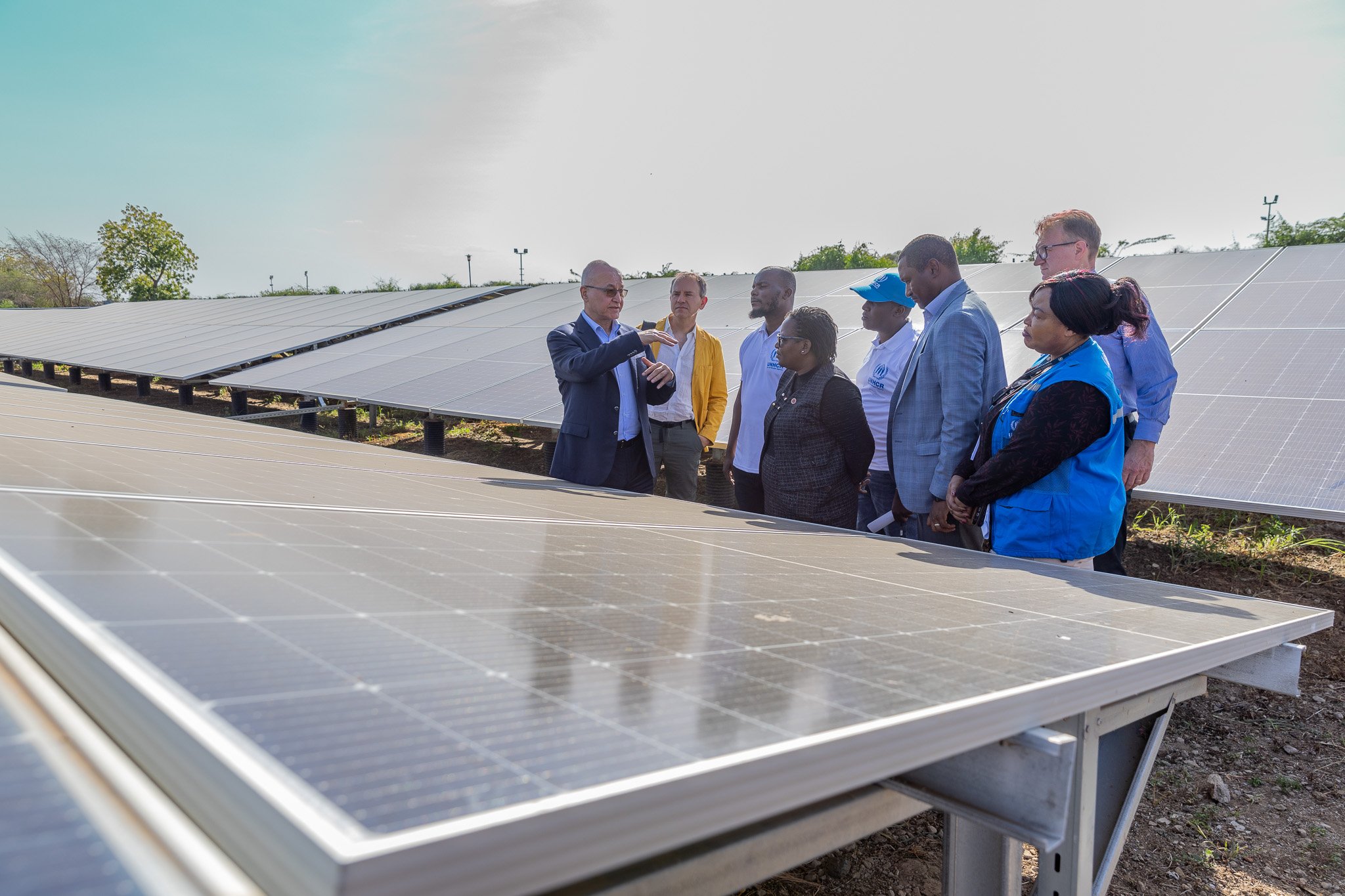
11 January 2026, Kenya. UNHCR Barham Salih in Kakuma municipality for his inaugural visit as High Commissioner. ©UNHCR/Eric Bakuli.
Delivering life-saving assistance in today’s humanitarian contexts means addressing two growing challenges at once: the accelerating impacts of climate change and increasingly limited funding. Humanitarian operations are expected to respond faster, reach further, and operate more efficiently—often in remote, fragile environments where energy access is unreliable or non-existent. In this context, the transition from diesel-powered energy systems to clean, renewable solar solutions is more than just an environmental choice; it is fast becoming a strategic necessity for resilient, cost-effective humanitarian operations.
For UNHCR, the UN Refugee Agency, energy underpins almost every aspect of its work, from protection and service delivery to staff safety and community support. Offices and facilities must function 24 hours a day, frequently in off-grid locations far from stable infrastructure. Over the years, diesel generators have been the go-to solution for meeting these demands. While diesel is effective in the short term, it has numerous drawbacks, including variable fuel prices, difficult logistics, high maintenance costs, and a substantial environmental impact. Over time, these variables reduce operating efficiency and drain already constrained resources.
A Smarter Way to Power UNHCR Operations
To respond to these challenges, UNHCR has developed the Green Financing Facility (GFF), an innovative approach that changes how energy systems are powered, financed, and managed. Supported by the Swedish International Development Cooperation Agency (Sida), the German Federal Ministry of Economic Cooperation and Development (BMZ), and the IKEA Foundation, the GFF leverages donor funding to achieve the greatest possible impact.
Instead of one-off, capital-intensive procurement, the facility uses a centrally managed internal leasing model where donor funds are recycled over time across multiple sites, allowing more solar systems to be delivered and sustained with the same level of funding. Through UNHCR’s in-house expertise, the model provides a full-service solar solution, covering feasibility, design, procurement, and long-term operation and maintenance. A five-year internal lease eliminates the necessity for substantial upfront investments, guarantees performance throughout the system’s lifecycle, and distributes costs predictably, ensuring sustainability without diverting critical funds from frontline humanitarian support.
In remote and fragile contexts where reliable energy is limited, solar power enables UNHCR offices to maintain operational continuity while reducing dependence on fuel and exposure to supply disruptions. The benefits are clear: solarized offices are expected to cut building-related carbon emissions by approximately 65 per cent while generating financial savings of 15–20 per cent, depending on country context and site conditions. Equally critical, the GFF enhances oversight and accountability; by shifting from isolated investments to a centrally managed financing facility, it monitors performance, ensures maintenance, and reinvests savings, amplifying the impact of every donor’s contribution.
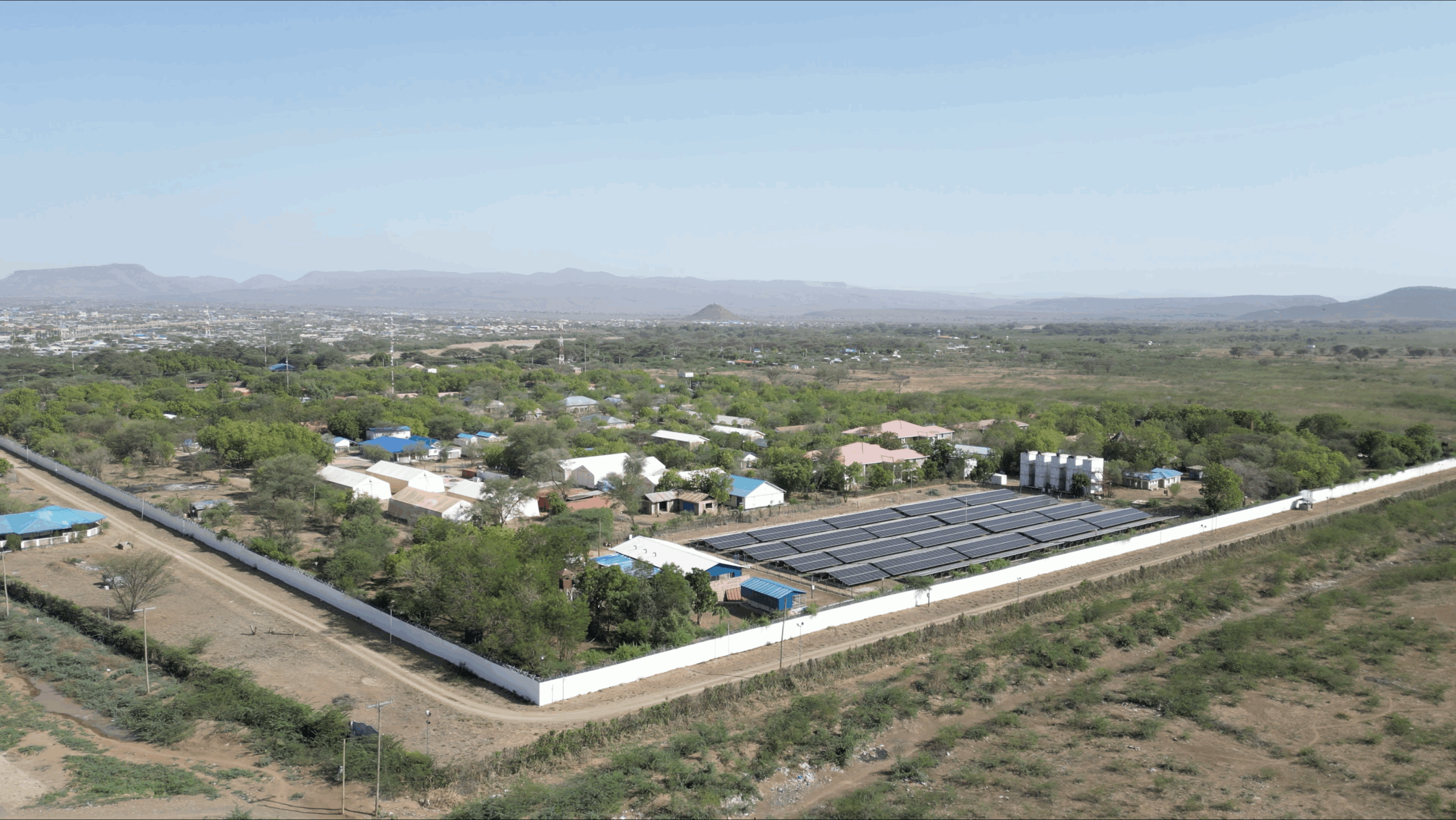
January 2026, Kenya. Aerial view of the solar plant in the UNHCR Kakuma Sub-Office compound. ©UNHCR/Eric Bakuli.
Turning Clean Energy into Systemic Change
With implementation currently in progress in 40 UNHCR sites across 14 countries and further expansion underway, the Green Financing Facility demonstrates how renewable energy can be embedded directly in humanitarian response, increasing access to reliable power while reducing both dependence on fossil fuels and carbon emissions.
As humanitarian needs continue to rise while resources become increasingly constrained, this model offers a practical pathway forward to maximize impact and stretch limited funding further. By aligning climate commitment, operational efficiency, and innovative financing, UNHCR is turning energy investments into a foundation for resilience and advancing sustainable development for humanitarian operations and the communities they serve.
On International Day of Clean Energy, the transition from diesel to solar stands as more than a technical improvement. It shows how smarter energy choices can strengthen humanitarian action, extend limited resources further, and deliver sustainable protection at scale—now and into the future.
For more information, please contact: [email protected]