



Leveraging In-Kind Donations to engage PS Companies - An example in Belarus
Leveraging In-Kind Donations to engage PS Companies - An example in Belarus
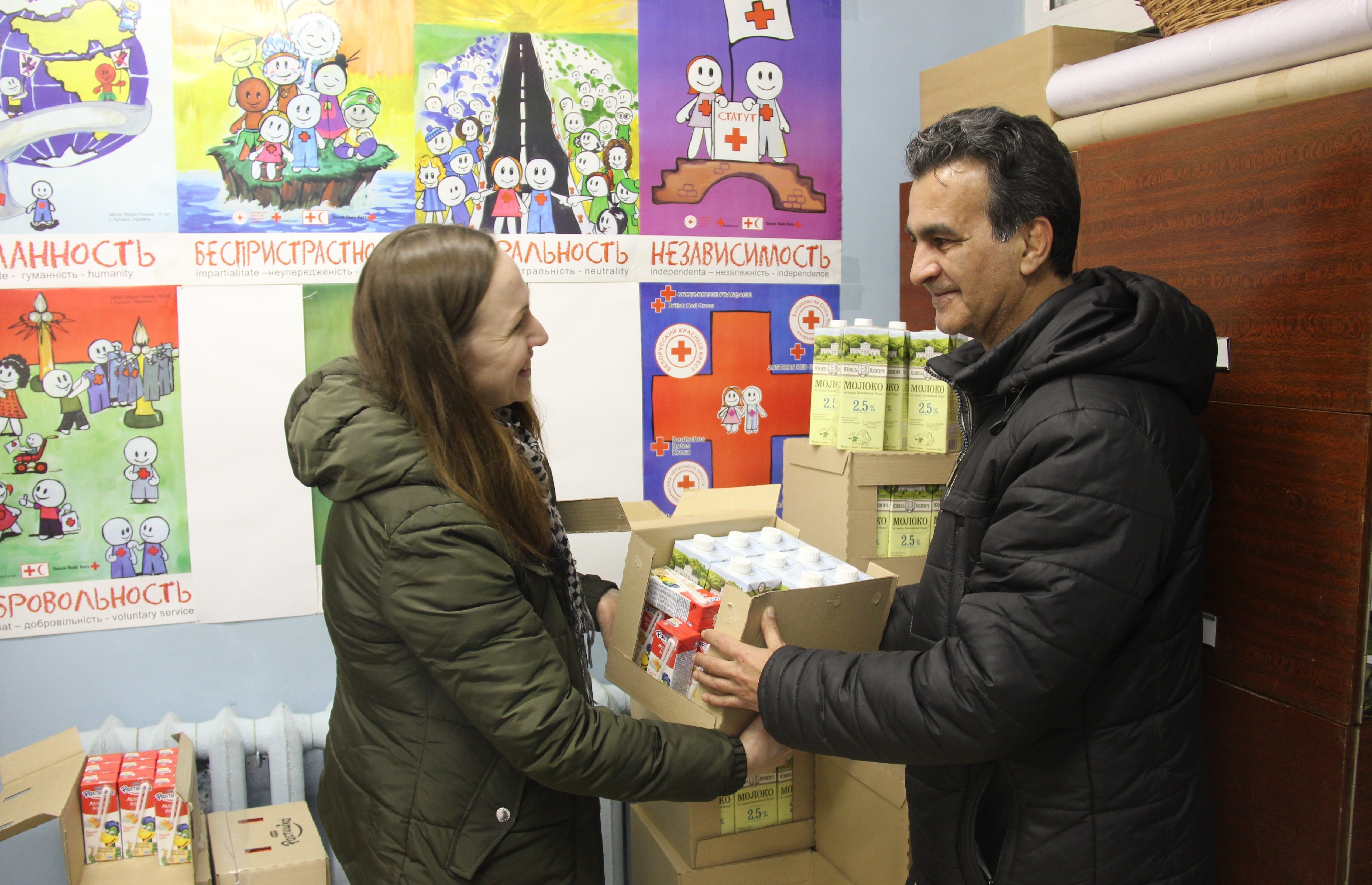
The distribution took place at one of the branch offices of the Belarusian Red Cross (BRC), UNHCR’s implementing partner, in the capital city of Minsk. This was the first of a series of scheduled donations of yogurts, butter and milk. The donations will be alternating between BRC locations, thus benefiting some 40 refugee families at a time.
In-Kind donations in UNHCR
In-kind contributions can form a vital part of our response to crises faced by refugees worldwide. Traditional gifts in kind include soap, baby diapers, clothing, footwear, mattresses and mosquito nets, but non-traditional items such as heavy engineering equipment are also welcome if they match our needs and specifications. One example of an in-kind donation is the long-standing partnership that UNHCR has with the Japanese retailer UNIQLO. Since 2006, UNIQLO has donated over 10 million pieces of clothing to our operations.
UNHCR accepts in-kind donations on the following basis:
- No conditions
- No additional costs to UNHCR
- Value can be reliably measured
- Full control over the goods
- Technically and operationally appropriate
UNHCR and the Belarusian branch of Danone started discussing a collaboration almost a year ago. The two partners had to spend this time on solving a number of issues related to the logistics of the collaboration. As commented by UNHCR Representative in Belarus Jean-Yves Bouchardy, “the company’s top managers expressed their interest in collaboration. However, it appeared that their enthusiasm was not enough to make the project a reality. Danone is a producer of dairy products but not a retailer. It does not own its stores and, therefore, cannot directly distribute the products among our persons of concern. That was a major challenge. It took us some time to find the way out.”
The local Danone branch addressed several major retailers, asking to assist with distribution. However, this was an unforeseen and unpaid workload to be imposed on staff so no stores were ready to deal with this.
It was finally decided to engage the Belarusian Red Cross, UNHCR’s implementing partner. This posed new challenges. First of all, the BRC had 9 sub-offices in Minsk and requested to provide products to all of them so no one would be left out. This added 9 new locations to already packed delivery list of Danone’s logistics partner. In addition to that, the BRC neither possessed refrigerators to store the products nor had it sufficient human resources to arrange a give-away.
“It has been a true learning experience for us,” said Gleb Khralenkov, Member of Board of Directors at Danone Belarus. “It was agreed to donate several refrigerators to be filled with dairy products and arrange the delivery through our logistics partner. The first distributive has taken place, and we’ve seen refugee families benefiting from the much-needed food items. I think we’ve all felt a part of a great cause. The deliveries will now become a regular practice.”

Main Takeaways:
- Through in-kind giving companies have an opportunity to make real change by donating products, services, expertise, and other non-cash items to humanitarian actors.
- In-kind donations, if done well, can multiply the capacity of nonprofit organizations to serve beneficiaries, build a company’s corporate citizenship reputation, lessen waste, bring immediate relief in times of disasters, and target valuable company expertise toward solving both short and long-term problems in the social sector.
- Most people think of in-kind giving when disasters. At these moments in-kind giving is front and center in the media. Of course many companies are doing in-kind giving, and doing it very well, year after year on an ongoing basis, not just in times of disasters.
- The most effective in-kind giving is done in strategic partnerships with government, nonprofits, and/or other funders.
In recent years, engaging the business sector into humanitarian work has been one of UNHCR’s priorities in Belarus. However, against the backdrop of economic difficulties in the country, most private companies are unable to provide direct financial aid. Ensuring in-kind donations has proven to be a win-win solution for both UNHCR and the business sector.
Earlier, a number of enterprises supported UNHCR’s persons of concern with their produce: a top Belarusian hosiery company donated its items for refugee children, several mobile operators granted laptops for refugee families, and a fashion retail company suggested regular donations of recycled clothing. All in all, throughout 2016, UNHCR’s efforts in approaching the private sector in Belarus resulted in a total of 9 companies’ having provided assistance to forcibly displaced persons – 4 of them in the form of in-kind contributions.
Why do companies do in-kind giving?
- To leverage the company’s products to benefit society
- Nonprofit organizations that receive donated products can spend cash donations on other items and ultimately serve more individuals.
- To bring the company’s expertise to bear on important social issues
- To demonstrate the company’s commitment to the community
- Donations of products and services “make sense” to the public.
- The media tends to pick up stories of in-kind donations along with accompanying photos.
- Companies can add in-kind giving to their broader portfolio of programs for a stronger impact on an issue or an organization.
- Consumers and/or potential consumers tend to view product donations very favorably.
- To reduce waste
- Many non-cash gifts such as office equipment or computers would end up in a land fill if they were not recycled for use by nonprofit organizations.
- Likewise with products – they may end up being thrown away rather than put to good use by those who need them.
- To enhance employee development
- Employees may feel energized by applying what they usually provide to for-profit clients to solving important issues in the social sector.
- To create market demand / new markets for company products
- Individuals and organizations that use a given company’s products that have been given in kind, may decide at a later date to purchase them as they have become accustomed to the quality or features of the product.