



Four years on - art therapy helps Ukrainian children find calm, confidence and belonging in Estonia
Four years on - art therapy helps Ukrainian children find calm, confidence and belonging in Estonia

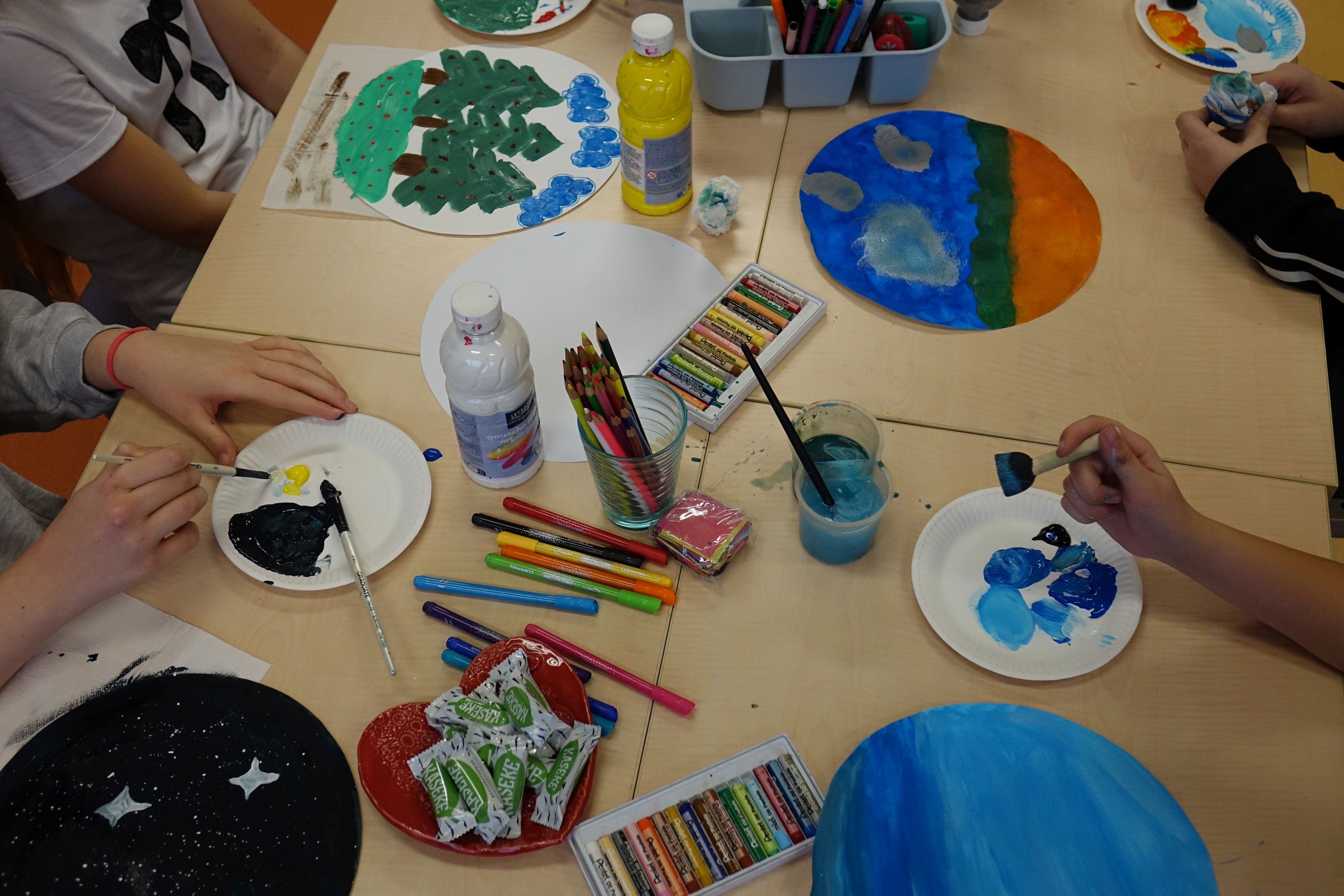
Acrylic paint, colored pencils, scissors and jars of blue colored water.
In a classroom at Laagna Gymnasium in Tallinn, Estonia’s capital city, Nastya, Dasha, Sasha, and David sit quietly around a table. One careful pencil stroke at a time, they fill their papers with colorful shapes and patterns, turning blank sheets into works of art.
The four children are part of an art therapy session organized by UNHCR’s partner Mondo. Art therapy is a form of psychotherapy that uses art to express emotions without words. Through symbols and images, the children explore and process their feelings.
“Art therapy has made me calmer and more confident. When I’m afraid, I remember the exercises and approaches I’ve learned, and I feel better. My anxiety level goes down.”
Sasha, 12-year-old girl from Ukraine
Like the other children in the session, Sasha is from Ukraine. She arrived in Estonia in the spring of 2022 together with her mother, aunt and cousin. In the last year, she has participated in two rounds of art therapy sessions, specialized for children with refugee backgrounds.
“I’ve made friends, and everything started to work out better for me. The sessions gave me confidence and calmness,” she explains.
Helping refugees cope
Many refugees, including children, experience emotional distress. Often these are natural reactions to adverse and traumatic events related to conflict, war, and displacement. The World Health Organization (WHO) estimates that mental health conditions such as depression, anxiety, and PTSD are more prevalent among refugees than host populations.
Art therapy can be an effective tool for both refugee adults and children to help deal with distress, trauma, and uncertainty.
“With a traumatic experience it's easier to express yourself through this non-verbal method. It's softer, because you can look at it from the outside. It’s an authentic way to express yourself. The children don't need to pick words,” says art therapist Tatjana Pavlova, who is leading today’s session. She elaborates: “When we do something, for example, make things from clay, we already physically calm down and anchor ourselves. And if we talk about art therapy with children, it's also about group work. The children do something in the group; it helps even more to achieve this feeling of belonging. As we know, this is one of the basic needs. Which also affects well-being.”
Four years on: including refugees through art
Since Russia’s full-scale invasion of Ukraine in February 2022, more than 70,000 Ukrainian refugees have sought safety in Estonia, with around 42,000 currently residing in the country. This has turned the country from one of the European nations with the fewest refugees into one of those hosting the most per capita.
UNHCR partnered with Mondo from the beginning of 2023 until the end of 2025. With UNHCR’s support, Mondo has successfully implemented education-focused activities for both adults and children. A key part of the partnership was the integration of Ukrainian teachers into the Estonian labour market through the establishment of the Mondo Ukrainian Academy and the provision of Estonian language courses to help teachers meet official language requirements to continue working as teachers.
Local teachers also benefited from Mondo’s courses on teaching approaches about refugees and working with children affected by trauma. Children learned about refugee issues through school workshops conducted by refugees themselves, while Ukrainian students took part in art therapy sessions. Awareness on refugee topics was further raised through community events and media activities.
Because of the high number of refugees and refugee children arriving, Mondo decided in 2024 to introduce art therapy into their activities. The therapy is based on similar projects in Ukraine and Georgia, but in Estonia, they have taken it a step further by collaborating with the country’s leading institution for art therapy – Tallinn University – and its professional art therapists. Together, they developed the programme, and the sessions are being led by graduates of the university. The collaboration has proven successful, and the feedback from the therapists has been very positive, says Meelis Niine, Head of Project and Migration Expert at Mondo.
“Therapists have said that at first the students seemed shy. Their backgrounds are complex, and they are not used to this kind of method. But throughout the sessions, they started to open up. The therapists noticed that the students became more aware of themselves and their emotions, and they also gained better social skills.”
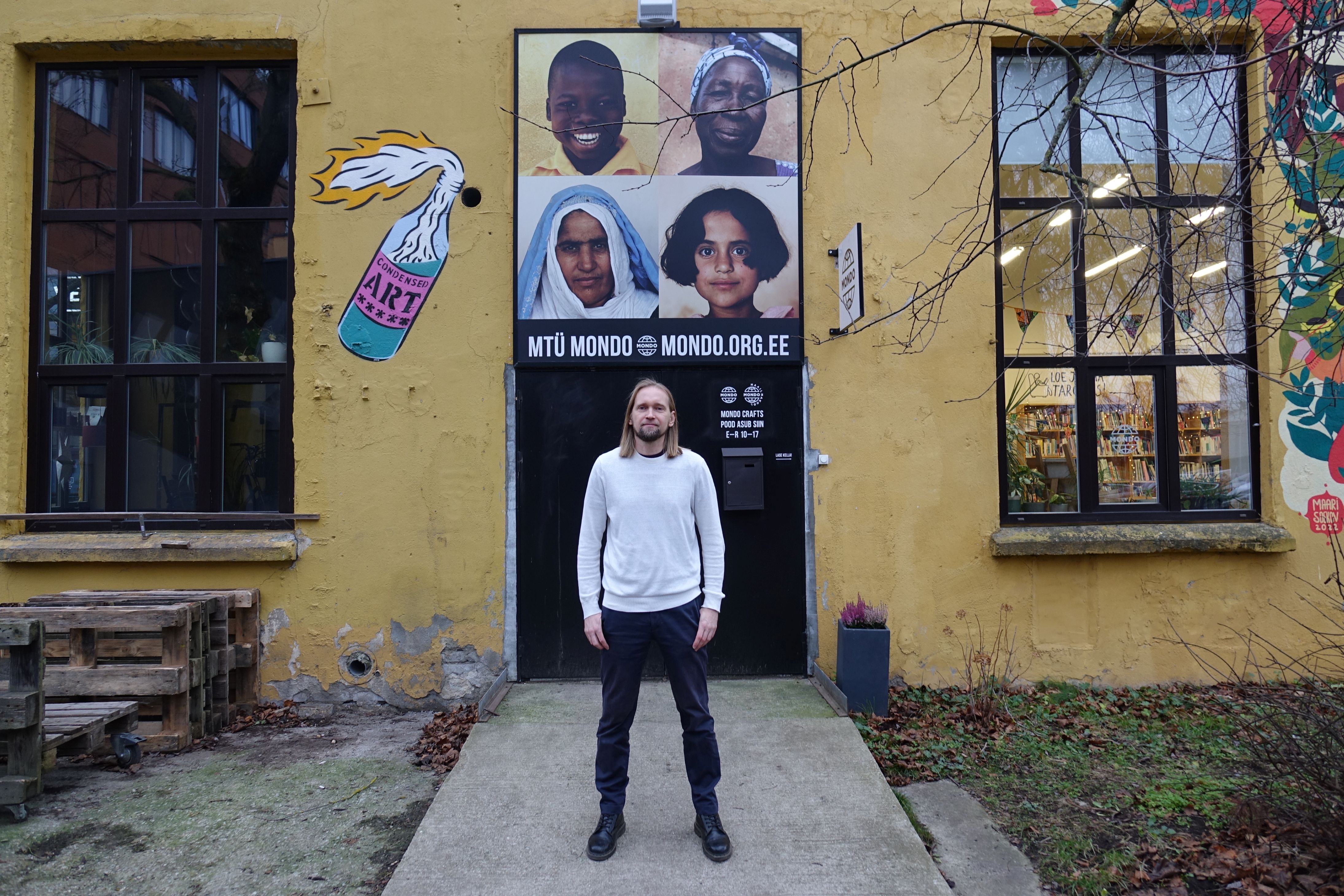
Meelis Niine, Head of Project and Migration Expert at Mondo, is encouraged by the progress among the children and positive feedback from therapists.
The progress among the children is something Tatjana has witnessed firsthand.
“Sometimes children come and tell me that something has happened, or that they have not slept well for two days, that they feel very worried. During the session they express their feelings, name them, and a process of self-regulation begins. By the end they often say, ‘It has all gone, I feel better now.’ It is very important to me that the child leaves feeling lighter and that something has shifted for the better.”
An outlet for emotions
So far, 215 refugee children across the country have benefited from art therapy, ranging from elementary school students to high school students. One of them is 11-year-old Anastasia from Khmelnytskyi in western Ukraine, who is also participating in the session today.
“I like that I can draw something when I'm angry. It probably helps everyone. When you're angry, you can just take a piece of paper, draw something, and it will be better for you.”
Over the two rounds of art therapy sessions she has attended, she has worked with many different types of art and materials, including making bracelets with her name, shaping a green alien out of clay, and creating drawings.
“I made a cute alien. When I'm stressed, I love making things out of modelling clay. The most memorable activity for me was when they gave us an A3 paper and asked us to draw our emotions. I drew different lines and stripes,” Anastasia recalls.
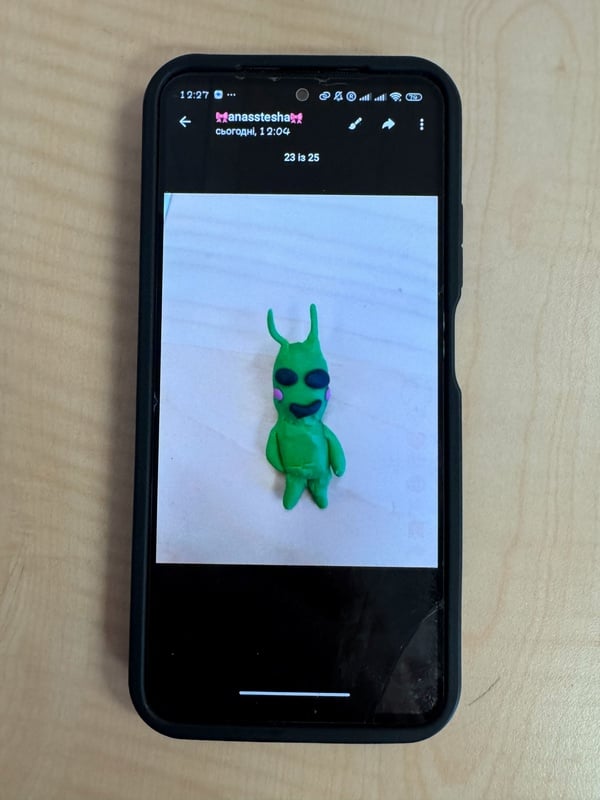
Anastasia shows a photo of an alien figure she made from green clay. She loves modelling with clay whenever she is feeling stressed.
The last brushstroke
The drastic funding cuts to the humanitarian sector in 2025 mean that Mondo will have to end their art therapy programme due to a lack of resources.
“I felt a little sad because I liked it. It helped me. But I was also sad because Tatjana helped us a lot. She told us to be ourselves, to draw. She supported us,” says Anastasia.
According to a Mondo evaluation survey conducted among last year’s participants, 97 percent of the children said they enjoyed the therapy, and 95 percent said it was beneficial. Mondo therefore hopes to secure new funding to continue the programme, as interest in these sessions has been high.
Back in the classroom, today’s session is over. The tables are now covered with beautiful drawings: colorful Christmas trees, a sweeping landscape, an ocean, and a dark starry night.
Related news and stories


