

Artificial intelligence and ethics
The rise of artificial intelligence (AI)[1] and generative artificial intelligence (gen-AI)[2], while a valuable tool for increasing staff capacity and creativity, have dramatically increased the capacity for further reaching and faster spreading information risks.
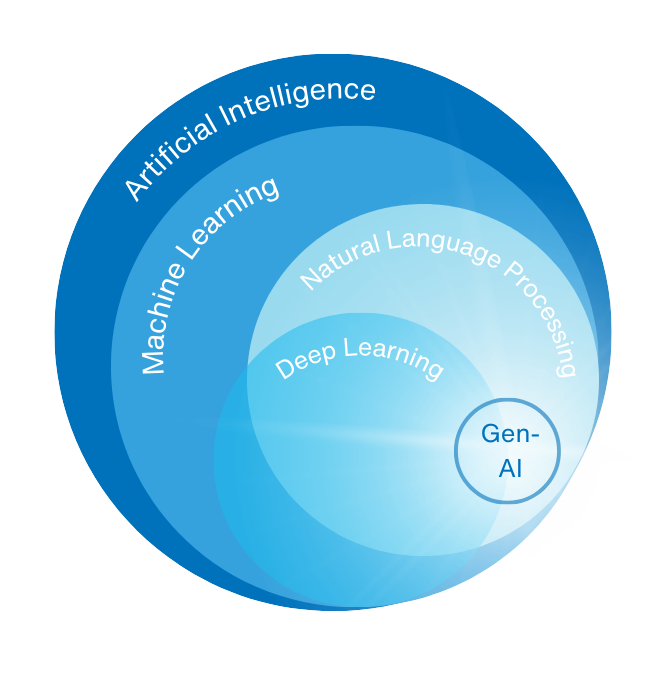
In the past, information risks on social media have primarily been spread through AI-powered recommendation systems and ranking algorithms which often prioritized inflammatory and/or emotional content for user engagement and clicks. These technologies have not only facilitated the dissemination of false and harmful content but have also accelerated their spread. The emergence of gen-AI poses a number of additional dangers such as ease of creation, seemingly authentic content, amplification and a further erosion of trust.
While AI systems and tools pose a number of challenges to successfully addressing information risks, they can also be a powerful tool for mitigating such risks through content moderation capabilities, accessibility and multilingual content, monitoring and analytics and real-time information provision.
RESOURCE
Principles for the Ethical Use of Artificial Intelligence in the UN System
These Principles for the Ethical Use of Artificial Intelligence in the UN System were developed by a workstream co-led by United Nations Educational, Scientific and Cultural Organization (UNESCO) and the Office of Information and Communications Technology of the United Nations Secretariat (OICT). It outlines a set of ten principles, grounded in ethics and human rights, aims to guide the use of artificial intelligence (AI) across all stages of an AI system lifecycle across United Nations system entities.
The following principles must be considered when utilizing AI systems in response to information risks (such as monitoring and analysis of social media):
Do no harm
Defined purpose, necessity and proportionality
Safety and security
Fairness and non-discrimination
Sustainability
Right to privacy, data protection and data governance
Human autonomy and oversight
Transparency and explainability
Responsibility and accountability
Inclusion and participation
[1] Per OECD, “an AI system is a machine-based system that, for explicit or implicit objectives, infers, from the input it receives, how to generate outputs such as predictions, content, recommendations or decisions that can influence physical or virtual environments. Different systems vary in their levels of autonomy and adaptiveness after deployment.”
[2] Per OICT, "Generative AI is a subfield of artificial intelligence (AI) and machine learning (ML) that involves the creation of original data or content, including images, video, text, code and 3D renderings."