
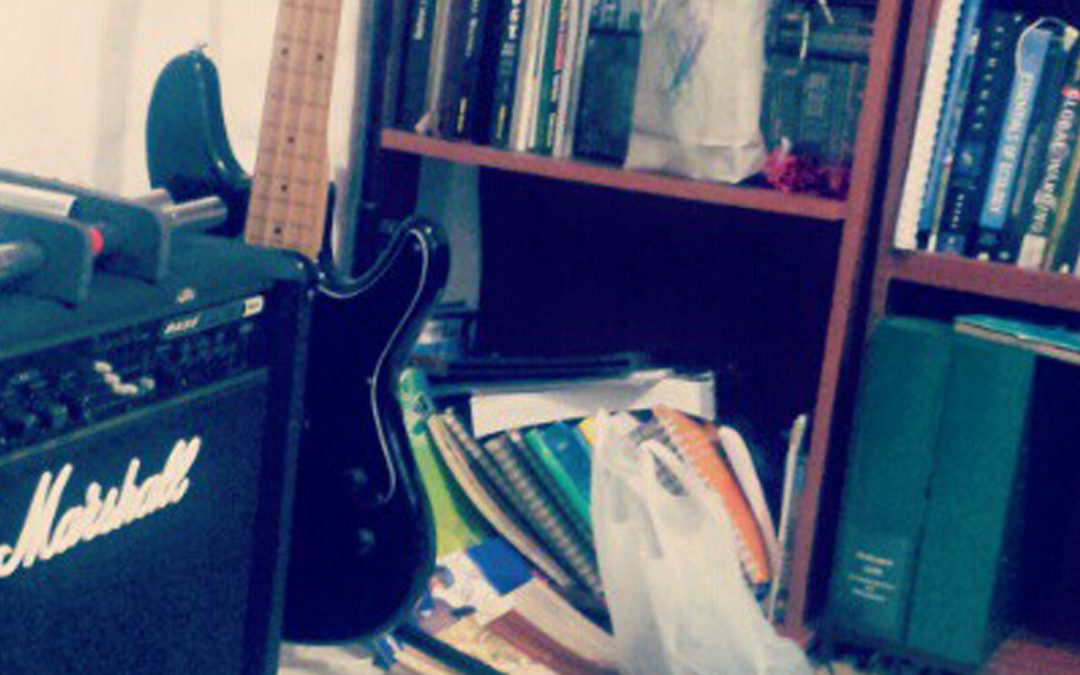
As a reader, you will notice that I will use the term ¨Harmony” a lot of times during this blog. Like in music, the harmony (how each instrument interact with other in a certain time line) and the timing (when and how each instrument enters) are key elements to make an innovative idea to become a concrete project. Like in music, you become a good performer by learning, as a VERY first step, to LISTEN… in this case the motivations behind what is declared on the needs assessments, and the tempos of when and how innovation tools can be used and what for. Like in music, a new type of practice takes years and years to be understood and absorbed by culture.
Like in music, you learn to dance by listening. An effective Innovation it’s a nice dancing between the ideas and the users, whereas the 1st one (the ideas) are changing their rhythm and harmony according to the needs of the second. Like in a good music jam, it does not matter how competent or how experienced the musicians are if they don´t listen to each other and adapt their ideas to the collective exercise in order to produce a song. In our case, we try to listen and adapt our ideas to the context we are playing in: the needs of our users. It does not matter how a great innovator you think you can be, it will happen only if your ideas can improve the reality of your surrounding environment. Some times being quiet and listen to the context, before starting to play is a pretty good first step to begin with.
The first time I presented a “new tool to improve your performance” as a foreigner in a new operation, the 1st answers I received were:
“I have being doing this job for 30 years! What made you think you can improve it?… What makes you think I want to improve it?”
“Every time some one new comes, they always try to bring something new and change the way we do things”
In that moment the conversation was already so far away about the discussion about improving efficiency or performance but gave me an even more important outcome of what I expected: The motivations for innovation into your clients (understanding “client” as the population that can be served for a certain idea. It can be a government officer, other HCR or UN colleagues, IDPs, Refugees and even your self wen prototyping any kind of tool to organize your self better).
There are 2 major elements I learned from those conversations:
- Changing customs is one of the more complex challenges for innovation. Is not about performance of efficiency, its about the daily mechanism a human being uses to organizes his/her reality. To cook different, to taste new flavors, to dress different, to learn a new language, to adapt into a new context…Even more dramatic when those changes are the result of a traumatic event as in the case of IDPs or Refugees that had to run away from their known environment to learn and re-learn a new type of reality. In the most of cases in higher levels of vulnerability. By Default, Change is difficult.
- Effective Innovation can happen only as the result of the harmonization between the needs of a client and the testing and prototyping different solutions centered not in the great ideas of the innovator, but the NEEDS of the users. Again, needs not only based on how to perform better or how to be more efficient, needs in terms of your motivations and relations with your environment in order to take a pattern of thinking, moving or organizing your self. If an innovator can harmonize effectiveness, performance and user’s motivations, then you have an optimal Innovation possibility. Improving a process requires that the user recognizes a need or at least a potential to improve. Otherwise, a great idea can be implemented (by force) but will not be sustainable in time (since users does not make any sense on changing).
Given this scenario, we have the motivations of the user/client in one side, and the needs to improve a process in the other, as elements to dialogue. In the most of cases those elements are not necessarily aligned in terms of temporality (yes, we can implement this ideas, but not in the timing you are expecting), shape (yes, we can try this idea but the other 80% of our time we will keep our old practices) or expected outcomes (well, we can implement this idea but you should give us some incentive to apply it). The incentives are important since are the direct link with the motivations of users to “test” an idea. At UNHCR, efficiency in processes can mean that refugees are benefited faster and in a more organized way. This incentive is one that all staff and partners can support.
Once again, once the proper motivation is settled, the implementation conditions will be required to be harmonized, again according to the rhythms and needs of the user.
If you’d like to repost this article on your website, please see our reposting policy.