



Navigating change in refugee child protection services
Navigating change in refugee child protection services

In a small, makeshift room in a refugee camp in Erbil, home to more than 8,500 refugees, 12-year-old Dîlan* sits quietly, lost in thought. He often keeps to himself, still carrying the pain of being bullied. “I prefer staying inside,” he says. “The other kids call me names.”
At just five years old, Dîlan fled Syria with his younger sister and elderly grandmother. His father had passed away two years earlier and his mother remarried, abandoning her children. Scarred by these early childhood experiences, Dîlan has lived with the trauma ever since and his ageing grandmother struggles to provide adequate care.
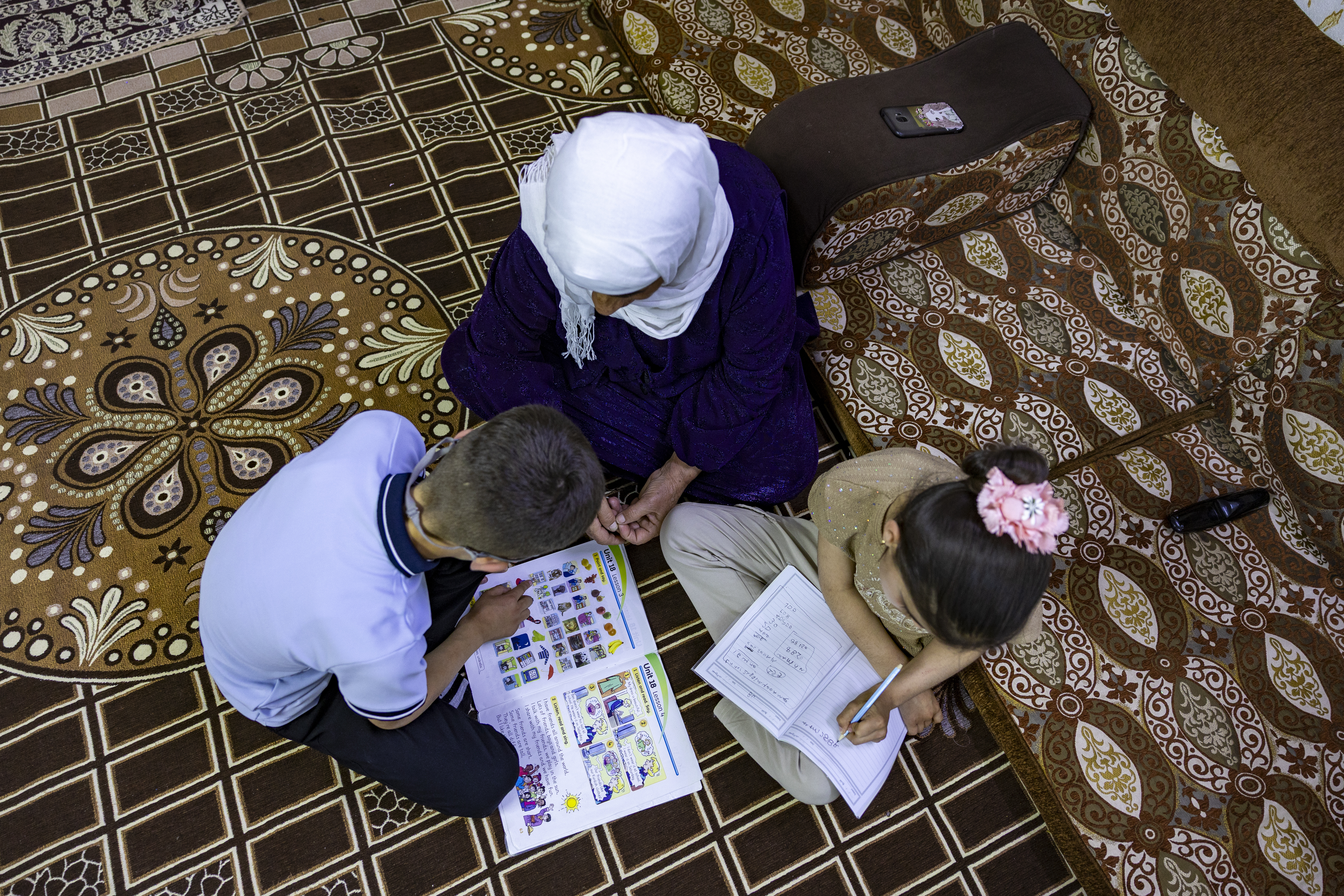
Dilan does his homework with his grandmother and younger sister. © UNHCR/Rasheed Hussein Rasheed
“Dîlan’s pain runs deep. He needs more follow-up and consistent support to begin healing and to have even a chance at a normal childhood. Yet now, even that hope is slipping away.” Dler Sdiq, a social worker working for UNHCR’s partner Kurdistan Save the Children, explains.
Like other vulnerable refugee children, Dîlan had previously benefited from attending UNHCR supported child protection related programmes in the camp. His neighbour, Rua*, who often checks in on the children, was the one who initially spotted that he required additional support.
“His sister and grandmother said he was becoming more aggressive, probably from spending too much time playing games on her smartphone. I took Dîlan to the UNHCR community centre in the camp,” she says.
“He was suffering from lack of focus and felt shuttered, and a sort of a depression. We included him in a programme tailored for such situations,” adds Dler.
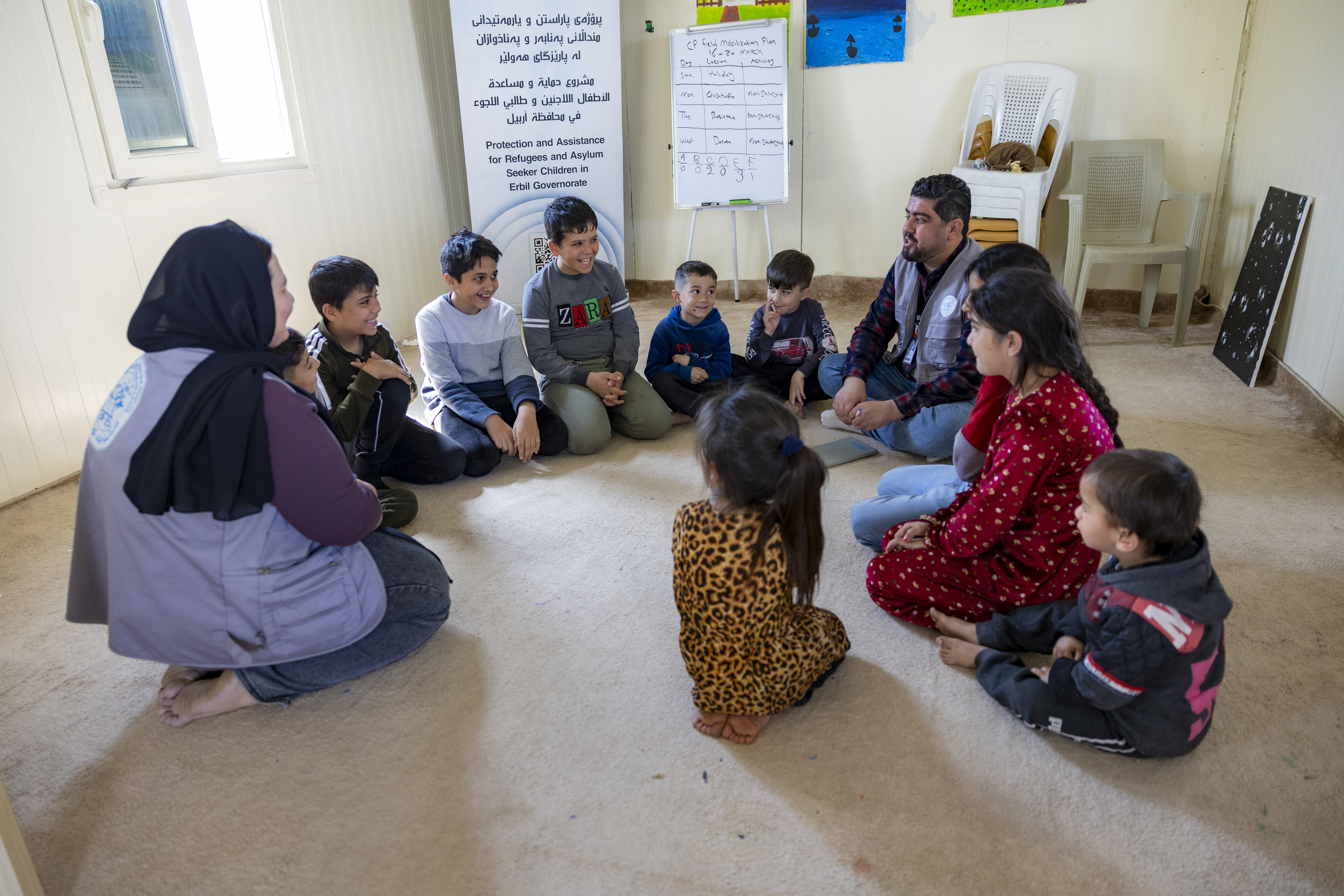
Dler joins a discussion with refugee children at UNHCR\'s community centre. © UNHCR/Rasheed Hussein Rasheed
Due to funding shortages, however, UNHCR supported child protection programmes like this will soon cease operation earlier than originally planned.
Instead, refugee children might access child protection support through public services, which are open to both Iraqi and non-Iraqi nationals alike. Although the accelerated phase-out is driven by funding limitations, the inclusion of refugees within national systems, including those related to child protection, has been a long-term goal of UNHCR in Iraq.
To support inclusion efforts, through steady efforts, UNHCR has been contributing to strengthening child protection services in the Kurdistan Region of Iraq. In 2024, UNHCR supported the Kurdistan Regional Government’s Ministry of Labour and Social Affairs (DoLSA) by training almost 950 government staff and child protection workers on key aspects of protecting children who are assessed to be at risk.
“UNHCR’s trainings helped shift our knowledge from theory to practice, equipping us to handle cases to international standards,” said Ahmed Rashid, Head of DoLSA’s Child Protection unit in Erbil who participated in one of the trainings last year.
These efforts have also been supported by the construction of community centres, outside refugee camps but located in refugee hosting areas, which are accessible to both the Iraqi and refugee communities. “UNHCR will soon hand over a new community centre in Kawergosk, which will be a location where DOLSA can offer inclusive services for both refugees and Iraqis,” explains Ahmed.
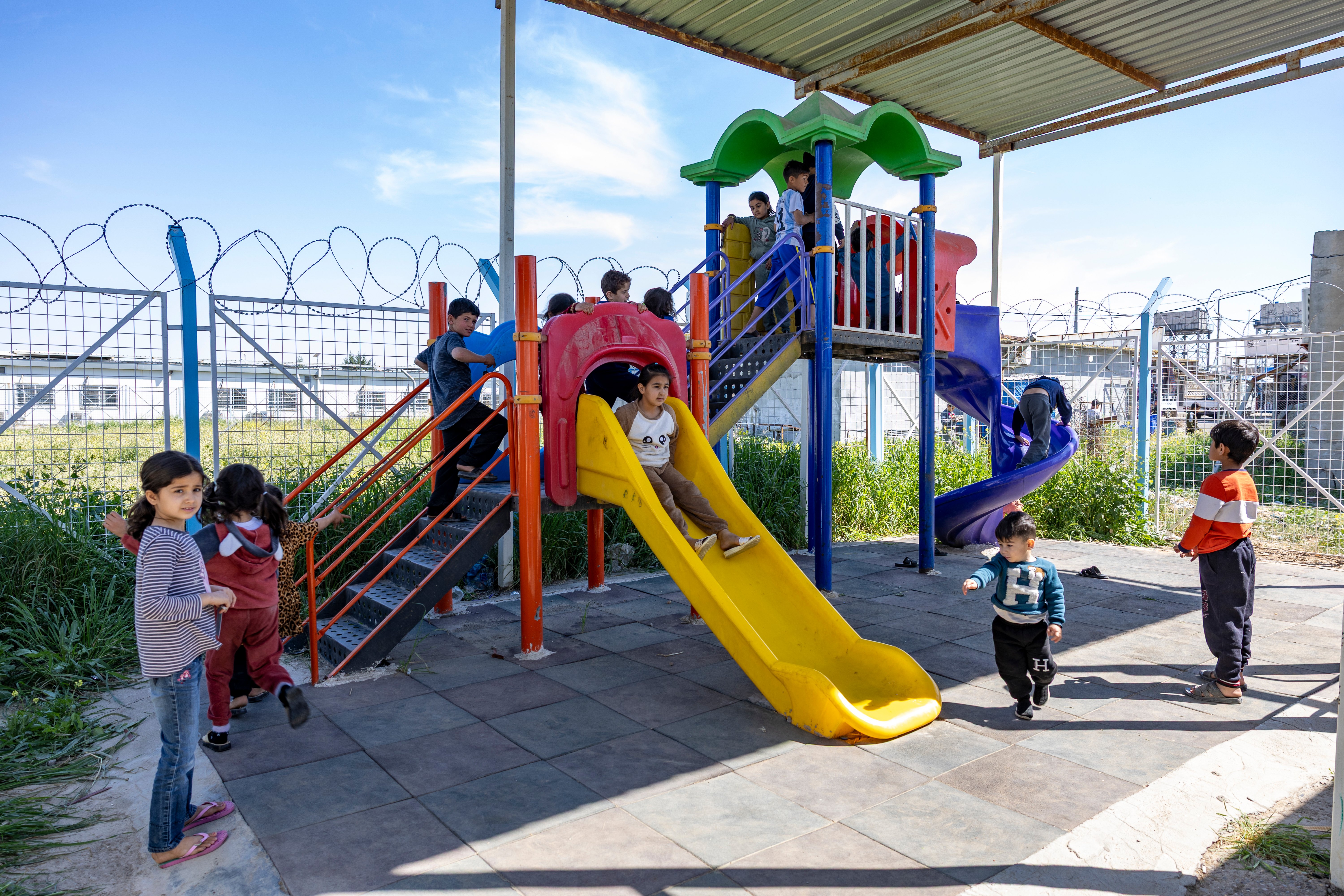
Refugee children playing at a UNHCR community centre in a camp in Erbil. © UNHCR/Rasheed Hussein Rasheed
Despite these efforts, there remain concerns about the immediate gaps that might be created as humanitarian child protection services phase out and public services to support children at risk continue to face several challenges. “We have always supported all children, no matter their background. Our services will continue and even expand, but I fear they will not reach the same level without support from partners,” Ahmed concludes.
With over 130,000 refugee children under 18 registered with UNHCR in Iraq, public services will likely be strained as they strive to fill the void. Therefore, continued support and collaboration will remain critical to strengthen these services. Through sustained efforts and partnerships can every child like Dîlan, regardless of their background, have the opportunity to heal, grow and thrive.
* Names have been changed for protection reasons.
Lilly Carlisle contributed reporting to this story.