



The unseen wounds of war
The unseen wounds of war

Tatiana, a lively 64-year-old woman, pushes open the office door and reminds us not to leave without signing the visitors’ log. She exchanges a few words in Romanian with the Centre’s administrator, then signals that she’s ready to receive us.
Four months after Russia’s invasion of Ukraine, Tatiana and her husband crossed the border into Moldova.
“I left behind 17 goats, chickens, ducks... Everything was given away to friends and relatives. We lived near a military base, so explosions were constant. Once, all our windows shattered. I had only seen that kind of thing in films,” she recalls, gesturing animatedly.
Her daughter and granddaughter had come earlier. Thanks to them, Tatiana and her husband eventually gave up the household they had built over a lifetime and made it to safety in Moldova.
“In the beginning, my husband and I would walk in the park. Whenever we heard a siren or even fireworks, we panicked instantly. Everything stays here,” she says, pressing her palms to her temples.
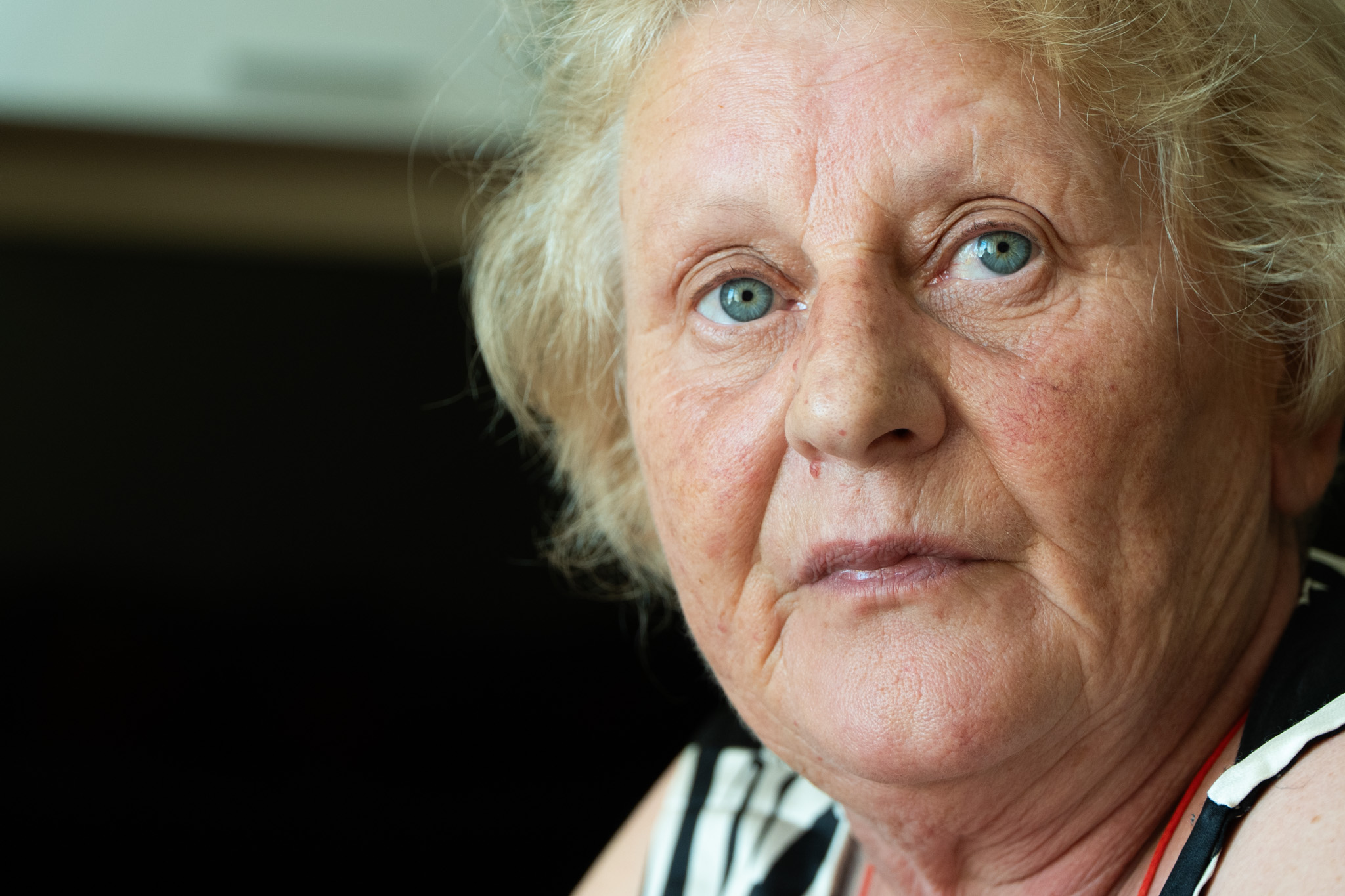
The deputy administrator
In Nisporeni, Tatiana first stayed with relatives. But they had five children, and there was simply no space. The local Refugee Accommodation Centre welcomed her, and soon Tatiana carved out an important role.
“I’m the administrator’s right hand,” she says proudly.
Before the war, she had run the household operations of a private school in Odesa region. Now, in the Centre, she organizes cleaning schedules, monitors chores, makes sure everyone receives their meals, and even negotiated for the small office in which we’re sitting.
“Lizochka” and words that heal
After three years of war, visits from “outsiders” have become part of the Centre’s rhythm, Tatiana explains. But her favorite is when “Lizochka”—Elizaveta, the psychologist from INTERSOS—comes by.
In tears, Tatiana tells how Elizaveta’s advice on managing emotions helped her through the darkest moment, when her daughter and granddaughter traveled to Lviv for the girl’s brain surgery.
“Elizaveta said, ‘I will pray for you.’ Those words touched me deeply. I realized how sometimes validation from a stranger can heal.”
Moldova is not foreign to Tatiana. Though she was born in Ukraine, she studied, married, and gave birth to two children here before moving to Odesa in 1999.
Speaking of her son, her voice falters.
“In 2014, our boy died from illness.” She admits she never realized she needed psychological support until arriving at the Centre. With tears in her eyes, she whispers:
“I never forgot my little boy. I love him—he’s in my heart. But thanks to Lizochka, I’ve started to enjoy life again. And that feels like a miracle.”
Journeys across Moldova
When Elizaveta arrives at any Centre, be it in Nisporeni, Ungheni, Comrat, or Căușeni, she is immediately surrounded by refugees eager to unburden themselves and have their emotions validated. Word of the counseling program spreads from one refugee to another, through INTERSOS’ hotline, group chats, and social media.
After the hour-and-a-half drive to Nisporeni, Elizaveta jokes, “This is the closest one to Chișinău. At least it’s not Comrat… But the road here is terrible.” She spends Wednesdays through Fridays traveling to Centres, often two hours each way.
She listens more than she speaks. One woman, newly arrived after heavy shelling, whispers almost inaudibly, pouring out her story. Elizaveta lets the flow continue, uninterrupted.
Carrying the weight of war
After long sessions, she walks slowly toward the kitchen, asking herself why the world can be so cruel.
“Sometimes I need 15 or 20 minutes just to let those questions drain out of me, so I can detach. Because it’s hard to always be face-to-face with people’s pain.”
She recalls a moment when a beneficiary insisted on showing her a photograph of a dead body.
“I’m very emotional by nature, but I accepted. In that role, as a psychologist, I try to keep my distance.”
The healing of group therapy
What she loves most are the art therapy groups for the elderly. Through drawings, she sees them reconnect with their inner selves.
“They explain why they drew the sea, or a little tree, and I watch how their faces change.”
One session, focused on conflicts and how to resolve them, still stays with her.
“I was curious about one woman who stayed silent the whole time. Near the end, she suddenly broke down and revealed an old conflict. That was a breakthrough. It became the best session we ever had.”
“Some people are only starting to speak now, after three years. Until now, they kept everything bottled up,” she explains.

Living with the war
Dan Aramă, INTERSOS project manager, confirms the shift.
“At first, people lived with the idea that they’d be going back home soon. But after a year, two, and now three, you see that some have resigned themselves.”
Smiling, he shares the story of a woman who began teaching yoga.
“Some decide to stay, to integrate. Not because they want to, but because they know they can’t return yet. Still, hope hasn’t disappeared. People continue to think about their homes, their families left behind.”

For Dan, the program’s value is clear:
“It’s where people meet, share, and find support. Most of our beneficiaries don’t have strong support systems anymore, or they’re very limited. In a way, these activities become a substitute for the networks they lost when the war began.”