

Integrated Services and Facilities Centre: A Beacon of Hope for Women Entrepreneurs

Integrated Services and Facilities Centre: A Beacon of Hope for Women Entrepreneurs
UN-supported centre in Kabul provides safe space for Afghan women to reclaim their livelihoods and rebuild their lives.
By Samand Ibrahimi in Kabul, Afghanistan
In the heart of Kabul, a bold new space is empowering forcibly displaced and returnee women to turn their skills and ideas into profitable enterprises. The newly opened two-story Women’s Integrated Services and Facilities (INSAF) Centre is more than a business hub – it is a safe and enabling environment helping women to reclaim their livelihoods and rebuild their lives.
Among the centre’s first shop owners is Mariam, 27, a former mathematics teacher who lost her job after restrictions imposed by the de facto authorities barred many Afghan women and girls from working or studying. Confined to her home and struggling with anxiety and depression, she knew she had to act.
I felt hopeless. But I knew I had to do something—not just for myself, but for others like me.
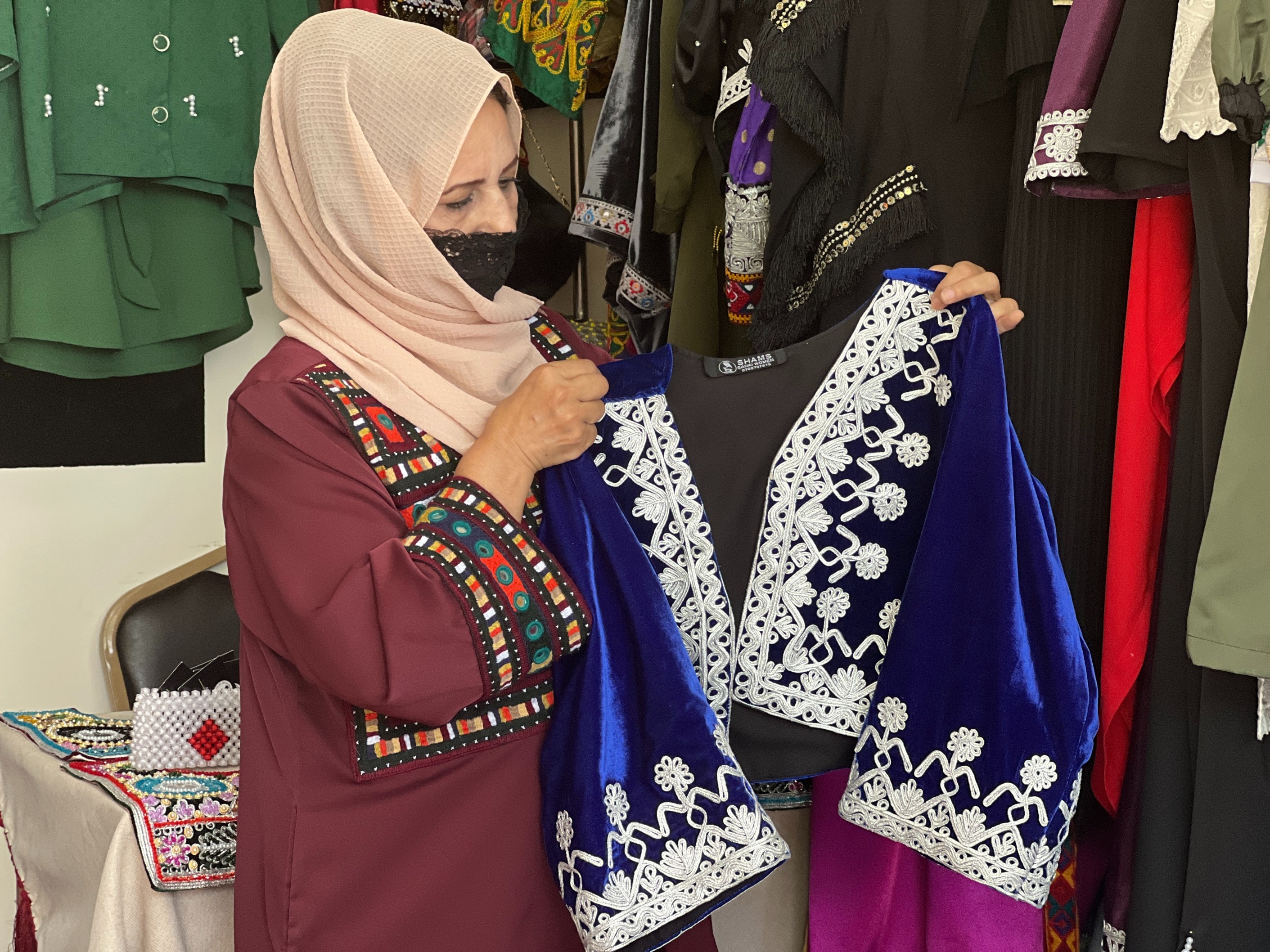
With support from fellow forcibly displaced and returnee women, Mariam launched ‘Salma’, a clothing and accessories brand. Initially operating online, the business faced challenges due to customers’ reluctance to buy items they could not see or touch. But now, thanks to the INSAF Centre, Mariam runs a physical store where customers can engage directly with her products.
Now that people can see the quality of our work, I believe we can really increase our sales.
"This shop is not just a space for business, it’s a place of hope."
The INSAF Centre currently hosts 18 women-led shops selling clothing, handicrafts, traditional Afghan food products, natural beauty items, home décor, and handmade jewelry, as well as offeringtailoring and embroidery services. On the second floor, the centre offers business training, mentorship, and psychosocial support, providing women with the tools and knowledge to grow and sustain their ventures.
The centre was established with the support of UNHCR, the UN Refugee Agency, together with the United Nations Office on Drugs and Crime (UNODC), and the Afghanistan Women Chamber of Commerce and Industry.
So far in 2025, over 2 million Afghans have returned or been forced to return to Afghanistan from neighbouring countries, further straining a country already suffering from years of instability and worsening an acutely under-funded humanitarian crisis. The UN estimates that half of Afghanistan’s population needs humanitarian assistance.
Shakira, a journalist by profession who was forced to give up her career due to the restrictions, is another INSAF Centre success story. Rather than remain idle, she founded Shams Embroidery Manufacturing Company, which now employs ten women—most of them displaced or returnees.
This is more than a business.
"We also serve as a training centre where women can learn embroidery, tailoring, and handicraft skills. I wanted to create something meaningful—for myself, my family, and for other women who need opportunities to earn and support themselves."
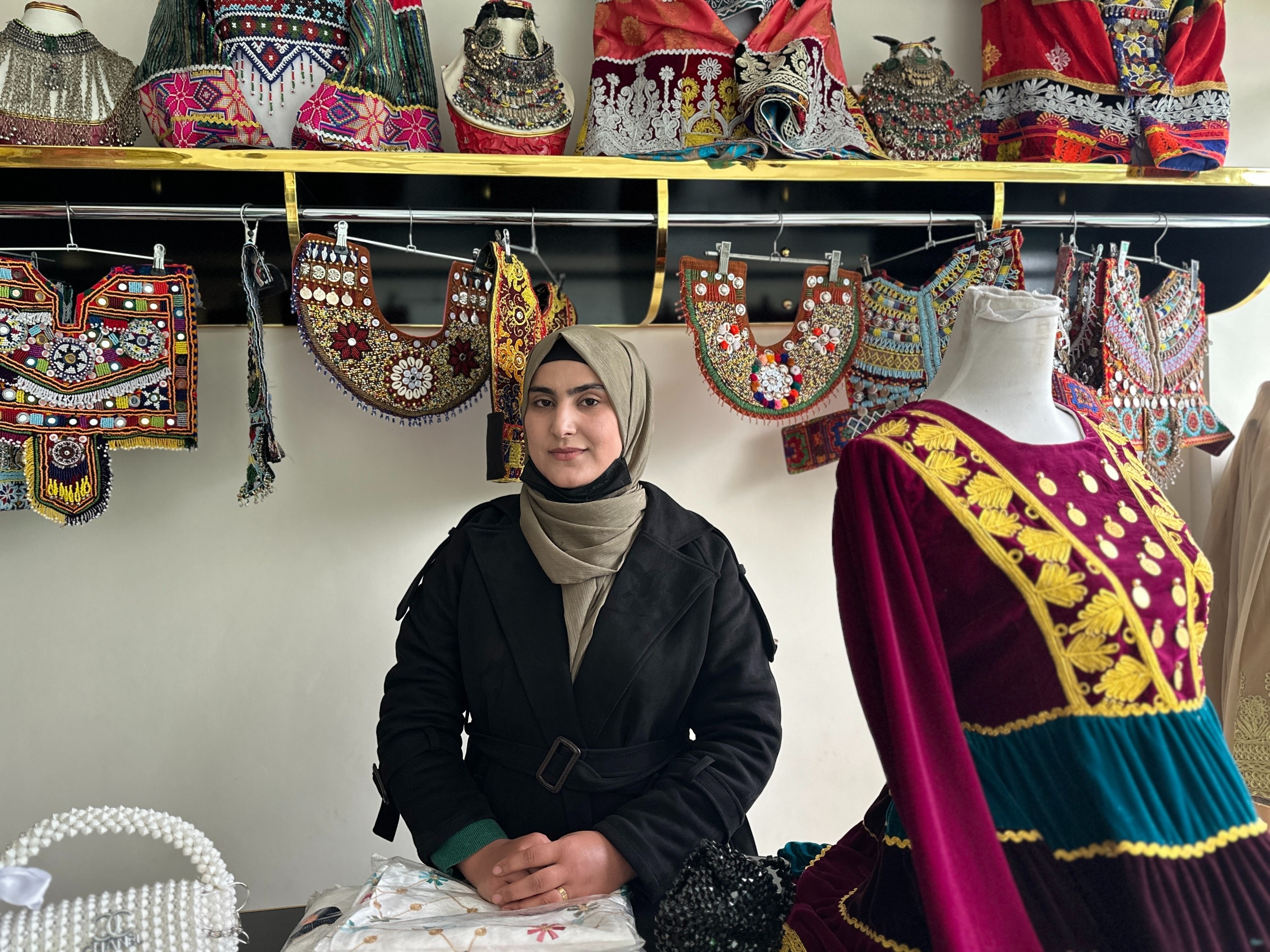
In a country where millions of women face profound barriers, and increasing restrictions in accessing employment, education, and freedom of movement, the INSAF Centre stands as a symbol of perseverance and promise. It is a place where women can rebuild not just businesses, but lives, families, and futures.
As result of severe funding cuts this year, UNHCR Afghanistan has been forced to downsize core livelihood and shelter activities and significantly reduce financial support to refugee returnees. UNHCR requires $216 million to protect and assist forcibly displaced people and returnees in Afghanistan this year, but has so far received just 28 per cent of that amount.