



Canvasses of new beginnings: How refugee women in Kenya are creating opportunities and futures through tie-and-dye skills
Canvasses of new beginnings: How refugee women in Kenya are creating opportunities and futures through tie-and-dye skills

Refugee and host community women with some of the textiles that they have upscaled with tie-and-dye and stitched into clothes for sale.
When Lydia Irakoze, 36, fled her home in Burundi in 2017, she had no idea what her future would be. Searching for a better life for herself and family was all she could think of.
Months after fleeing she arrived in Nairobi, Kenya with not more than the few belongings she had managed to carry when she fled. Besides finding a roof over her head, she had to find a means for her family and her to survive.
“I came here not knowing anyone so I had to do all I can to find my way around,” said Lydia. “I ended up doing a lot of small jobs here and there so I can at least earn some little money to buy food for my children,” she said. “But I also wanted to give them a better life than the one we had back home, so I decided to start learning simple skills that I could use to find a good job,” she added.
“I was introduced to Refugee Women (in Nairobi) by a neighbor who was part of the group and was interested in the trainings that she attended. When I joined them, I realized they were just young refugee women like me, who wanted a better life for themselves and that motivated me to stay,” said Lydia.
Just like Lydia, Lucy Duku, a South Sudanese mother of five and who had been living in Kenya as a refugee since 1992, had tried all she could to support her family. But she wanted more, not just for herself but for the many refugee women she had come to know in her community.
After volunteering in different organizations, she felt she had what it took to set up a community organization that would contribute to positively impacting women like her. In June 2024, she founded the Refugee Women in Nairobi (RWIN), an organization created by refugee women for refugee women to upskill them in handicraft and entrepreneurship. Through skills trainings, RWIN equips refugee women and their counterparts from local host communities with knowledge, ideas and capacities that will help them generate an income, provide for their families and build more stable lives where they live.
In 2025, the Refugee Women in Nairobi and with support from the UNHCR-Mastercard Foundation partnership, trained 210 refugee and host community women in tie-and-dye and batik textile production. They upscale ordinary fabric with beautiful designs, stitch them into clothes that they would sell in local markets. With the income they get back, they put food on the table, take their children to school and meet other needs they may have.
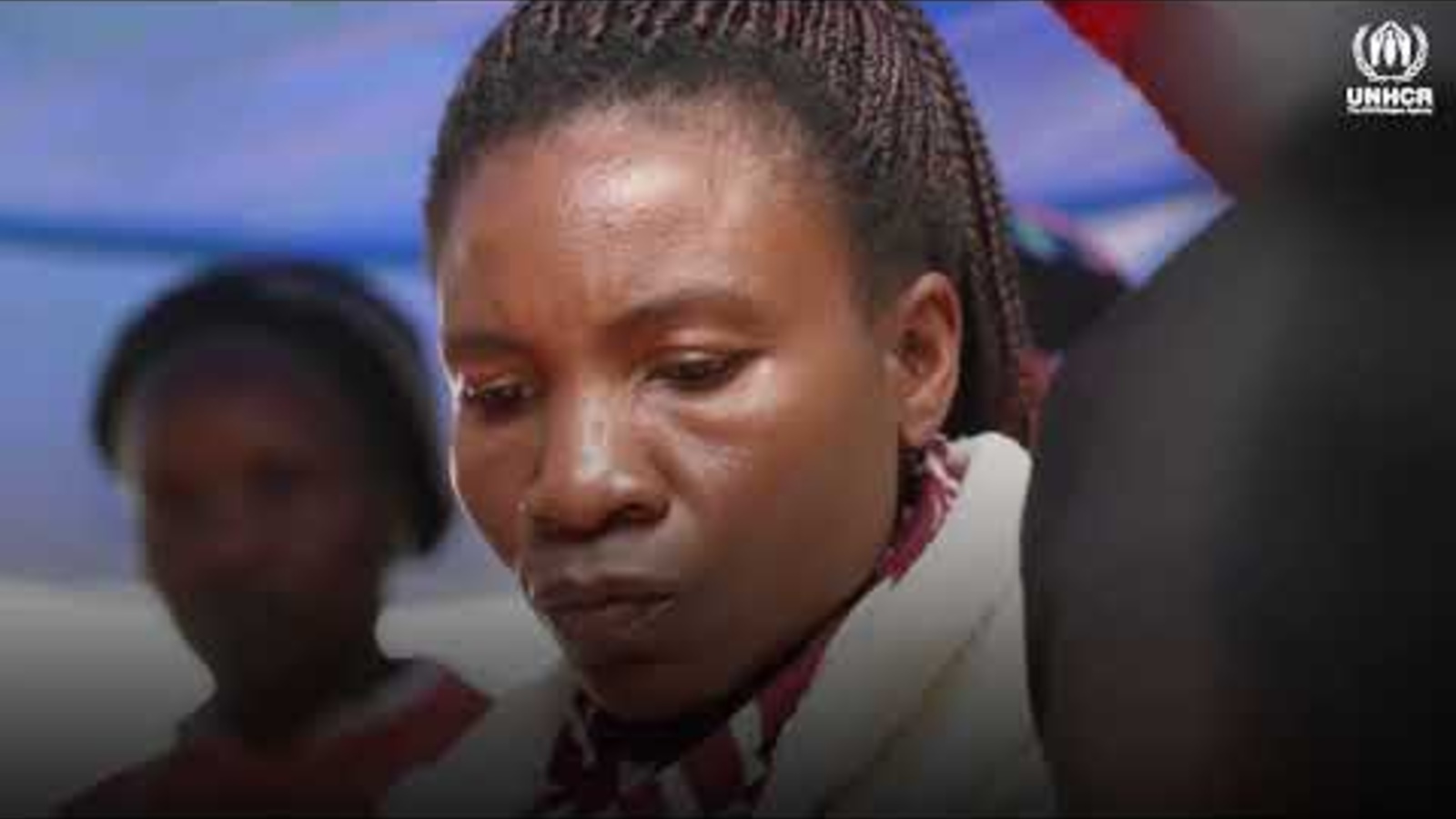
“We felt that if we empower women, one day they will be able to represent their own needs,” said Duku. “We are trying to use these skills, not only to help the women we have trained at Refugee Women in Nairobi, but to also be extended to other women in the community,” she added.
The training was just the first step. Some of the participating women who were skilled in stitching, have since been employed by the organization to produce clothing items for sale, and whose income partly supports the organization’s operations. Others have teamed up together to establish their own businesses and are setting up market linkages, both locally and abroad.
Lydia was among this first cohort of women to be trained.
“A good person is not one who can give you fish. It is the person who teaches you how to catch that fish,” she said. “This training has given me something I can do with my hands. I can employ myself and don’t have to wait for someone else to employ me or go and beg,” she added.
Lydia is now part of a group of 10 women including refugees and from the local community, who have come together, hoping to use their skills to start their entrepreneurial journey and support themselves. Now they can dream bigger, not just to own a business but also uplift other women in their communities, both refugees and hosts alike.
“We already have a plan as a group. All we need is some capital to start us out and the rest we will take forward and teach others as well,” Lydia affirms.
Access to skills development equips refugees and displaced youth, especially young women, to transition into dignified work, and economic participation.
When refugees can generate income, they can support themselves and their families and build stable lives where they live.


