
Partners In Action - 2024 Private Sector Partnerships Africa Impact Report

Executive Summary
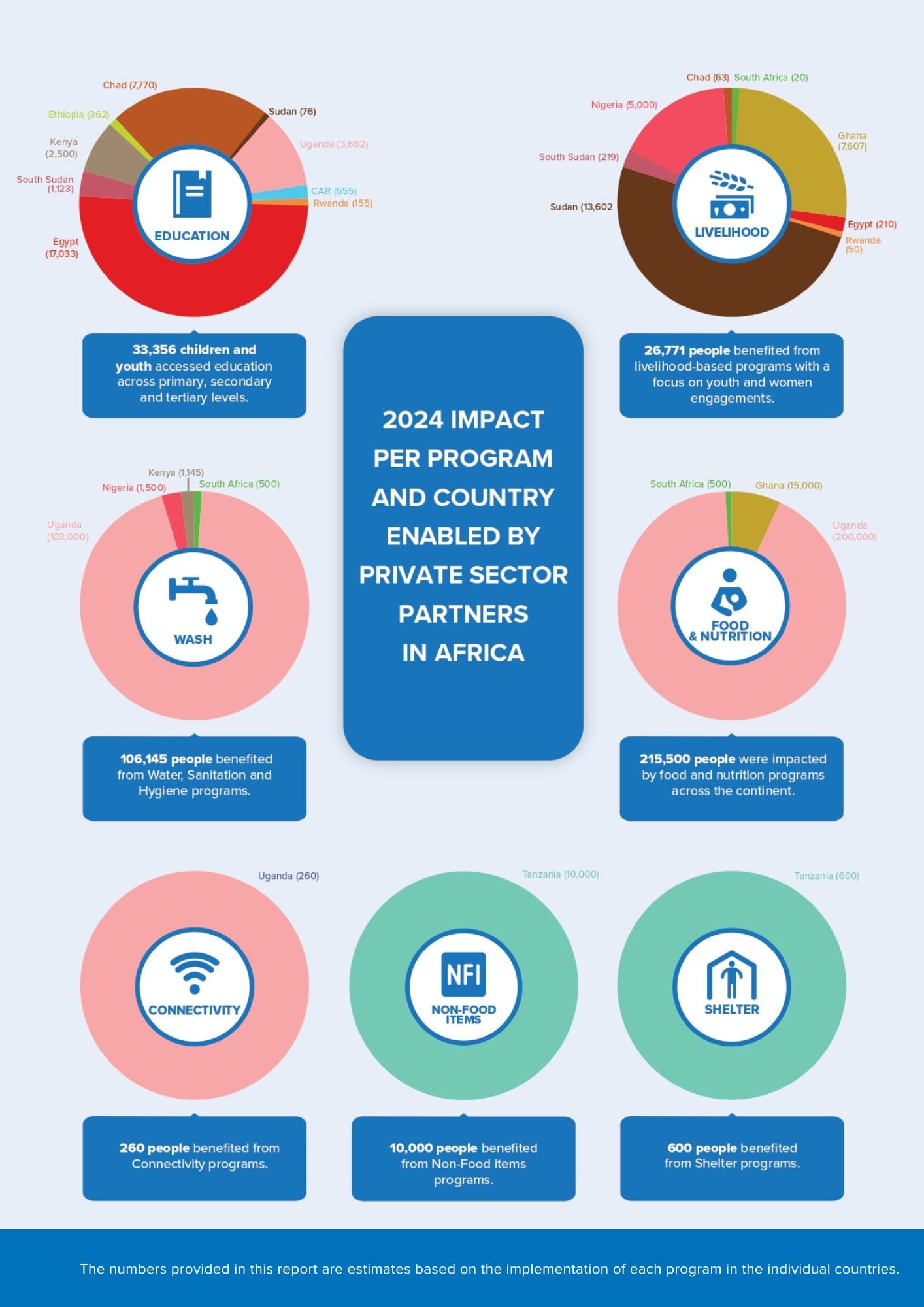
The 2024 Private Sector Partnerships Africa Report is a summary of UNHCR's engagements with private sector partners in Africa, and the subsequent impact achieved due to these partnerships. Through strategic and long-term collaboration with the private sector in Africa, our collective efforts have reached and positively impacted the lives of 200,132 displaced persons and host community members during 2024. The stories and figures shared in this report stand as testament to what is possible when we invest in solutions that are not only sustainable but also rooted in partnership and purpose.
By the end of 2024, 44 million people across Africa had been forcibly displaced—driven by conflict, persecution, human rights violations, and the intensifying impacts of climate change. From the ongoing Sudan emergency to the conflict in the Democratic Republic of the Congo and the deepening Sahel situation, displacement remains a defining challenge for both refugees and internally displaced persons (IDPs).
In light of this pressing backdrop, the private sector in Africa is rising to the occasion and demonstrating that strategic, long-term collaboration can truly transform lives. UNHCR intentionally engages Africa’s private sector, including companies, foundations, and individuals, to provide various forms of support and solutions for people forced to flee.
With over 50 partners engaged across the continent during 2024, the private sector continues to play a pivotal role in improving the lives of displaced individuals and members of host communities, by connecting them to a diverse range of opportunities and services including education and livelihoods. These efforts went beyond traditional monetary aid, equipping people with the necessary tools to become independent, self-sufficient, and capable of providing for their families.
In the East and Horn of Africa and the Great Lakes (EHAGL) region, education and livelihoods support impacted over 21,000 displaced and host community members. Partners helped strengthen and scale up access to education for children and youth from primary to tertiary levels, supporting both infrastructure and skills development. Livelihood programs fostered greater economic inclusion, especially for women and youth, empowering both refugees and their host communities.
In West and Central Africa, livelihood investments focused on agriculture, integrating refugees into value and supply chains, opening new opportunities in sustainable agri-business. These efforts had positive ripple effects on over 12,000 displaced persons and host community members.
In Southern Africa, water and sanitation programs improved the quality of life for over 500 displaced persons and host community members. Livelihood initiatives also boosted agricultural productivity, increasing food availability and supporting community-led solutions to displacement-related challenges.
Throughout the year, UNHCR deepened public engagement through targeted events and campaigns. From sporting charity activities to fundraising initiatives, the private sector stepped into spaces that sparked meaningful dialogue and action. Faith-based organizations also came together to support those in need through our Ramadan campaigns.
Moreover, UNHCR received tremendous support from celebrities across the continent, championing the cause of displacement and leveraging their social influence to raise awareness and mobilize support for people forced to flee.
Looking ahead, UNHCR is inspired by the momentum built in 2024 and by what’s possible when Africa’s private sector steps up, not just as donors, but as true partners in progress. Together, we have the power to design and scale solutions that respond to today’s urgent needs while laying the foundation for thriving, resilient communities for generations to come.
This report is more than a record of impact; it’s a call to action. Because when purpose-driven partnerships lead the way, we don’t just respond to displacement, we reshape the future of Africa.


Private Sector Partners Spotlight
Mastercard Foundation

Text and media 10
In response to the Sudan crisis, Mastercard Foundation played a critical role in helping UNHCR deliver life-changing support to refugees and displaced persons affected by the conflict, with a strong emphasis on education and economic inclusion.
Through this partnership, 29,732 refugee and displaced youth were supported to continue their secondary education, while 724 students accessed opportunities in higher education with a clear priority placed on girls and young women. The collaboration also enabled 14,751 young people to benefit from livelihood and skills training, promoting resilience and self-reliance across refugee-hosting communities in the region.
Mastercard Foundation further deepened its engagement by supporting efforts to tackle systemic barriers to education and employment. This included strengthening Refugee-Led Organizations and laying the groundwork for expanded access to work opportunities for thousands more displaced youth.
Amid one of Africa’s largest displacement crises, Mastercard Foundation has ignited as a catalyst for meaningful change, supporting youth-led solutions and creating pathways to brighter, more stable futures.
Qatar Charity Ghana

Text and media 15
When conflict erupted in 2021 in Burkina Faso and the larger Central Sahel region, hundreds of thousands of men, women, and children were forced to flee their homes in search of safety. Over 15,000 Burkinabe refugees have since settled in northern Ghana, across the Upper East, Upper West, Savannah, and Bono East regions.
In Tarikom Refugee Settlement (Upper East Region), both refugees and members of the host community continue to face daily challenges in accessing food and economic opportunities. Resources remain limited, making support for basic needs and sustainable solutions more vital than ever.
During Ramadan, Qatar Charity, in partnership with UNHCR, launched a feeding program that provided nutritious meals for over 15,000 Burkinabe refugees. Beyond meeting immediate needs, the initiative also created economic opportunities by engaging local women from the host community to prepare and distribute the meals, fostering stronger ties and mutual support between the two communities.
Through this partnership, Qatar Charity continues to play a vital role in responding to urgent needs while investing in longer-term community resilience.
Canaan Group of Companies

Text and media 16
In Gorom, South Sudan, just 26 kilometers from Juba, a community of refugees and internally displaced families has sought safety since 2010, fleeing conflict in Ethiopia and other parts of Sudan. Access to education has remained a major challenge, with only primary schools available. The absence of secondary education meant limited opportunities, leaving youth vulnerable to child labor, early marriage, and exploitation.
It is here that Mr. Berket of Canaan Group, in partnership with UNHCR, supported the construction of eight classrooms, an office block, a kitchen, staff toilets, and six toilet blocks at Gorom Secondary School. The project also improved water, sanitation, and hygiene (WASH) infrastructure in the school and the surrounding environment, creating a healthier learning environment.
The school provides an opportunity to 400 students annually, including refugees, returnees, and host community youth, to access education and transition to secondary education.
Tropical General Investments

Text and media 17
In Northwest Nigeria, conflict over the scarcity of natural resources, including land, water, and pasture, has led to forced displacement, with over 186,000 people internally displaced within Katsina, Zamfara, and Sokoto states.
In Katsina State, Nigeria, internally displaced persons (IDPs) and host communities face economic instability and food insecurity, with limited access to jobs, financial services, and agricultural opportunities. Without sustainable livelihoods, many struggle to rebuild their lives.
To support these displaced communities, the TGI Group, in partnership with UNHCR, launched an initiative to create long-term, sustainable economic opportunities. The project integrates agriculture, skills development, and financial inclusion, providing land, irrigation, and subsidies to help IDPs participate in agricultural value chains, thereby boosting both income and food security. In addition, market-driven training, certification programs, internships, and job placements equip individuals with essential skills for employment. Meanwhile, improved access to financial education, savings, and affordable credit empowers families to build financial stability.
By equipping 1,000 IDP families with the tools to achieve self-reliance, this partnership has fostered resilience, enabling displaced families to achieve dignified futures.
Ashraful Aid

Text and media 18
In Southern Africa, conflicts and climate change have forced thousands to flee their homes in search of safety and security. Many make a tiring and long journey to South Africa and Eswatini from as far away as the Democratic Republic of Congo. While UNHCR and our partners are on the ground to provide protection and support, with the large numbers of those already seeking refuge and more arriving, resources are strained. Ashraful Aid, an international humanitarian organization headquartered in South Africa, has made significant contributions to UNHCR’s work in the region.
In Limpopo, South Africa, Ashraful Aid’s food relief parcels arrived as a lifeline for 500 displaced individuals, providing essential nourishment to struggling families. These simple yet vital provisions offered sustenance and a moment of hope for the displaced families.
Meanwhile, in Eswatini, Ashraful Aid’s support helped clear land for the Ndzevane Livelihoods Project, enabling 8 local farmers to begin the vital work of growing food, ensuring food security for their families and the wider community. Furthermore, during the holy month of Ramadan in 2024, Ashraful Aid provided food parcels to refugee families in Malindza Refugee Reception Centre, helping feed families for Iftar.
Ashraful Aid has shown an unwavering commitment to those forced to flee their homes, helping to rebuild lives, restore dignity, and create a future of hope for displaced communities across Southern Africa.
Impact Stories
Empowering Sudanese Refugee Women in Chad

Empowering Sudanese Refugee Women in Chad
After losing her son in Sudan’s conflict, Zahra Khamis Ibrahim fled to Chad—only to begin again. In Adré, this courageous social worker is helping other refugee women heal from trauma, reclaim their power, and build futures of hope.
Watch how Zahra turned grief into leadership, creating a safe space for women to rise.
Growing Hope Through Agriculture in Uganda

Growing Hope Through Agriculture in Uganda
From surviving violence in DR Congo to leading a farming collective in Uganda, Mahoro Florence is rewriting her story and helping other women do the same. Watch how this mother of eight turned resilience into leadership, and why her journey shows what’s possible when refugees are given the chance to thrive.
Restoring Dignity Through Sanitation in Kenya
For 61-year-old Dahabo Ahmed, the journey from Somalia to Kenya’s Dadaab refugee camps was nothing short of a nightmare. Fleeing drought, famine, and conflict, she arrived exhausted, carrying the weight of nine grandchildren and her daughter’s safety on her shoulders. But even after reaching Dadaab, their struggles were far from over. They had a tent to sleep in, but no safe place to relieve themselves.

Before UNHCR and its partners intervened, families like Dahabo’s faced a harsh reality of being forced to resort to open defecation, exposed to disease, and, for women and girls, at risk of harassment when seeking privacy at night.
“I feared for my granddaughters every time they had to go outside,” she recalls. The lack of proper sanitation was more than an inconvenience; it was a threat to their health and dignity.
Then, through the generosity of Islamic Philanthropy donors, notably the World Federation of Khoja Shia-Asheri Muslim Community and the Federation of Khoja Shia-Asheri Jamaat of Africa, UNHCR, working with Garissa County and humanitarian partners, constructed household latrines in Dadaab Ifo 2. When Dahabo’s family was allocated one, she felt an overwhelming sense of relief. “For the first time, I felt human again,” she says.
These latrines have done more than improve hygiene. They have restored safety, dignity, and a sense of normalcy for displaced families. “No more fearing for our daughters. No more worrying about sickness,” says Dahabo’s daughter, Fartun. With access to clean sanitation, their focus has shifted from survival to rebuilding their lives. More lives can be transformed with continued support from the private sector and partners. This will ensure that no family has to endure the indignity of unsafe sanitation. Because a simple latrine isn’t just about hygiene… It’s about restoring dignity and hope, one family at a time.
Private Sector Led Solutions: from Dependency to Self-Reliance
A joint UNHCR–World Bank study shows that enabling refugees to work can reduce aid dependency and free up billions in international assistance. For example, if refugees increase their income by 25%, the need for complementary aid drops by half. Aided by this evidence, UNHCR is moving from short-term emergency responses to “solutions from the start” whenever possible, embedding sustainability and resilience into all phases of displacement response.
UNHCR’s Sustainable Responses approach is about maximizing self-reliance and minimizing dependency on humanitarian aid. This involves expanding the human potential of forcibly displaced people, integrating refugees into national systems (education, health, housing, civil registration), and strengthening host country institutions to sustainably manage asylum and protection.
Key categories of private sector led solutions include:
Job creation and inclusion: Businesses can provide employment opportunities for refugees and host communities, helping build self-reliance and reduce aid dependency.
Access to essential services: Private sector partners help improve access to education, healthcare, energy, and digital connectivity—often through innovative models like mobile learning or microfinance.
Market access for refugee products: Initiatives like MADE51 connect refugee artisans to global markets, promoting dignity and economic empowerment through fair trade.
Climate-resilient solutions: The private sector can offer technologies that help displaced communities adapt to climate change and environmental degradation (ex., promoting climate-smart agricultural practices).
Advocacy and public engagement: Corporations and foundations amplify refugee voices and advocate for inclusive policies through campaigns and strategic communications.
Support for entrepreneurship and SMEs: Investment in refugee-led businesses and local enterprises fosters economic growth and resilience.
Private sector led sustainable solutions come at the core of UNHCR's approach to sustainable responses. These solutions go beyond financial contributions and focus on long-term impact through innovation, inclusion, and resilience. The expertise, products, services, networks, and innovation capabilities render businesses well-positioned to deliver positive results for forcibly displaced people and the communities hosting them. In this way, corporate shared-value partnerships can equally contribute to the objectives of UNHCR, the corporate partner, the Global Compact on Refugees (GCR), and the Sustainable Development Goals (SDGs). During 2024, the African private sector has provided various forms of solutions, most notably:
Financial inclusion: Several financial institutions and fintech companies across the continent are engaging with UNHCR to expand much-needed financial services to displaced and host communities.
Connectivity: Several telecommunication companies are engaging with UNHCR to provide connectivity in displacement-heavy areas, including for education/ schools.
Employment and policy advocacy: Several businesses are in talks with UNHCR about ways to address work policy barriers and to explore up-skilling and income-generating opportunities for displaced and host communities across the continent. Such opportunities include the integration of displaced persons in relevant supply/ value chains, such as for agriculture, which is a prominent livelihood activity among displaced and host communities.
Access to other services: Several companies are actively exploring inclusive business expansion plans with UNHCR, helping them understand the market potential (and challenges) from such expansion to displacement-dense localities.
Events & Activities
Africa Roundtable on Private Sector Solutions to Forced Displacement

Africa Roundtable on Private Sector Solutions to Forced Displacement
In November 2024, leaders and members of the African private sector, development actors, civil society organizations, UN agencies, and other stakeholders convened in Lagos, Nigeria, to develop solutions for IDPs. Hosted by the Nigerian State government in collaboration with UNHCR, the event brought together over 245 participants from across Africa and featured conversations around:
- Identifying scalable solutions and sharing best practices to enhance inclusive market creation in IDP contexts.
- Highlighting business opportunities and challenges for private sector engagement in forced displacement contexts, including policy, financing, and skills gaps.
- Discussing ways to address these gaps to promote private sector development in internal displacement contexts.
The event provided a crucial opportunity for knowledge sharing, awareness raising, networking, and creating a deeper understanding of each stakeholder's role in addressing challenges related to private sector solutions for internal displacement, as well as developing a roadmap for collaborative solutions.
A key outcome of the event was securing concrete commitments from the private sector, demonstrating their willingness to engage further with UNHCR in discussions and collaborative efforts to address critical challenges in displacement contexts.
Ramadan Engagements

Ramadan Engagements
During Ramadan, UNHCR partnered with local organizations and communities in Kenya, Ghana, and Nigeria to bring much-needed relief to displaced people. These efforts focused on food, water, and sanitation, essentials during a month rooted in compassion and giving.
In Kenya, UNHCR and DIB Bank Kenya hosted an Iftar fundraiser in Nairobi with support from mosques in Kenya. The event brought together private sector leaders and donors to raise funds for over 1,000 refugees in Dadaab, helping improve access to clean water and latrines.
In Ghana, UNHCR supported a feeding program for around 15,000 Burkinabe asylum seekers in the Tarikom settlement. Local women from the host community prepared daily warm meals, creating jobs and meeting urgent nutritional needs.
In Nigeria, UNHCR and the Al-Habibiyyah Islamic Society launched a Ramadan campaign to support IDPs across the country. The campaign raised awareness and mobilized resources through engagement with faith leaders and national media.
Charity Golf Tournament in Kenya

Charity Golf Tournament in Kenya
During the third edition of the annual charity golf tournament, golfers took a swing for education at the beautiful Windsor Golf and Country Club. The tournament, which was fully booked with over 250 players, was one for the books as both corporate teams went head-to-head with each other, and individual players competed for prizes provided by our partners and sponsors.
The tournament helped improve education infrastructure in Kakuma refugee camp, and provided educational materials for 2,500 refugee students.
AfriPolo Charity Event in Ghana

AfriPolo Charity Event in Ghana
The perfect blend of fashion, equestrian skill, and fundraising went down at the inaugural UNHCR AfriPolo event in Accra, Ghana, at the scenic Accra Polo Club in March 2024. From a day of adrenaline-filled polo to an evening reception filled with entertainment and networking, all culminating in an exceptional show of support and love for refugees through the donations, the event was indeed one to remember.
Through the support and funds raised at the event, over 900 Burkinabe refugee families in the Tarikom Refugee Settlement were positively impacted, enabling the provision of warm meals and agricultural kits that helped these families rebuild their lives with dignity.
Celebrity Engagements

Celebrity Engagements
UNHCR's celebrity supporters play a crucial role in advocating, amplifying, and raising awareness and funds for programs and events that support refugees. We are grateful for their continued dedication to supporting persons forced to flee.
Celebrity supporters who engaged with us in 2024 include:
- Innocent Idibia - 2Baba - UNHCR (Regional) Goodwill Ambassador
- Kwame Amfo Annom-Akonnor - UNHCR (National) Goodwill Ambassador
- Mercy Masika - UNHCR (National) Goodwill Ambassador
- Nikki Samonas - UNHCR (National) Goodwill Ambassador
- Adjetey Anang- UNHCR High Profile Supporter
- Collins Injera - UNHCR High Profile Supporter
- Oheneba Yaw – Abrantie, the Gentleman - UNHCR High Profile Supporter
- Lavin Asego - UNHCR Celebrity Supporter
How You Can Help
UNHCR Private Sector Partners in Africa 2024
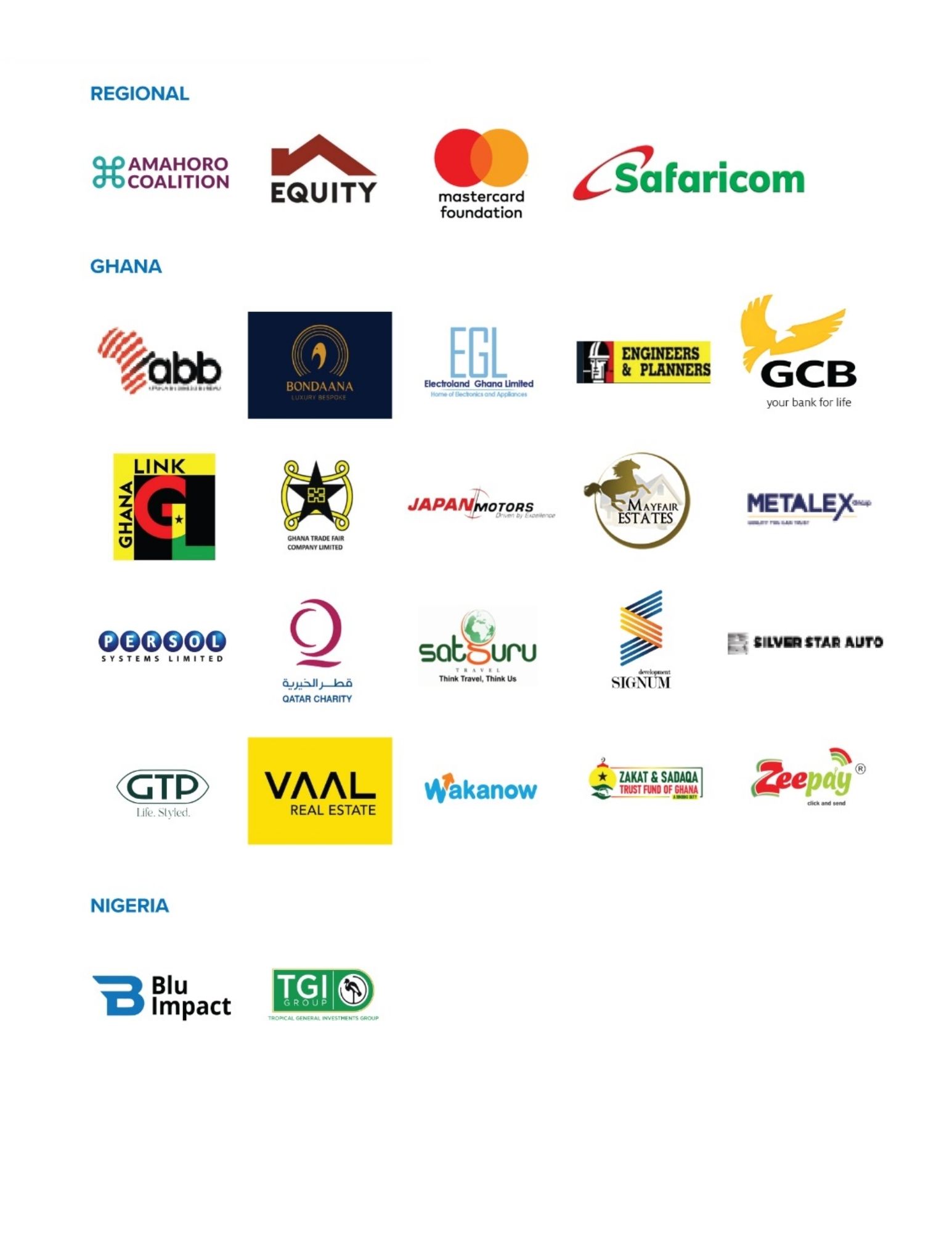
We deeply appreciate the support of our private sector partners in Africa, in advancing solutions for displaced and host communities during 2024. Your commitment has played a vital role in creating sustainable opportunities and lasting impact through financial contributions, in-kind support, and innovative solutions.