

Rebuilding Hope: One Year After the Earthquake in Myanmar
Rebuilding Hope: One Year After the Earthquake in Myanmar

Daw San Myint in front of the community pig shed where she raises her piglets for extra income.
One year after the devastating 7.7 magnitude earthquake struck central Myanmar, many families are still rebuilding their lives, piece by piece, day by day.
Across affected communities, the damage remains visible, but so does the determination to move forward. Homes were reduced to rubble, livelihoods disrupted, and families were left to face deep uncertainty. Yet even in these conditions, recovery is steadily taking shape.
The earthquake struck communities already living through years of conflict. Many of the families affected had already been displaced at least once – losing their shelter and sense safety all over again. The overlapping tragedies left them with even fewer resources to recover when the earthquake hit.
In the weeks following the quake, UNHCR rapidly scaled up emergency relief, providing life‑saving assistance and support to over 244,000 people across Mandalay, Sagaing, Nay Pyi Taw, and southeastern Myanmar. This includes shelter materials, household items, protection services, and help for vulnerable groups such as women, children, older persons, and people with disabilities – helping communities in their gradual recovery.
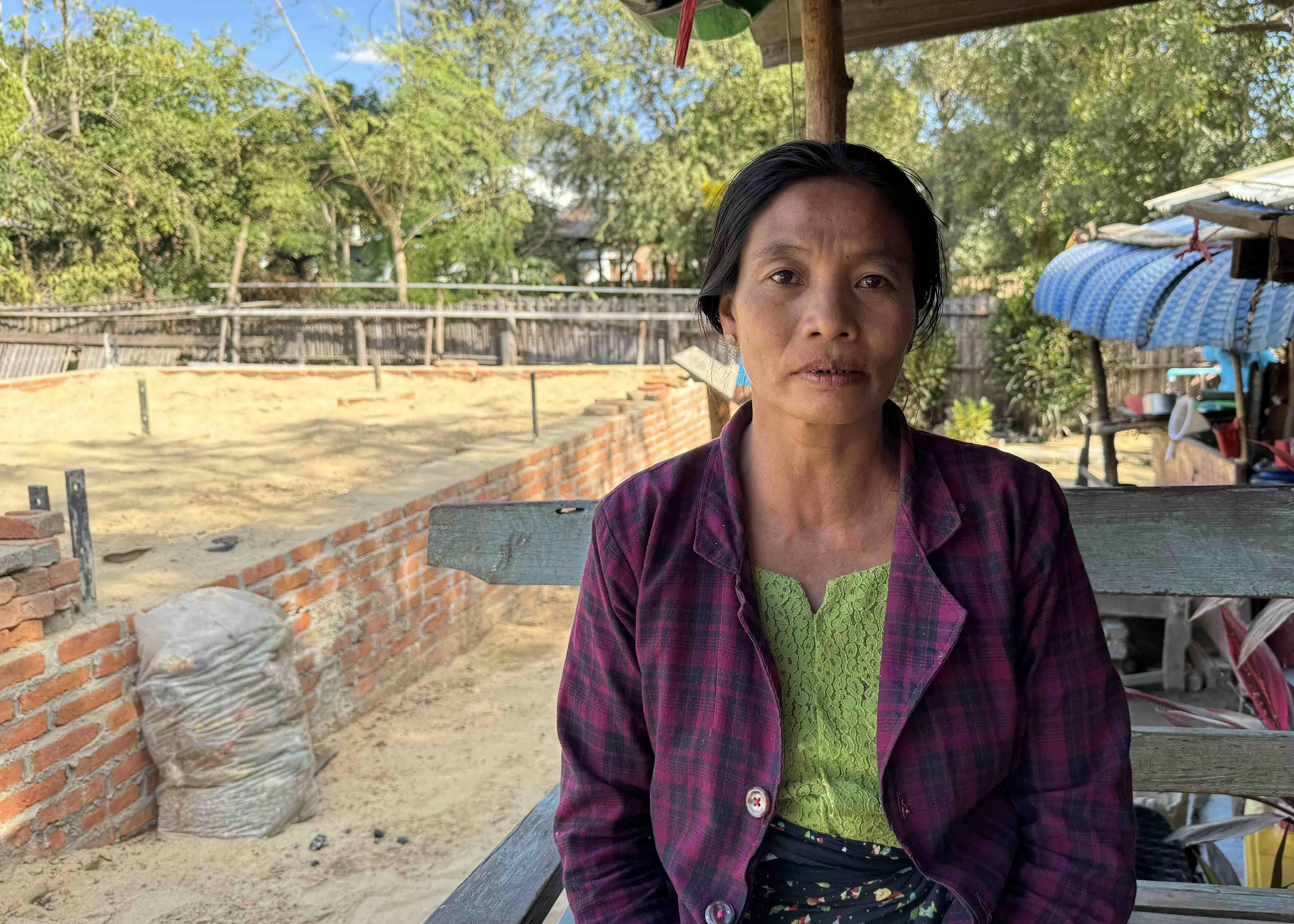
Ma Tin Tin Mya's new home takes shape behind her.
In Lat Pan village in Takone District, Ma Tin Tin Mya’s life was turned upside down overnight. A wall collapsed while her husband was asleep inside their home. He survived, but the house was completely destroyed. Since then, the family has been living in a temporary shelter, protecting them from the elements while they slowly rebuild.
“Rebuilding is not easy,” she says. “But every day we see progress, and that gives us courage.”
With simple materials like tarpaulins and blankets from UNHCR and partners, the family has managed difficult conditions while working towards building a more permanent home. Now, the foundation of their new house is in place, marking a small but meaningful step toward restoring safety and stability.
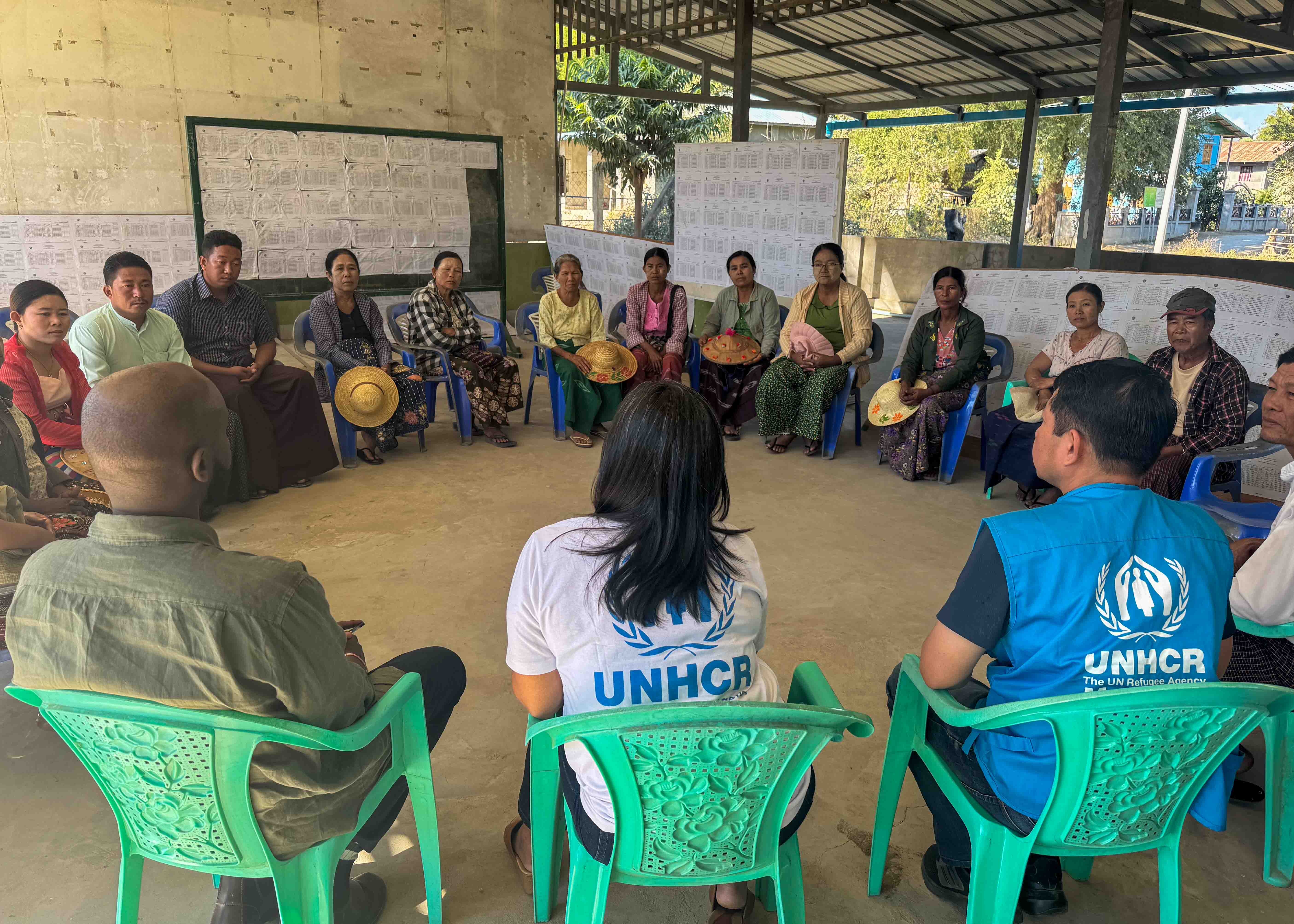
UNHCR staff engage with village committee members during a visit to hear firsthand about the road construction project and the difference it is making for residents.
In Ma Oo Pin village in Pyinmana, recovery has taken shape in a different way. For years, residents had been working to improve the muddy road that connects their homes, schools, and farms. When the earthquake struck, the project came to a halt. With homes destroyed and livelihoods disrupted, continuing the work was no longer possible. But over time, as the community began to recover, the effort resumed.
Today, the road stretches through the village as a shared achievement, reflecting the determination of the community. Solar powered lights provided by UNHCR and partners now line the path, making it safer for children returning home in the evenings and for families moving about after dark.
“The road is important for school, for work, and for health,” said a youth volunteer. “Now it is easier for all of us.”
This progress has improved daily life, while also restoring a sense of connection and normalcy.
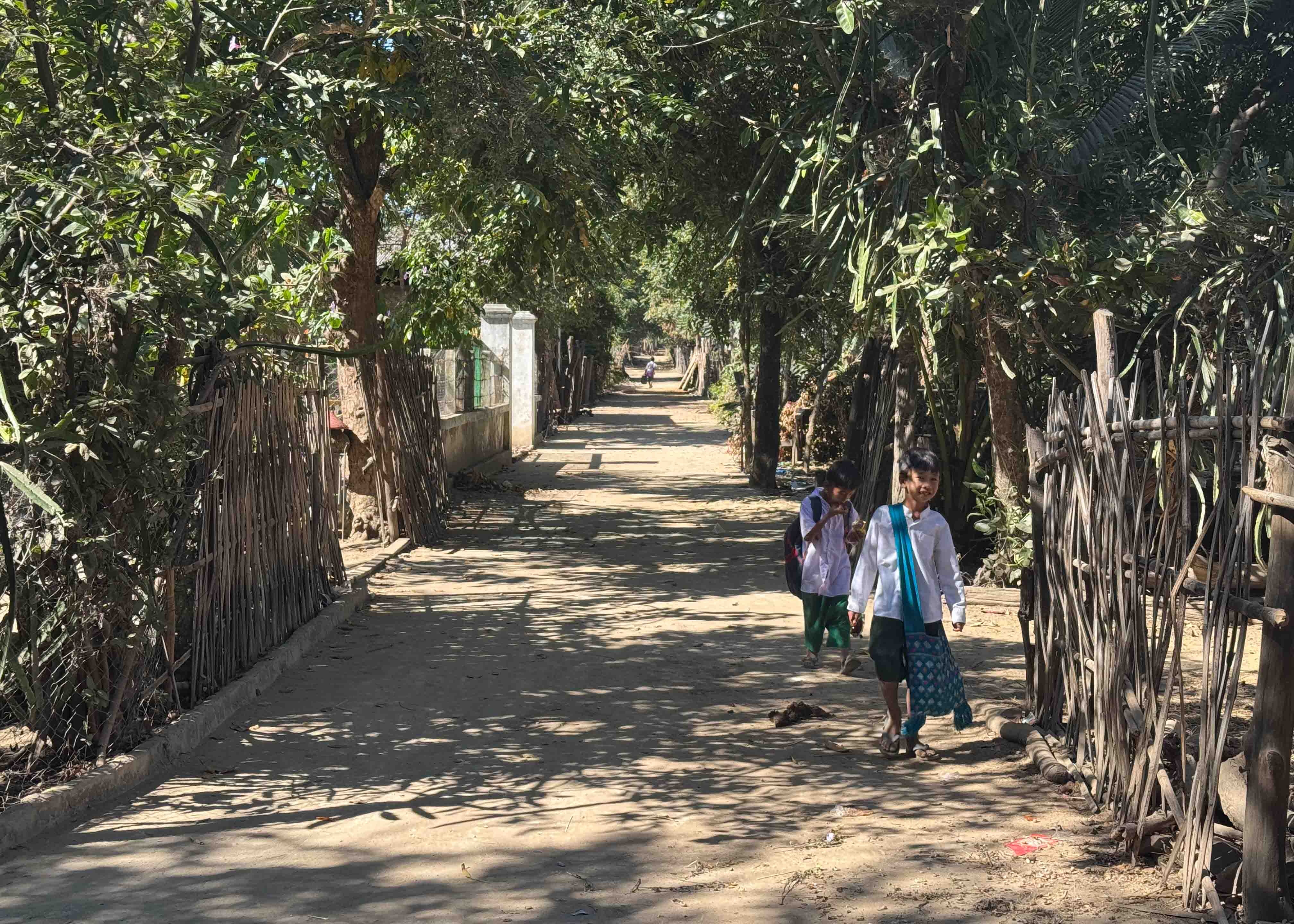
Children make their way to school along the newly constructed road.
“Rebuilding is not easy. But every day we see progress, and that gives us courage.”
In Kyauk Se District, Daw San Myint is rebuilding her livelihood while supporting her family. After her home was damaged, she continued working as a daily laborer while also raising piglets in a small, shared shed – constructed and provided by UNHCR and partners, who also supplied the pigs and training.
“This pig farm is my savings,” she says. “I hope to support my daughter’s education when school reopens.” For women like Daw San Myint , small scale farming provides not only a source of income, but also a way to plan for the future and regain a sense of stability in uncertain times.
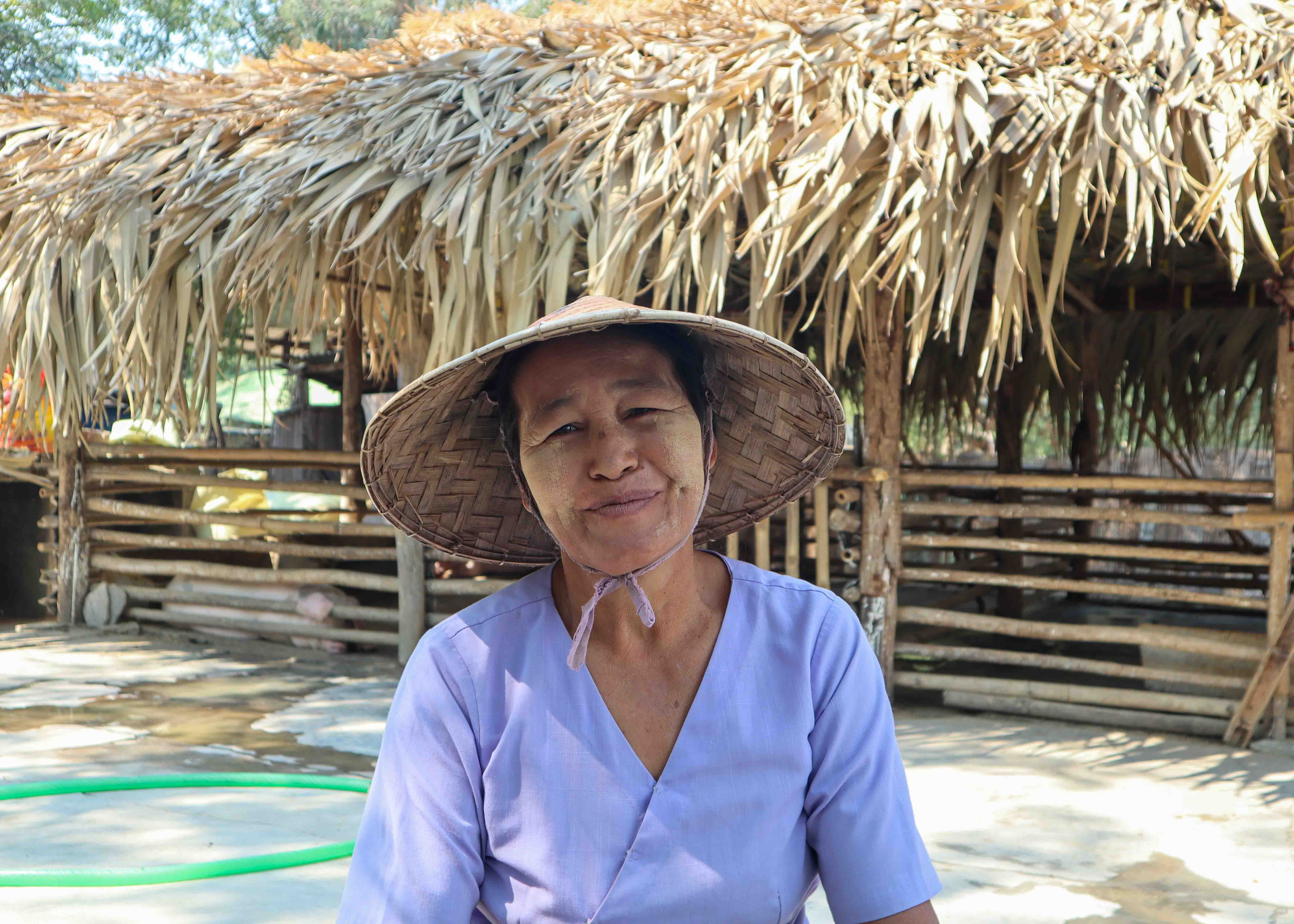
Daw San Myint in front of the community pig shed where she raises her piglets for extra income.
In the days immediately after the earthquake, it was often neighbors, local groups, and community networks who were first to respond and helped the most affected. That same spirit continues to shape recovery today, as communities rebuild homes, restore livelihoods and reconnect with one another.
One year on, progress may be gradual, but it is visible in every foundation laid, road restored, and livelihood rebuilt.
With the right support, families and communities can rebuild homes and essential infrastructure, restore livelihoods, and create opportunities for displaced people to restart their lives with dignity.
UNHCR is grateful to government, private sector and individual donors for standing with families in Myanmar and supporting them to recover and rebuild.
In 2026, UNHCR needs $92 million to protect and assist forcibly displaced people across Myanmar. As of end of February, only 8% of this had been received.