



Empowering Rohingya Girls: How Peer Leadership Is Creating Safer Communities in Cox’s Bazar
Empowering Rohingya Girls: How Peer Leadership Is Creating Safer Communities in Cox’s Bazar

Aysha wears the purple headscarf that she got when graduating to girl peer support leader, with pride.
When 13-year-old Aysha sits with a group of girls in the sprawling Rohingya refugee camps of Cox’s Bazar, Bangladesh, sharing lessons on personal safety and self-confidence, it is hard to imagine that she once rarely left her shelter out of fear.
"Before joining Girl Shine, I only stayed at home and never went anywhere,” she said. “I didn't know much about how to protect myself, so I stayed inside because I was afraid of getting into trouble. But I did see some other girls going outside, and eventually I asked them if I could join where they were going."
Growing up in the camps comes with a daunting set of challenges for young girls. Overcrowded living conditions, the constant threat of natural disasters, and an uncertain future are compounded by the risks of gender-based violence, child marriage, and other forms of exploitation.
"Boys in the camp bother girls. They tease and bully us," she says. "They want to do bad things to us. They want to oppress us and even sell us."
Aysha then joined Girl Shine, one of several UNHCR initiatives supported through the Bangladesh Humanitarian Fund that help protect and empower women and girls in the Rohingya refugee camps. Through dedicated ‘Women and Girls Friendly Spaces’ and programmes such as Girl Shine, adolescent girls gain knowledge, confidence and peer support while learning how to identify and respond to risks including child marriage, exploitation and gender-based violence.
Sessions on child marriage, how to distinguish between good and bad touch, and child labour help girls recognize risks and protect themselves from harm.
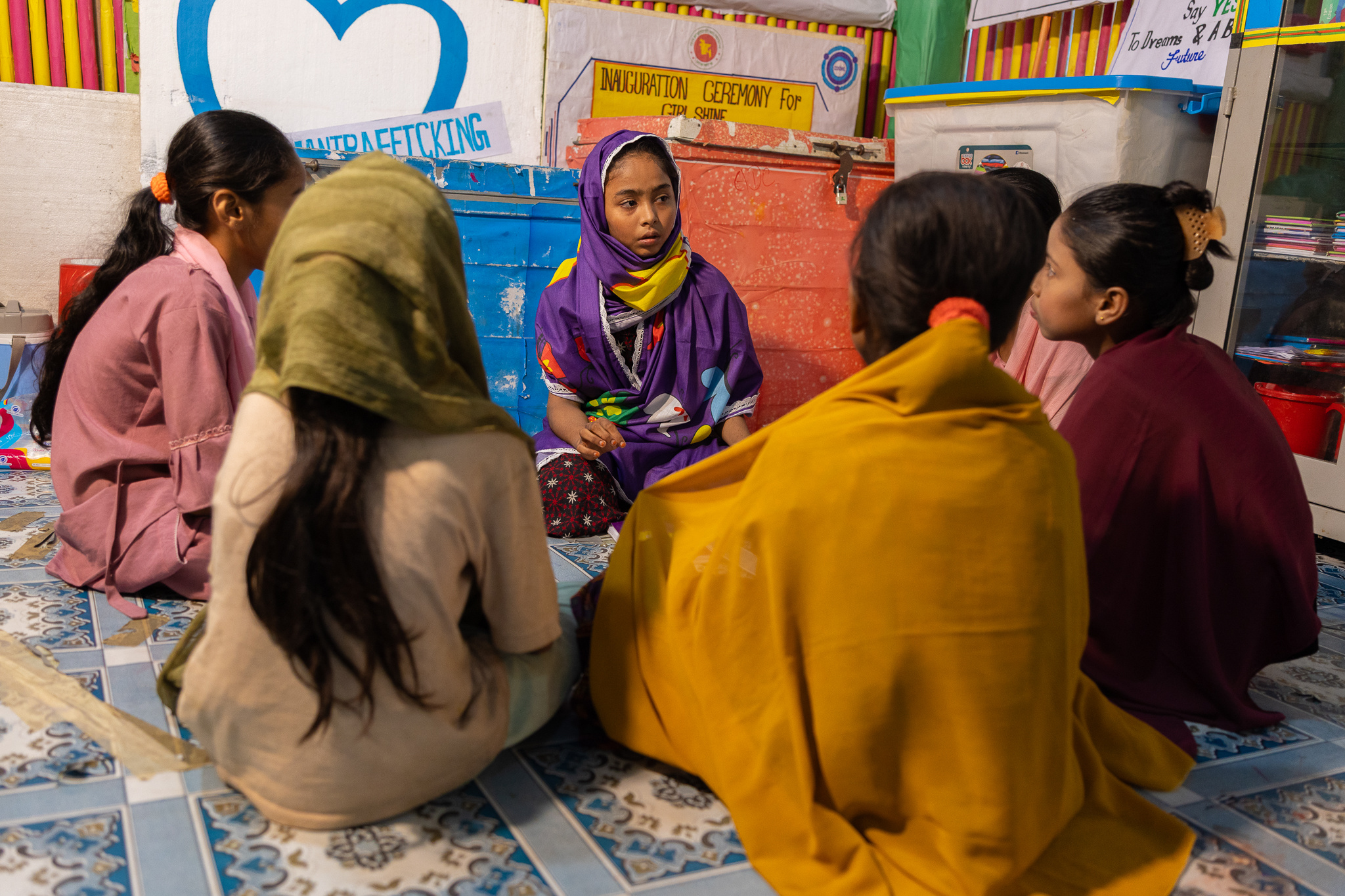
Learning is important because knowing these things has improved my life.
Within a year, Aysha progressed from participant to peer leader, sharing with others the knowledge and skills she had gained.
"I teach other girls in my community the things I learned in the Girl Shine sessions," she says. "For example, if a girl marries before the age of eighteen, her life can become very difficult. Nobody should be forced to marry before eighteen."
The programme also provided something Aysha hadn't expected: a sense of belonging.
Several years ago, her father took a perilous boat journey in search of a better future for his family. Although he survived the journey, he remains in another country without official refugee status, stable work, or a reliable source of income. While she misses him deeply, the friendships she has built through the programme have helped her cope.
"Sometimes, when I feel very sad, I come to the community centre to be with the other girls," she says.
Today, Aysha is focused on helping other girls gain the same confidence she found. Through conversations with her peers, she shares information about personal safety, gender-based violence and the importance of supporting one another.
"I had a lot to learn when I first came here, but now I know much more," she says. "Learning is important because knowing these things has improved my life. And now I can teach others."
Related news and stories


