
By Laura Argibay, UNHCR Reporting Officer.
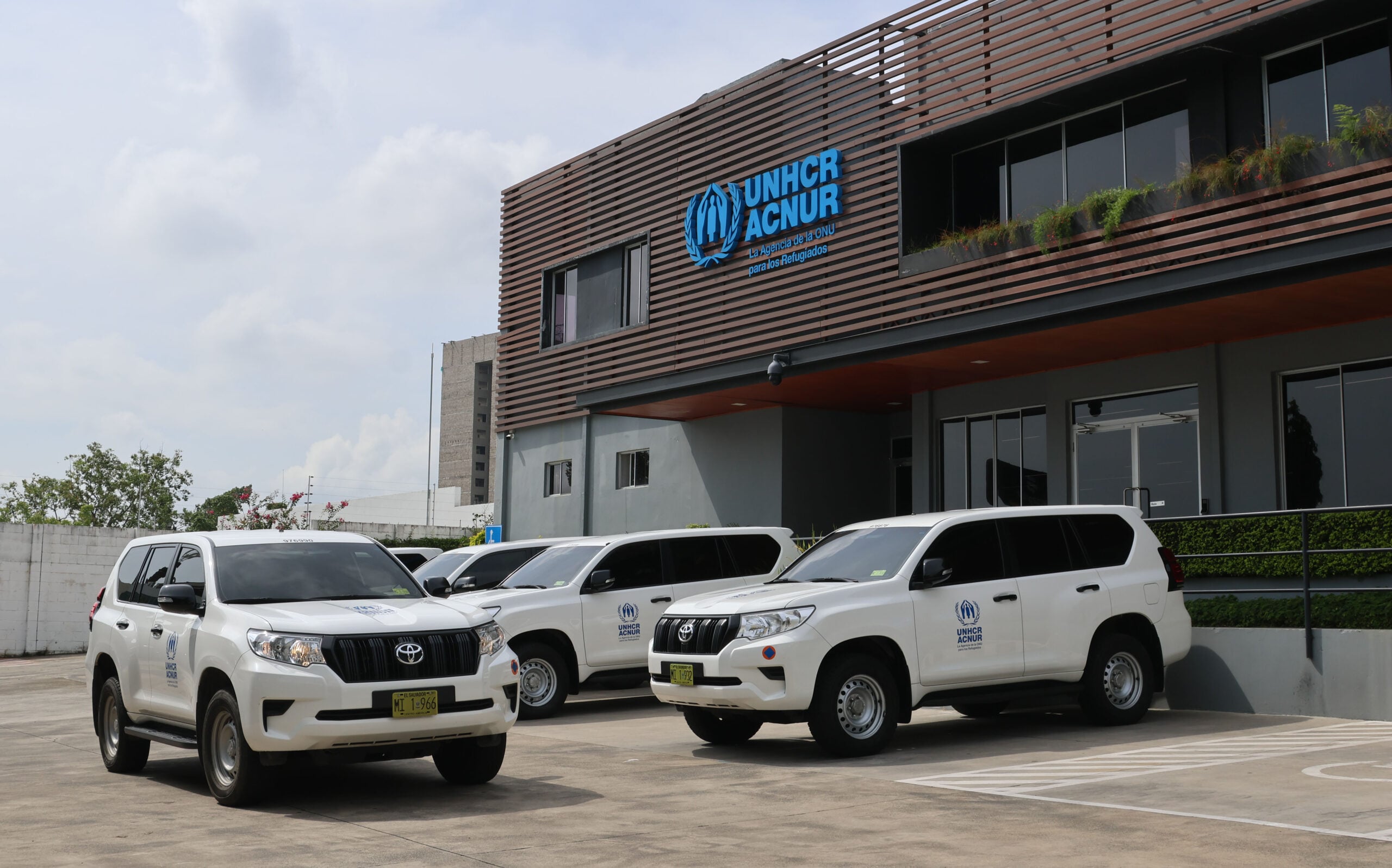
UNHCR vehicles outside the UNHCR office in El Salvador, July 2025. © UNHCR
On World Sustainable Transport Day, UNHCR, the UN Refugee Agency, highlights how smarter approaches to mobility can reduce environmental impact, strengthen operations and help resources go further.
Transport is fundamental to humanitarian action. Vehicles enable UNHCR teams to reach communities and maintain operations in some of the world’s most challenging environments.
But mobility also comes with environmental, financial and safety impacts. At a time of growing humanitarian needs and constrained resources, finding ways to reduce those impacts while maintaining operational capacity is increasingly important.
UNHCR’s experience is showing that sustainability and efficiency do not need to compete. They can reinforce each other.
Sustainability that strengthens delivery
Through its Sustainable Fleet Transformation, UNHCR’s Global Mobility and Infrastructure Service (GMIS) is changing how vehicles are selected, used, shared, maintained and responsibly managed at the end of their service life.
The approach brings together fleet optimization, digital monitoring and data-informed decision-making, road safety, shared mobility, more efficient vehicles, sustainable procurement and responsible asset management.
The principle is simple: use fewer resources where possible, use them better, reduce waste and emissions, and preserve the mobility humanitarian operations need to deliver.
Sustainability and efficiency in action
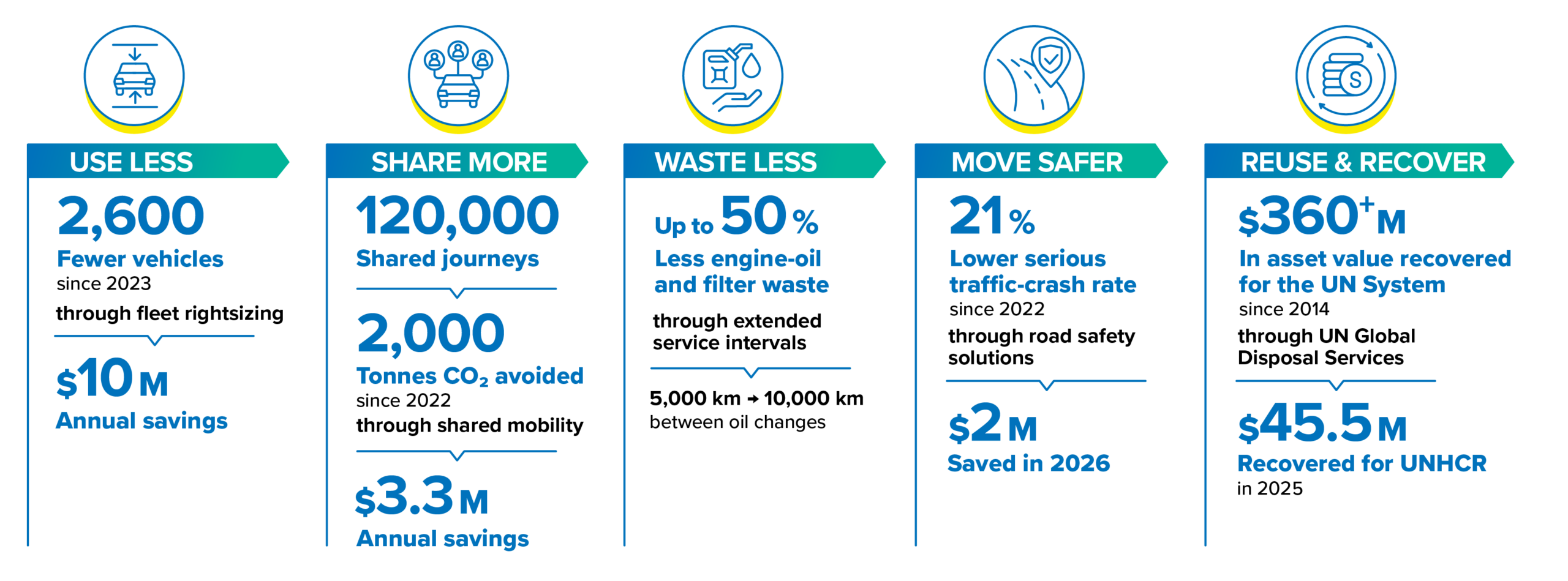
Together, these results show how practical changes, from using and sharing vehicles more efficiently to reducing waste, recovering value from assets and improving road safety, can reduce environmental impact while making operations more efficient and resilient.
“For us, sustainability and efficiency are not competing priorities. They are two sides of the same effort: using resources responsibly while keeping operations safe, effective and ready to deliver.”
Scaling what works
No organization can maximize this opportunity alone. Sustainable mobility depends on practical collaboration, shared learning and the ability to scale solutions that work.
This approach is reflected in shared solutions such as UN FLEET and the recently launched UN System Services Hub, both jointly created by UNHCR and WFP. Together, they build on proven expertise to make established solutions more accessible across the UN system, from sustainable vehicle leasing to energy, responsible asset disposal and road safety.
The direction is clear: smarter, safer and more sustainable mobility can help humanitarian resources go further while ensuring UNHCR can keep reaching the people it serves.