



Bringing support and social connection to isolated war-affected people in Ukraine
Bringing support and social connection to isolated war-affected people in Ukraine

The full-scale war in Ukraine, claiming lives, uprooting millions and causing mass destruction, has also left many vulnerable people in very difficult and isolated situations, without social support, in hardship and loneliness.
Whether it is an 80-year-old woman living alone on the 10th floor without electricity, a newly evacuated person with limited mobility arriving in a new community not knowing anyone, or an elderly couple that have returned to a remote area devastated by war. This is where social facilitators, trained community volunteers, step in to provide neighbourly basic social support.
Social facilitation — a new community-based protection model — complements state social services and provides basic, tangible assistance that makes daily life more manageable. This could include carrying firewood, delivering water, accompanying someone to the medical clinic or grocery store, or simply spending time in conversation.
The facilitators act like a bridge between the people and the state social protection system: While on the one hand, the state’s social services can refer people to the programme, on the other hand, social facilitators help people access social services.
“When someone comes to visit me, it means a lot”
In the village of Chervona Dolyna in the Mykolaiv region, social facilitators have become a vital part of daily life for many residents. 77-year-old Lyudmyla Buts is one of them.
She never left home. Even during months of shelling and hostilities right at her doorstep in the beginning of the full-scale invasion, and now as the war is ongoing. Her son serves in the military, and her daughter, who lives in Kherson, cannot be by her side. With chronic health issues and a pension of just 4,000 UAH (approx. USD 96) a month, she was not able to evacuate.
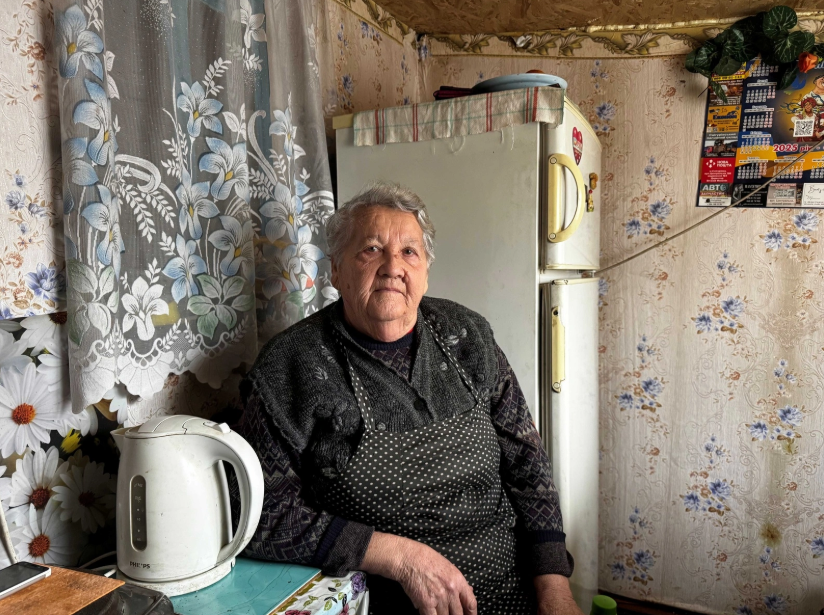
When explosions damaged her home, UNHCR and its NGO partner the Tenth of April stepped in with emergency repairs, and mobile brigades fixed the roof and replaced shattered windows. But the greatest change in Lyudmyla’s life came with the weekly visits from a social facilitator, also called Lyudmyla (Komyrets), who supports her around the house.
“Imagine, I am 77 years old. It is no longer easy for me to carry buckets. Once a week, Lyudmyla comes, and I am so glad about this. She helps me to carry coal and firewood, bring water, or pick up my medicine. When someone comes to visit me, it means a lot,” says Lyudmyla Buts.
Support that makes a difference
The social facilitators are trained volunteers from the same communities who act as “good neighbors,” ensuring that the most vulnerable people impacted by the war—including older people, persons with disabilities, internally displaced people and returnees living alone—are not isolated or forgotten.
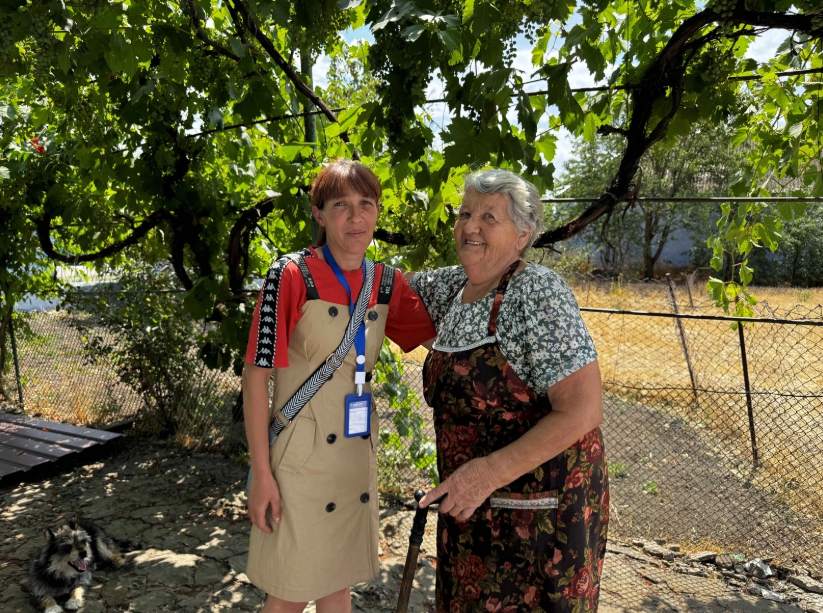
“I take care of six people in our village—mostly elderly, and two of them have disabilities. Of course, they need practical help with everyday things,” explains Lyudmyla Komyrets, 41, the social facilitator in Chervona Dolyna.
But according to her, the role of a social facilitator goes far beyond helping around the household.
“I officially dedicate one day a week, but I often try to do more. Sometimes I come at noon, sometimes in the evening, just to be there for them. I give as much as I can,” she says.
“People need someone to talk to, someone who listens. Communication is vital. It helps people, and it gives them the connection they are missing. There are no social workers in our village, so I step in to fill this gap,” highlights Lyudmyla.
“It is not only the help—it is the conversation”
A few houses away lives Mariia Kovtunyuk, 83. At the start of the full-scale invasion, Mariia and her husband, who had a serious physical disability, sheltered in their basement for three days under heavy bombardment, before fleeing to Odesa to stay with relatives. When they returned in March 2023, they found their home damaged by shelling and shrapnel.
They repaired what they could themselves, but not long after, Mariia’s husband passed away, leaving her to cope with grief and daily survival alone.
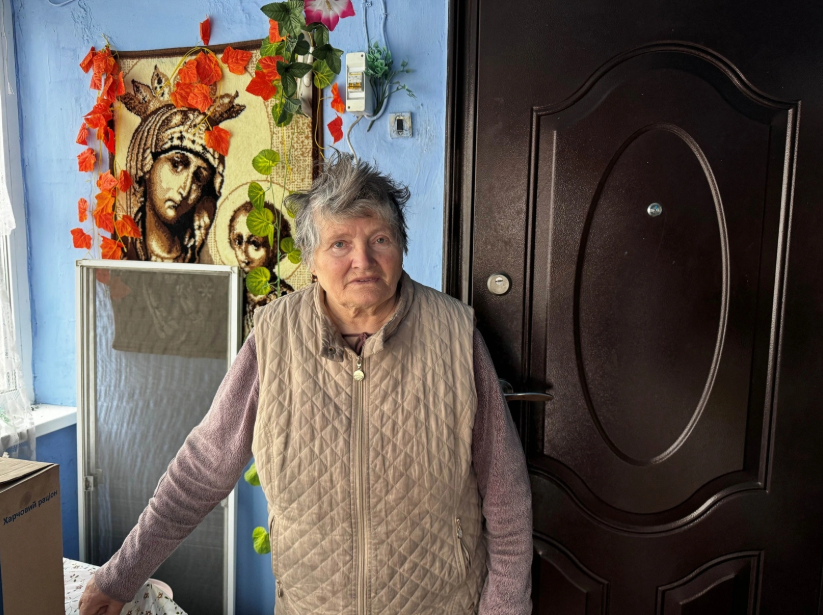
It was then that the social facilitator program became an anchor in her life. Through regular visits, Lydmila Komyrets, her facilitator, supported Mariia not only with access to essentials but also with companionship and small acts of kindness.
“Lyudmyla comes whenever I need her. She helps me get to the medical point, brings what is necessary, and always checks in. Sometimes she even helps with things that are not her job,” says Mariia.
“It is not only the help—it is also the conversation. To sit together, to talk, to not feel alone. For me, that is the most important support,” she adds.
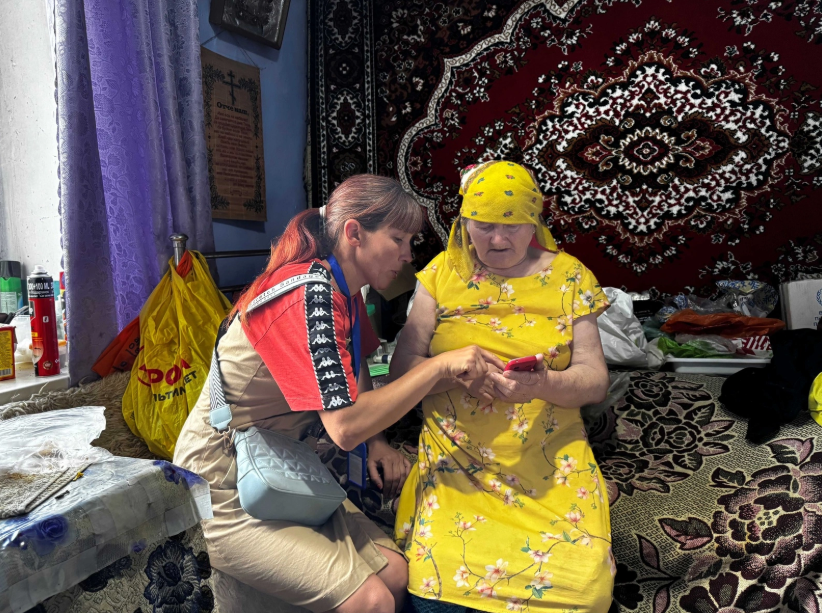
What started as a pilot initiative launched in late 2024 with UNHCR’s partner Tenth of April with 10 social facilitators in Mykolaiv Region, has grown into a community of over 100 facilitators active in over 90 communities in 13 regions. In the first nine months of 2025, facilitators have already supported over 5,000 people, providing tangible help to people that makes their daily life a little easier, more hopeful and less lonely.
The social facilitators programme not only supports people, but it also supports the state social protection system by complementing and reinforcing it.
Related news and stories


