



Kawargosk Community Centre, a hub for safety and empowerment

In the heart of Kawargosk town, a quiet transformation is underway. Less than a kilometre from one of Iraq’s largest refugee camps, a community hub comes to life five days a week. Children arrive after school to play and learn. Women and girls follow, joining literacy classes, vocational training, and courses that help them build confidence and income. This is the Kawargosk Community Centre in Erbil, constructed by UNHCR, serving refugees, displaced Iraqis, and host community members in one inclusive space.
This modern, purpose-built centre was recently handed over by UNHCR, the UN Refugee Agency, to the Ministry of Labour and Social Affairs of the Kurdistan Regional Government. With its spacious workshops, colourful play areas, and dedicated counselling rooms, it is designed to meet multiple needs of the community.
“The centre is open to everyone, and we make no distinction between refugees, displaced Iraqis, or Iraqis from Kawargosk,” says Hiwa Hussein, the Head of the Kawargosk Community Centre. “Anyone from any group can participate in the programmes or volunteer as a facilitator.”
The heart of the centre’s mission is child protection. The Ministry of Labour and Social Affairs supports vulnerable children and those at risk, including refugees. It’s opening marks a significant milestone, moving away from parallel humanitarian services to sustainable and dependable access to public services.
UNHCR laid the groundwork for this transition, training nearly 950 government staff and child protection workers in 2024 on case management and supporting children at risk, working alongside UNICEF who continue to support social workers from the Directorate of Labour and Social Affairs, to apply their knowledge in working with the community.
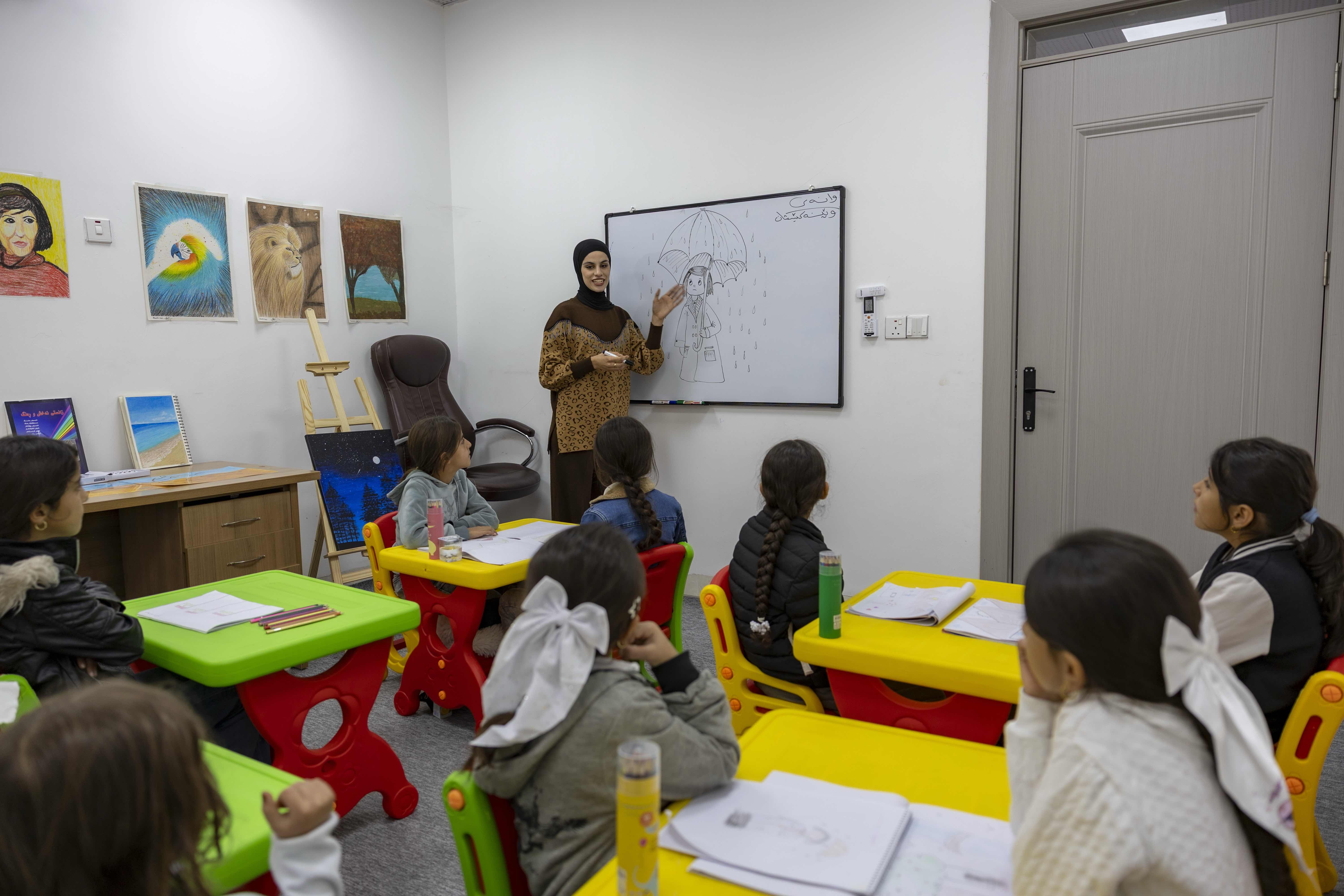
Children from host and displaced communities learn drawing at Kawargosk Centre.
“Psychosocial support is one of our most important programmes,” Hiwa explains. “But our child protection work at the centre covers much more. Our social workers identify children facing serious risks whether it is violence, neglect, early marriage, child labour, or a lack of safe care. These vulnerable children are identified directly here at the centre or referred to us by refugee community leaders or partner organisations.”
“For each child, we provide close follow-up and support,” Hiwa continues. “This can include counselling, visiting their family, and connecting them to health or legal help when needed. We also work with parents, guiding them on positive parenting and how to keep their children safe. If a child is not in school, we help them get back into education.”
Ultimately, the centre provides a safe space where children can talk openly. “Our main goal is to lower risks, earn the trust of families and help children grow up in a safe and stable environment,” Hiwa says.
Since its opening in September 2025, more than 500 women and girls and more than 900 children have benefited from the services provided by the Directorate of Labour and Social Affairs in the centre.
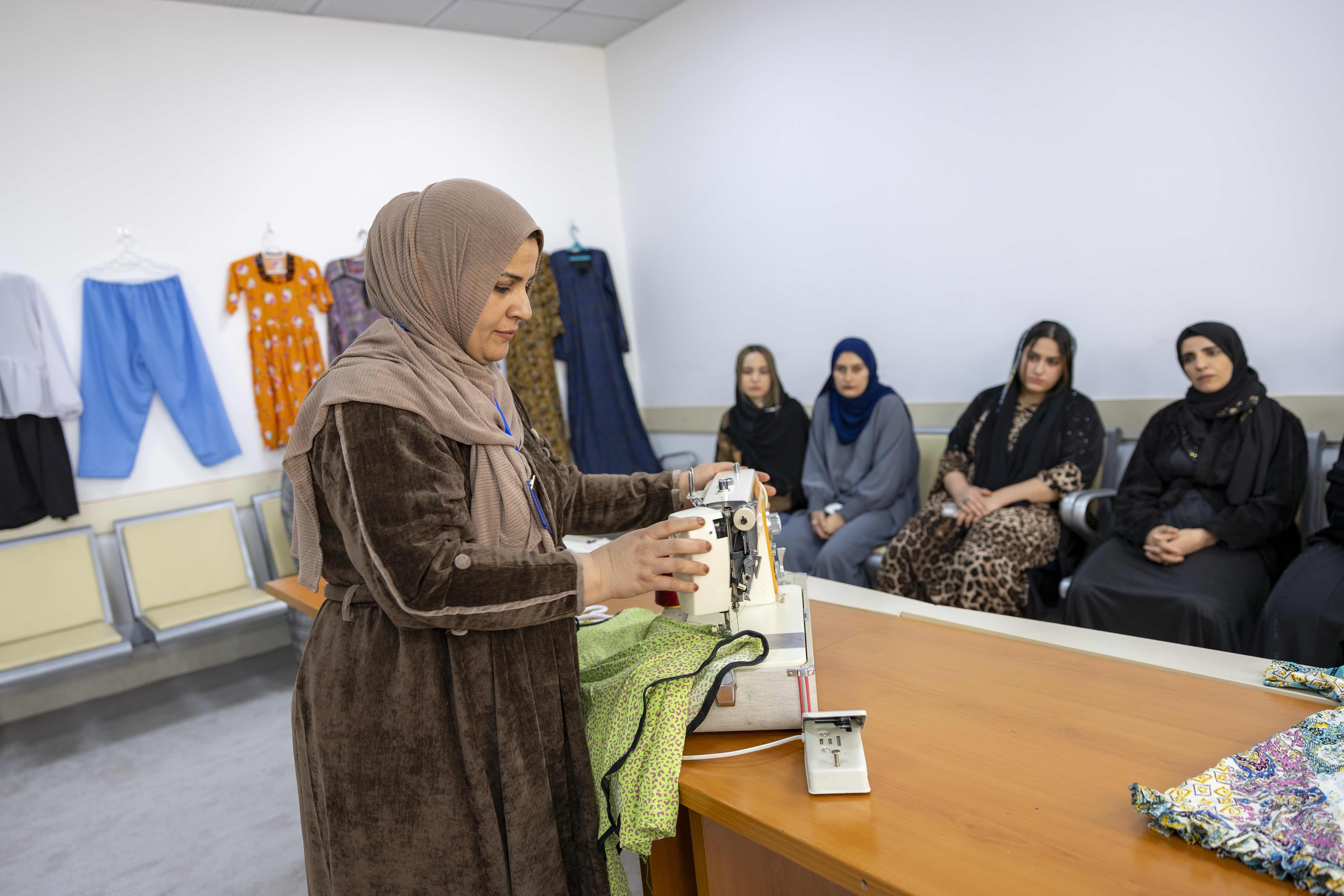
Women and girls at Kawargosk Centre learn new skills through tailoring training.
Trained staff at Kawargosk design specialized programs and run social skills workshop. In its dedicated child protection space, children learn how to stay safe, express their feelings and understand their rights. “They are guided on how to ask for help and how to protect themselves, all in a supportive and trusting atmosphere. With the experience we have gained, we are able to run this centre effectively and provide services to the best of our capacity,” Hiwa adds.
This local ownership is key to sustainability.
Collaboration also extends beyond the community centre. The team works closely with the management of Kawargosk refugee camp – home to over 8,000 Syrian refugees, 47% of whom are children under 18 - for referrals of refugee children who may need their support. They also partner with local schools to deliver psychosocial activities, embedding the centre in the community’s fabric. “We aim for this centre to serve people of all ages and backgrounds,” Hiwa says.
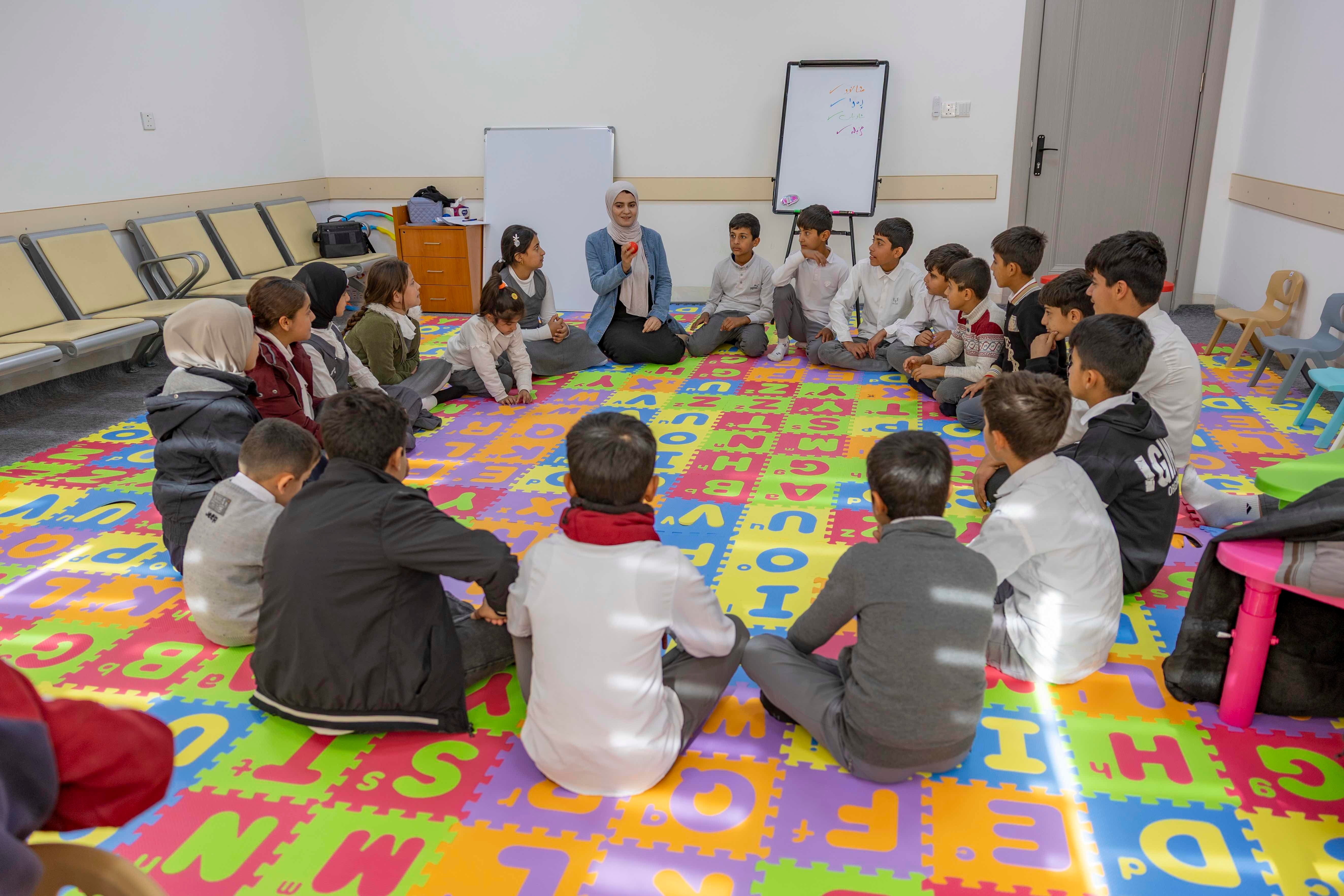
Trained social workers at Kawargosk Centre lead various sessions for children in a safe and trusting environment.
Yet, challenges still exist. As the transition from a humanitarian response to inclusive development approaches take place in Iraq, concerns remain about gaps in support for vulnerable children. Despite this, community centres like Kawargosk are central to bridging these gaps.
Every day, its success is visible: a refugee child playing beside a local neighbour, a displaced mother learning a skill next to Iraqi volunteers from Kawargosk. These moments show what shared spaces can achieve, bringing communities together and creating a sense of inclusion, cooperation, and hope.
Lilly Carlisle contributed reporting to this story.


