Protection Impact During the Lean Season
Protection Impact During the Lean Season

What is the lean season & why does it matter
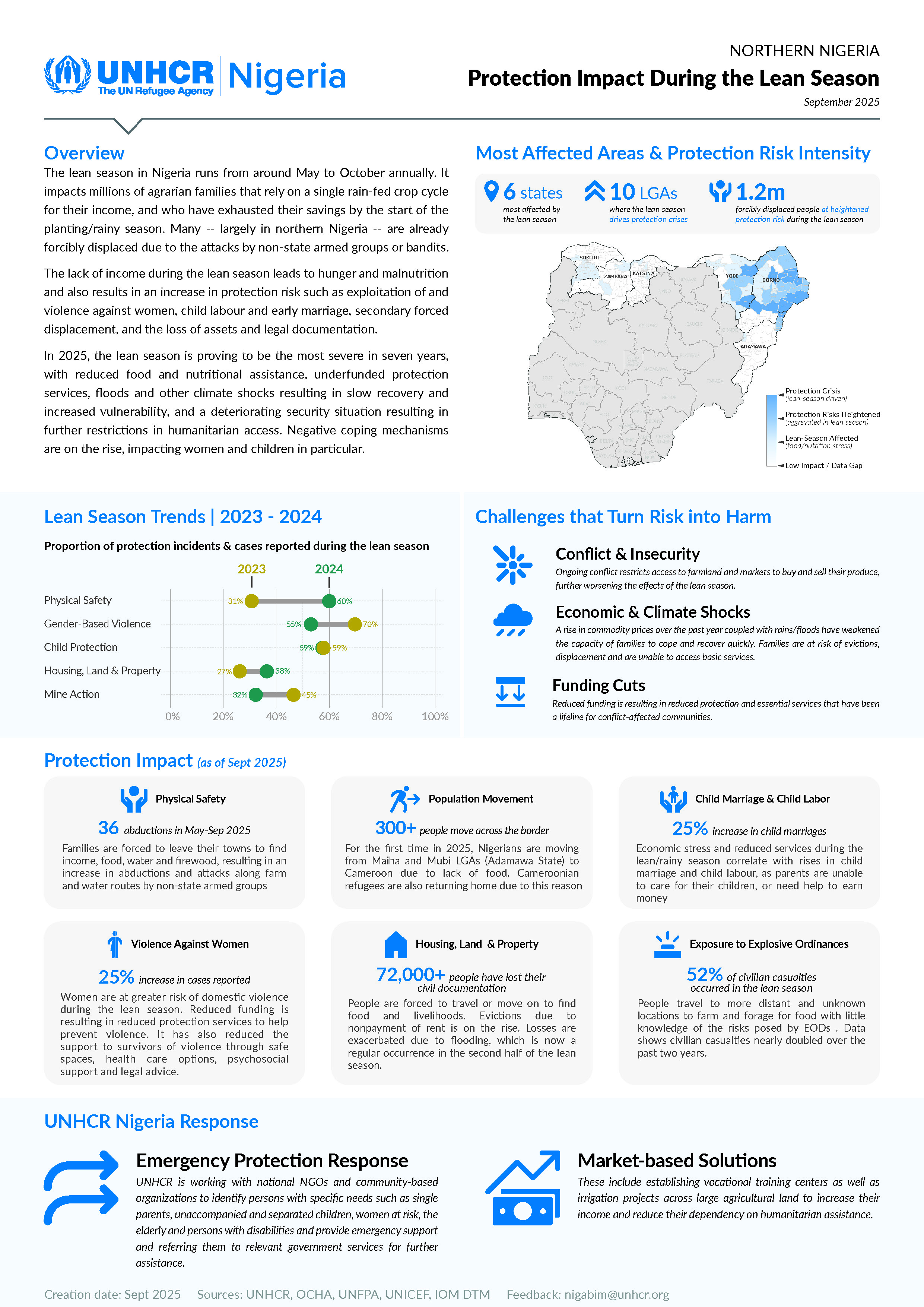
The ‘lean season’ - refers to a period, typically between harvests, when food stocks are low and food prices are high, making it difficult for households, especially those in agriculture-based communities, to access sufficient food. Also known as the ‘hunger season’ or ‘pre-harvest season’.
In Northeast Nigeria, the 2025 lean season is already upon us. This has coincided with increased activity of non-state armed groups and extreme weather events such as windstorms and floods.
In the lean season, communities venture further out of protected areas to farm, forage for food and fish, which exposes them to attacks from armed groups. Extreme weather events such as floods and windstorms are being reported in the Bay States (Borno, Adamawa, and Yobe) which has led to the destruction of property and farmlands, leaving communities facing the loss of housing, property and crops. All these elements increase a family’s general vulnerability or pushes them towards or into more vulnerable situations.
__
__
Funding Cuts Take Their Toll
Communities face further vulnerability this year, due to the reduced number of humanitarian actors following global funding cuts to aid.
Between January and June 2025, UNHCR partner, GISCOR (Grassroot Initiative for Strengthening Community Resilience), identified nearly 24,000 vulnerable cases across various sectors including food security, gender based violence (GBV), health, mine action, WASH and shelter, the majority of which they have not been able to refer onwards, due to the reductions in resources. Nearly 5,500 cases are still pending, primarily due to limited or unavailable service providers.
Monthly data shows there has been in increase in pending cases which peaked in April at 32%. The reduced presence of humanitarian partners that UNHCR works with has significantly impacted referrals and key locations, such as Gwoza, Banki, Bama in Borno state and several areas in Yobe state.
Risks to Protecting People
Physical Safety: During the lean season, rising inflation and reduced access to food and basic services forces families to leave garrison towns (towns protected by the Nigerian Army) in search of food, firewood and daily needs. This exposes them to the risk of abduction (by armed groups) and landmines and increases women's and girls' vulnerability to violence and exploitation, especially in rural and remote locations. Between July and August this year, 33 abductions and kidnappings were reported in Northeast Nigeria.
Gender Based Violence (GBV): Since 2023, a clear seasonal pattern has emerged in GBV cases. Of the 1,095 cases reported in 2023, 70.2% occurred during the lean season and in 2024, 55.4% of the 999 cases were reported.
In both years, incidents began rising sharply from May, peaked between July and October and then declined significantly at the end of lean season, whereas from January to April there were consistently low numbers of GBV cases recorded.
These trends highlight a recurring and predictable surge in GBV incidents during the lean season, underscoring the need for targeted interventions during this time. Unfortunately, with the funding cuts critical GBV services have been scaled down or suspended. This has resulted in over 120,000 women and girls without access to safe spaces, psychosocial support or survivor-centred care.
Community Based Protection (CBP): CBP activities in hard-to-reach areas have been weakened, with over 150 community protection structures affected by funding cuts. This has resulted in; reduced local capacity to prevent and respond to protection risks, decreases in identifying and support for vulnerable households - especially during flooding and displacement, increased exposure to family separation and exploitation and a lack of support for vulnerable groups such as women-headed households and persons with disabilities.
Housing, Land Property: The process of obtaining the correct documentation to secure housing, land and property rights has been disrupted, leaving thousands particularly small-scale farmers and displaced people, unable to access shelter assistance and essential services. In addition, flooding in the rainy season has left vulnerable households without the resources to recover from the loss of their homes and, or household items, destruction of crops and loss or destruction of legal documents such as land titles, tenancy papers, education certificates and ID cards.
Child Protection: Child protections risks and using negative coping strategies as ways of dealing with stress and trauma are escalating with the reduction or ending of activities to prevent child marriage (a rise of up to 25% in affected areas), child labour, transactional sex and the recruitment and use of children by armed groups. In the absence of sustained psychosocial support, children’s mental health is deteriorating. One in three conflict affected children show signs of severe distress.
The ongoing insurgency in several Local Government Areas (LGAs) in Northeast Nigeria (Damboa, Gamboru Ngala, Gwoza, Marte, Kala-Balge, Nganzai, Konduga and Malam-Fatori) has severely hampered efforts to protect children. Frequent attacks from armed groups have resulted in families - of which children make up over half - being displaced again. These children face exposure to exploitation, psychological trauma and a lack of access to essential social safety nets.
Mine Action: Due to the need to travel further for food, fuel and daily essentials during the lean season people are more exposed to conflict-related hazards.
In 2024, the number of explosive ordnance (EO) incidents nearly doubled from the previous year. Notably, the nature of incidents shifted; in 2023 improvised explosive devices (IEDs) accounted for 84% of cases, however in 2024 this had dropped to 42% with airstrikes and artillery fire emerging as the predominant cause of harm (46%), which indicates a tactical evolution in conflict dynamics.
Despite the increase in incidents, casualties fell significantly from 306 to 130, suggesting possible improvements in risk education, protective measures, or a shift toward less lethal EO types. However, civilian casualties remained consistently high (around 55%), underscoring the persistent threat to civilians and the urgent need for enhanced protection and mitigation strategies, including mine clearance activities and mine risk education. In addition, the increased use of airstrikes and artillery can lead to broader contamination zones, which further complicates access for humanitarian groups and supporting families to return home safely.
The Human Cost of Inaction
Dwindling resources threaten to shut down half of the nutrition centres and has greatly reduced services for the most vulnerable, including single women, children, older people and persons with disabilities. Without immediate support, protection partners will be unable to restore life-saving services, prevent further rights violations or scale up mine clearance. The consequences will be, further illness and death, mass displacement and irreversible setbacks in protecting children, women and men living in underserved, remote and high-risk areas.
Find out more
Read the report on the Protection Impact During the Lean Season to learn more