
From Aspiration to Opportunity: How a New Partnership is Opening Doors for Refugee Students in Thailand
From Aspiration to Opportunity: How a New Partnership is Opening Doors for Refugee Students in Thailand

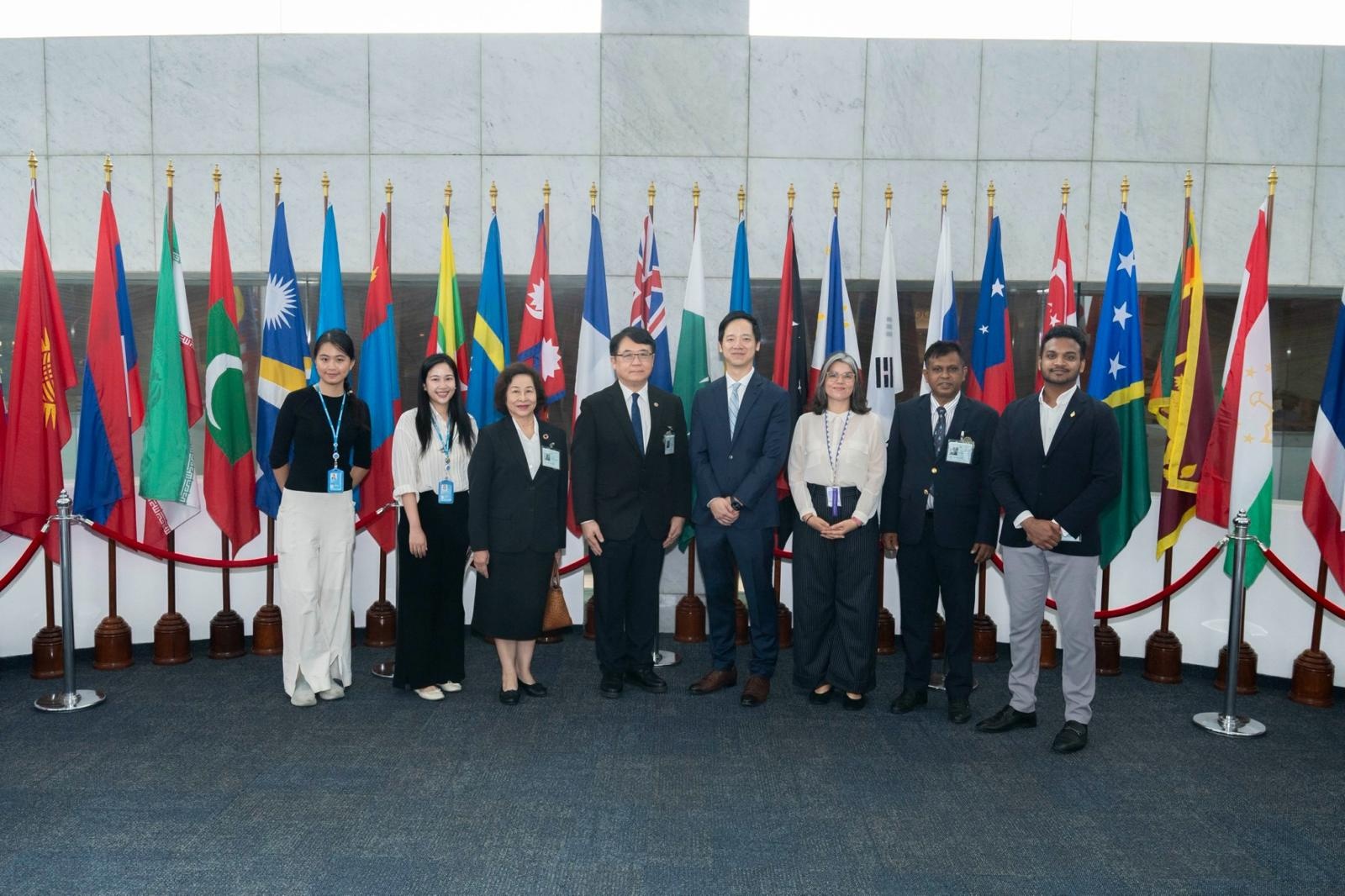
Representatives from UNHCR Thailand and Siam University gather to commemorate the signing of a Memorandum of Understanding aimed at expanding access to higher education opportunities for refugee and asylum-seeker students in Thailand.
Bangkok, Thailand – For young refugees pursuing higher education in Thailand, gaining admission to university is often an achievement against the odds. Language barriers, financial constraints and uncertainty about the future can make the process particularly challenging. Yet admission is only the first hurdle.
Once accepted, tuition fees and other education-related costs can place enormous pressure on families already struggling to make ends meet, making it difficult for students to stay in university and complete their studies.
Zahra* knows these challenges well.
Raised by a single mother and the eldest of six siblings, Zahra grew up believing in the power of education. Through hard work and determination, she completed upper secondary school in Bangkok with honors and earned a place at Siam University.
"Education is important because it gives people opportunities," she says. "My mother always believed that education could help us build a better life, and I believe that too."
Today, Zahra is able to pursue her degree through support from the Albert Einstein German Academic Refugee Initiative scholarship (DAFI) funded by the Government of Germany.
However, opportunities like these remain limited and are highly competitive. Many refugees with strong academic potential are unable to secure scholarships and must find other ways to cover tuition fees and education expenses.
To help address these challenges, UNHCR, the UN Refugee Agency, and Siam University have signed a Memorandum of Understanding (MoU) offering tuition fee reductions and other support mechanisms to eligible refugee and asylum-seeker students.
For students facing constant financial uncertainty, even partial tuition support provides hope and can make the difference between staying in university and dropping out.
"When I heard about the partnership, I was very happy," says Zahra*. "Without support, it is very difficult for refugee families to continue their higher education. I hope my siblings can benefit from these opportunities too."
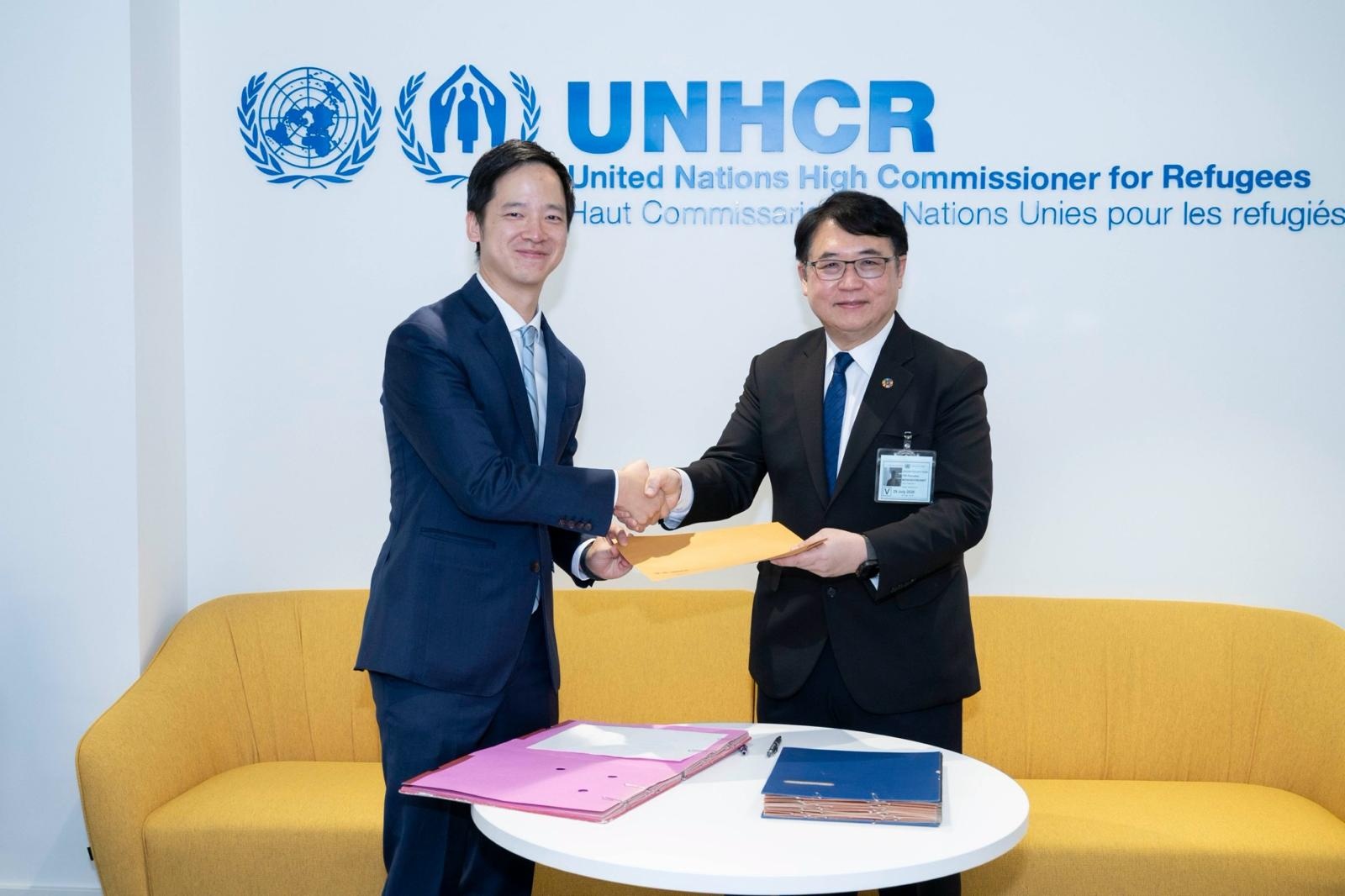
Keane Shum, Officer-in-Charge of UNHCR Thailand, and Dr. Pornchai Mongkhonvanit, President of Siam University, mark the signing of a Memorandum of Understanding to expand access to higher education opportunities for refugee and asylum-seeker students in Thailand.
The partnership between UNHCR and Siam University builds on an existing collaboration that has already helped refugee students access accredited higher education through the DAFI Scholarship Programme. More broadly, it reflects a growing recognition of the potential that refugee students bring to Thailand's communities, economy, and future.
“True sustainability extends far beyond environmental stewardship. It demands an unwavering commitment to the core UN Sustainable Development Goal principle of leaving no one behind,” said Siam University President and Chair of the Sustainable University Network of Thailand (SUN Thailand), Dr. Pornchai Mongkhonvanit. “By extending tuition support to refugee and asylum-seeker students, Siam University translates our leadership role into meaningful action, ensuring higher education remains an inclusive bridge to dignity, equity, and opportunity for all.”
For UNHCR, the partnership with Siam University represents more than financial assistance. It demonstrates how actors in Thai society can play a meaningful role in expanding opportunities and unlocking refugee potential.
“This partnership with Siam University demonstrates the important role academic institutions can play in creating opportunities for refugee youth. It is an investment in talent, resilience and the possibility of a better future,” said Keane Shum, Officer-in-Charge of UNHCR Thailand.
Alongside her studies, Zahra volunteers as an interpreter at community clinics, helps refugees access essential services, and teaches Thai language skills to refugee children. She hopes to use her education to continue supporting her community and helping others access opportunities.
As more institutions recognize the value and potential of refugee students, partnerships like this help turn higher education from a distant aspiration into an achievable pathway. They enable more refugees in Thailand to complete their studies, give back to their communities, and contribute their skills and knowledge to the societies in which they live.