Ethiopia flag

Ethiopia Ethiopia RSS Feed

2013 UNHCR country operations profile - Ethiopia

Working environment

The context

The past two years have seen the refugee population in Ethiopia nearly double. This is due to the influx of more than 100,000 Somalis into the Dollo Ado region, and a stream of Sudanese entering the country in the region around Assosa. A steady, but significant, number of Eritreans have also entered Ethiopia's Afar and Tigray regions.

Ethiopia is now host to some 370,000 refugees: the largest groups are Somalis (56 per cent), Sudanese and South Sudanese (23 per cent) and Eritreans (17 per cent). In addition, there are a number of displaced people of concern from Kenya in the Moyale region, as well as urban refugees from several other countries, including Burundi, the Democratic Republic of the Congo (DRC), Djibouti, Rwanda, Uganda and Yemen.

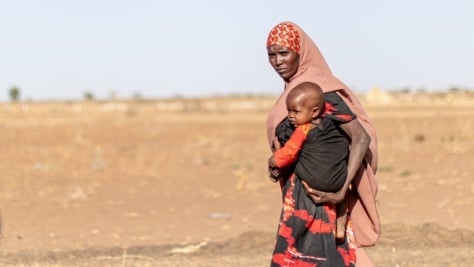
Most of the Somali refugees (more than 206,000 at mid-year) are in eastern and south-eastern Ethiopia. In 2011, three new camps were opened in the Dollo Ado area. Currently there are five camps, with a sixth under consideration. The number of arrivals increased dramatically in 2011 and continued to rise in the first half of 2012 when more than 1,200 people were arriving every week. The majority of the refugees are women and children.

In 2011, disputes in the border areas, especially those contiguous to Sudan's Blue Nile and South Kordofan states, have resulted in large numbers of refugees entering western Ethiopia. Most live in camps in the area. The Fugnido camp in Gambella has been expanded, and two others have been opened in the Assosa area in the Benishangul-Gumuz region: Tongo and Bamabasi camps.

The arrival figures for refugees from Eritrea have also remained high in 2012, at between 800 and 1,000 per month. Of particular concern is the presence in this group of a large number of unaccompanied and separated children. Some opportunities for durable solutions are available to the Eritrean refugees through an "out-of-camp scheme", which allows refugees to leave the camp setting and attend university. Solutions are also found through resettlement.

Approximately 2,800 Borena refugees who arrived in Ethiopia from Kenya in 2005-2006 remain under the care of UNHCR and the Government of Ethiopia. Efforts to assist them to voluntary repatriate will continue.

The increase in the number of refugees in Ethiopia is also apparent in urban areas. Many urban refugees are referred to UNHCR for protection, medical or other specific needs. As of June 2012, there were nearly 3,900 registered urban refugees, of whom more than 2,000 were receiving assistance. The majority of the registered urban refugees are Eritreans allowed to live in various towns under the Government's "out-of-camp" policy.

The needs

The lack of security in many of the countries of origin of refugees in Ethiopia prevents them from being able to envisage repatriating for the foreseeable future. Resettlement will remain a key durable solution, but only for a limited number of refugees. UNHCR expects the refugee population to grow by 137,000 in 2013, bringing the total to 530,000. There is an urgent need to improve the conditions in the camps in Ethiopia to meet UNHCR standards in essential sectors such as health, education, water and sanitation.

At the same time, UNHCR will work towards a transition from life-saving activities to sustainable programmes and increased self-reliance among the refugees. Livelihood projects for urban refugees that commenced in 2012 will continue in 2013. A three-year self-reliance programme is being developed for Dollo Ado.

The transitional shelter programme, which was initiated in 2011, will remain a key activity in 2013. Shelters will be made of local and traditional materials, as they are better able to survive the climate, offer greater protection and cuts costs.

UNHCR 2013 planning figures for Ethiopia
TYPE OF POPULATION ORIGIN JAN 2013 DEC 2013
TOTAL IN COUNTRY OF WHOM ASSISTED
BY UNHCR
TOTAL IN COUNTRY OF WHOM ASSISTED
BY UNHCR
Total 394,630 394,630 531,320 531,320
Refugees Eritrea 86,660 86,660 127,970 127,970
Somalia 215,590 215,590 245,680 245,680
Sudan 88,010 88,010 153,140 153,140
Various 3,000 3,000 3,770 3,770
Asylum-seekers Eritrea 20 20 10 10
Somalia 100 100 50 50
Sudan 900 900 500 500
Various 350 350 200 200

Main objectives and targets for 2013

Favourable protection environment

Access to territory is improved and the risk of refoulement reduced.

  • All asylum-seekers are registered on an individual basis.

Basic needs and essential services

The health of the population improved.

  • The under-5 mortality rate is less than 2/10,000/day.

The supply of potable water is increased or maintained.

  • All refugees receive an average of at least 15 litres/person/day.

Community empowerment and self-reliance

Self-reliance and livelihoods are improved.

  • Some 10 per cent of households benefit from livelihood projects.

Durable solutions

Comprehensive solutions strategies are developed, updated or strengthened.

  • Some 25 per cent of individuals in need of resettlement are submitted to receiving countries.

Strategy and activities in 2013

Ethiopia's position in the subregion means that it is likely to continue to receive new arrivals from neighbouring countries throughout 2013.

UNHCR will help the Government to maintain a favourable protection environment. Important elements of UNHCR's strategy in Ethiopia are to enable the participation of more non-governmental organizations (NGOs) in the refugee programme and to advocate for borders to remain open for refugees.

UNHCR will stabilize the emergency phase of its response to the Sudanese and Somali refugee influxes. It will improve conditions in the camps, and make the transition from emergency responses to more sustainable activities, thereby also reducing costs and encouraging self-reliance. This includes the phasing out of water trucking in favour of more permanent piping systems, and the construction of transitional shelters to replace tents.

UNHCR is also committed to ensuring the timely provision of core relief items to refugees, and is currently building buffer stocks to cope with any new refugee influx.

Emergency preparedness and response mechanisms are the hallmark of UNHCR's leadership and coordination role with regard to refugee issues. Support for host communities around refugee camps is another important element of UNHCR's strategy. Improving relations between refugee and local communities will bolster the protection environment, making refugee-hosting areas safer for all, while encouraging both communities to share common services such as education and health facilities.

Constraints

Poor security and unstable political conditions in the countries neighbouring Ethiopia will result in more arrivals.

Local integration remains a challenge for refugees in urban areas and in the established camps. While some of these refugees have been living in the country for several decades, the Government's policy does not allow for local integration. However, a number of projects to improve self-reliance in the Jijiga camps have shown positive results, but they will require considerable support to become sustainable.

The majority of the refugee camps are located in areas characterized by extremely fragile environmental conditions. The concentration of large numbers of refugees has a negative impact on the environment in the areas surrounding the camps.

Conflict is common as refugees compete with the local population for very scarce natural resources.

Ethiopia is neither a party to the 1954 Convention Relating to the Status of Stateless Persons nor to the 1961 Convention on the Reduction of Statelessness. UNHCR will continue its advocacy for the Government to accede to these accords as it is believed that there are a significant number of individuals who could be affected by statelessness in Ethiopia.

Organization and implementation

Coordination

UNHCR coordinates protection and delivery of services to refugees in close collaboration with the Administration of Refugee and Returnee Affairs (ARRA).

There is an established Standing Task Force on Refugees which is co-chaired by ARRA and UNHCR. The Task Force brings together a considerable number of NGO, donor and UN partners, and has been the main body coordinating the emergency response and contingency planning. Its work is complemented by regular inter-agency meetings at field and camp levels, as well as in sectoral working groups on key sectors, including health and nutrition, protection, education, shelter and environment.

UNHCR is implementing the IASC Transformative Agenda through several activities. The Office participates in the monthly Ethiopian Humanitarian Country Team meetings and leads the protection cluster. UNHCR also participates in key sectoral working groups within the humanitarian response. Cooperation with UNICEF has been strengthened with a Letter of Understanding which includes a detailed plan of action for activities in the refugee areas.

Outreach to donors and NGO partners will continue in a variety of forums, including meetings with donor missions and inter-agency conferences in the Field.

Financial information

Two emergency situations and continuous influxes of refugees over the past few years pushed the annual budget for the Ethiopia operation up from USD 100.2 million in 2010 to USD 218.6 million in 2012.

A significant part of the 2013 budget, set at USD 192.8 million, is expected to be dedicated to the establishment of new camps, improvements in services and infrastructure and immediate emergency-response efforts.

Source: UNHCR Global Appeal 2013 Update

• DONATE NOW •


• GET INVOLVED • • STAY INFORMED •
Statistical Snapshot*
* As at January 2012
  1. Country or territory of asylum or residence. In the absence of Government estimates, UNHCR has estimated the refugee population in most industrialized countries based on 10 years of asylum-seekers recognition.
  2. Persons recognized as refugees under the 1951 UN Convention/1967 Protocol, the 1969 OAU Convention, in accordance with the UNHCR Statute, persons granted a complementary form of protection and those granted temporary protection. It also includes persons in a refugee-like situation whose status has not yet been verified.
  3. Persons whose application for asylum or refugee status is pending at any stage in the procedure.
  4. Refugees who have returned to their place of origin during the calendar year. Source: Country of origin and asylum.
  5. Persons who are displaced within their country and to whom UNHCR extends protection and/or assistance. It also includes persons who are in an IDP-like situation.
  6. IDPs protected/assisted by UNHCR who have returned to their place of origin during the calendar year.
  7. Refers to persons who are not considered nationals by any country under the operation of its laws.
  8. Persons of concern to UNHCR not included in the previous columns but to whom UNHCR extends protection and/or assistance.
  9. The category of people in a refugee-like situation is descriptive in nature and includes groups of people who are outside their country of origin and who face protection risks similar to those of refugees, but for whom refugee status has, for practical or other reasons, not been ascertained.
The data are generally provided by Governments, based on their own definitions and methods of data collection.
A dash (-) indicates that the value is zero, not available or not applicable.

Source: UNHCR/Governments.
Compiled by: UNHCR, FICSS.
Residing in Ethiopia [1]
Refugees [2] 288,844
Asylum Seekers [3] 1,347
Returned Refugees [4] 21
Internally Displaced Persons (IDPS) [5] 0
Returned IDPs [6] 0
Stateless Persons [7] 0
Various [8] 0
Total Population of Concern 290,212
Originating from Ethiopia [1]
Refugees [2] 70,610
Asylum Seekers [3] 38,755
Returned Refugees [4] 21
Internally Displaced Persons (IDPS) [5] 0
Returned IDPs [6] 0
Various [8] 0
Total Population of Concern 109,386

Ethiopia UNHCR Fundraising Reports Rss FeedUNHCR Fundraising Reports

more documents
2013 UNHCR partners in Ethiopia
Implementing partners
Government agencies: Administration for Refugee and Returnee Affairs; Bureau of Agriculture; Gambella Rural Road Authority; Jijiga Water Supply Authority; Natural Resources Development Agency - Assosa; Natural Resources Development Agency - Gambella; Tselemet Woreda Environmental Protection Programme
NGOs: Africa Humanitarian Action; African Humanitarian Aid and Development Agency; Association of Ethiopians Educated in Germany; Development and Inter Church Aid Commission; Gaia Association; Hope for the Horn; International Medical Corps; International Rescue Committee; Jesuit Refugee Services; Lutheran World Federation; Mother and Child Development Organization; Norwegian Church Aid; Norwegian Refugee Council; Opportunities in Industrialisation; Partnership for Pastoralist Development Association; Pastoralist Welfare Organization; Relief and Development Agency; Save the Children - USA; Save the Children Sweden; Save the Environment, Ethiopia; Swedish Civil Contingencies Agency; World Vision Ethiopia
Others: IOM; UNICEF; UNOPS; WFP
Operational partners
NGOs: Danish Refugee Council; GOAL; Islamic Relief and Development; Médecins Sans Frontières - Spain and the Netherlands; Oxfam - UK; ZOA
Others: IOM; UNICEF; UNOPS; WFP

New Arrivals in Yemen

During one six-day period at the end of March, more than 1,100 Somalis and Ethiopians arrived on the shores of Yemen after crossing the Gulf of Aden on smuggler's boats from Bosaso, Somalia. At least 28 people died during these recent voyages – from asphyxiation, beating or drowning – and many were badly injured by the smugglers. Others suffered skin problems as a result of prolonged contact with sea water, human waste, diesel oil and other chemicals.

During a recent visit to Yemen, UNHCR Assistant High Commissioner for Protection Erika Feller pledged to further raise the profile of the situation, to appeal for additional funding and international action to help Yemen, and to develop projects that will improve the living conditions and self sufficiency of the refugees in Yemen.

Since January 2006, Yemen has received nearly 30,000 people from Somalia, Ethiopia and other places, while more than 500 people have died during the sea crossing and at least 300 remain missing. UNHCR provides assistance, care and housing to more than 100,000 refugees already in Yemen.

New Arrivals in Yemen

Crossing the Gulf of Aden

Every year thousands of people in the Horn of Africa - mainly Somalis and Ethiopians - leave their homes out of fear or pure despair, in search of safety or a better life. They make their way over dangerous Somali roads to Bossaso in the northern semi-autonomous region of Puntland.

In this lawless area, smuggler networks have free reign and innocent and desperate civilians pay up to US$150 to make the perilous trip across the Gulf of Aden.

Some stay weeks on end in safe houses or temporary homes in Bossaso before they can depart. A sudden call and a departure in the middle of the night, crammed in small unstable boats. At sea, anything can happen to them - they are at the whim of smugglers. Some people get beaten, stabbed, killed and thrown overboard. Others drown before arriving on the beaches of Yemen, which have become the burial ground for hundreds who many of those who died en route.

Crossing the Gulf of Aden

Somalia/Ethiopia

In February 2005, one of the last groups of Somalilander refugees to leave Aisha refugee camp in eastern Ethiopia boarded a UNHCR convoy and headed home to Harrirad in North-west Somalia - the self-declared independent state of Somaliland. Two years ago Harrirad was a tiny, sleepy village with only 67 buildings, but today more than 1,000 people live there, nearly all of whom are former refugees rebuilding their lives.

As the refugees flow back into Somalia, UNHCR plans to close Aisha camp by the middle of the year. The few remaining refugees in Aisha - who come from southern Somalia - will most likely be moved to the last eastern camp, Kebribeyah, already home to more than 10,000 refugees who cannot go home to Mogadishu and other areas in southern Somalia because of continuing lawlessness there. So far refugees have been returning to only two areas of the country - Somaliland and Puntland in the north-east.

Somalia/Ethiopia

Bonga Camp, Ethiopia

Bonga camp is located in the troubled Gambella region of western Ethiopia. But it remains untouched by the ethnic conflicts that have torn nearby Gambella town and Fugnido camp in the last year.

For Bonga's 17,000 Sudanese refugees, life goes on despite rumblings in the region. Refugee children continue with school and play while their parents make ends meet by supplementing UNHCR assistance with self-reliance projects.

Cultural life is not forgotten, with tribal ceremonies by the Uduk majority. Other ethnic communities – Shuluks, Nubas and Equatorians – are welcome too, judging by how well hundreds of newcomers have settled in after their transfer from Fugnido camp in late 2002.

Bonga Camp, Ethiopia

New arrivals in Ethiopia: Remote Dolo Ado becomes a safe haven for 10,000 Somalis fleeing violence

Since the beginning of this year an estimated 10,000 Somalis have crossed the border and sought shelter in Dolo Ado, a remote, sun-scorched and predominantly Somali corner of south-east Ethiopia. Most have fled insecurity, following the withdrawal of Ethiopian troops from south and central Somalia and the takeover of these areas by insurgent elements. At the peak of the influx in early February 2009, about 150 people were crossing the border each day.

In reponse, a UNHCR emergency team was sent to help run a transit centre in Dolo Ado. In addition, UNHCR dispatched convoys carrying emergency aid, including mosquito nets, blankets, jerry cans, kitchen sets and plastic sheets. Relief efforts are being coordinated with other UN agencies and NGOs to ensure needs are being met.

Although a number of displaced Somalis within south and central Somalia have started to return, mainly to Mogadishu, many Somalis remain in Dolo Ado in need of protection. Given the poor prospects for repatriation in the foreseeable future, a camp is now under development and refugees are being screened.

New arrivals in Ethiopia: Remote Dolo Ado becomes a safe haven for 10,000 Somalis fleeing violence

Somali Refugees: Ethiopian CampsPlay video

Somali Refugees: Ethiopian Camps

Ethiopias fortunes are closely linked with those of its troubled neighbour, Somalia. It has served as a refuge for tens of thousands of Somalis over the years, but recently the increasing numbers are straining the resources of the UN refugee agency.
Somali Refugees: Ethiopian CampsPlay video

Somali Refugees: Ethiopian Camps

Increasing numbers of Somali refugees in Ethiopia are stretching the resources of the UN refugee agency.
Ethiopia: All AlonePlay video

Ethiopia: All Alone

Kicking a football around, they seem carefree and happy. But these children are refugees, many of them unaccompanied, and they face a host of problems.
Ethiopia: A Green Refugee CampPlay video

Ethiopia: A Green Refugee Camp

A refugee camp might seem like an unlikely place for a conservation project. but Sherkole in the western highlands of Ethiopia is showing that it can be done. The results are positive.
Goodwill Ambassador: Barbara Hendricks in EthiopiaPlay video

Goodwill Ambassador: Barbara Hendricks in Ethiopia

UNHCR Goodwill Ambassador highlights the plight of refugees in Ethiopia.
Somalia: Fleeing FaminePlay video

Somalia: Fleeing Famine

Tukaay is one of the nearly 1.5 million internally displaced Somalis struggling with drought and conflict.
Ethiopia: Somali arrivalsPlay video

Ethiopia: Somali arrivals

This parched and remote corner of southeast Ethiopia has received an endless flow of Somali refugees, many of them malnourished and bearing tragic stories.
Ethiopia: Arriving in Assosa Play video

Ethiopia: Arriving in Assosa

Zeneib was living in her husband's village in Sudan's Blue Nile state when it was attacked. She lost three brothers and then endured tremendous hardship on the journey to Ethiopia with her children.
Kenya: Hawa's Dilemma Play video

Kenya: Hawa's Dilemma

When Hawa was a child, her father was murdered by rebels and her mother was kidnapped. Later Hawa was jailed and raped. When she was released, she fled to Kenya, where she now lives as a refugee. No one chooses to be a refugee.