Zimbabwe flag

Zimbabwe Zimbabwe RSS Feed

2013 UNHCR regional operations profile - Southern Africa

Working environment

At the end of 2011, there were some 449,000 people of concern to UNHCR in Southern Africa, including 145,000 refugees, 245,000 asylum-seekers, 55,000 internally displaced persons (IDPs) and 4,000 returnees.

Individuals in mixed-migration movements towards South Africa often use camps in Malawi, Mozambique and Zimbabwe as temporary stopovers, putting a strain on scarce humanitarian resources and creating tensions locally. This has led many governments in the region to restrict access to the asylum system by requiring travel documents at entry points and applying the "first safe country" principle, whereby entry is refused to asylum-seekers who have travelled through a safe country prior to their arrival.

Some positive steps have also been taken in the management of mixed-migration movements. These include Mozambique's signing of the International Convention on the Protection of the Rights of All Migrant Workers and Members of their Families. Other countries in the region have pledged to accede to the relevant international and regional instruments and to undertake legal and policy reforms to address the mixed-migration challenge.

With the exception of Angola and South Africa, the countries in the subregion hosting a significant number of refugees maintain encampment policies that restrict the freedom of movement of refugees and asylum-seekers and hamper their efforts to become self-reliant.

There are many people who may be at risk of becoming stateless in Madagascar, Malawi, Mozambique, South Africa and Zimbabwe. At the Intergovernmental event commemorating the Refugee and Statelessness conventions in Geneva in December 2011, Madagascar, Mozambique, South Africa and Zambia pledged to accede to one or both of the Statelessness Conventions.

Strategy in 2013

UNHCR will promote the development of protection-sensitive regional and national asylum and immigration systems in order to address the growth of mixed-migration flows towards South Africa. In addition, it will continue to advocate for countries to lift their reservations to the 1951 Refugee Convention and ratify international and regional instruments on statelessness and IDP protection.

The Office will also work to strengthen national asylum systems by supporting the development of sustainable registration and documentation systems and trained and qualified refugee eligibility committees in charge of refugee status determination. In addition, advocacy to prevent and respond to xenophobia towards refugees and asylum-seekers will be conducted.

In Zimbabwe, where it leads the protection cluster, UNHCR will strengthen the coordinated response to IDP situations and ensure that contingency plans are in place to address new movements. Initiatives to combat statelessness, including the identification of stateless people, the documenting of those at risk of statelessness and the provision of legal assistance will continue throughout the subregion in 2013.

Constraints

The economic constraints faced by governments in the subregion leave them with few resources for the protection of refugees. In addition, local communities often see foreigners, including refugees and asylum-seekers, as competitors for employment and services. The increasing visibility of mixed-migration movements tends to create confusion amongst the general public over the distinction between refugees and economic migrants. This reduces the scope for UNHCR to expand self-reliance and promote local integration as a durable solution.

Although countries in the region have ratified international refugee instruments, most have maintained reservations that curtail the socio-economic rights and hamper the integration of refugees. Moreover, encampment policies limit refugees' freedom of movement and their right to work.

Operations

UNHCR's programme in South Africa is presented in a separate country chapter.

Angola hosts more than 20,000 asylum-seekers and refugees, including nearly 12,000 of the latter from the Democratic Republic of the Congo (DRC). In 2012, the Government initiated a programme to register all refugees in order to provide them with identity documents. UNHCR will work with the Angolan Government to strengthen national refugee legislation and RSD capacity. It will also provide legal and psychosocial assistance to refugees and asylum-seekers.

Some 3,500 refugees and asylum-seekers live in Botswana, with most coming from Angola, Namibia, Somalia, Zimbabwe and the Great Lakes Region. Botswana's strict encampment policy has led to increasing numbers of refugees living in Dukwi camp, putting a strain on the services available. UNHCR will ensure that basic services are provided while advocating for the lifting of the restrictions on refugees' freedom of movement and reform of the national asylum law.

The Indian Ocean Island States of Comoros, Mauritius and Seychelles currently do not hold significant numbers of refugees, but UNHCR will monitor these countries and endeavour to find durable solutions as soon as new arrivals are reported. A small number of refugees and asylum-seekers in Madagascar receive assistance from UNDP, under a Memorandum of Understanding with UNHCR. Moreover, the Office is working closely with the Government to prepare a strategy in order to address statelessness.

In Lesotho, there are 28 refugees and asylum-seekers who are largely self-reliant. UNHCR continues to advocate for the Kingdom of Lesotho to grant unconditional citizenship to those refugees who have been in the country for five years or more, in accordance with national legislation.

Malawi currently hosts a total of some 16,000 refugees and asylum-seekers, mainly from Burundi, the DRC and Rwanda. UNHCR will use a participatory and community-based approach to deliver basic services to refugees in Dzaleka Camp, and will work to achieve durable solutions, including resettlement when required and arrangements for voluntary repatriation to Burundi and Rwanda. It will also work with the Government to help facilitate the adoption of a new national policy and legislative framework on refugees.

Mozambique hosts more than 13,000 refugees and asylum-seekers, the majority originating from the DRC, Rwanda and Burundi respectively. Although there has been a decline in the number of arrivals, many asylum-seekers from the Great Lakes continue to travel through Mozambique to reach South Africa. As a result, the Government is looking at strengthening its border controls. UNHCR will thus focus on expanding its border-monitoring activities and helping to build the capacity of authorities to police the border in a protection-sensitive manner.

The majority of the refugee population in Mozambique remains camp-based. UNHCR will continue to provide protection and assistance to cover these refugees' basic needs and improve their prospects for self-reliance. Efforts to persuade Mozambique to withdraw its reservations to the 1951 Convention will remain a priority, as will helping the Ministry of Justice to draft a new Nationality Act in order to prevent statelessness.

Namibia hosts some 4,300 refugees and asylum-seekers, mainly from the Great Lakes region, as well as 1,600 Angolans whose refugee status ceased on 30 June 2012. UNHCR is promoting the local integration of these former refugees, given their long residence in and close ties to the country. Due to the decreased number of refugees residing at Osire camp, UNHCR will take over the provision of food to the refugee population from WFP. With the Government assuming responsibility for refugee status determination (RSD), UNHCR will provide technical assistance and some financial support to strengthen the RSD system and bring it in line with the Namibian Refugee Act.

In Swaziland, UNHCR provides technical support and advice to the Government, which provides education, health and other services to the 800 refugees in the country, originating from Burundi, the DRC, Rwanda, Somalia and Zimbabwe.

Zambia hosts some 34,000 refugees, almost half of whom were born in the country, in two refugee settlements (Mayukwayuka and Meheba) and urban areas. 2013 will be a year of transition for two of Zambia's main refugee populations: Angolans, whose refugee status ceased in mid-2012; and Rwandans, whose status is expected to cease in June 2013.

In December 2011, the Government of Zambia pledged to integrate 10,000 Angolan refugees locally. Discussions are underway to establish eligibility criteria for those seeking to remain in the country and to design programmes that would facilitate local integration.

The Government of Zambia expects that most of the 4,000 Rwandan refugees in the country will return home. UNHCR will support the repatriation of refugees willing to return home, while resettlement will be used for refugees who lack foreseeable alternative solutions or who have specific protection needs, in particular, women at risk.

Delays in the passage of the draft refugee legislation mean that UNHCR will need to continue to support the national asylum system, including by increasing the national capacity for RSD.

Zimbabwe hosts a total of some 5,800 refugees and asylum-seekers, mainly from the Great Lakes region and the Horn of Africa. The country continues to be affected by mixed-migration movements along the north-south migratory route. UNHCR, the Government of Zimbabwe and the International Organization for Migration (IOM) have established a task force to work on the phenomenon of mixed migratory population movements, and the Nyamapanda Transit Centre has been set up to process people arriving in mixed population movements.

As the protection cluster leader for IDPs, UNHCR works with the Government, UN agencies, NGOs and IOM to develop a strategy in order to provide effective humanitarian responses and durable solutions.

Financial information

The total comprehensive budget for the subregion has grown steadily, from USD 49.7 million in 2008 to USD 90 million in 2012. The biggest increase was between 2009 and 2010, when the budget went up by 42 per cent, from USD 52.8 million to USD 74.9 million. This was a reflection of the significant needs created by the growth in the number of asylum-seekers, especially in South Africa. The budget reduction to USD 83 million in 2013 is due to the reduction in the Angolan refugee caseload as a result of the application of the cessation clause in 2012. However, the response to the new needs in the area of local integration, especially in Zambia, will require considerable resources.

UNHCR 2013 budget for Southern Africa (USD)
Operation 2012
REVISED BUDGET
(as of 30 June 2012)
2013
REFUGEE
PROGRAMME
PILLAR 1
STATELESS
PROGRAMME
PILLAR 2
IDP
PROJECTS
PILLAR 4
TOTAL
Total 90,394,698 78,250,728 2,849,131 1,826,905 82,926,765
1. Includes regional activities in Southern Africa.
Angola 9,925,001 4,696,832 0 0 4,696,832
Botswana 5,550,259 5,457,089 0 0 5,457,089
Malawi 3,475,659 4,238,716 0 0 4,238,716
Mozambique 4,990,711 4,610,095 408,697 0 5,018,791
Namibia 5,701,887 3,741,534 0 0 3,741,534
South Africa Regional Office[1] 35,083,644 35,322,437 2,069,208 0 37,391,645
Zambia 17,910,542 14,943,255 0 0 14,943,255
Zimbabwe 7,756,993 5,240,770 371,227 1,826,905 7,438,902

Source: UNHCR Global Appeal 2013 Update

• DONATE NOW •


• GET INVOLVED • • STAY INFORMED •
Statistical Snapshot*
* As at January 2012
  1. Country or territory of asylum or residence. In the absence of Government estimates, UNHCR has estimated the refugee population in most industrialized countries based on 10 years of asylum-seekers recognition.
  2. Persons recognized as refugees under the 1951 UN Convention/1967 Protocol, the 1969 OAU Convention, in accordance with the UNHCR Statute, persons granted a complementary form of protection and those granted temporary protection. It also includes persons in a refugee-like situation whose status has not yet been verified.
  3. Persons whose application for asylum or refugee status is pending at any stage in the procedure.
  4. Refugees who have returned to their place of origin during the calendar year. Source: Country of origin and asylum.
  5. Persons who are displaced within their country and to whom UNHCR extends protection and/or assistance. It also includes persons who are in an IDP-like situation.
  6. IDPs protected/assisted by UNHCR who have returned to their place of origin during the calendar year.
  7. Refers to persons who are not considered nationals by any country under the operation of its laws.
  8. Persons of concern to UNHCR not included in the previous columns but to whom UNHCR extends protection and/or assistance.
  9. The category of people in a refugee-like situation is descriptive in nature and includes groups of people who are outside their country of origin and who face protection risks similar to those of refugees, but for whom refugee status has, for practical or other reasons, not been ascertained.
The data are generally provided by Governments, based on their own definitions and methods of data collection.
A dash (-) indicates that the value is zero, not available or not applicable.

Source: UNHCR/Governments.
Compiled by: UNHCR, FICSS.
Residing in Zimbabwe [1]
Refugees [2] 4,561
Asylum Seekers [3] 777
Returned Refugees [4] 19
Internally Displaced Persons (IDPS) [5] 54,278
Returned IDPs [6] 0
Stateless Persons [7] 0
Various [8] 40
Total Population of Concern 59,675
Originating from Zimbabwe [1]
Refugees [2] 25,048
Asylum Seekers [3] 35,830
Returned Refugees [4] 19
Internally Displaced Persons (IDPS) [5] 54,278
Returned IDPs [6] 0
Various [8] 40
Total Population of Concern 115,215

Zimbabwe UNHCR Maps Rss FeedUNHCR Maps

more documents

Zimbabwe UNHCR Partner Directory Rss FeedUNHCR Partner Directory

Zimbabweans in South AfricaPlay video

Zimbabweans in South Africa

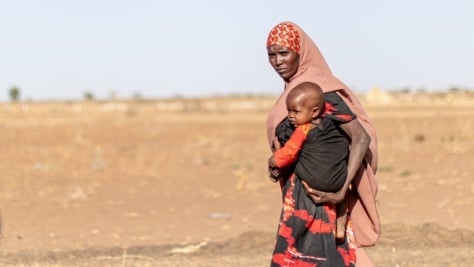
While Zimbabwe's main political rivals have agreed to hold power-sharing talks, there are continued reports of instability and violence in the country. The flow of Zimbabweans seeking asylum in neigbouring South Africa is growing, rather than ebbing. The UN refugee agency reports that there are more and more women and children joining the exodus.