Libya flag

Libya Libya RSS Feed

2013 UNHCR country operations profile - Libya

Working environment

The context

Having recently emerged from a historic revolution inspired by the Arab Spring, Libya is going through a delicate post-conflict transitional period that offers both opportunities and challenges. The country's first national elections were held successfully in July 2012, following which the National Transitional Council handed power to the democratically elected National Congress.

Nevertheless, confrontations between armed militias, the growth of instability in the east of the country and the escalation of inter-ethnic and tribal conflicts pose significant challenges for the new Government. A series of attacks targeting the international community in Benghazi have led UNHCR and other agencies to reduce their presence in eastern Libya.

Libya continues to be a major mixed-migration route in the region. Refugees and asylum-seekers comprise part of the mixed movements, the management of which is made more complex by the absence of a national asylum system. At the end of August 2012, the total number of refugees and asylum-seekers registered with UNHCR stood at approximately 10,000.

While a party to the 1969 OAU Convention Governing the Specific Aspects of Refugee Problems in Africa, Libya has not promulgated national legislation or established administrative structures dealing with asylum. Despite discussions with the Libyan authorities on the matter, no formal agreement has been reached, and UNHCR's status in the country remains unsettled.

Meanwhile, the Office seeks to expand the protection space for people of concern, including by helping the Libyan authorities to develop protection-sensitive migration policies.

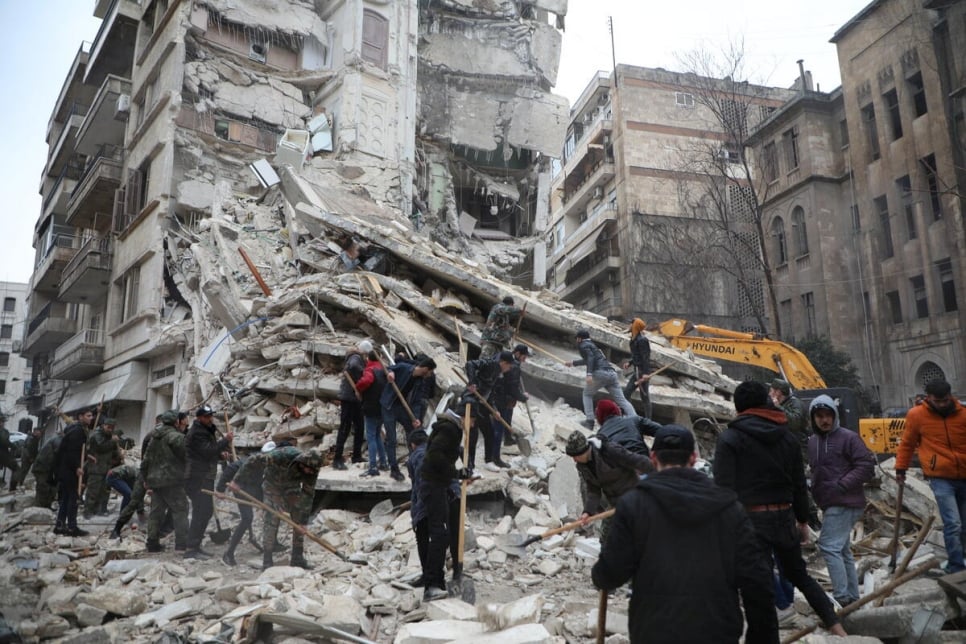
Most of the more than 550,000 people who were internally displaced during the course of the uprising have returned to their areas of origin and are in the process of reintegration. Nevertheless, local conflicts have resulted in the new internal displacement of more than 25,000 people.

At the end of August 2012, the number of internally displaced persons (IDPs) in Libya remained somewhere between 65,000 and 80,000, a population composed mostly of minorities, such as the Tawerghas, who are unwilling or unable to return to their areas of origin for fear of reprisals.

Since the uprising, UNHCR has been assessing the risk of statelessness for certain populations in the southern part of the country. It estimates that some 50,000 people are potentially at risk of statelessness.

The needs

Refugees and asylum-seekers continue to arrive in Libya despite a fragile protection environment. Sub-Saharan Africans in particular face a greater risk of arrest and detention. Serious concerns persist regarding access to food and basic services, in particular water, sanitation and health, for people of concern to UNHCR. Refugees and asylum-seekers who lost their sources of livelihood during the uprising may continue to opt for dangerous migration routes across the Mediterranean.

According to reports received by UNHCR, thousands of Syrians entered Libya between 2011 and 2012. While many had lived and worked in Libya before the uprising, others, some of whom are vulnerable and have special needs, are fleeing the violence in the Syrian Arab Republic.

For the IDPs who remain unable to return to their places of origin, UNHCR will work with the UN Mission in Libya (UNSMIL) and the Libyan Humanitarian Relief Agency (LibAid) to address concerns relating to protection during displacement, the continuity of humanitarian assistance and the identification of interim and durable solutions.

Efforts to prevent and reduce statelessness will continue. Many members of transnational and semi-nomadic populations, such as the Tuareg and Tebu, lack basic citizenship documentation, including birth registration, and have also been affected by local conflicts.

UNHCR 2013 planning figures for Libya
TYPE OF POPULATION ORIGIN JAN 2013 DEC 2013
TOTAL IN COUNTRY OF WHOM ASSISTED
BY UNHCR
TOTAL IN COUNTRY OF WHOM ASSISTED
BY UNHCR
Total 114,570 114,570 75,010 75,010
Refugees Various 8,000 8,000 12,000 12,000
Persons in refugee-like situations Various 5,500 5,500 8,000 5,000
Asylum-seekers Various 7,000 7,000 8,000 8,000
Returnees (refugees) Libya 500 500 10 10
IDPs Libya 47,000 47,000 35,000 35,000
Returnees (IDPs) Libya 46,570 46,570 12,000 12,000

Main objectives and targets for 2013

Favourable protection environment

Access to the territory is improved and risk of refoulement is reduced for refugees and asylum-seekers.

  • The extent to which border authorities refer asylum-seekers to competent authorities is improved.

Fair protection processes and documentation

The level of individual documentation is increased.

  • All people of concern are provided with individual protection documentation.

Basic needs and essential services

Services for refugees with specific needs are strengthened.

  • Some 70 per cent of refugees with disabilities are provided with access to services for their specific needs.

  • Nearly 70 per cent of elderly refugees with specific needs are provided with access to services.

Community empowerment and self-reliance

Self-reliance and livelihoods are improved for refugees.

  • Some 675 refugees benefit from vocational training.

Security from violence and exploitation

The risk of sexual and gender-based violence (SGBV) is reduced and the quality of the response to it is improved.

  • The support given to SGBV survivors is improved.

Strategy and activities in 2013

While UNHCR has shifted its focus from humanitarian relief to longer-term interventions that support the establishment of a national asylum system, the immediate needs of people of concern in the volatile post-revolutionary environment will require a rapid response.

UNHCR's strategy in 2013 will focus on maximizing the available protection space and providing needed assistance in urban areas, camp-like settings and detention centres.

In coordination with the Libyan authorities, the strategy will include strengthening registration and refugee status determination activities, promoting and facilitating durable solutions, and assisting vulnerable people of concern.

UNHCR will work closely with the Libyan authorities to address the challenges of mixed migration. It will support the establishment of a protection-sensitive migration and asylum framework by building the capacity of the Government and national NGOs. Protection monitoring will continue to be a priority, particularly for people of concern from sub-Saharan Africa, as will humanitarian relief and legal assistance for those rescued at sea or languishing in detention centres.

The remaining IDP population will receive UNHCR's protection and benefit from advocacy in support of interim and durable solutions, which will continue to be linked to Libya's larger national reconciliation process. UNHCR's strategy for 2013 will also include protection monitoring of populations at risk of statelessness, as well as the promotion of durable solutions in collaboration with UNSMIL and the Libyan authorities.

Constraints

The operational environment in 2013 is expected to remain fragile and unpredictable. Plans to enhance the protection space for people of concern remain constrained by the lack of a country agreement and general uncertainty during the post-conflict transition period.

Organization and Implementation

Coordination

Many of the inter-agency humanitarian clusters that were phased out at the beginning of 2012 have been replaced by various sectoral and thematic working groups that respond to the remaining humanitarian needs. UNHCR continues to chair the Protection Working Group and provides critical support to the IDP coordination structure. UNHCR also continues to build partnerships with local NGOs and the Libyan Red Crescent as well as LibAid.

Financial information

Pending the signing of a country agreement with the authorities to formalize UNHCR's presence and activities in Libya, the comprehensive requirements for the operation have been halved from USD 31.4 million in 2012 to USD 16.6 million in 2013.

Source: UNHCR Global Appeal 2013 Update


UNHCR contact information

The UNHCR Representation in Libya
Style of Address The UNHCR Representative in Libya
Street Address Next to Tarek Ben Zayad School
Gergarsh
Tripoli, Libya
Mailing Address Next to Tarek Ben Zayad School
Gergarsh
Tripoli, Libya
Telephone +218 21 477 0262
Facsimile +218 21 477 0267
Email lbytr@unhcr.org
Time Zone GMT + 2:00
Working Hours
Monday:AM: 8:30 - 12:30, PM: 13:30 - 17:30
Tuesday:AM: 8:30 - 12:30, PM: 13:30 - 17:30
Wednesday:AM: 8:30 - 12:30, PM: 13:30 - 17:30
Thursday:AM: 8:30 - 12:30, PM: 13:30 - 17:30
Friday:
Saturday:
Sunday:AM: 8:30 - 12:30, PM: 13:30 - 17:30
Public Holidays 15 Febraury 2011, Mouloud (Prophet's Birthday)
2 March 2011, Jamahiriya Day
28 March 2011, British Evacuation Day
11 June 2011, American Evacuation Day
28 June 2011, Ascension of the Prophet
30 August 2011, Eid al-Fitr (End of Ramadan)
1 September 2011, Revolution Day (National Day)
7 october 2011, Italian Evacuation Day
6 November 2011, Eid al-Adha (Feast of the Sacrifice)
26 November 2011, Islamic New Year
• DONATE NOW •


• GET INVOLVED • • STAY INFORMED •

UNHCR contact information

Statistical Snapshot*
* As at January 2012
  1. Country or territory of asylum or residence. In the absence of Government estimates, UNHCR has estimated the refugee population in most industrialized countries based on 10 years of asylum-seekers recognition.
  2. Persons recognized as refugees under the 1951 UN Convention/1967 Protocol, the 1969 OAU Convention, in accordance with the UNHCR Statute, persons granted a complementary form of protection and those granted temporary protection. It also includes persons in a refugee-like situation whose status has not yet been verified.
  3. Persons whose application for asylum or refugee status is pending at any stage in the procedure.
  4. Refugees who have returned to their place of origin during the calendar year. Source: Country of origin and asylum.
  5. Persons who are displaced within their country and to whom UNHCR extends protection and/or assistance. It also includes persons who are in an IDP-like situation.
  6. IDPs protected/assisted by UNHCR who have returned to their place of origin during the calendar year.
  7. Refers to persons who are not considered nationals by any country under the operation of its laws.
  8. Persons of concern to UNHCR not included in the previous columns but to whom UNHCR extends protection and/or assistance.
  9. The category of people in a refugee-like situation is descriptive in nature and includes groups of people who are outside their country of origin and who face protection risks similar to those of refugees, but for whom refugee status has, for practical or other reasons, not been ascertained.
The data are generally provided by Governments, based on their own definitions and methods of data collection.
A dash (-) indicates that the value is zero, not available or not applicable.

Source: UNHCR/Governments.
Compiled by: UNHCR, FICSS.
Residing in Libya [1]
Refugees [2] 10,130
Asylum Seekers [3] 2,894
Returned Refugees [4] 148,951
Internally Displaced Persons (IDPS) [5] 93,565
Returned IDPs [6] 458,047
Stateless Persons [7] 0
Various [8] 0
Total Population of Concern 713,587
Originating from Libya [1]
Refugees [2] 4,384
Asylum Seekers [3] 1,505
Returned Refugees [4] 148,951
Internally Displaced Persons (IDPS) [5] 93,565
Returned IDPs [6] 458,047
Various [8] 0
Total Population of Concern 706,452
Government Contributions to UNHCR
Contributions since 2000
YearUSD
2012 0
2011 0
2010 0
2009 0
2008 0
2007 0
2006 0
2005
More info 100,000
USD 100,000 of which 100% was unrestricted.
2004 0
2003 0
2002 0
2001 0
2000 0

Libya UNHCR Fundraising Reports Rss FeedUNHCR Fundraising Reports

Libya UNHCR Maps Rss FeedUNHCR Maps

2013 UNHCR partners in Libya
Implementing partners
NGOs: ACTED; Al-Wafa Charity Society; CESVI; Danish Refugee Council; International Medical Corps; Islamic Relief; Libyan Society for First Aid and Response; Mercy Corps; Mine Action Group
Others: Libyan Red Crescent
Operational partners
Government agencies: Libyan Humanitarian Relief Agency (LibAid)
NGOs: Médecins Sans Frontières
Others: ICRC; IOM; UNICEF; UNMAS Worldwide; UNSMIL; WFP

Angelina Jolie meets boat people in Malta, Lampedusa

Goodwill Ambassador Angelina Jolie joined UNHCR chief António Guterres on the Italian island of Lampedusa, where they met with boat people who have fled unrest in North Africa.

More than 40,000 people, including refugees and asylum-seekers, have crossed the Mediterranean on overcrowded boats and descended on the small island since the beginning of the year.

The UNHCR Goodwill Ambassador flew to Lampedusa from Malta, which has also been a destination for people fleeing North Africa by boat.

Angelina Jolie meets boat people in Malta, Lampedusa

Displacement Challenges for Libya

Libya endured severe upheaval in 2011 and the next government faces major challenges moving the country forward after four decades of Muammar Gaddafi's rigid rule. One task will be addressing and resolving the issue of tens of thousands of internally displaced people. Some are waiting for their homes to be repaired or rebuilt, but many more have been forced to desert their towns and villages because of their perceived support for Gaddafi and alleged crimes committed during the conflict. Meanwhile, growing numbers of people, including refugees and asylum-seekers, are coming to Libya from sub-Saharan Africa on well travelled mixed migration routes. Some are being detained as illegal immigrants, though many are people of concern. Others have risked the dangerous sea crossing to southern Europe.

Displacement Challenges for Libya

Crisis in Libya

UNHCR is working with the Tunisian and Egyptian authorities and aid groups to manage the dramatic influx of tens of thousands of people fleeing Libya. By the beginning of March, two weeks after the violence erupted in Libya, more than 140,000 people had fled to the neighbouring countries, while thousands more were waiting to cross. Most are Egyptian and Tunisian nationals, though small numbers of Libyans and other nationalities are managing to escape. UNHCR is particularly concerned about thousands of refugees and other foreigners trapped inside Libya, especially people from sub-Saharan Africa. The following photo essay gives a glimpse into what is happening at the borders.

Crisis in Libya

Crush at the Tunisian border

At the Tunisia-Libya border, a heaving crush of thousands of people anxious to leave the insecurity of Libya gathered in no-man's land and on the Libyan side of the border on 2 March, 2011. Most were young men, principally migrant workers from Tunisia and Egypt. They were desperate to go home or find shelter and safety in Tunisia. After several nights sleeping out in the open, many were exhausted and hungry. As the crowd surged towards the border gate, several people were injured. The Tunisian Red Crescent is on hand to provide medical support for all those in need. UNHCR officials were also waiting on the Tunisian side of the border, supporting the Tunisian authorities and aid organizations.

Crush at the Tunisian border

Tunisia's tented transit camp

A new camp full of UNHCR tents, has sprung up close to Tunisia's border with Libya to provide shelter to thousands of migrant workers desperate to get hope. The UNHCR-run facility is already full, with 15,000 people from around Africa and Asia who have fled from Libya.

Most of the new arrivals are penniless and have no hope of making it home on their own. Many of the sub-Saharan Africans arriving at the camp say they fled because of threats and abuse, with some being attacked and robbed in their homes as well as at the checkpoints that have sprung up along many roads in Libya. Non-African arrivals also report having their belongings taken at the checkpoints, but say they have not been the victims of racism and threats.

With people continuing to arrive daily, UNHCR and other agencies are bracing themselves for what could be a large-scale humanitarian disaster if the fighting worsens and if large numbers of Libyans try to flee their country.

Tunisia's tented transit camp

Fleeing Libya by sea

Thousands of people, mainly sub-Saharan Africans, are taking to the sea in ancient, leaky and overcrowded boats to escape war in their adopted homeland. Libya. The destination of choice is the Italian resort island of Lampedusa, some 600 kilometres north of Libya in the Mediterranean. Many of the passengers arrive traumatized and exhausted from the high seas journey. Others perish en route.

One Ivorian migrant describes life in Tripoli before leaving: "There was no peace. There was rifle fire everywhere. Then NATO started to bomb. We had nothing to eat. Some Libyans started to attack strangers at night, to steal your money, your mobile, whatever you have ... No way to stay there with them. Better to flee."

UNHCR estimates that one in 10 people die during the sea journey from Libya. Those bodies which wash ashore get a simple burial in Lampedusa's cemetery.

May 2011

Fleeing Libya by sea

Displacement in Libya: Misrata, Benghazi and Tobruk

Thousands of people still remain displaced in eastern Libya as a result of the conflict that erupted in mid-February between government and opposition forces. Most are staying with host families, in empty buildings or schools. Other people of concern to UNHCR, such as refugees and asylum-seekers, have fled conflict areas such as Misrata by boat to safer locations. They are now hoping to return to their homes in Libya, be resettled to a third country, or to return to their countries of origin. UNHCR's Helene Caux has photographed the plight of internally displaced people (IDPs), refugees and migrants in Misrata, Benghazi and Tobruk.

Displacement in Libya: Misrata, Benghazi and Tobruk

Going home

During the past two weeks, UNHCR has worked with the Tunisian government, Tunisian Red Crescent and the International Organization for Migration (IOM) to respond to the dramatic influx of over 90,000 people fleeing the violence in Libya. The majority are migrant workers from Egypt, Tunisia, Bangladesh, China, Thailand and Vietnam. Tens of thousands were flown home following an appeal from UNHCR and IOM to governments to send flights to evacuate them.

Going home

Stuck at the Egyptian border

Some three weeks after the Libyan displacement crisis erupted in mid-February, thousands of people were still stuck at the border between Libya and Egypt waiting for onward travel to their home countries. Many have arrived exhausted at the Sallum crossing after travelling for days without adequate food or water. Some told harrowing tales of armed men going door to door at night, forcing people from sub-Saharan Africa to leave after destroying their identity papers and taking their money.

More long-haul flights to Bangladesh and other Asian destinations are needed to decongest the border, although people from countries like Eritrea and Somalia cannot go home. As a result, many people have been stuck at the border for days, sleeping outside in the cold. UNHCR has provided blankets, plastic mats, food and water for those waiting to be repatriated.

More than 100,000 people have arrived at the Sallum border since the start of the Libyan uprising. The majority have been migrant workers from Egypt who were allowed through immigration and customs quickly, but many nationalities have also turned up at the border and having to wait.

Stuck at the Egyptian border

UNHCR: Boat OrdealPlay video

UNHCR: Boat Ordeal

UNHCR spokeswoman Melissa Fleming talks about a boat that drifted in the Mediterranean for more than two weeks after leaving Libya. Only nine of the 72 passengers survived.
Libya: Desert EscapePlay video

Libya: Desert Escape

The town of Ajdabiya in eastern Libya has been the scene of heavy fighting. Thousands of civilians sought shelter in the surrounding desert.
Tunisia: Aid FlightPlay video

Tunisia: Aid Flight

Tens of thousands of people have been crossing into Tunisia from Libya. And many more are expected. UNHCR flight of supplies arrives
Tunisia: Border TensionsPlay video

Tunisia: Border Tensions

The latest footage from the border between Libya and Tunisia where tens of thousands of migrants are struggling to leave the country in the wake of the uprising against Muammar Gaddafi
High Commissioner's Libya AppealPlay video

High Commissioner's Libya Appeal

High Commissioner for Refugees António Guterres addresses the situation in Tunisia and UNHCR's response to the emergency.
Tunisia: Tents for Thousands at the Border Play video

Tunisia: Tents for Thousands at the Border

The UN refugee agency is putting up hundreds of tents for people stuck at the Tunisian border after fleeing from Libya.
Libya: Scared and in HidingPlay video

Libya: Scared and in Hiding

They hide in the shadows, so afraid that they don't even want to answer the door. These Africans from sub-Saharan countries fear for their lives in Libya.
Libya: A Boat Out . . . for SomePlay video

Libya: A Boat Out . . . for Some

A group of Bangladeshi workers leave the coastal Libya town of Benghazi by boat. But some Somalis are not so fortunate.
Egypt: Stranded at the BorderPlay video

Egypt: Stranded at the Border

Thousands of people are stranded at Egypt's Sallum border crossing with Libya. Many of them are migrant workers, like these exhausted Bangladeshi men.
Tunisia: DeparturesPlay video

Tunisia: Departures

Foreign migrant workers queue to leave Tunisia. A massive evacuation programme has repatriated thousands who fled Libya.
Tunisia: A Camp of NationsPlay video

Tunisia: A Camp of Nations

A sea of tents at a camp near Tunisia's border with Libya harbours a mix of many nationalities. What they share is the wish to go home.
Tunisia: Finding RefugePlay video

Tunisia: Finding Refuge

Some 15,000 people are staying in a camp just inside Tunisia after fleeing Libya. Many have stories about increasing violence in Libya and of being targeted by gangs.
Tunisia: Dashed HopesPlay video

Tunisia: Dashed Hopes

Victor left Nigeria 10 years ago in search of a better life and ended up in Libya. In escaping the violence there, he has lost everything he worked for.
Tunisia: No Way HomePlay video

Tunisia: No Way Home

Among the tens of thousands fleeing the violence in Libya is one group of particularly vulnerable people. They come from countries in conflict and cannot go home.
Egypt: Seeking SafetyPlay video

Egypt: Seeking Safety

Amid the ebb and flow of fighting in eastern Libya, a steady stream of people continues to seek shelter in Egypt and other neighbouring countries. They tell their stories.
Tunisia: Angelina Jolie on the Libya BorderPlay video

Tunisia: Angelina Jolie on the Libya Border

UNHCR Goodwill Ambassador Angelina Jolie visits refugees fleeing violence in Libya in a camp in Tunisia.
Italy Sea rescuePlay video

Italy Sea rescue

A Guardia di Finanza vessel, which normally operates against drug smugglers, arrives in Italy's Lampedusa Island with a group of boat people rescued at sea after fleeing Libya.
Tunisia: Libyan RefugeesPlay video

Tunisia: Libyan Refugees

Over the past month more than 50,000 people, mostly ethnic Berbers, have across the Tunisia-Libya border at Dehiba. Some of them described why they fled Libya.
Tunisia: Border ArrivalsPlay video

Tunisia: Border Arrivals

Tunisia has opened its borders to people of all nationalities who are fleeing from Libya. Arrivals are registered at a military camp.
Egypt: Egyptians Cross Back HomePlay video

Egypt: Egyptians Cross Back Home

A steady stream of people have been crossing into Egypt from Libya. These migrant workers were elated to return home.
Libya: Africans at Risk Play video

Libya: Africans at Risk

As the civil war ends in Libya, Sub-Saharan Africans fear recriminations
Libya: Cost of WarPlay video

Libya: Cost of War

Sirte was heavily damaged during last year's fighting.