Home > Where We Work > Asia and the Pacific > South-West Asia > Afghanistan
2013 UNHCR country operations profile - Afghanistan
Working environment
The context
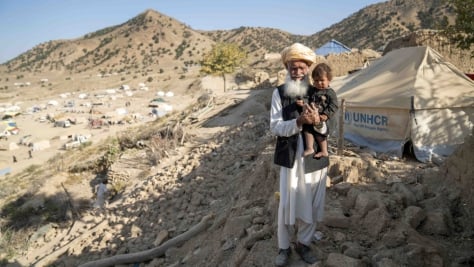
More than 5.7 million refugees have voluntarily repatriated to Afghanistan in the last 10 years, of whom more than 4.6 million were assisted to do so by UNHCR. Nonetheless, some 2.7 million Afghans continue to live in exile in neighbouring countries. An international conference in Geneva in May 2012 brought the Governments of the Islamic Republics of Afghanistan, Iran and Pakistan, UNHCR and donors together to endorse a Solutions Strategy for Afghan Refugees, which aims to pursue voluntary repatriation, sustainable reintegration and assistance to host countries.
The security situation in Afghanistan continues to be volatile, and obtaining humanitarian access to many areas remains impossible. The lack of security continues to be the main cause of displacement. UNHCR estimates that as of mid-2012, some 425,000 Afghans were internally displaced. UNHCR pursues innovative practices to gain access to people of concern, track population movements and provide assistance to the vulnerable through a network of partners throughout the country.
The needs
Returning refugees struggle to achieve sustainable reintegration, which is defined as reaching parity with local community members. UNHCR is currently conducting community surveys in high-return areas, where the initial indications are that returnees have specific vulnerabilities. Protection monitoring to understand the return environment and confirm the voluntariness of returns is also critical.
During the last three years, internal displacement has increased significantly in Afghanistan. Securing access and providing emergency humanitarian assistance to internally displaced persons (IDPs) is a key objective for UNHCR pursuant to its leadership of the protection and emergency shelter/non-food items clusters. UNHCR works with cluster participants to respond to immediate needs, pursue advocacy to reduce displacement, and support durable solutions.
| UNHCR 2013 planning figures for Afghanistan | |||||
|---|---|---|---|---|---|
| TYPE OF POPULATION | ORIGIN | JAN 2013 | DEC 2013 | ||
| TOTAL IN COUNTRY | OF WHOM ASSISTED BY UNHCR |
TOTAL IN COUNTRY | OF WHOM ASSISTED BY UNHCR |
||
| Total | 1,877,810 | 1,877,810 | 2,212,310 | 2,212,310 | |
| Refugees | Islamic Rep. of Iran | 40 | 40 | 40 | 40 |
| Iraq | 10 | 10 | 10 | 10 | |
| Pakistan | 40 | 40 | 40 | 40 | |
| People in refugee-like situations | Pakistan | 4,940 | 4,940 | 7,440 | 7,440 |
| Asylum-seekers | Islamic Rep. of Iran | 20 | 20 | 20 | 20 |
| Pakistan | 40 | 40 | 40 | 40 | |
| Returnees (refugees) | Afghanistan | 162,000 | 162,000 | 172,000 | 172,000 |
| IDPs | Afghanistan | 547,550 | 547,550 | 697,550 | 697,550 |
| Returnees (IDPs) | Afghanistan | 50,000 | 50,000 | 50,000 | 50,000 |
| Others of concern | Afghanistan | 1,113,170 | 1,113,170 | 1,285,170 | 1,285,170 |
Main objectives and targets for 2013
Fair protection processes and documentation
The quality of registration and profiling is improved and maintained.
-
Sex- and age-disaggregated data are available for 62 per cent of IDPs.
Basic needs and essential services
People of concern have shelter and infrastructure established, improved and maintained.
-
Some 48 per cent of the most vulnerable returning refugee households are able to live in adequate dwellings.
Community empowerment and self-reliance
Self-reliance and livelihoods are improved.
-
Some 22 per cent of returning refugees have access to sustainable self-reliance and livelihood activities.
Durable solutions
The potential for voluntary return to Afghanistan is realized.
-
All returning refugees do so voluntarily and are supported with grants from UNHCR.
-
About 75 per cent of returnees have the same access to rights as other citizens.
Strategy and activities in 2013
For 2013, UNHCR's planning figure for voluntary returns to Afghanistan is 172,000. This includes 150,000 returnees from Pakistan, 20,000 from the Islamic Republic of Iran and 2,000 from other countries. These figures take into account the growth of "asylum fatigue" in the Islamic Republics of Iran and Pakistan, where authorities have stated that voluntary repatriation is the primary solution for the approximately 2.7 million Afghan refugees in these countries.
Returning refugees will receive voluntary repatriation grants of USD 150 per person. Five encashment centres will provide the grants, as well as counselling in health, legal and social issues.
Returnees will also receive information about mine and ordnance risks. Following return to their place of origin, the most vulnerable returnees will be identified and assisted with an in-kind or cash grant. Legal counselling and support will be provided through a network of information centres.
UNHCR, in coordination with other stakeholders, will continue to pursue reintegration to bridge the gap between humanitarian and development assistance in selected high-return areas. Working with ministries, UN agencies and international and national NGOs, UNHCR will advocate for these areas of high return to be included in the Afghan Government's national priority programmes. Sites will be identified for reintegration assistance, which will target accessible locations with a high proportion of returnees. This will be done in partnership with UNDP, with the possible inclusion of other UN agencies. Technical assistance and expertise will be solicited to ensure that the interventions are strategic and effective in their design and implementation.
UNHCR estimates that there are currently some 450,000 internally displaced Afghans. For 2013, UNHCR expects to expand its interventions for conflict-induced IDPs. Better coordination is required to track population movements as well as to understand and address the root causes of displacement, in addition to improving emergency response mechanisms.
UNHCR will support an inter-agency approach to devise a durable solutions framework for IDPs, for which it will also work with the Ministry of Refugees and Repatriation.
Urban displacements occur largely as a form of secondary displacement driven by the absence of basic protection, services and/or livelihoods, as well as natural disasters and lack of food security. UNHCR will continue to improve its emergency response to new conflict-induced displacement. Assistance will be provided to conflict IDPs, with priority given to the pursuit of solutions, including return and reintegration. Legal counselling and support will also be provided for IDPs.
The number of asylum-seekers and refugees in Afghanistan is modest (fewer than 130). In addition, more than 3,000 people are considered to be living in a refugee-like situation, having been displaced from their homes across international borders. UNHCR is increasingly engaged in the drafting of national refugee legislation, and is working with the authorities to improve reception conditions and ensure protection-sensitive border policies. While the number of refugees and asylum-seekers is expected to remain little changed in 2013, the number of people living in a refugee-like situation is expected to increase by some 3,000 due to instability in some border regions.
Constraints
A complex array of political, security, and socio-economic factors in Afghanistan have contributed to the gradual decline in the number of refugees returning from neighbouring countries. The most significant assumption regarding internal displacement in Afghanistan is the likely increase in conflict-induced IDPs. This may be due to security challenges in the wake of the withdrawal of international forces from Afghanistan and their handover of responsibilities to the nascent Afghan security forces.
It is expected that humanitarian access will continue to be limited, and perhaps worsen, in 2013. Attacks may continue to target international military forces as well as organizations perceived to be foreign in nature. Though UNHCR is making headway in obtaining humanitarian access directly and through partners, operational momentum is constrained by limits on freedom of movement. This hinders direct discussions with people of concern and visits to affected areas and makes it difficult to coordinate assistance with other actors.
Organization and implementation
Coordination
UNHCR engages actively with the Ministries of Foreign Affairs, Rural Rehabilitation and Development, and Housing and Urban Development. The main government counterpart, the Ministry of Refugees and Repatriation (MoRR), will be assisted to strengthen its management. Greater responsibilities for repatriation, monitoring and speedy identification of IDPs will be entrusted to relevant MoRR district offices. The active engagement of other key partners will also be sought. In 2012, UNHCR supported the work of more than 70 national NGOs.
As part of the UN Country Team, UNHCR works with the Humanitarian/Resident Coordinator as well as with UNAMA, UNDP, UN-Habitat, WFP, ILO, WHO and UNICEF. UNHCR's role in leading the protection and emergency shelter clusters as well as co-chairing the national and regional IDP task forces will continue. Coordination and cooperation with major UN agencies, relevant government departments and other actors in selected sites and communities will be strengthened to ensure comprehensive reintegration interventions.
Financial information
The budget in 2013 for Afghanistan is largely the same as in 2012 and reflects the continued importance of achieving sustainable reintegration for returnees as well as addressing the immediate and longer-term needs of IDPs. The trend over the past few years shows that funding support for Afghanistan has remained stable, reflecting a robust response to the immense challenges in the country.
Nonetheless, more efforts are needed to ensure that humanitarian assistance is strongly linked with development efforts, which are usually of a far longer scope and require greater resources.
Source: UNHCR Global Appeal 2013 Update
UNHCR contact information
| The UNHCR Representation in Afghanistan | |||||||||||||||
|---|---|---|---|---|---|---|---|---|---|---|---|---|---|---|---|
| Style of Address | The UNHCR Representative in Afghanistan | ||||||||||||||
| Street Address | 41, Jadi Solh (Peace Avenue) Shar-e-New Kabul |
||||||||||||||
| Mailing Address | P.O. Box 3232 Kabul |
||||||||||||||
| Telephone | +41 22 739 7500 | ||||||||||||||
| Facsimile | +41 22 739 7501 | ||||||||||||||
| afgka@unhcr.org | |||||||||||||||
| Time Zone | GMT + 4:30 | ||||||||||||||
| Working Hours |
|
||||||||||||||
| Public Holidays | 02 January 2011 - New Year's Day (Observed) 15 February 2011 - Prophet's Day 21 March 2011 - Nawroz 31 July 2011 - First Day of Ramadhan 30 August 2011 - Eid-uI-Fitr 31 August 2011 - Eid-uI-Fitr 06 November 2011 - Eid-ul-Qurban 07 November 2011 - Eid-ul-Qurban 05 December 2011 - Tenth of Moharam 25 December 2011 - Christmas Day |
||||||||||||||
| The UNHCR Sub-Office in Herat | |||||||||||||||
|---|---|---|---|---|---|---|---|---|---|---|---|---|---|---|---|
| Style of Address | The UNHCR Head of Sub-Office at Herat | ||||||||||||||
| Street Address | Park Round About end of Majidi Street, Herat, Afghanistan |
||||||||||||||
| Mailing Address | N/A |
||||||||||||||
| Telephone | +93 40 4470 41 - 43 | ||||||||||||||
| Facsimile | +90 93 042 080 | ||||||||||||||
| afghe@unhcr.org | |||||||||||||||
| Time Zone | GMT + 4:30 | ||||||||||||||
| Working Hours |
|
||||||||||||||
| Public Holidays | 02 January 2011 - New Year's Day (Observed) 15 February 2011 - Prophet's Day 21 March 2011 - Nawroz 31 July 2011 - First Day of Ramadhan 30 August 2011 - Eid-uI-Fitr 31 August 2011 - Eid-uI-Fitr 06 November 2011 - Eid-ul-Qurban 07 November 2011 - Eid-ul-Qurban 05 December 2011 - Tenth of Moharam 25 December 2011 - Christmas Day |
||||||||||||||
| UNHCR Sub-Office Mazar-e-Sharif | |||||||||||||||
|---|---|---|---|---|---|---|---|---|---|---|---|---|---|---|---|
| Style of Address | UNHCR Sub-Office Mazar-e-Sharif | ||||||||||||||
| Street Address | Kart-e-Shafakhana, Near Shafakhana Mosque |
||||||||||||||
| Mailing Address | via Kabul: P.O. Box 3232 ***POUCH STILL VIA LO-OFFICE FOR UNHCR REPRESENTATION AFGHANISTAN IN ISLAMABAD*** Kabul |
||||||||||||||
| Telephone | +93791990030 | ||||||||||||||
| Facsimile | via HQ +41227397505 | ||||||||||||||
| afgma@unhcr.org | |||||||||||||||
| Time Zone | GMT+4:30 | ||||||||||||||
| Working Hours |
|
||||||||||||||
| Public Holidays | 02 January New Year's Day 15 February Prophet's Birthday 21 March Nawrooz 28 April Mujahideen's Victory Day 19 August Independence Day 30-31 September Eid-I-Fitr 6-07 November Eid-ul-Qurban 5 December Tenth of Moharam 25 December Christmas Day |
||||||||||||||