Cameroon flag

Cameroon Cameroon RSS Feed

Global Needs Assessment

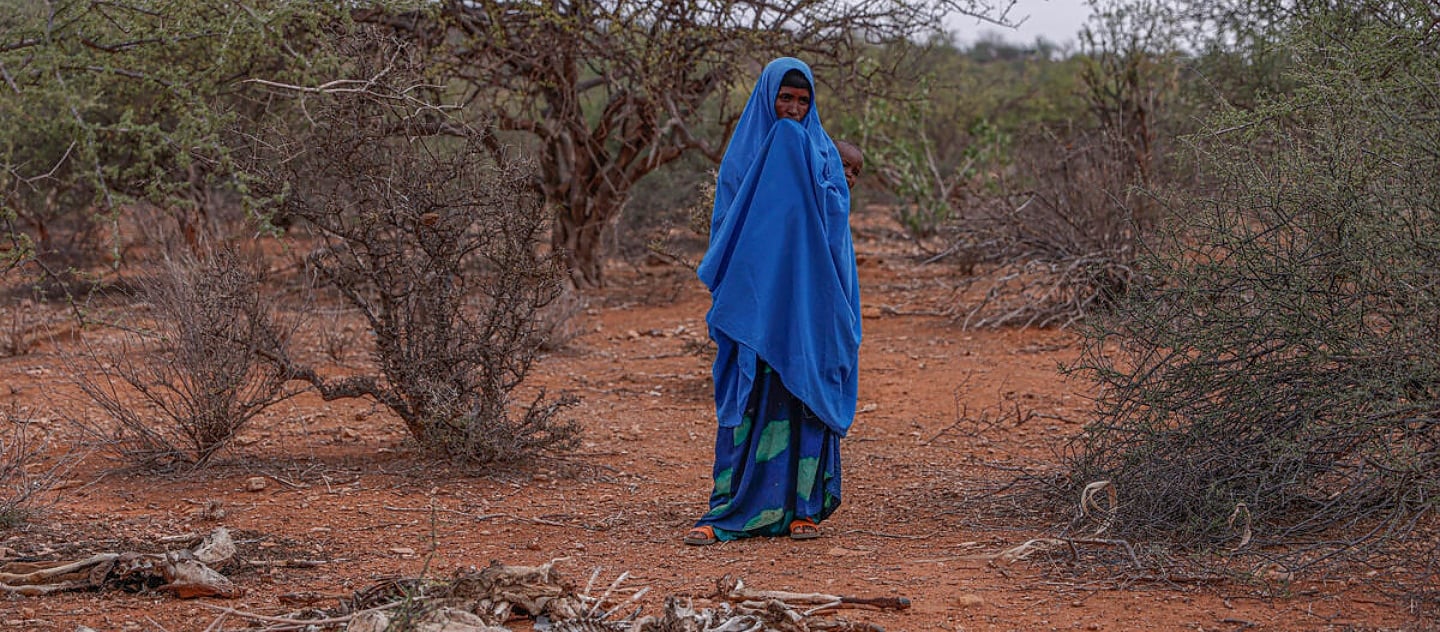
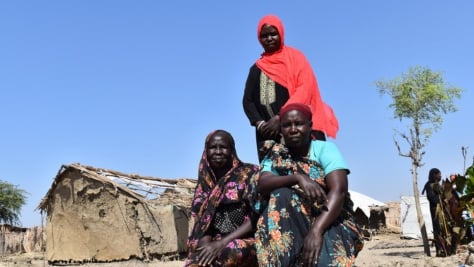
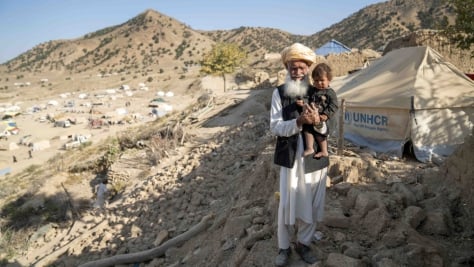
Since 2005, Cameroon has been experiencing a silent refugee influx along its remote eastern border with the Central African Republic - a country wracked by generalised insecurity, banditry and recurrent armed conflict. The number of refugees arriving increased considerably in 2006 and 2007. Most are Mbororo cattle herders fleeing "coupeurs de route" (bandits) and rebels who have attacked their settlements, stolen their cattle and kidnapped women and children for huge ransoms. Many have experienced and witnessed multiple traumatic events, lost family members, lost their cattle and traditional way of life. Their stories are harrowing.

Spread out in more than 60 settlements over a 30,000 sq km wide area in East and Adamaoua provinces, some 60,000 CAR refugees are living in tough conditions. Acute child malnutrition and child mortality rates are high. Access to primary health care and education is very limited.

Delivering humanitarian assistance to such a large number of people scattered over a wide area is challenging for UNHCR and partners, particularly in the rainy season when the roads become impassable. Nevertheless, UNHCR regularly carries out registration missions to new sites to keep track and document new arrivals.

Also in Cameroon, there are refugees from Chad, some in Langui camp in Northern province near Garoua while others are living in urban areas. Many of the refugees arrived in February 2008 after an assault on the Chadian capital N'Djamena by rebel forces. Thousands of Chadians fled over the river into neighbouring Cameroon. Most returned after the rebel attack was repelled and security restored but 5,000 have remained and are assisted by UNHCR in Langui.

Cameroon also hosts refugees and asylum seekers living in urban areas, mainly in Yaoundé and Douala. These refugees face particular problems with integration, accommodation, access to employment and education.

At the crossroads of the African continent, Cameroon has historically seen many inter-African migratory movements and today is no exception. The country's political and economic stability is a magnet for people from neighbouring countries - mainly Chad and the Central African Republic, but also from the Great Lakes region and West Africa. Within this mixed migration flow, the protection and specific needs of refugees are important.

In a Global Needs Assessment, GNA, in 2008, gaps in protection and in meeting the needs of refugees and asylum seekers were highlighted. Areas for action requiring financial support included training and raising awareness of refugee law for administrative authorities in border zones to reduce the risk of forcible return of refugees; expansion of a programme for prevention of and response to sexual and gender-based violence; strengthening of child protection activities particularly for victims of kidnapping, torture and brutality; interventions to reduce malnutrition particularly for children, pregnant and lactating women; construction of additional school facilities and a campaign to sensitise parents to the benefits of education; improved access to primary health care and clean water; self-reliance activities to help former cattle breeders learn agricultural techniques.

See more documents at our French website here

Related GNA Documents

Country Operations Profile

Working environment

The context

With most of its neighbours having experienced armed conflicts or socio-political turmoil in recent years, Cameroon has received large numbers of displaced people. Today it hosts close to 90,000 refugees and asylum-seekers. Of these, more than 14,600 live in urban areas, while some 60,000 others from the Central African Republic (CAR) are settled in villages in East or Adamaoua provinces. After rebel attacks in February 2008 on the capital of Chad, N'Djamena, 14,350 Chadians sought refuge among communities in northern Cameroon. Some 5000 of these Chadians live in Langui camp.

For many years Cameroon was considered a safe haven in the region. But in 2007 the country experienced a significant degree of social unrest, and security deteriorated in several towns. Despite efforts to bolster the economy, growth declined from 3.2 per cent in 2006 to 2.7 per cent in 2007.

The needs

UNHCR assessments have identified major gaps in nutrition, water and sanitation, health, education, community services and protection in all refugee sites in Cameroon. The assessments, in which refugees and UNHCR's partners participated, found the acute malnutrition rate among children below five years of age had reached 17.2 per cent, while 68 per cent of households experienced food insecurity. Furthermore, almost half the refugees had no access to safe drinking water.

The Government of Cameroon has requested that refugees from Chad be relocated to a camp in Poli. This site is in need of facilities such as water points and sanitary stations.

UNHCR's programme for refugees living in urban areas needs to consolidate improvements in refugee status determination (RSD), health care and education.

Main objectives

  • Improve the national protection framework by advocating for the establishment of a national eligibility committee and building the capacity of national authorities to address refugee-related issues.

  • Provide identification documents to all people of concern.

  • Ensure access to primary health care for both urban and rural refugees.

  • Support income-generating activities by providing micro-credits and implement rapid-impact projects to aid self-reliance.

  • Facilitate access to education for all refugee children of primary school age and 150 refugee children at secondary or university level.

  • Provide access to water and sanitation.

  • Fulfil the basic food needs of refugees in collaboration with WFP and UNICEF.

Key targets

Central African refugees in East and Adamaoua provinces

  • All refugees receive non-food items, including hygiene kits for women, and at least 20 litres of drinking water per person per day.

  • Some 90 per cent of refugees receive monthly food rations.

  • All refugees, including people living with HIV and AIDS, have access to health care.

  • Mortality rates stand at less than one for every 10,000 births and the global malnutrition rate falls below five per cent.

  • At least 60 per cent of school-aged children are enrolled in school.

  • 60 per cent of refugees engage in agricultural activities.

  • All refugees are registered and newborns are given birth certificates.

Chadian refugees in northern Cameroon

  • All refugees receive monthly food rations and non-food items, including hygiene kits for women.

  • All refugees have access to medical care and receive at least 20 litres of drinking water per person per day.

  • Some 30 per cent of refugees participate in community-based activities.

  • All school-aged children are enrolled in school.

  • All refugees are registered and newborns are given birth certificates.

Urban refugees

  • All refugees have access to medical care, and people living with HIV and AIDS are assisted.

  • All survivors of sexual and gender-based violence receive medical, psychological and legal assistance.

  • All women receive sanitary kits every month.

  • Some 100 micro-projects are approved and 80 of these projects are allocated to women. The reimbursement rate of the loan is at least 50 per cent.

  • RSD processing time is reduced to three months.

  • Some 400 refugees with specific needs are resettled.

  • At least 80 per cent of school-aged children are enrolled in primary schools.

Planning figures
Type of population Origin Jan 2009 Dec 2009
Total in country Of whom assisted
by UNHCR
Total in country Of whom assisted
by UNHCR
Total 87,675 84,675 93,700 90,700
Refugees CAR 64,000 64,000 70,000 70,000
Chad 14,350 14,350 15,000 15,000
Nigeria 3,000 - 3,000 -
Various 2,825 2,825 2,900 2,900
Asylum-seekers CAR 1,150 1,150 900 900
Chad 1,200 1,200 900 900
DRC 300 300 200 200
Various 850 850 800 800

Strategy and activities

Comprehensive needs assessments have allowed UNHCR to design plans to provide adequate assistance to both rural and urban refugees and asylum-seekers.

UNHCR will promote the registration of CAR refugees and the delivery of identification cards to them. Community groups will be made more aware of sexual and gender-based violence and the need for children to be enrolled in school. UNHCR will ensure that all refugees receive enough food and non-food items and will monitor their distribution and use. The Office will strengthen collaboration with UN agencies and other partners, and reinforce the operational capacity of implementing partners.

The Office estimates that up to 5,000 refugees from Chad will have to be relocated from the Langui camp to the site in Poli. UNHCR's protection strategy will bid to improve the reporting of, and response to sexual and gender-based violence in camps. Refugee students will be assisted in gaining access to education.

UNHCR Cameroon will continue to protect urban refugees and asylum-seekers, mainly from CAR, Chad and the Great Lakes region. The Office will work closely with the national authorities to help these people of concern receive work permits and gain access to public services, such as health care and education. The voluntary repatriation of refugees from the Great Lakes region will be pursued as long as conditions in their countries of origin allow it. UNHCR will also intensify the search for resettlement opportunities, particularly for people with specific protection needs.

Constraints

Access to refugee settlements in the East and Adamaoua provinces remains difficult. Refugees there are settled in 65 sites spread over a territory of 35,000 square kilometres. Security constraints, including attacks by bandits known as coupeurs de routes in Adamaoua, may hamper implementation of UNHCR's programme. Poor road conditions, especially during the rainy season, hinder the provision of relief items.

Organization and implementation

Coordination

UNHCR coordinates its activities with the ministries of External Relations and Territorial Administration. The Office also works closely with several NGOs and UN Agencies, including WFP and UNICEF.

Following the expansion of UNHCR's programme in 2008, office structures and implementation strategies have been revamped in order to improve humanitarian responses. UNHCR also began collaboration with new NGO partners that will continue in 2009.

Financial information

With the exception of a slight decline in the annual budget in 2006 due to the finalization of the repatriation operation of Nigerian refugees, Cameroon has experienced a constant increase in its budget, stemming from growing refugee inflows from neighbouring countries.

The poor living conditions and political instabilities in CAR caused the new arrival of 20,000 refugees, which is reflected by an increase of the annual budget in 2007. In 2008 and 2009, the annual budget increased due to the continuous influx of refugees, such as the arrival of Chadian refugees.

Budget (USD)
Activities and services 2008 2009
Annual
budget
Suppl.
budget
(Improving
water and
sanitation)
Total Annual
budget
Total 3,150,673 500,000 3,650,673 11,244,566
Note: Supplementary programme budgets exclude 7 per cent support costs that are recovered from contributions to meet indirect costs for UNHCR.
Protection, monitoring and coordination 608,113 0 608,113 1,711,339
Community services 186,015 0 186,015 620,000
Crop production 30,288 0 30,288 195,000
Domestic needs 76,320 0 76,320 220,000
Education 301,489 0 301,489 376,000
Health 277,963 0 277,963 1,034,000
Income generation 50,480 0 50,480 250,000
Legal assistance 266,256 0 266,256 440,000
Livestock 34,326 0 34,326 30,000
Operational support (to agencies) 379,419 0 379,419 693,000
Sanitation 0 150,000 150,000 42,000
Shelter and infrastructure 17,179 0 17,179 140,000
Transport and logistics 115,650 0 115,650 610,000
Water 64,614 350,000 414,614 400,000
Global Needs Assessment 0 0 0 3,000,000
Total operations 2,408,112 500,000 2,908,112 9,761,339
Programme support 742,561 0 742,561 1,483,227
• DONATE NOW • • GET INVOLVED • • STAY INFORMED •


Statistical Snapshot*
* As at January 2009
  1. Country or territory of asylum or residence. In the absence of Government estimates, UNHCR has estimated the refugee population in most industrialized countries based on 10 years of asylum-seekers recognition.
  2. Persons recognized as refugees under the 1951 UN Convention/1967 Protocol, the 1969 OAU Convention, in accordance with the UNHCR Statute, persons granted a complementary form of protection and those granted temporary protection. It also includes persons in a refugee-like situation whose status has not yet been verified.
  3. Persons whose application for asylum or refugee status is pending at any stage in the procedure.
  4. Refugees who have returned to their place of origin during the calendar year. Source: Country of origin and asylum.
  5. Persons who are displaced within their country and to whom UNHCR extends protection and/or assistance. It also includes persons who are in an IDP-like situation.
  6. IDPs protected/assisted by UNHCR who have returned to their place of origin during the calendar year.
  7. Refers to persons who are not considered nationals by any country under the operation of its laws.
  8. Persons of concern to UNHCR not included in the previous columns but to whom UNHCR extends protection and/or assistance.
  9. The category of people in a refugee-like situation is descriptive in nature and includes groups of people who are outside their country of origin and who face protection risks similar to those of refugees, but for whom refugee status has, for practical or other reasons, not been ascertained.
The data are generally provided by Governments, based on their own definitions and methods of data collection.
A dash (-) indicates that the value is zero, not available or not applicable.

Source: UNHCR/Governments.
Compiled by: UNHCR, FICSS.
Residing in Cameroon [1]
Refugees [2] 81,037
Asylum Seekers [3] 2,231
Returned Refugees [4] 0
Internally Displaced Persons (IDPS) [5] 0
Returned IDPs [6] 0
Stateless Persons [7] 0
Various [8] 0
Total Population of Concern 83,268
Originating from Cameroon [1]
Refugees [2] 13,870
Asylum Seekers [3] 2,933
Returned Refugees [4] 0
Internally Displaced Persons (IDPS) [5] 0
Returned IDPs [6] 0
Various [8] 0
Total Population of Concern 16,803

Cameroon UNHCR Maps Rss FeedUNHCR Maps

more documents
UNHCR partners in Cameroon
Implementing partners
NGOs: Croix Rouge Camerounaise, BASC Caritas, Première Urgence, IFRC, Association de lutte contre les violences faites aux femmes
Operational partners
Government agencies: Ministries of External Relations, Territorial Administration, and Decentralization
NGOs: Médecins Sans Frontières
Others: FAO, UNICEF, UNFPA, WFP

Crisis in the Central African Republic

The Mbororo: A way of life at risk

Systematic attacks on settlements in Central African Republic have forced more than 60,000 people from the Mbororo tribe to flee to neighbouring Cameroon. UNHCR is trying to help these nomadic herdsmen restart their lives.

Cameroon: A Silent Crisis

In Cameroon, more than 60,000 refugees have fled Central African Republic after systematic attacks by armed gangs. Despite the atrocities, this crisis has gone largely unnoticed by the international community - perhaps because it is overshadowed by the conflict in Sudan's Darfur region. UNHCR is trying to address the enormous needs.