
Kakuma refugee camp, which houses hundreds of thousands of people, has attained municipal status, signifying its recognition as an urban center with enhanced governance, planning, and service delivery functions. Over the past three years, the partnership between the Novo Nordisk Foundation, Grundfos Foundation and UNHCR, the UN Refugee Agency – in collaboration with the Government of Kenya – has contributed to Kakuma’s inclusion as a municipality focusing on health and water services.
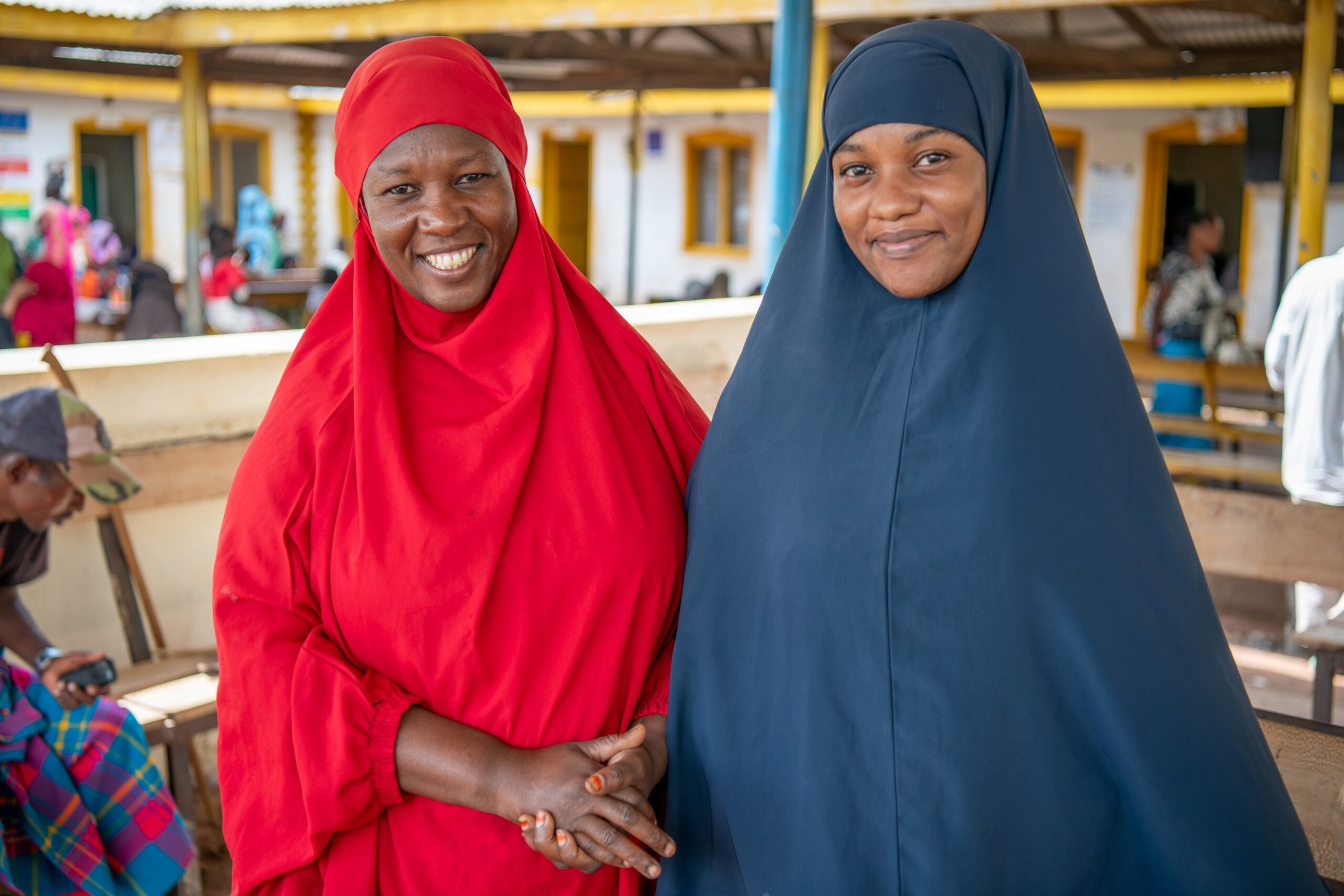
Rahmo, a refugee from Somalia, and her daughter in front of a health clinic in Kakuma, Kenya. © UNHCR/Eric Bakuli
Rahmo Muktar was forced to flee her home in Somalia. She now lives in Kakuma, one of the world’s largest refugee camps. The camp is home to more than 330,000 people, mainly from Sudan, Ethiopia, Democratic Republic of the Congo and Somalia. Here, Rahmo lives side by side with other refugees – many of whom have been there since the camp was established in 1992. On average, a person lives in the camp for 17 years, with devasting human consequences.
Since 2010, Rahmo has worked as a Community Health Promoter in Kakuma and the surrounding area, where she guides and supports patients living with non-communicable diseases (NCDs) such as respiratory and cardiovascular diseases. Rahmo herself lives with high blood pressure, while her 22-year-old daughter, Hani Abass Osman, is being treated for diabetes. Non-communicable diseases are on the rise among refugees in Kakuma, driven in part by the growing number of elderly people in the area.
“The training as a Community Health Promoter has given me knowledge on how to manage my own condition and at the same time support my daughter with her diabetes. We receive medication from the clinic every month, and this has helped us continue to live healthier. As a Community Health Promoter, I also use what I have learned to help others in the community understand their illness and to seek treatment and care in a timely manner,” says Rahmo Muktar.
UNHCR runs several health facilities in Kakuma, where Rahmo receives support and is now helping out herself. Last year, less than a quarter of UNHCR’s budget for Kenya was funded, and this has had a drastic impact on the work UNHCR is able to carry out. Health facilities are overstretched, as Kakuma is also affected by infectious diseases such as malaria, cholera and measles among others. Reception centers for newly arrived refugees are overcrowded, the number of case workers has been reduced, and cuts to healthcare, water and education services have affected both refugees and local communities.
Every day Rahmo helps her daughter monitor her condition, take her medication and show up for clinic appointments. For many families, regular access to well-functioning clinics, free medicine and community support is essential to manage their non-communicable disease.
“The medication and support from the clinic have helped me manage my diabetes better. My mother supports me every day in following the treatment and in monitoring my condition, and the health workers are always there to guide us,” says Hani Abass Osman.
Partnership strengthens health and water services
The aim of UNHCR’s partnership with the Novo Nordisk Foundation and Grundfos Foundation has been to strengthen access to health services and treatment for refugees and local communities in Kakuma through, among other things, renovating and constructing dedicated clinics for NCDs at six health facilities. In the past, the clinics experienced periods of inadequate or a complete lack of water, which contributed to the spread of diseases such as cholera, increased the risk of infections and made treatment of patients difficult. Now, the clinics have better equipment, more qualified staff, better power supply and access to clean water and proper sanitation facilities, with all of the water required by the health facilities now provided.
At the same time, a strategic agreement has been entered into with the Kenya Medical Training College (KMTC), where refugees are now enrolled in nursing programmes with scholarships funded by the partnership. The KMTC campus in Turkana, close to Kakuma, has been renovated and expanded to accommodate double the number of students, with more students now also able to stay in the campus dormitories. Over time, this will help ensure more trained healthcare workers locally.
In addition, refugees have also been trained as Community Health Promoters, like Rahmo, to assist people with NCDs in understanding their disease, receiving care and medication, and following treatment. Together with the physical improvements to the health clinics and the increased number of health workers, this has ensured that more people have been diagnosed with and treated for NCDs.
From temporary camp to local community
Kenya is home to more than 835,000 refugees and asylum seekers. As part of the national Shirika Plan, the Kenyan government is working to ensure that areas hosting refugees gradually become part of the local communities around them, giving both refugees and host communities access to government-led health services, water and sanitation, education and job opportunities, as well as identity cards and banking services.
The Shirika Plan builds on the principles of the Global Compact on Refugees, which highlights the need to promote sustainable solutions and strengthen the inclusion of refugees in national systems and public services.
As the UN High Commissioner for Refugees, Barham Salih, said during a visit to Kakuma in January 2026: “Being a refugee must be a temporary situation, not permanent pain.”
In order to support the hand-over of select health facilities and water systems in Kakuma to the local government and ensure refugees are included in national systems, the partnership has worked to ensure that facilities and systems are in line with national standards. As a result, a number of UNHCR-supported health clinics have now been registered as public Kenyan health clinics and integrated into Kenya’s national health monitoring and information systems. The partnership has also contributed to the gradual transfer of water and sanitation responsibility in Kakuma from UNHCR to the local government.
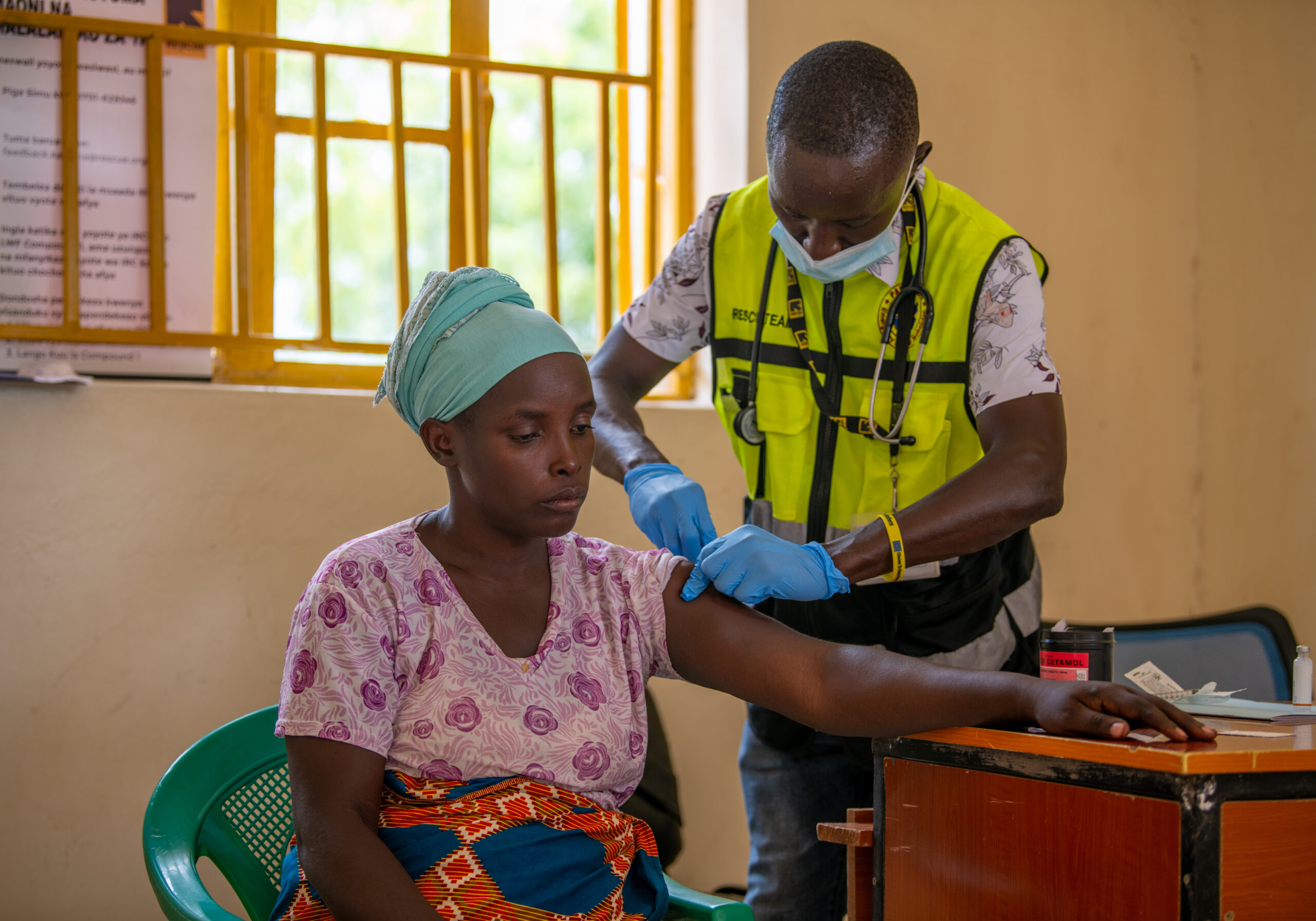
NCD consultation at Ammusait General Hospital in Kakuma, Kenya. © UNHCR/Eric Bakuli
The partnership is part of a broader collaboration, the Inclusive Refugee Response Programme (IRRP), which was set up in 2022 between the Danish Ministry of Foreign Affairs, the Novo Nordisk Foundation, Grundfos Foundation and LEGO Foundation. The goal of the programme is to advance the implementation of the Shirika Plan and support government-led inclusive service delivery in health, education and water as well as enhanced self-reliance for refugees and host communities. The three foundations contribute within their respective strategic areas – the Novo Nordisk Foundation focuses on health initiatives, the Grundfos Foundation supports water programmes and the LEGO Foundation supports the area of education – while the Ministry of Foreign Affairs supports across the four focus areas.
Flemming Konradsen, Chief Scientific Officer at the Novo Nordisk Foundation, explains, “Our partnership with UNHCR has shown that it is possible to promote the inclusion of refugees in national systems while driving systemic change in the field of health, even in a highly volatile context. A key strength of the partnership has been the complementary roles of the Novo Nordisk Foundation and the Grundfos Foundation, which together have created the best possible health service, where clean water and health go hand in hand and ensure better treatment for patients.”
Kim Nøhr Skibsted, Executive Director of the Grundfos Foundation, adds, “The partnership helps to translate the Shirika Plan from vision to reality and solve the fundamental challenges that stand in the way of refugees being integrated into Kenyan society – especially access to water and health. By investing in solutions that can be transferred and operated locally, the partnership helps create a foundation where refugees and local communities can live side by side – not temporarily, but as part of a common, sustainable urban community.”
Stable support in an uncertain time
The support from the Novo Nordisk Foundation and Grundfos Foundation to UNHCR’s work to strengthen access to healthcare has made a tangible difference – and at the same time contributed to the process of handing over responsibility to the local authorities.
“This partnership has made a tangible difference for refugees and host communities in Kakuma by strengthening access to essential healthcare and clean water. These services are fundamental to people’s health, dignity and wellbeing. They also reflect the ambition of Kenya’s Shirika Plan to ensure refugees are progressively included in national systems alongside the communities hosting them. Partnerships like this are critical to translating that vision into lasting change,” says Ms. Fatima Mohammed Cole, UNHCR Representative in Kenya.
The partnership has been implemented from 2023-2025. The Novo Nordisk Foundation has supported the partnership with DKK 48.8 million and the Grundfos Foundation with DKK 13.98 million.
For any media queries about the partnership, please reach out to Andreas Floistrup, [email protected]