
Help 2.0: A digital lifeline reimagined
Published October 2025
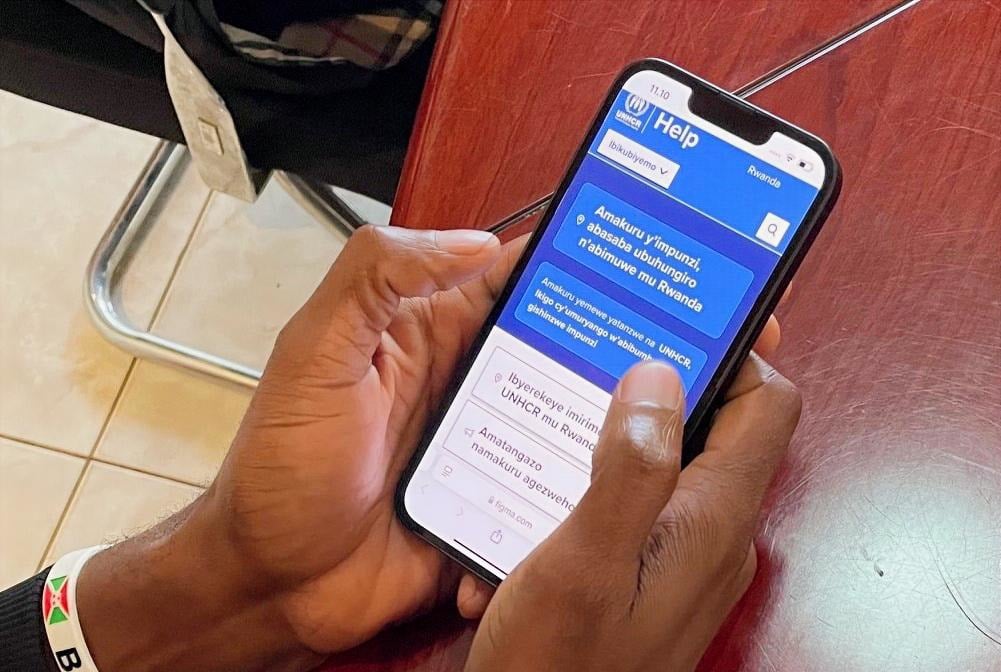
A Burundian refugee tests the Rwanda Help site in 2024. © UNHCR
For millions of forcibly displaced and stateless people, UNHCR’s Help websites have long served as a trusted source of country-specific guidance.
Now, with the launch of Help 2.0, this digital lifeline has been transformed, bringing accessibility, usability, and trust to the forefront of humanitarian digital services.
What are Help sites?
Help sites are UNHCR’s public-facing digital platforms that provide essential information on asylum procedures, resettlement, cash assistance, and more in the country where displaced people are. They are globally coordinated, regionally advised, and locally owned, ensuring content is relevant and timely.
Today, Help is live in 148 countries, available in 32 languages, and receives over 13 million visitors per year.
Keeping users at the centre
User feedback has been central to the redesign. Over 150 interviews and thousands of survey responses shaped the platform’s evolution.
“I want more information on each topic. Not generic text like ‘education is for everyone.’ I need to know which school, where, and how to sign up my children.”
A refugee father in Iraq
A Sudanese lawyer in Rwanda asked for “short and simple text, full of information inside.”
Feedback also highlighted the need for clearer labels, better spacing, and more intuitive navigation, especially for country switching and emergency content.
What’s new?
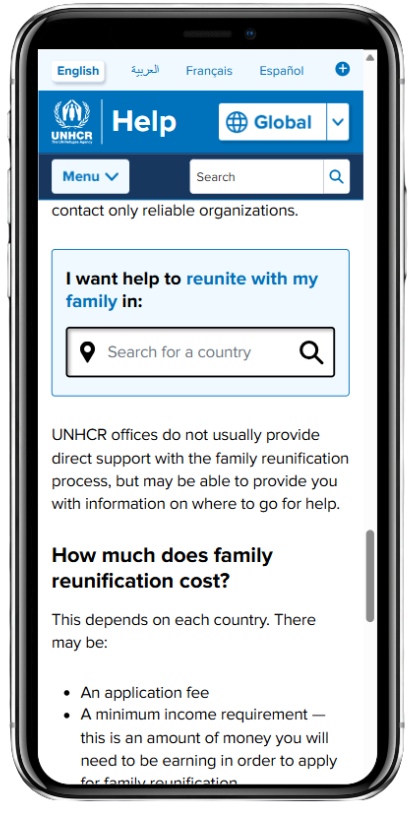
Help 2.0 introduces a modern, responsive design aligned with UNHCR branding.
Key upgrades include:
- Improved navigation: Sticky menus, breadcrumbs, and jump links make content easier to find.
- Language accessibility: Language switchers now display options in native alphabets.
- Content management: Content is tagged by topic and audience to make it easier for our users to find what they need.
- Inclusive features: Text-to-speech (in development), downloadable PDFs, and simplified layouts support users with low literacy or limited connectivity.
- Smart tools: A gamified quiz helps users determine eligibility for services like cash assistance, while improved contact forms support anonymous complaints and API integration with the Digital Gateway.
Looking ahead
The migration to Help 2.0 is underway, with country sites prioritized based on strategic importance, user needs, and operational readiness. The goal is not just to migrate, but to elevate the quality and accessibility of every Help site.
By making critical information easier to find, understand, and act on, Help 2.0 empowers refugees to make informed decisions and access protection with greater confidence and dignity.