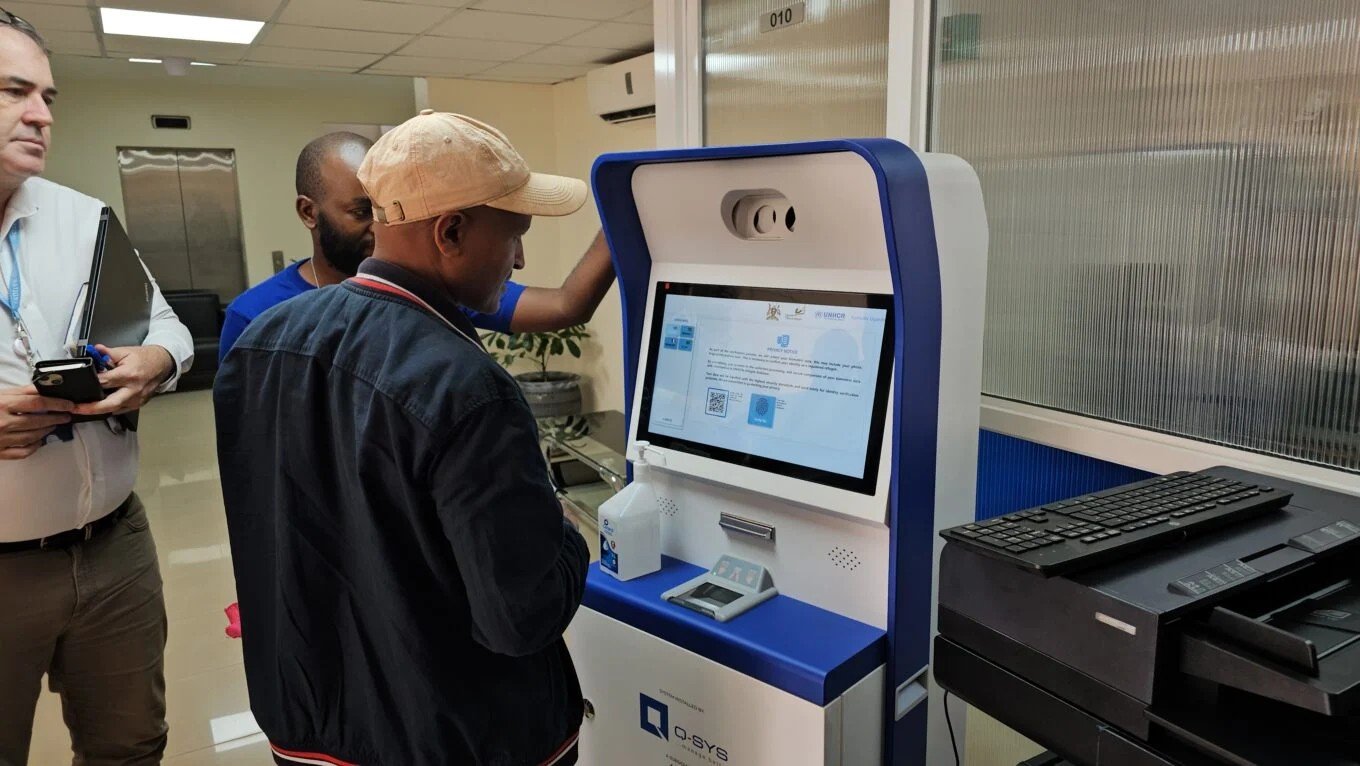
What is the Digital Gateway?
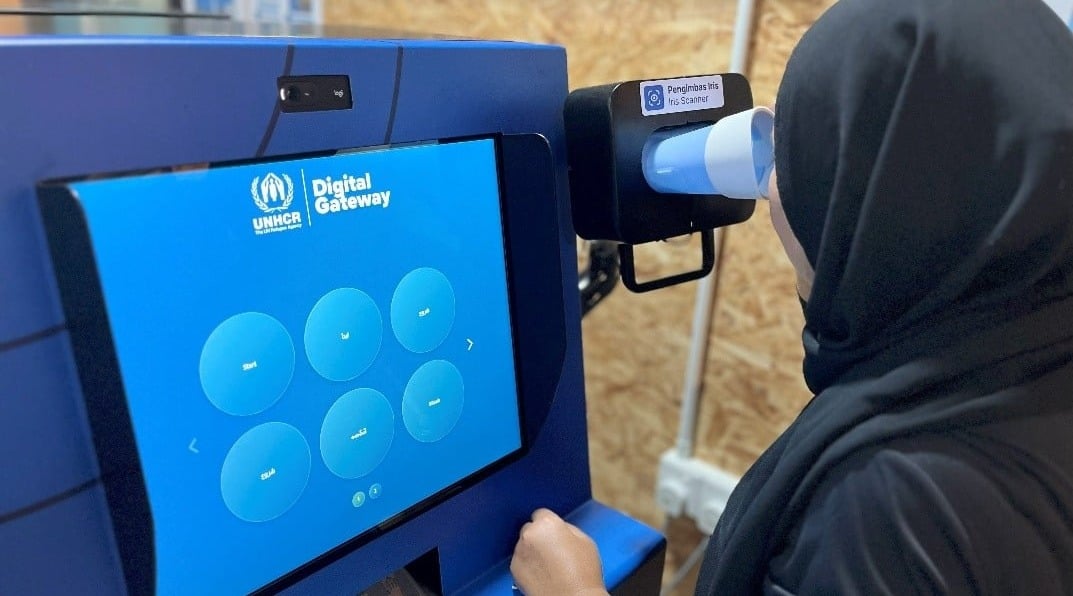
UNHCR’s Digital Gateway is transforming how forcibly displaced and stateless people access information, services, and support. It provides a unified digital entry point to UNHCR, combining self-service tools and multi-channel communication to improve access, efficiency, and accountability across operations.
In a context of growing displacement and increasing pressure on humanitarian resources, the Digital Gateway supports a more sustainable way of working. By enabling people to access services remotely, update information digitally, and receive timely communication, the Gateway reduces administrative bottlenecks, limits unnecessary travel, and allows UNHCR staff to focus on complex protection needs that require in-person engagement.
The Digital Gateway empowers forcibly displaced and stateless people by offering:
- Accessible digital services, complementing existing in-person support.
- Consistent communication across channels, including websites, messaging platforms, contact centres, kiosks, and social media.
- Clear feedback and enquiry mechanisms, ensuring that community voices can be heard and acted upon.
- Greater transparency and control over personal data, enabling individuals to exercise their data protection rights digitally.
Demo of MyServices portal overview
The Gateway is grounded in UNHCR’s commitments on Accountability to Affected People (AAP), as outlined in UNHCR’s Age, Gender, and Diversity Policy, and is designed to be inclusive, secure, and adaptable to different operational contexts.
From pilots to global delivery
The Digital Gateway builds on a series of earlier digital initiatives that explored how different services could be accessed online, each addressing specific operational needs at the time.
Safe Mobility Initiative
As part of the Safe Mobility initiative in the Americas, UNHCR and IOM launched the Movilidad Segura portal in 2023. It allowed refugees and migrants to create accounts, complete questionnaires, and be considered for humanitarian and other regular pathways to third countries.
More than 270,000 individuals submitted their online applications for processing. A regional contact centre supported users throughout, recording more than 90,000 interactions. The portal and contact centre closed in early 2025 with the end of the initiative.

Egypt
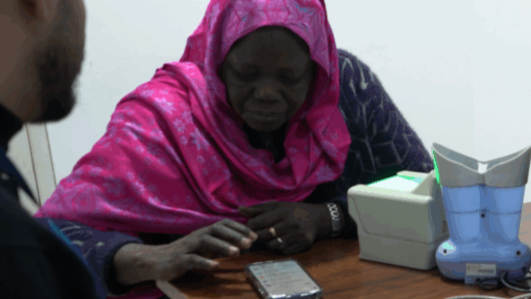
In Egypt, a digital registration appointment booking tool was developed to allow Sudanese individuals to request registration appointments remotely, improving access during a rapidly evolving emergency context. With this tool, Sudanese nationals can complete pre-registration for themselves and their family members and request new registration appointments.
The tool has reduced the need to travel to UNHCR premises, easing pressure on registration centres, and improving the speed and organization of access to protection.
Indonesia
In Indonesia, an initial self-service portal was introduced for registered refugees, allowing them to check their resettlement case status and later initiate the addition of family members.
With communities dispersed across multiple islands, the portal reduces the need for in-person visits, while supporting timely birth registration, improving access to case updates, and ensuring individuals receive critical communications without delay.
These initiatives provided critical learning on user behaviour, access barriers, and the types of digital services most valued by communities. These lessons directly informed the development of a standardised, scalable and locally configurable Digital Gateway now deployed across multiple operations.
In December 2025, UNHCR completed coordinated deployments of the Digital Gateway in eight languages in Egypt, Indonesia, India, and Iraq. In Egypt and Indonesia, existing portals were transitioned and upgraded to the Digital Gateway, while in India and Iraq the platform was introduced as a new end-to-end digital solution.
Prior to the portal replacements in Egypt and Indonesia, more than 125,000 individuals submitted applications through the existing portal in Egypt, while in Indonesia more than 80% of the registered population (over 5,000 individuals) was onboarded to the Digital Gateway.
India
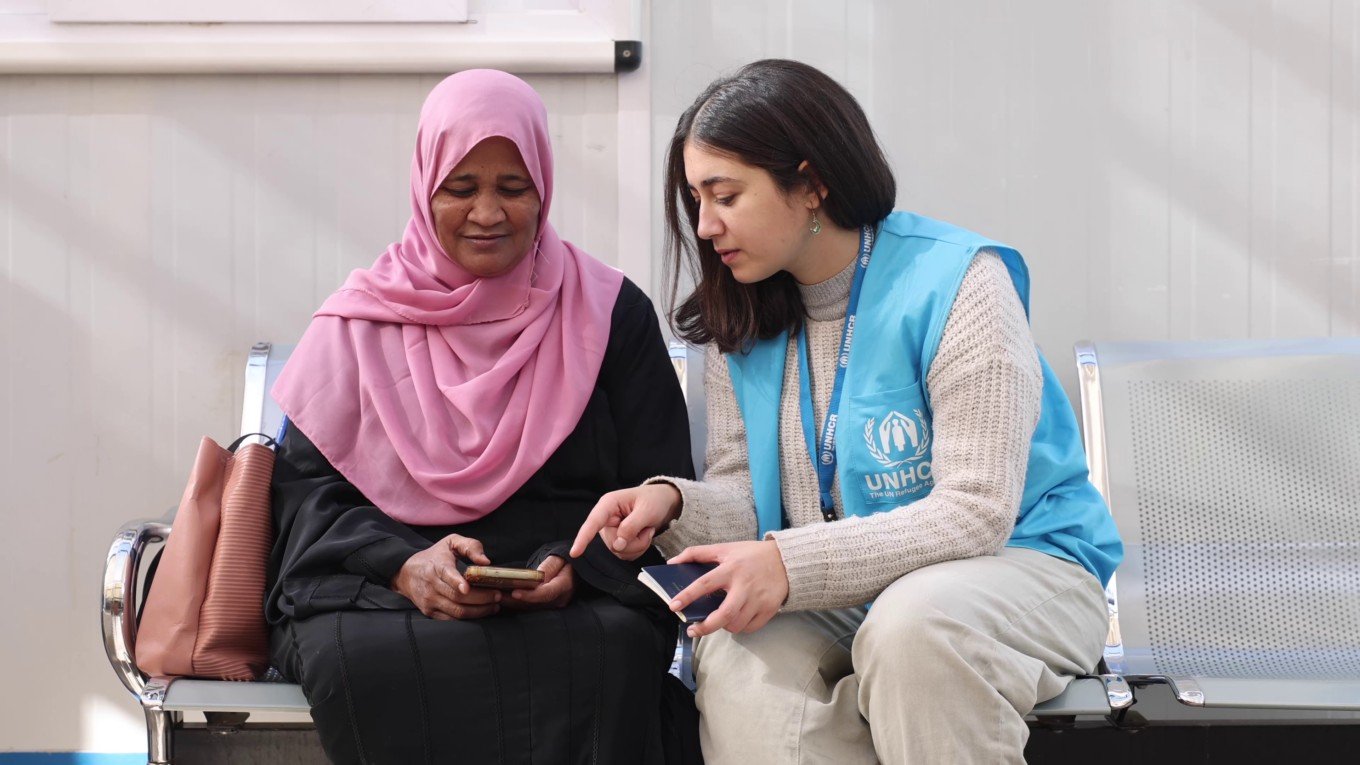
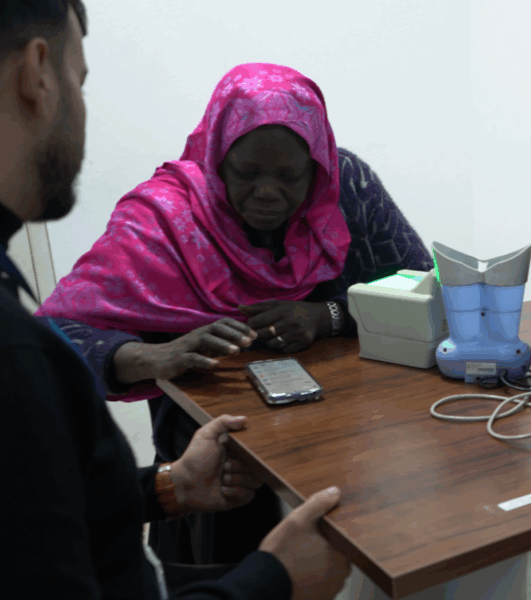
In India, the portal is used by registered individuals who create their accounts after completing an in-person verification interview. Through the portal, they can update their contact details and request appointments to add family members.
Iraq
In Iraq, the portal is used by both registered and unregistered individuals. Through the portal, people can request registration appointments by submitting their own information and that of their family members, request and manage their appointments, check their resettlement status, update their contact details, and raise support tickets.
“The website helped me understand how my personal data is used, which made me feel more confident.”
– Asylum-seeker from Sudan, Egypt
These deployments marked a clear shift from earlier, one-off initiatives to a single, shared approach across operations. They showed that the Digital Gateway can be introduced in very different country contexts while still offering communities a familiar, reliable service and giving UNHCR a model that can be reused and scaled.
With these foundations in place, the Gateway is ready for wider rollout, supported by ongoing adjustments based on user feedback and lessons from implementation.
Why the Digital Gateway matters
Humanitarian needs continue to grow while resources remain increasingly constrained. In this context, UNHCR must find ways to deliver protection and assistance that are not only effective, but also sustainable over time. The Digital Gateway responds to this challenge by strengthening how services are accessed, managed, and delivered, without replacing essential in-person engagement.
By enabling self-service access to information and selected services for forcibly displaced persons, this means fewer unnecessary journeys, clearer communication, and more timely access to information relevant to their situation. For UNHCR, it means more predictable workflows, improved data quality, and staff time freed to focus on complex protection cases that require individual assessment and face-to-face support.
“It saves me time and reduces the need to travel to the office.”
– Refugee from Yemen, India
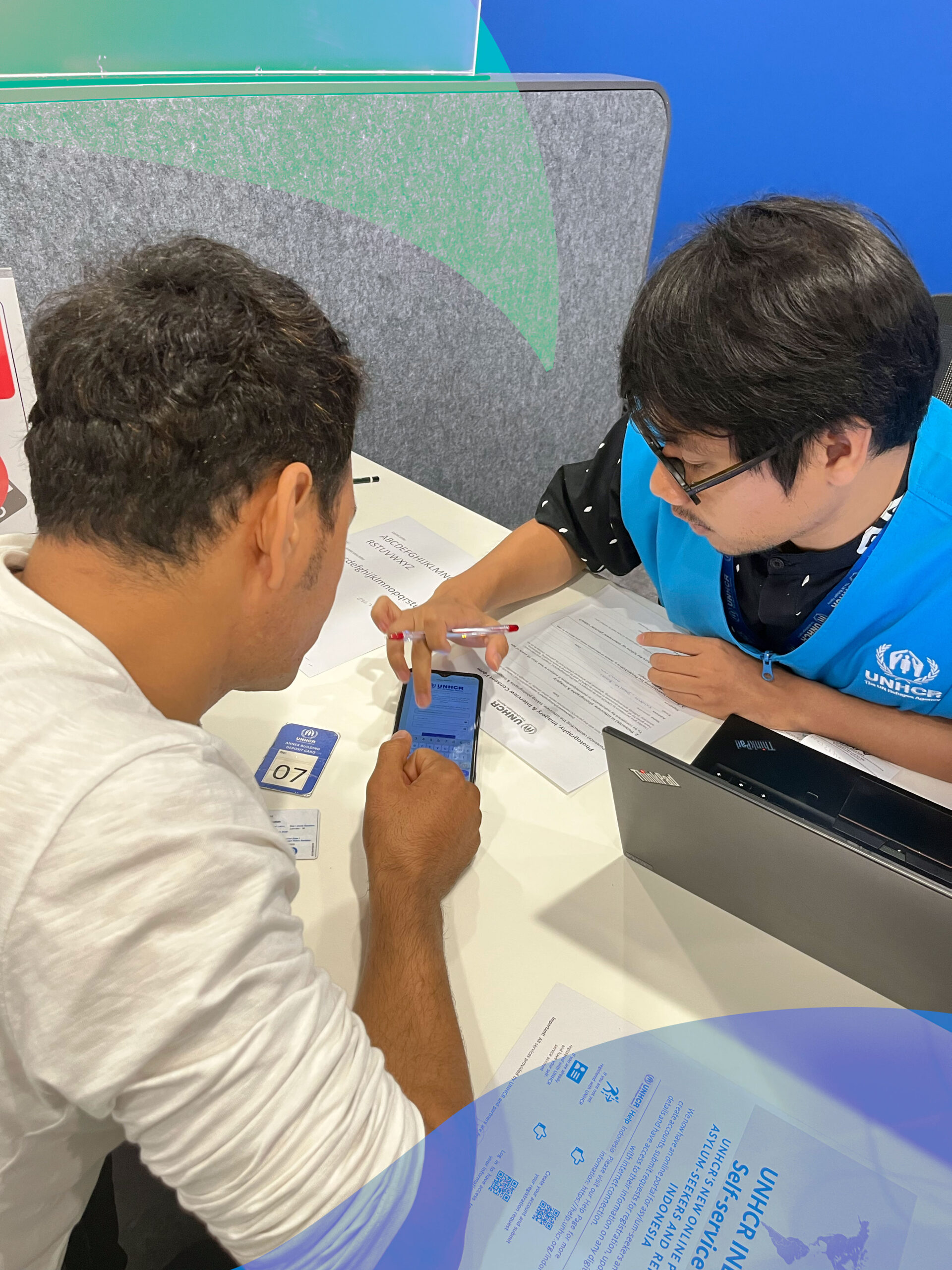
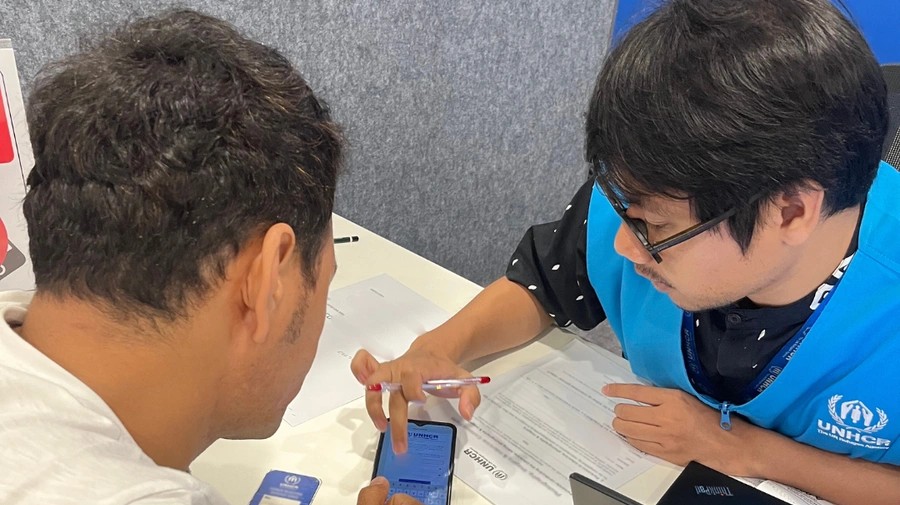
UNHCR staff briefing a refugee on the Indonesia self-service portal. UNHCR/ Mitra Salima Suryono
Importantly, the Digital Gateway is designed as a shared global platform rather than a collection of fragmented local solutions. This standardisation reduces duplication, lowers long-term maintenance costs, and allows innovations and improvements developed in one operation to benefit others. Over time, this approach supports better use of limited resources while improving consistency, transparency, and accountability across operations.
For donors
For donors, investing in the Digital Gateway supports a move towards more efficient and reliable ways of delivering services. It helps UNHCR reach more people with the same or fewer resources, while improving data protection, reducing operational risks, and strengthening day-to-day engagement with forcibly displaced people. The Digital Gateway is not a short-term digital tool, but a foundational system that supports sustainable humanitarian operations.
For Governments
The Digital Gateway supports stronger systems and more consistent service delivery within humanitarian operations. In contexts where humanitarian responses and public services intersect, governments will benefit from improved data quality, clearer processes, and more predictable engagement with affected populations. Over time, this can help ease administrative pressures, support transparency, and contribute to fairer and more efficient assistance frameworks.
For humanitarian partners
The Digital Gateway supports improved communication and coordination between UNHCR and partners. Through the contact centre, it may help streamline enquiries, referrals, and follow-up over time, reducing duplication and supporting more consistent service delivery. As the platform evolves, it is intended to help partners focus on delivery while maintaining strong standards for data protection and accountability.
Winner of the Danish Design Award
The Digital Gateway recently won a design accolade at the Danish Design Awards 2025 – a leading annual celebration of innovative multi-disciplinary design organized by the Design Denmark trade association and the Danish Design Centre.
Entries were evaluated by an independent jury of experts in design, management, and research, chosen for their relevance to the award’s principles of positive change for people, society, and the planet.
The Digital Gateway won the ‘Best of the Best’ award – the major prize of the evening, with specific recognition of the project’s impact, user testing, iterative design process and focus on accessibility and configurability.
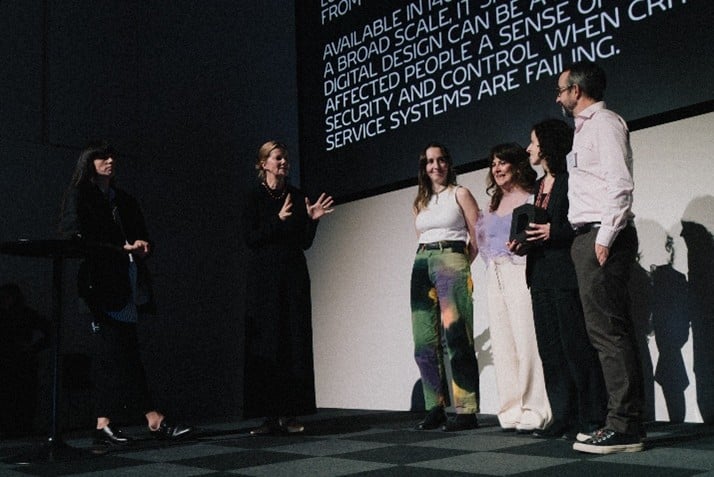
Ceremony of the Danish Design Awards 2025. ©UNHCR
What comes next
With the pilot phase completed in December 2025, the Digital Gateway is now positioned for a broader global rollout. In 2026, UNHCR will continue expanding the Gateway to additional operations, progressively onboarding services based on operational readiness, community needs, and local contexts.
The next phase will focus on scaling access while maintaining inclusion and protection safeguards. This includes further localisation, support for multiple languages and communication channels, and continued investment in digital literacy and assisted access for those who face barriers to using digital services independently.
For more information, please contact:
Lea Bardakgi, Digital Gateway Project Coordinator, [email protected]
Isil Goksel, Communications and Change Management Focal Point, [email protected]