
UNHCR Comments on the Draft Law of the Ministry of Migration and Asylum
UNHCR Comments on the Draft Law of the Ministry of Migration and Asylum

Honorable Mr. President, Honorable Members of the Parliament, Honorable Ms. Deputy Minister,
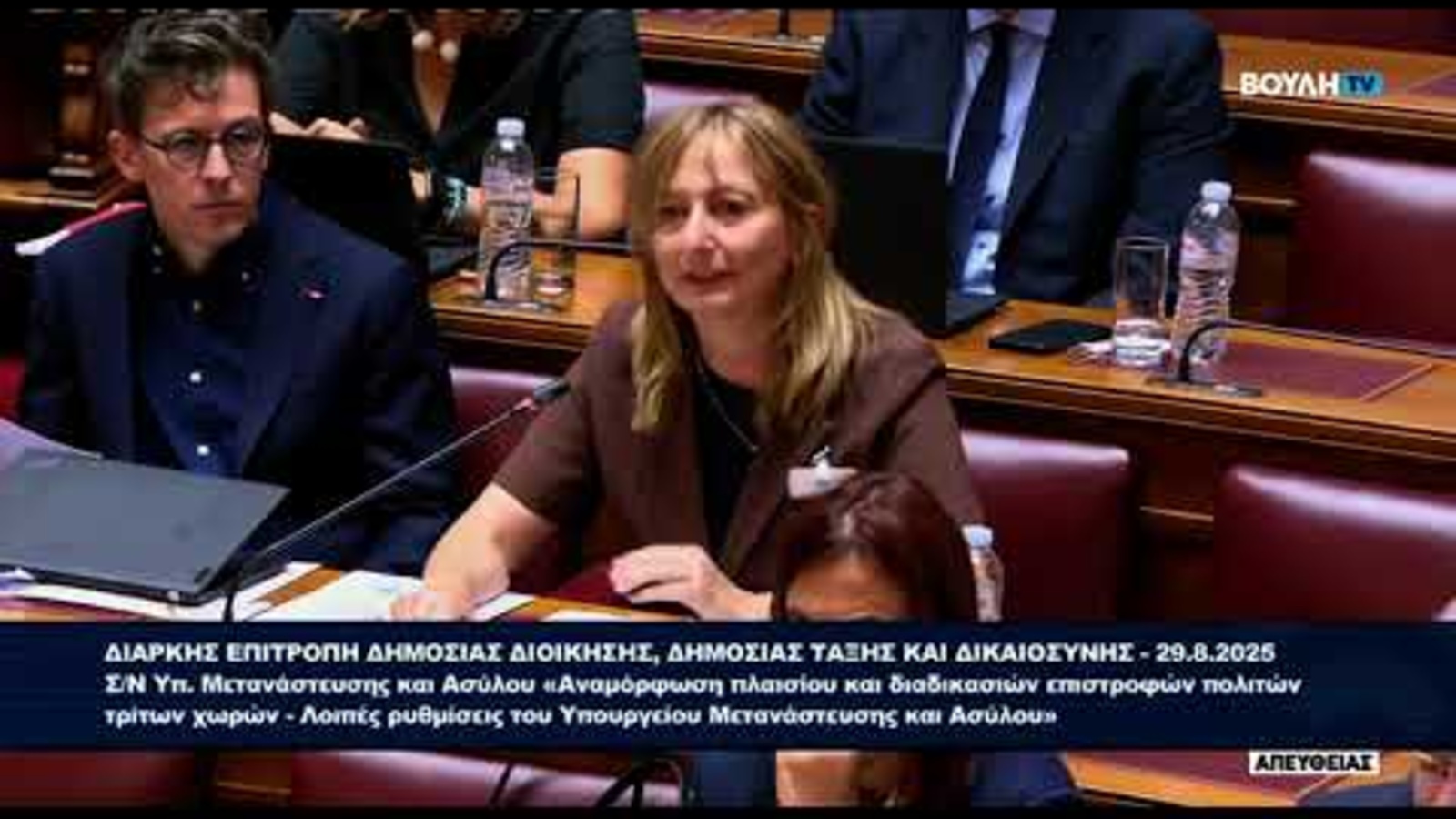
On behalf of UNHCR, I would like to thank you for the opportunity to present our views on the Draft Law concerning the reform of the framework and procedures for the return of third-country nationals.
UNHCR has already submitted to the Ministry of Migration and Asylum and to your esteemed Committee a detailed Commentary on the draft provisions relevant to our Mandate, along with a Memorandum summarizing our Commentary on selected provisions. Accordingly, today’s intervention will focus exclusively on specific provisions of the Draft Law that, in UNHCR’s view, warrant particular attention.
First of all, UNHCR acknowledges that the proposed legislative initiative is part of broader efforts to strengthen Greece’s legal framework for managing the return of third-country nationals staying irregularly in the country.
The efficient, safe and dignified return of individuals not in need of international protection is essential to preserve the integrity and effectiveness of the asylum system, while fully respecting human rights and the principle of non-refoulement.
We welcome certain positive elements introduced in the Draft Law, notably the prioritization of less coercive, alternative to detention measures before detention is imposed, in alignment with the EU Return Directive.
Also of significant importance is the introduction of an attestation confirming the submission of an application for the renewal of residence permits for refugees and beneficiaries of subsidiary protection (ADET). This provision will help ensure continued access to rights while applicants await a decision on their renewal.
These are important steps toward safeguarding fundamental rights and ensuring the continuity of legal status.
However, certain provisions are, to UNHCR’s view, highly concerning. In particular:
- The expansion of detention grounds to include “reasons of security, public security and public order”, which are not foreseen in the Return Directive.
- The broadening of the criteria for determining a “risk of absconding,” which may lead to arbitrary detention, in particular when the ground is applied without proper justification. It is recommended to revisit the criteria for risk of absconding, ensuring the conduct of individual assessments when risk indicators arise, and proper justification to ensure detention is a last-resort measure.
- The proposed increase in the maximum detention period from 18 to 24 months exceeds the limits set by the Return Directive.
Furthermore, UNHCR is also deeply concerned about the provisions regarding the criminalization of irregular stay and the significant tightening of sanctions for irregular entry and exit.
These measures risk penalizing persons in need of international protection or whose international protection needs have not yet been assessed, including for example asylum-seekers whose claims have not been assessed on the merits but have been rejected as inadmissible on the grounds of the “safe third country” concept.
UNHCR would like to note that Article 31 of the 1951 Refugee Convention safeguards the right of refugees to access international protection effectively without being penalized for violating immigration laws in connection with their flight. Seeking asylum, including by irregular means, is not a criminal act but a life-saving measure and a fundamental human right.
We recommend the review of these provisions to ensure proportionality and compliance with international obligations. Instead of punitive measures, we encourage investment in efficient fast-track asylum procedures, which would allow for the prompt identification of refugees and non-refugees and their respective administrative treatment at the earliest stages of the procedures. Such procedures should make it easier to identify refugees and non-refugees at an earlier stage and could thus assist with return of those not in need of international protection or other types of protection.
UNHCR remains at your disposal for any further technical input and stands ready to continue supporting Greece in building a fair, humane, and effective migration and asylum system.
Thank you for your attention.
United Nations High Commissioner for Refugees, Representation in Greece, 29 August 2025