



Behind the scenes at Baherka Registration and Protection Centre in Erbil
Behind the scenes at Baherka Registration and Protection Centre in Erbil

Every day, over 1,000 refugees and asylum seekers pass through the doors of Baherka Registration and Protection Centre in Erbil Governorate. Some come to seek international protection and, upon registration with UNHCR, receive an asylum seeker certificate; others come to renew their government-issued documentation from the Kurdistan Regional Government.
Learn more about the centre and the people who keep it running.
Saya is one of UNHCR’s Registration Assistants at Baherka:
I joined UNHCR in December 2020. Before that, I spent five years with an NGO called Qandil also working with refugees in places like Darashakran and Basirma camps. Since 2014, all my work has been with refugees.
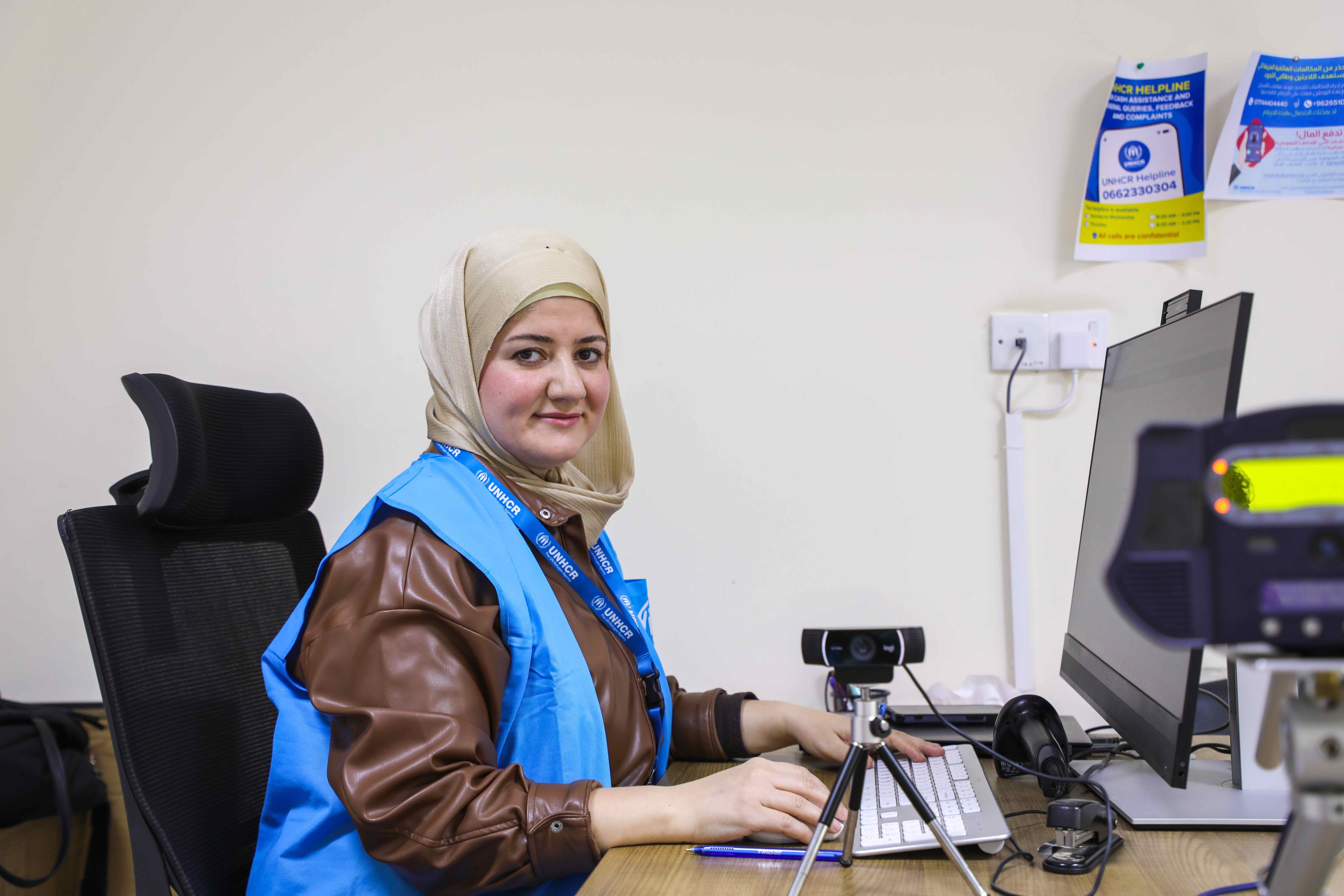
I’ve seen so much change over the years. When the first large groups of refugees arrived, their situation was very poor, no homes, no hygiene products, very little stability. Over time, things have improved. Now I see many refugees working and paying rent. When I ask refugees about their lives, they often tell me they feel safe in Erbil and don’t want to return to Syria right now. The security situation and cost of living there are too difficult.
The UNHCR certificate that we issue upon registration is really important. It helps refugees obtain government documentation. Most children born in the Kurdistan Region of Iraq also have birth certificates, and if they don’t, legal assistance is available.
When I joined UNHCR, I had to learn a lot. I took trainings on interview techniques, fraud prevention, awareness of protection needs, and how to use ProGres, the registration system of UNHCR, and other systems. As staff at Baherka Registration and Protection Centre, we are the first line of contact with refugees. They share their stories with us during interviews, and we hear many requests, cash assistance, resettlement, and more.
On average, I conduct around 15 registration interviews with refugees and asylum seekers a day, sometimes more. Renewals take around 20 minutes, but new registrations take longer. As part of the registration interview, I counsel families on the process, explain why we collect information, and what the UNHCR certificate means. We also scan their iris to be able to verify their identity in the future.
I live in Erbil, about 30 minutes away from the centre. While the workload keeps us busy, I have good teamwork and friendships within the registration team. We are 11 staff conducting registration interviews and I am proud of the impact we make.
Barzan, one of the cleaners at the busy centre, contributes his perspective:
I’ve been working as a cleaner at the centre in Baherka for three years. I work an eight-hour shift, from 8 a.m. to 4 p.m., Sunday to Thursday. There are 11 of us on the cleaning team, and together we make sure the centre stays clean so that the other staff can do their jobs properly. Whenever we’re asked to do something extra, we’re happy to help. Sometimes that means moving furniture or rearranging chairs so colleagues can work more easily.
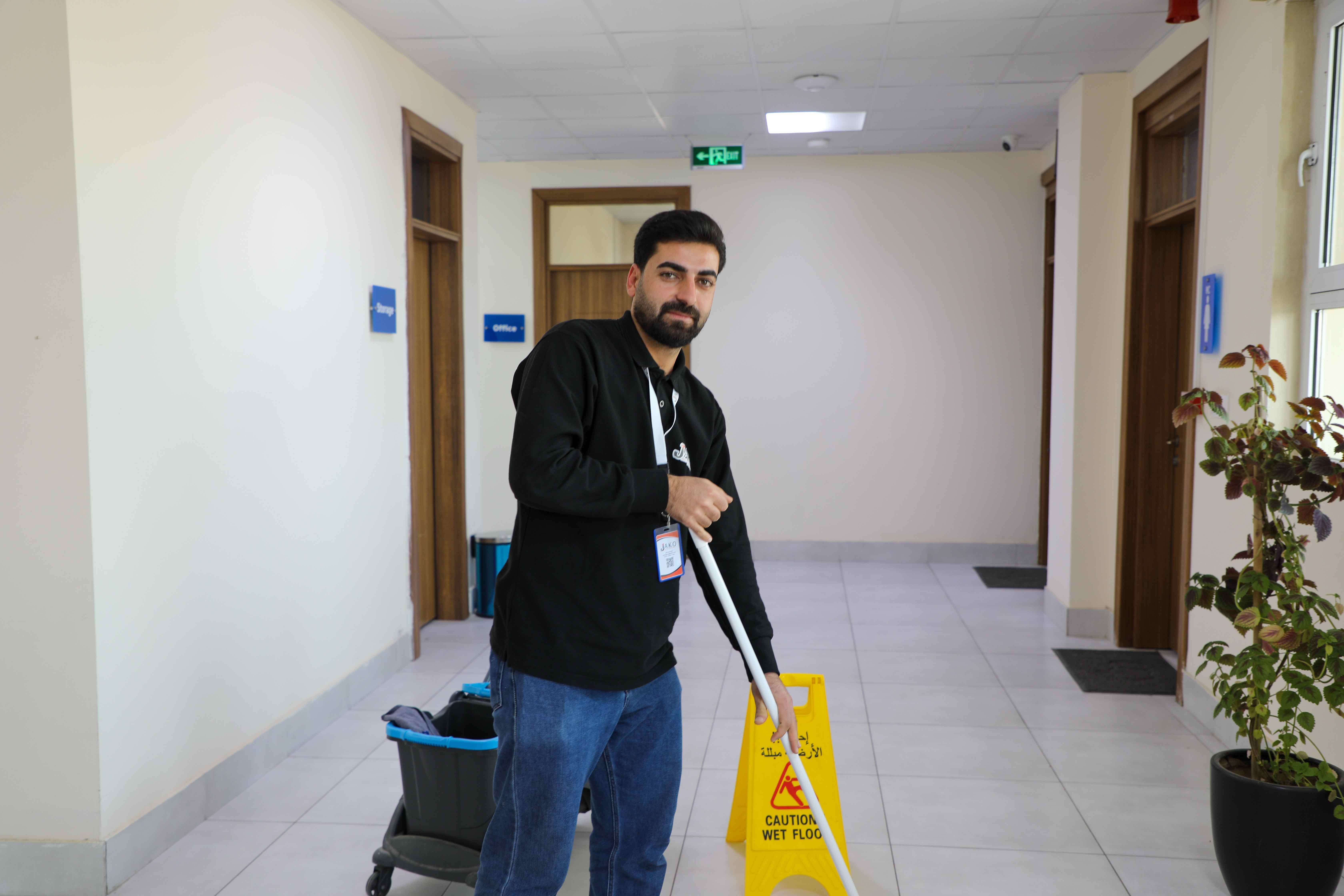
Barzan during his daily duties at the UNHCR Registration Centre in Baherka.
The centre is always busy, so spaces get dirty quickly. Still, we work with empathy. My job is not just about keeping the centre clean, but about helping create a space where refugees feel cared for and respected.
Over these three years, I’ve learned more about the situation of refugees in Iraq. Before, I knew there were lots of Syrians living in Erbil, but I wasn’t sure about how they lived. Now I know that, for them, having the documentation is really important. Whatever happens in Erbil, we are here to support people.
Another important function at the centre, concerns security. Sowham, one of the security guards, shares her experience:
I have been working as a security guard at the centre in Baherka for five years now. My job is to welcome refugees as they arrive, guide them through the centre, and show them where the different rooms are. Over time, I’ve come to recognize many familiar faces - people who return each year to renew their certificates.
One of the things I enjoy most is the reception I get from my colleagues. Seeing the people I work with every day makes the job feel lighter.
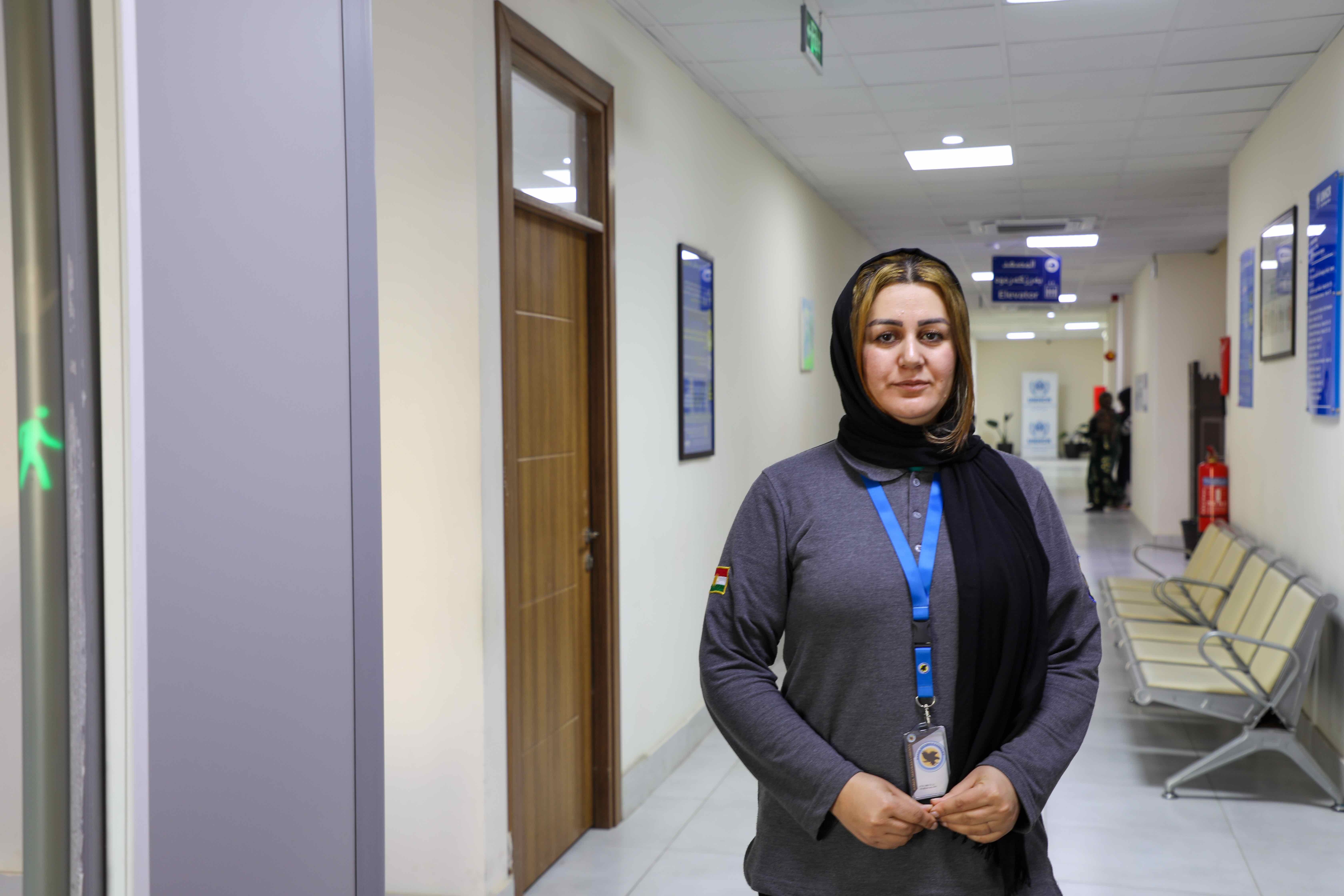
Sowham, one of the security guards, on duty at the UNHCR Registration Centre in Baherka.
Of course, there are challenges. In winter, the roads sometimes flood, making it difficult to get to work. Sometimes we have to calm down refugees who feel agitated or stressed. But overall, we’ve been fortunate, there have been no major security incidents during my time here.
We are ten women in the security team, and I’ve noticed that female refugees often feel more comfortable speaking with us. That makes me satisfied of the role we play. For me, this is a good job. I feel comfortable here. After years of experience, we know the rules and procedures well, and that helps us keep everything running smoothly.
Last but not least, Zhero, the UNHCR Receptionist and Filing Assistant speaks about his work:
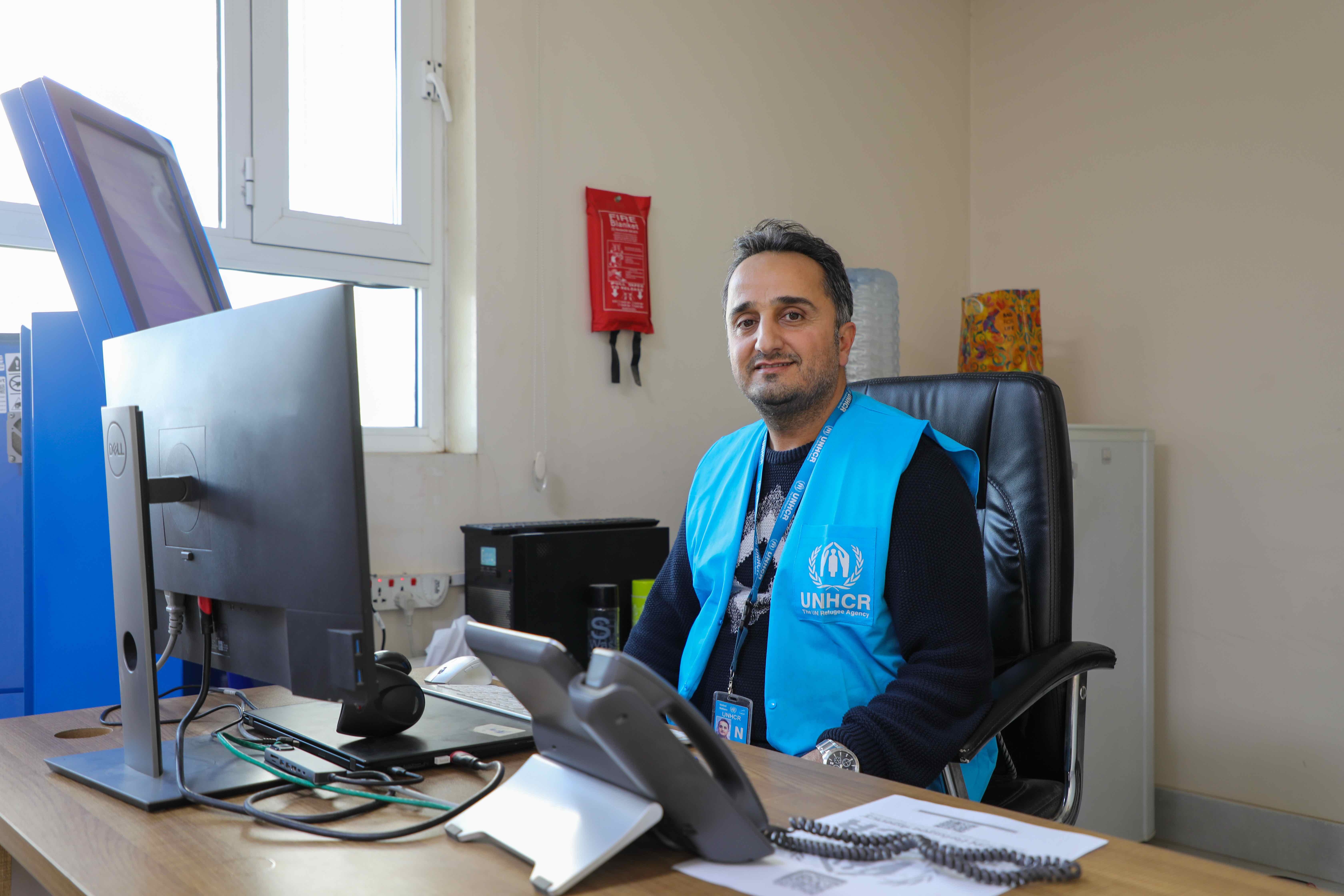
Zhero, UNHCR Receptionist and Filing Assistant at the Registration Centre in Baherka.
I’ve been working with UNHCR for six years. Previously, I worked at the old registration centre in the Italian village in Erbil, but some two years ago this new centre in Baherka opened. At the centre we have two reception desks. At the first reception point, we check if the people have made an appointment online in advance and then explain the process and where they should go in the centre. If someone does not have an appointment, I guide them on booking online. If they arrive with an urgent protection matter, we can also prioritize them.
At the second reception, we prepare files and copy documents ahead of the registration interviews. If there are any issues or questions, I provide counselling. In addition to registration, we are often asked about resettlement, cash assistance, what services are available to refugees at Baherka or what assistance they can expect to receive from UNHCR. This means we have to stay informed.
Every day, we see more than 500 people. It’s busy, but I enjoy my job. I try to help people feel calm and relaxed so they can give the information needed during their registration interview.
Sometimes we see serious problems, cases of refugees who experienced violence or vulnerable children who need specialised support, so I consult with colleagues to respond, or direct them to others who can help. Elderly people often struggle with the online appointment system, so we walk them through it. If someone has a disability or vision impairment, we can prioritize them.
Its normally very busy at the centre in the morning, but after 2:30pm, I can move to the filing room to help my colleague scan and upload files; I support with the digital system.
I graduated in English, and that has helped me in this role. The number of staff here has decreased recently, so we all chip in to support each other. The Baherka centre in Erbil is responsible for a large number of refugees, which means we are always busy, but I feel proud of the work we do.
Support for UNHCR’s registration programme has been supported by EU Humanitarian Aid (ECHO) and the United States in 2025.