



From Tiling Floors to Tech Platforms: Ahmad’s Journey to Entrepreneurship Without a Degree
From Tiling Floors to Tech Platforms: Ahmad’s Journey to Entrepreneurship Without a Degree

Ahmad, holding a certificate where he won 2nd place in a MENA tech competition. ©UNHCR/ Yousef Taha
From Tiling Floors to Tech Platforms: Ahmad’s Journey to Entrepreneurship Without a Degree
From dropping out of school to support his family, Ahmad transformed challenges into opportunities by building a digital platform that connects thousands of buyers and sellers across Jordan.
“I was working as a tiler with my father when I had to pause for 10 minutes to deliver a presentation… that moment changed my life.”
In a quiet neighborhood in Irbid, Jordan, down a narrow street lined with old stone buildings, lives a 27-year-old refugee whose ambition knows no limits.
Ahmad, originally from Daraa in Syria, left school after primary education and never earned a high school certificate. Yet today, he runs a growing digital platform that connects thousands of buyers with sellers across Jordan. What he lacks in formal education, he makes up for in resilience, vision, and relentless self-belief.
This is not a story of what Ahmad lost; his country, his education, his childhood — it’s the story of everything he rebuilt from the ground up.
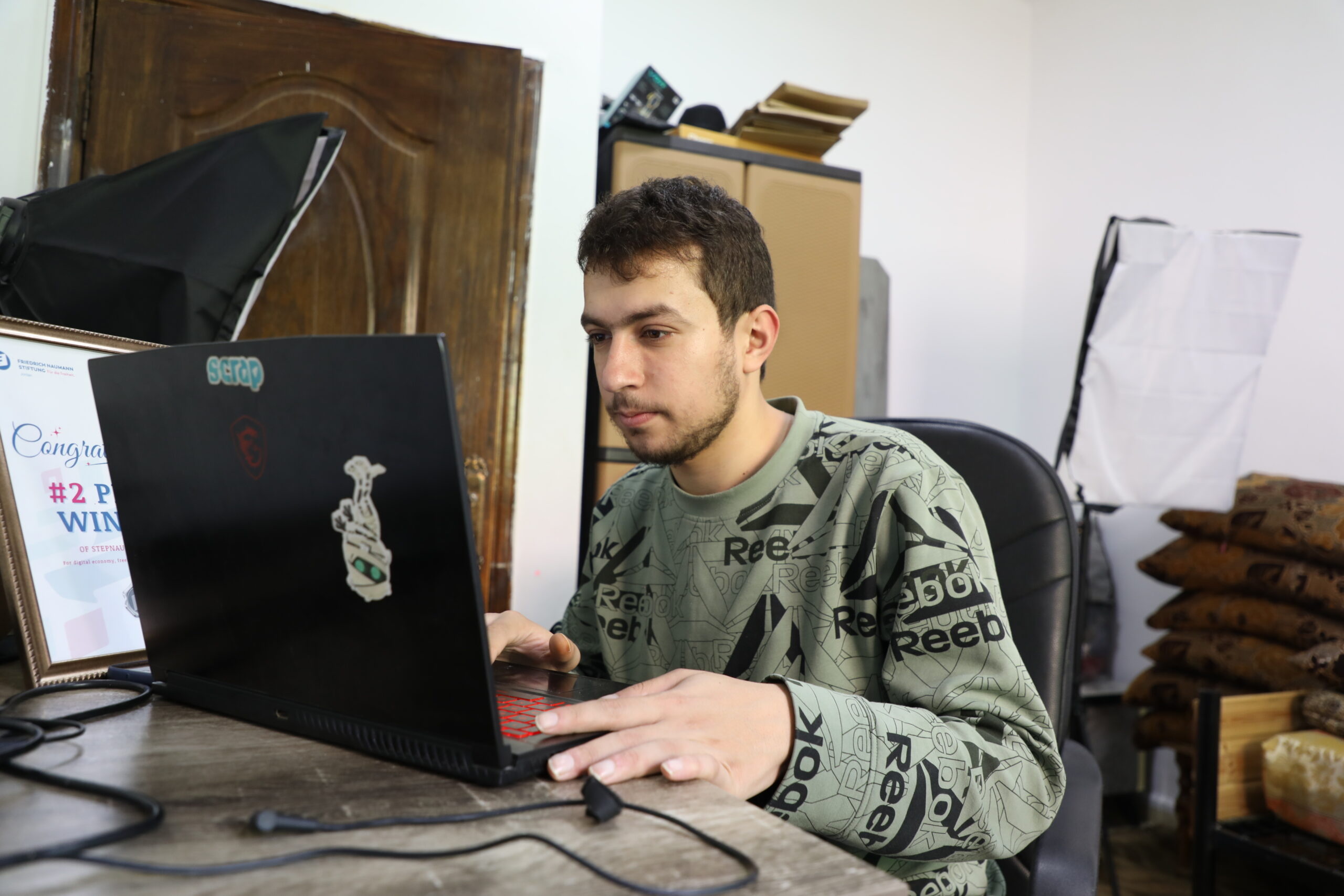
Ahmad, 27-year-old Syrian refugee working on his laptop, the tool that out him back on track to achieve his goals. ©UNHCR/ Yousef Taha
A Forced Pause
In 2012, when the war broke out in Syria, Ahmad’s life took a sharp turn. Forced to flee his hometown of Daraa, Ahmad crossed into Jordan with his family, first spending time in Za'atari camp before settling in Irbid.
At just 14, Ahmad was forced to drop out of school, not because he wanted to, but because survival came first. He joined his father in tiling floors to help support the family.
“I didn’t want to become a tiler,” he recalls. “But I had to stand by my father and help the family.”
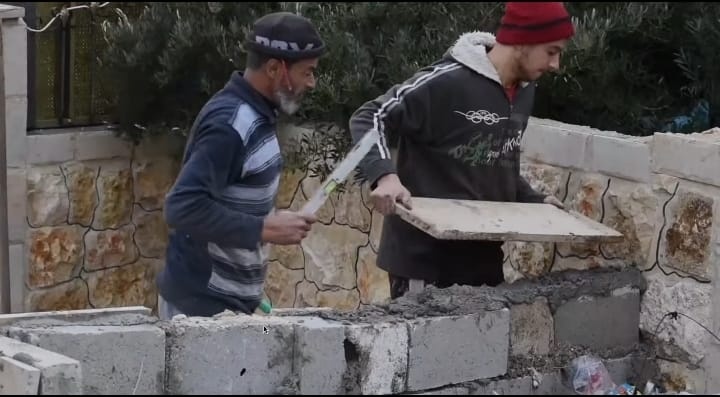
Ahmad working with his father in tiling floors, a job that he didn't like, but did to support his family's livelihood. In 2013, he made a brave attempt to return to school. But after missing a year and falling behind, he became a target for bullying. The weight of shame and isolation pushed him to drop out again.
For the next four years, Ahmad spent long days mixing cement and laying tiles, his childhood dreams quietly slipping away beneath the floors he built. Yet, deep inside, Ahmad refused to let his situation define him.
A Self-Taught Spark
As years passed, Ahmad stood watching his friends advance while he stayed behind. He grew jealous, and realized something had to change. With no school degree, not being enrolled at university, and few prospects, he turned to the only teacher he had left—the internet. Bit by bit, he taught himself some software development languages including HTML, CSS, JavaScript, and others. But he didn’t stop at coding;he also pushed himself to become more outgoing and confident - skills he knew he lacked.
“I didn’t even know how to talk to people, I was too shy. I had to change myself first before I could change my future,” Ahmad shares.
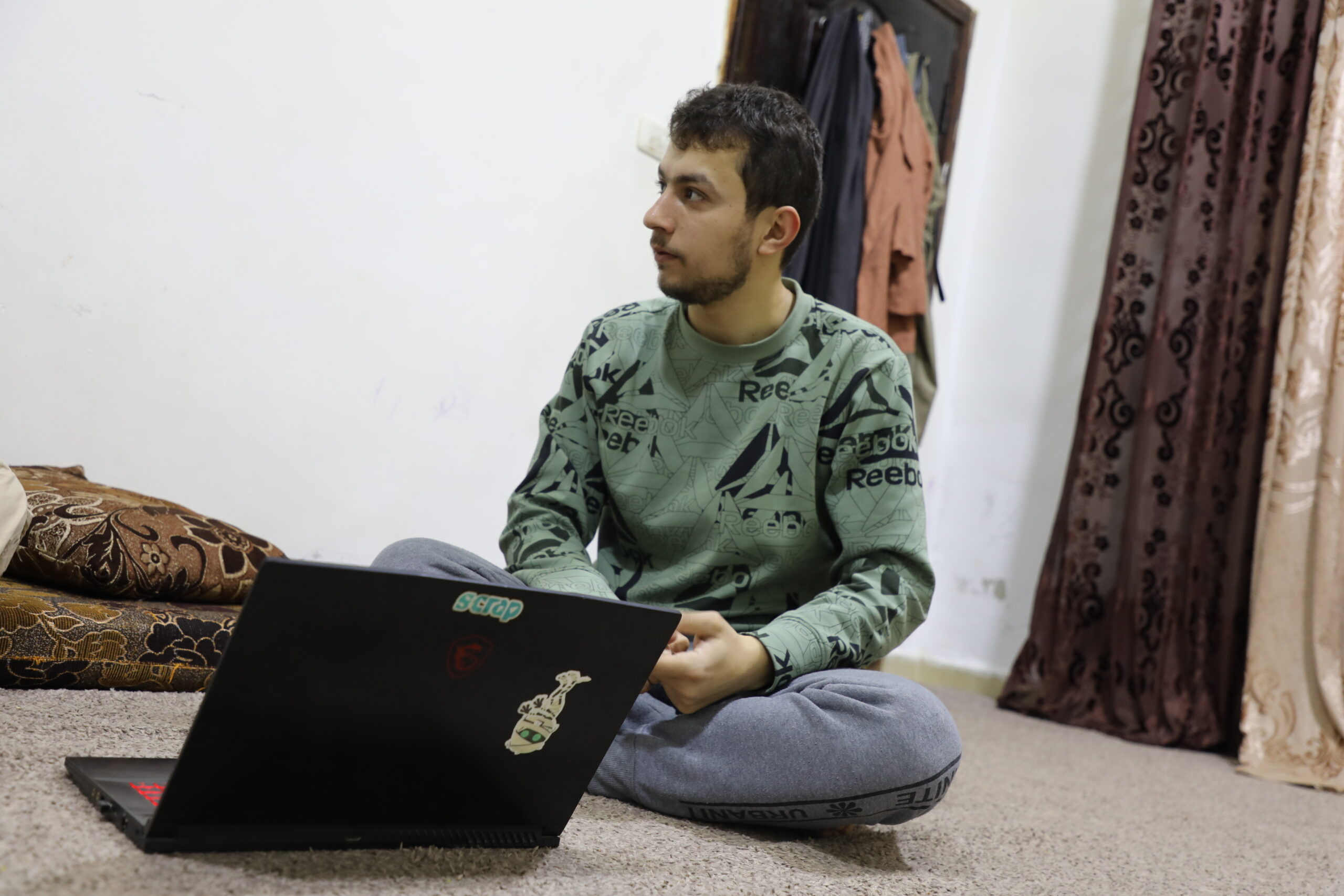
©UNHCR/ Yousef Taha
Despite his growing skills, the job market had a harsh truth for him: no formal education, no employment.
“Every time I applied for a job, the first thing they asked for was a bachelor’s degree,” Ahmad says, disappointment heavy in his voice. “It was crushing.”
The Turning Point: Entrepreneurship
In 2019, over a hot cup of coffee, Ahmad’s path shifted dramatically. A friend, sensing his frustration, casually said: “You know, you don’t need a degree to become an entrepreneur.”
Those words hit Ahmad like a revelation.
“It was like a door I never knew existed suddenly opened,” he recalls. “I went home that night and started searching for everything I could find about entrepreneurship.”
With no capital and no formal education, Ahmad began to teach himself the fundamentals of building a business. He signed up for free online courses in marketing, finance, feasibility studies, and business law. He studied late into the night, often after a full day of physical labor, driven by a newfound purpose.
By 2020, Ahmad was ready to bring his vision to life with Caprs.net; a reselling platform designed to connect suppliers with everyday customers, focusing on the sale of second-hand goods.

Caprs.net, Ahmad\'s website. ©UNHCR/ Yousef Taha
A 10-Minute Presentation That Changed Everything
With his concept in hand, Ahmad applied to a regional tech forum. Juggling tile work by day and entrepreneurship by night, he was stretched thin . But on the day of the event, he put down his tools, took a break from tiling with his father, and stepped into a new world.
“I was literally at a job site,” he remembers. “I asked my father to pause for 10 minutes to deliver a presentation… that moment changed my life.”
His pitch soared. Out of hundreds of participants, Ahmad ranked first across the MENA region. For the first time, he saw a glimpse of what could be, a future built not on floors, but on innovation.
“That win was the confirmation I needed,” he says, his eyes lighting up. “It told me I belong in this space.”

Struggles and Setbacks
Since its launch, Caprs.net has grown to over 4,000 users, helping local businesses reach new customers and providing Ahmad with the platform he needed to rewrite his own future. However, this success didn’t come without its challenges.
Ahmad faced technical failures that nearly derailed his platform. He needed urgent funds to fix these issues and improve his infrastructure. That’s when he received support from various organizations that believed in his business plan.
With the funds, Ahmad solved the technical issues, hired additional staff, and scaled his operations. His business was booming.
In 2024, Ahmad received a vital boost: a 1,900 JOD = 2670 USD seed grant from UNHCR, through its implementing partner the Jordan River Foundation (JRF).
The grant helped him develop a dashboard integration (API link) for his site, improve functionality, and stabilize operations. He hired five more people and upgraded the platform’s infrastructure.

©UNHCR/ Yousef Taha
By 2024, Ahmad’s platform had grown into a sustainable business, generating income through multiple streams: commissions on sales, vendor subscriptions, and the sale of his own products. But at the core of Caprce.net’s success is the strong community behind it. Fifteen committed traders now rely on the platform to expand their reach and connect with customers, turning Ahmad’s vision into a thriving marketplace.
“This support wasn’t just money. It was a belief in me, in my work, and in what refugees can achieve and in what refugees can accomplish, even without formal education, just like in my case” says Ahmad.
Looking Ahead
Today, Ahmad dreams bigger. He’s looking for investors to help scale his website to new markets, improve its infrastructure, and expand services. His story is a shining example of how refugees, even those who drop out of school, can rise as leaders, innovators, and business owners when given the chance.
Ahmad’s journey from a tiler to a tech entrepreneur is not just his own, it’s a reflection of what’s possible when refugees are empowered with tools, trust, and opportunities.
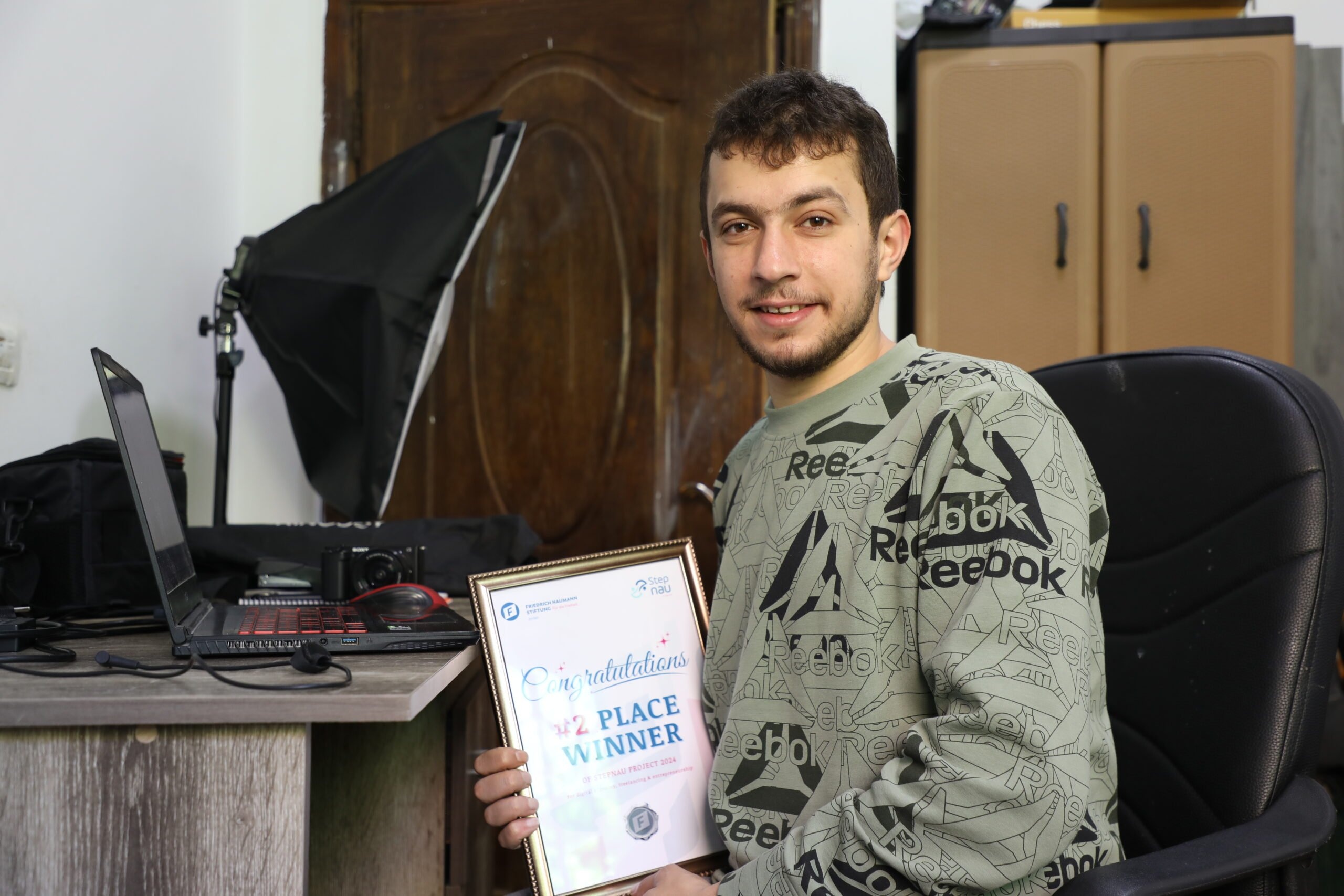
Ahmad, holding a certificate where he won 2nd place in a MENA tech competition. ©UNHCR/ Yousef Taha
Seed funding is transforming the lives of refugees. It's more than financial aid, it's an investment in their potential. By empowering them with the tools to become freelancers and build sustainable businesses, initiatives like these have helped over than 500 refugees in 2024 to gain entrepreneurship and access to market skills, opening doors to many opportunities and leading to more independent futures.