

From the field: How frontline stories shape a life-saving mission
From the field: How frontline stories shape a life-saving mission

Kathryn greeting Zeinabou, a forcibly displaced woman, in Burkina Faso while serving as a communications officer on a visit with UNHCR's leadership to Niger, Mauritania and Burkina Faso.
Pull back the curtain at UNHCR, the UN Refugee Agency, and you’ll find that our work is shaped as much by the lives of refugees and displaced people, as by the colleagues who have stood shoulder-to-shoulder with them through flight, loss and finding safety. These frontline experiences lend a sense of urgency and purpose to our work, shaping how we respond, partner and advocate.
That’s true in Washington, DC, too, where the Multi-County Office is home to colleagues who bring years of international experience in humanitarian hubs, war zones and frontline conflicts. They carry those experiences with them, bringing each day a deep understanding of what’s at stake for the 123 million displaced people around the world.
Five UNHCR colleagues reflect on what they’ve learned and how it continues to shape their work today.
"Every story someone shares with you - it's a responsibility."
Kathryn has worked across multiple continents, from Djibouti to South Sudan to Jordan. Reflecting on one experience that has stayed with her, she recalls:
“I was sitting in Niger listening to Falmata, a Nigerian mother who fled Boko Haram. Her hands shook as she told me that she was home alone with her children, her husband was farming in the field, when their village was attacked. Falmata had to flee with her children, and without him or knowing if he was safe. When they got to a river they needed to cross to reach safety, she was struggling to get all her children across – none of them knew how to swim. She wept as she told me the little hand of her seven-year-old daughter slipped out of hers. She told me with a heavy voice that her daughter drowned that day. She fled her burning house with seven kids and arrived in exile with six. You don’t forget that. And you don’t want to. Because once you’ve witnessed that kind of loss, that kind of courage, you carry it with you.”
“Every story someone shares with you—it's a responsibility. They’re not just telling you because they want to be heard. They want the story to go somewhere. So as a communicator, I ask: What am I going to do with this story? How am I going to share it ethically, in a way that honors their trust?”
“It’s about urgency.”
Mariia began working in humanitarian response in Ukraine after the war in the east and the occupation of Crimea. She explains how the experience shaped her view of displacement:
“Before 2015, I didn’t even know the difference between a refugee and an internally displaced person. Then I started meeting people who had lost everything and just needed to start again. A close friend of mine had a house on the sea, a business—everything. He had to leave overnight. Seeing that, I gained more empathy. More understanding of how quickly life can change.”
“In human resources, we feel the urgency. When we hire someone, it’s not just a position—it’s so that someone on the ground isn’t left understaffed, trying to help people alone. Every delay matters. Every gap matters. It’s all connected to people who need support now.”
“Every little thing counts.”
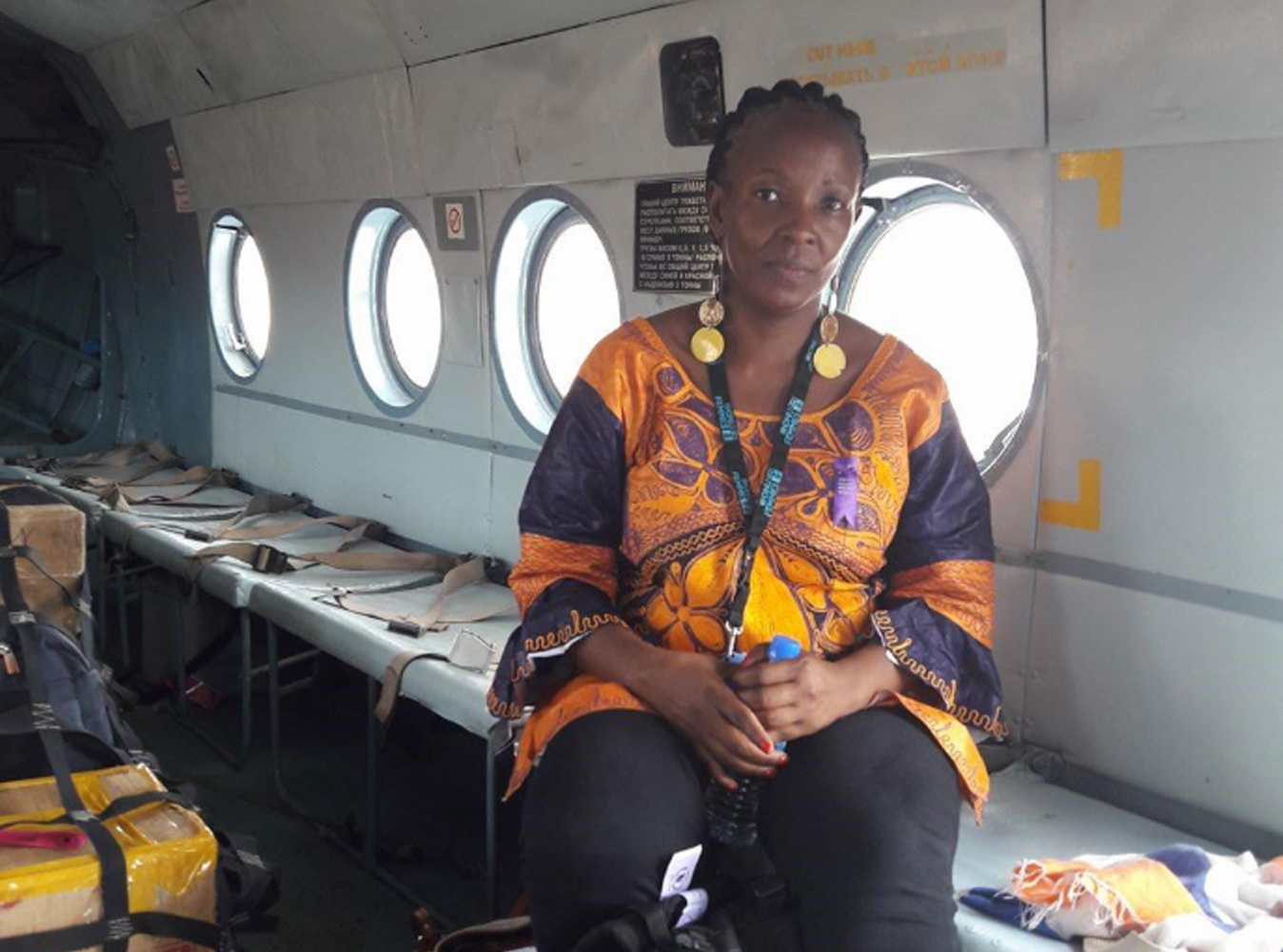
Silper on mission to a refugee returnee integration program in South Sudan on an UNHAS/UN flight.
Having worked in 14 countries, from Myanmar to Yemen to Ethiopia, Silper reflects on the lessons she carries into her work today.
“In each place, there were moments that reminded me: anything you save—any resource, any time—can go back to helping someone. Every little thing counts. Over the years, I’ve learned how much avoiding waste, finding efficiencies, and using resources wisely really matters. The work is so interconnected and behind the scenes, in finance, logistics, and operations, we’re making sure things are in the right place, and everything flows to where it’s needed most. That’s what enables the frontline, life-saving work to happen.”
“Field experience fills in the gaps.”
Andrew, who has worked in Moldova and Ethiopia, shares how his time in the field informs his perspective.
“One of the biggest takeaways from working in the field is context. When you’ve spent time in camps or worked with governments just beginning to develop asylum systems, you see challenges and opportunities differently. You begin to recognize what systems look like when they’re just being built, and how much space there is for growth, creativity, and support.”
“In Moldova, I really came to appreciate the role of refugee-led organizations. They were essential in giving voice to their communities. It reminded me that agency matters.”
“You get this sense of global community.”
For Jenna, who has worked in Uganda and Bangladesh, an important takeaway is the people she has met.
"One thing I really value about working at UNHCR is the people you meet along the way. Having people with different backgrounds and experience working in different contexts benefits the whole office environment. You get this sense of global community—people who genuinely care about the work, wherever they are from and wherever they are based. It’s part of what makes this organization so unique."
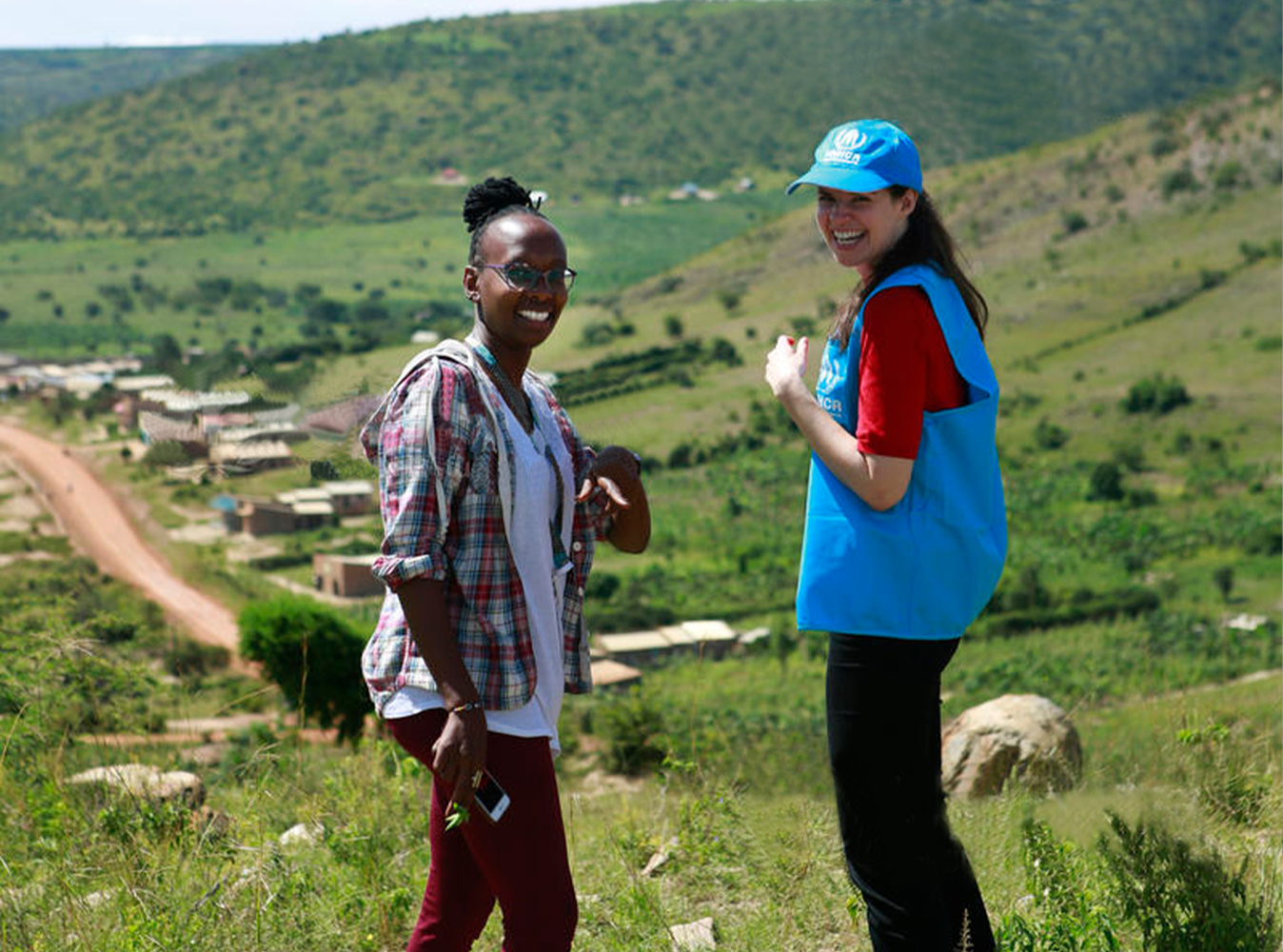
Jenna with a colleague based in Nairobi at the Nakivale settlement in Uganda preparing for a higher profile mission together.
To learn more about UNHCR’s global humanitarian response and hear directly from refugees, follow UNHCR on social media and explore recent profiles on UNHCR’s website.