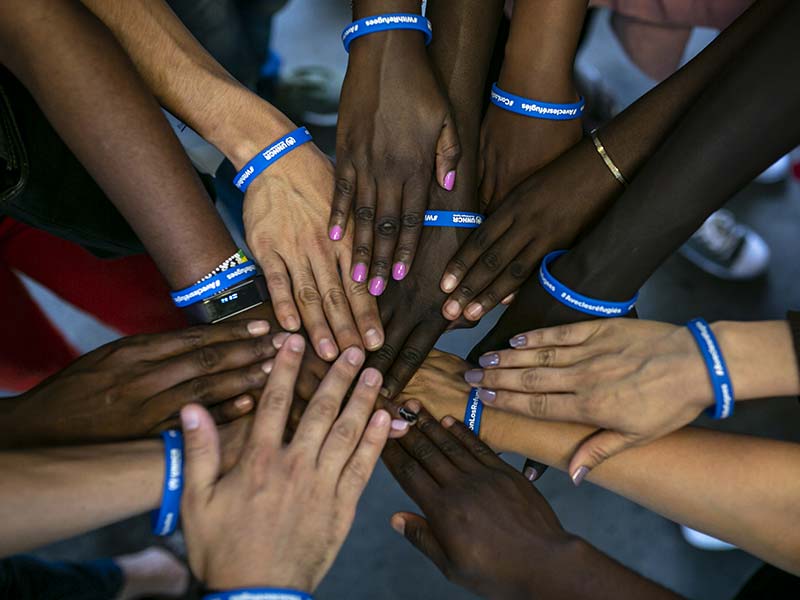
The UNHCR Resettlement Handbook offers resettlement management and policy guidance to UNHCR staff, and is a key reference tool on global resettlement policy and practice for resettlement countries, NGOs and other partners.
© UNHCR/Christopher Herwig
Preface
UNHCR has been entrusted by the United Nations General Assembly with the mandate to provide international protection to refugees and to support Governments in seeking solutions to refugee problems, as outlined in UNHCR’s Statute. These remain core objectives of UNHCR, with resettlement playing a vital role in achieving both.
Resettlement is a process that offers refugees the possibility to rebuild their lives in a third country and to become fully participating members of a society in which they can settle permanently. It remains an invaluable and life-changing protection response for refugees facing acute risks – survivors of violence and torture, members of minority groups, LGBTIQ+ persons, women, older persons and children at risk, political activists and others. At the same time, UNHCR envisages an increasingly strategic and data-driven approach to resettlement by which larger numbers or groups of refugees in protracted situations may be identified and their predicament definitively solved through resettlement.
This fully revised online Resettlement Handbook updates and consolidates global resettlement advice to help equip UNHCR colleagues to meet the resettlement challenges of the future. It provides detailed and wide-ranging operational guidance on the different processing steps from initial case identification through to submission and post-submission follow-up, drawing on best practices from around the globe that improve processing efficiencies while preserving and enhancing core protection and integrity safeguards.
Developed with generous support from the Swiss government, this Handbook benefited from valuable insights from NGO partners in resettlement, and reflects extensive consultations and feedback from colleagues and technical experts within UNHCR.
We are grateful to all those who contributed to this Handbook, and who continue to support refugees as they benefit from resettlement as a protection tool and durable solution.

Gillian Triggs
Assistant High Commissioner for Protection