



Better Interviews, Stronger Protection: Training strengthens capacity to identify people in need of international protection and interviewing techniques
Better Interviews, Stronger Protection: Training strengthens capacity to identify people in need of international protection and interviewing techniques

Frontline officials from key institutions including the Border and Migration Police, the National Reception Centre for Asylum, and the Directorate of Policies for Migration, Asylum and Anti-Trafficking take part in a one-day training in Tirana, supported by UNHCR under the EU4Migration project funded by the European Union.
For people arriving in Albania after fleeing war, violence or persecution, every conversation matters. A question asked at the border, a meeting at a reception centre, or an asylum interview can shape the course of their future, determining whether they are referred to the asylum system, connected to the right services, or left without the support they need.
That’s why frontline officials, from border police and reception centre staff to caseworkers, play a crucial role in identifying people who may be in need of protection or specific support.
To strengthen this capacity across the asylum system, a one-day training was held in Tirana with technical support from UNHCR, under the EU4Migration project funded by the European Union. The session brought together staff from the Border and Migration Police, the National Reception Centre for Asylum, and the Directorate of Policies for Migration, Asylum and Anti-Trafficking, all institutions central to Albania’s protection response.
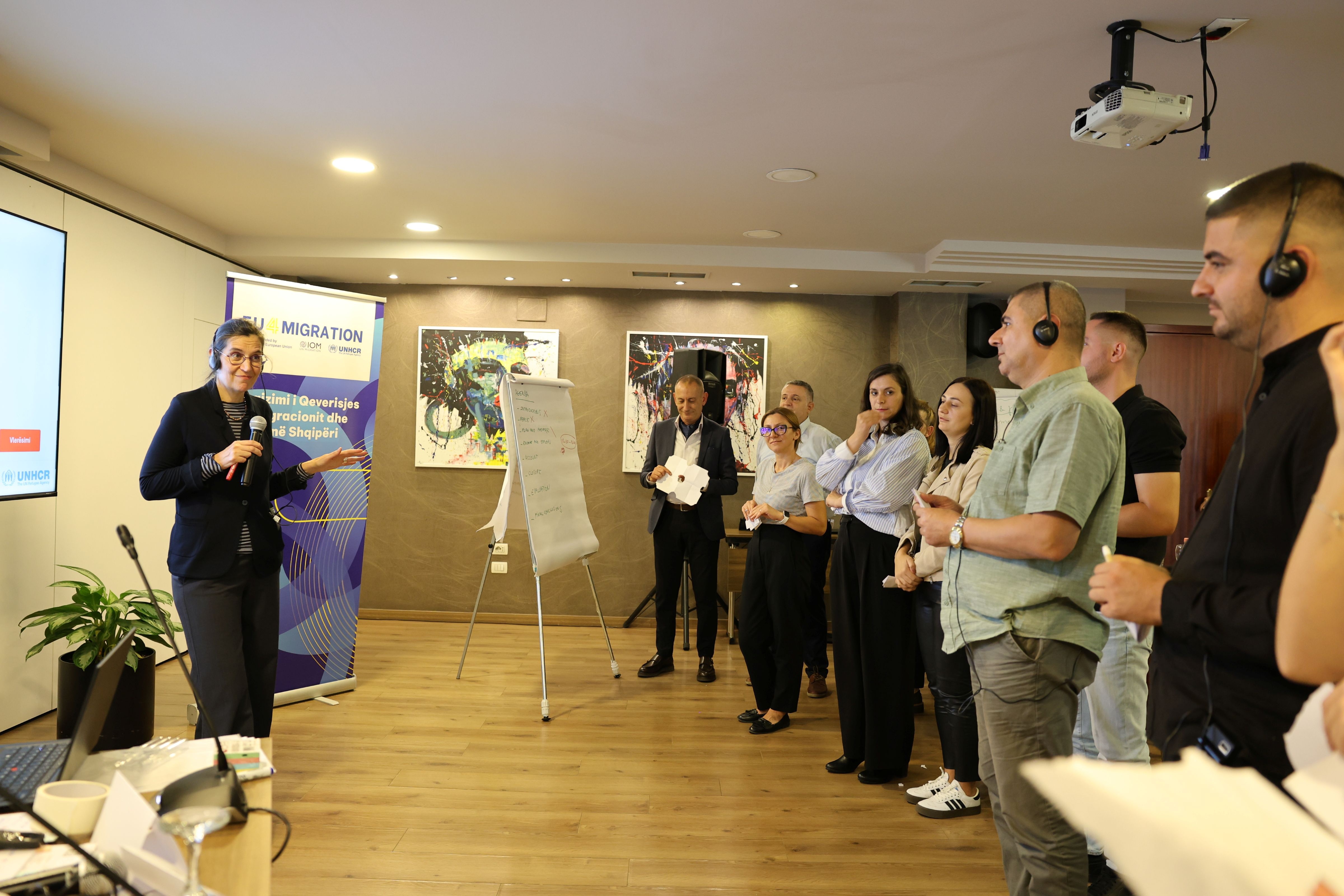
Frontline officials from key institutions including the Border and Migration Police, the National Reception Centre for Asylum, and the Directorate of Policies for Migration, Asylum and Anti-Trafficking take part in a one-day training in Tirana, supported by UNHCR under the EU4Migration project funded by the European Union.
“Interviews at the border or in reception centres are not just about collecting facts,” said Helena Behr, Protection Officer at UNHCR and lead trainer. “They are about creating a safe space where people can speak openly, especially when they’ve experienced trauma. We want to ensure officials have the skills and tools to ask the right questions, in the right way, so that no one who needs protection is left behind.”
The training focused on protection-sensitive interviewing, an approach that goes beyond legal procedures and emphasizes empathy, trust-building, and trauma awareness. Participants were introduced to the PEACE model, an internationally recognized framework for conducting ethical, structured interviews.
Sessions explored how stress and trauma can affect memory and disclosure, and how officers can adapt their approach when speaking with unaccompanied children, survivors of trafficking, or others at heightened risk.
“At the border, we meet people who have gone through extremely difficult journeys,” said Joana, a border officer at Kakavijë. “This training helped us understand the difference we can make just by how we listen.”
Participants also engaged in practical exercises, including role plays and simulations, to reinforce techniques like open-ended questioning and active listening, essential skills for encouraging people to share their stories in a safe and respectful way.
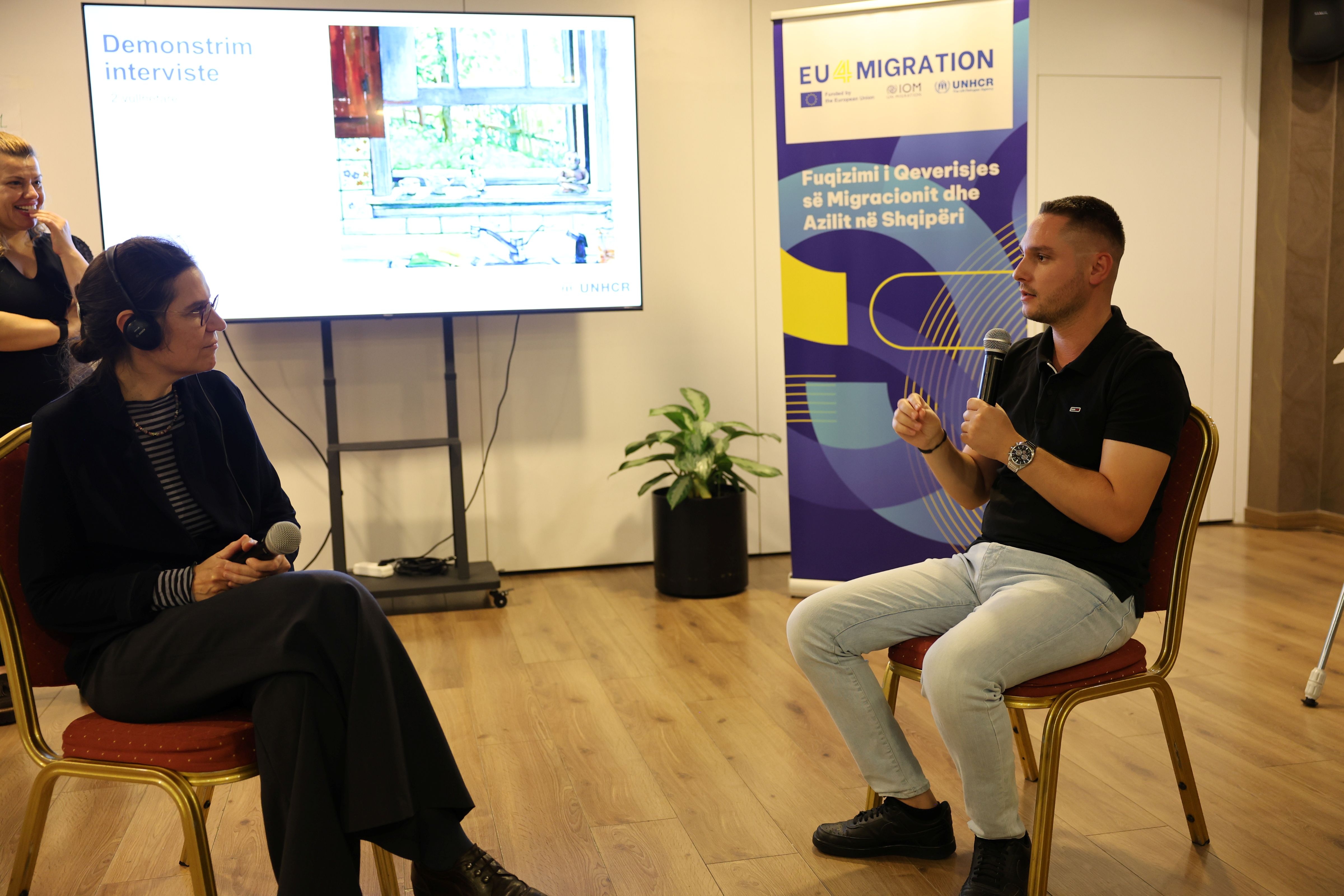
A participant practices interviewing techniques during a mock interview exercise, part of the protection-sensitive interviewing training supported by UNHCR under the EU4Migration project.
“Refugee status interviews require more than technical knowledge,” said a caseworker from the Directorate of Policies for Migration, Asylum and Anti-Trafficking. “This training reminded us how we conduct the interview can be just as important as what we ask.”
Albania has made significant progress in strengthening its asylum and protection systems. In recent years, the country has aligned its legal framework more closely with international and EU standards and continues to build the capacity of its institutions to meet these commitments.
This training is part of that broader effort. It was delivered under EU4Migration, a four-year project funded by the European Union and implemented by UNHCR and IOM, in close partnership with the Government of Albania. The initiative supports inclusive and effective migration and asylum systems in Albania, ensuring that people who need protection are identified and supported from the moment they arrive.


