



A day in the life of Gawilan Refugee Camp Manager: connecting refugees to services

Its July in Iraq and the temperatures are climbing. Inside Gawilan refugee camp, Imad Salih walks through the camp he manages, greeting families along the way, before making his way to the office where refugees are already waiting. One by one, he listens, scribbles notes and puts a plan in place with his team to ensure every concern is addressed by the end of the day.
"For me, being a camp manager means taking responsibility, listening to refugees' concerns and doing everything to address their issues professionally,"

Meeting with refugees in the camp is an essential part of Imaad's daily routine.
Home to around 11,000 Syrian refugees, Gawilan camp in Dohuk Governorate has provided safety to families who fled conflict since it opened in 2013. Since then, shelters that began as tents have given way to caravans, increasingly connected to the same utilities used by surrounding Iraqi towns and villages. Making sure services such as water, garbage collection and electricity continue to reach everyone requires close coordination between government authorities and partners.
This is where Imad's role comes in.
"I stay informed by spending time among the refugees and listening to their concerns directly," Imad explains. "My team and the refugee community leaders also keep me updated. We work to ensure that everyone has the opportunity to be heard."
He explains, however, that refugee camp management is more than responding to complaints. It is also about connecting refugees with the government departments and organizations responsible for delivering services and making sure no issue is overlooked.
"I closely monitor the delivery of services such as water, electricity, education, and other essential support," says Imad. "If there is a gap in services, I coordinate with the relevant government authorities and partners to ensure services reach everyone fairly."
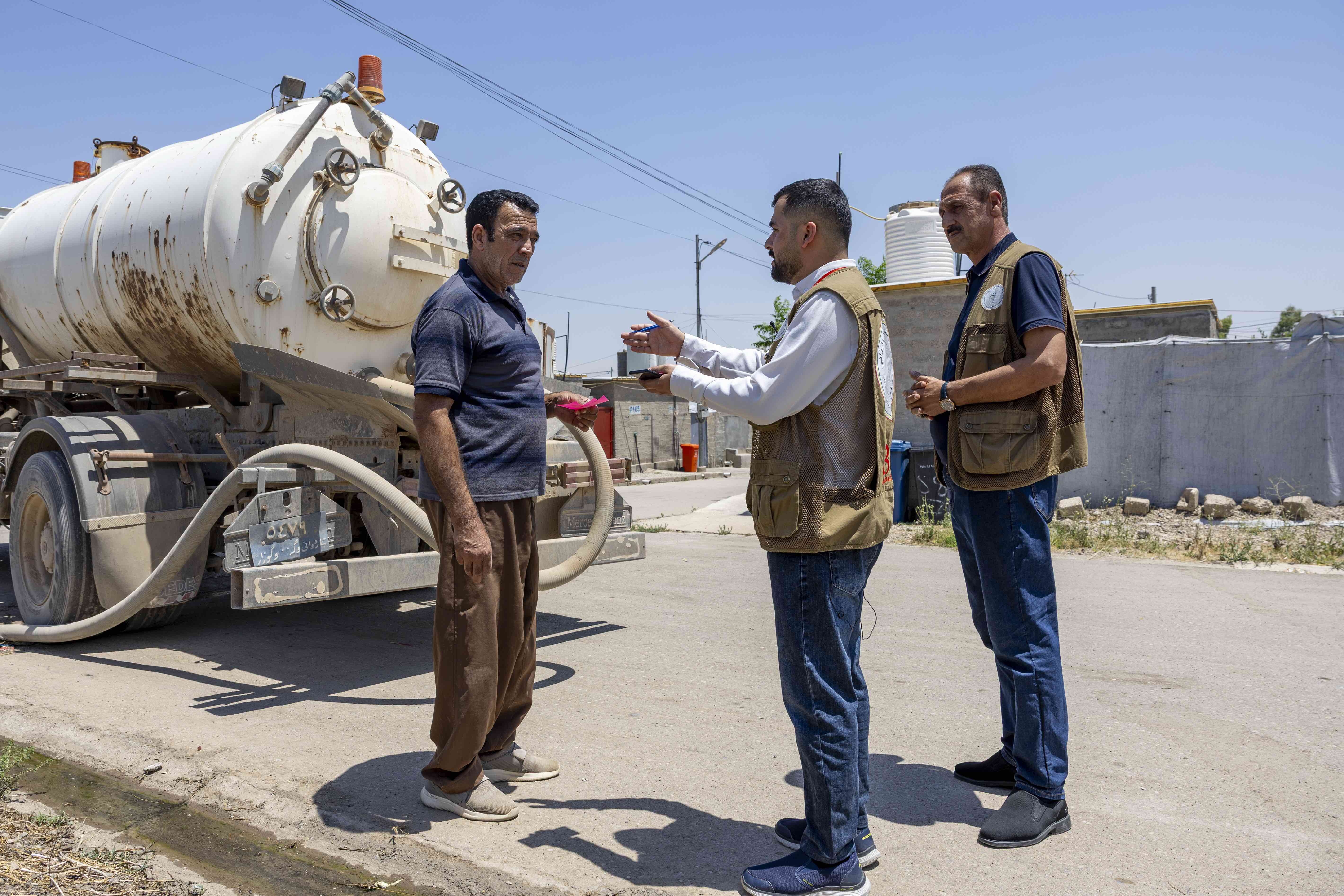
Imad inspects services across the camp every day to ensure they are delivered fairly to all residents.
Some concerns can be resolved quickly. Others require coordination across several entities, including government actors, the private sector and partners. Waste collection, electricity, infrastructure, transportation, and protection all involve these actors working together.
Electricity, for example, has long been one of the main concerns raised by refugees during the hot summer months. Today, improvements are underway as the Kurdistan Regional Government’s Runaki initiative to provide twenty-four-hour electricity in the region is also being extended to the camp.
Beyond basic services, refugees continue to access public schools, healthcare and other government services outside the camp. Camp management helps bridge the connection between refugees and these services while working with authorities to address practical challenges such as transportation and access. "We hold regular coordination meetings to identify issues, assign responsibilities and agree on action points," Imad says.
UNHCR supports the Ministry of Interior's Joint Crisis Coordination Centre and local Directorates of Migration and Crisis Response, which works with the Barzani Charity Foundation to manage and coordinate services across the nine refugee camps in the Kurdistan Region of Iraq. As humanitarian funding has declined, this role of camp managers in connecting refugees with government institutions has become increasingly important as part of the transition to more sustainable settlements.
For Imad, that daily coordination is only part of the picture. Every conversation, every phone call and every walk through the camp helps build the trust his work depends on.. Camp management helps ensure that refugees can live with dignity by coordinating services, responding to their concerns, and connecting them with the support they need," he says.